
What Are Hot Spots in Dogs?
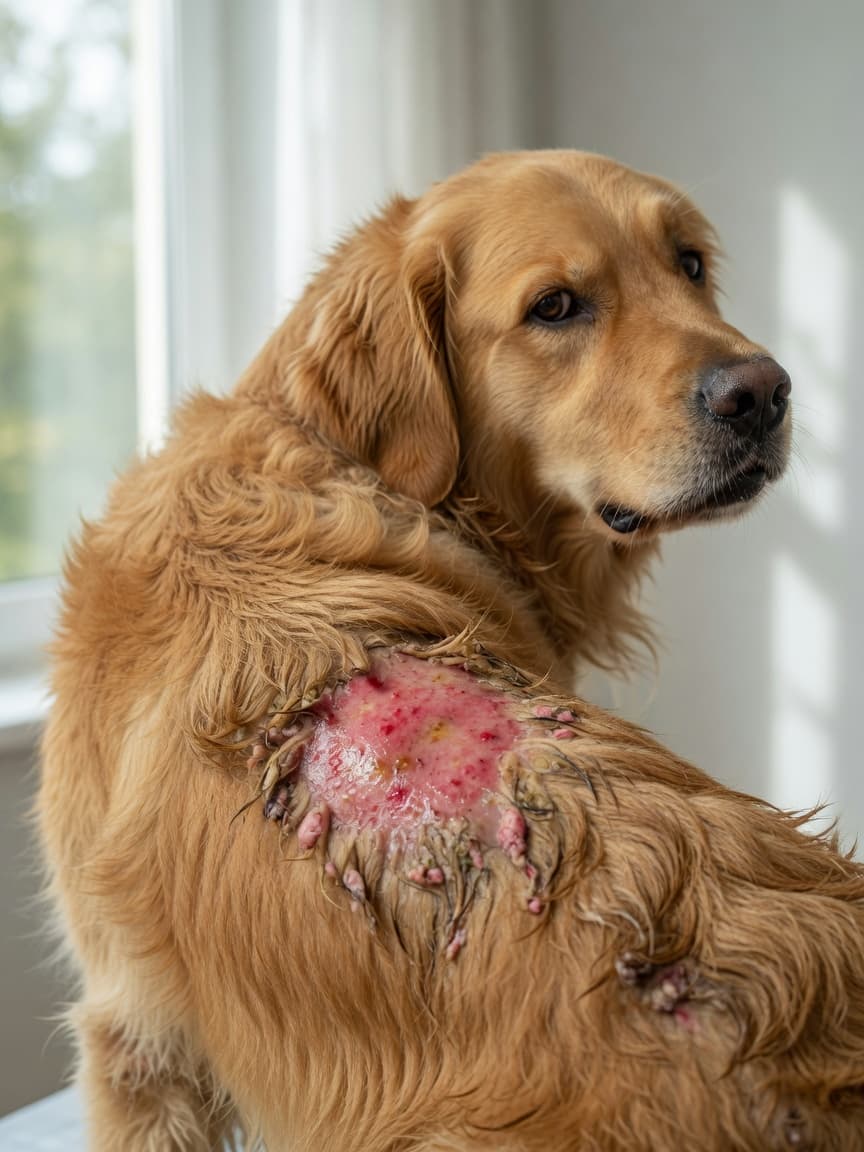
Hot spots — known clinically as acute moist dermatitis — are localised areas of inflamed, infected skin that can appear and worsen remarkably quickly, sometimes within just a few hours. They are characterised by raw, wet, red patches of skin that are painful to the touch and may ooze serum or pus. The surrounding fur is often matted and damp, and a distinctive unpleasant odour is common due to bacterial activity.
Hot spots are one of the more alarming skin conditions dog owners encounter, largely because of how rapidly they can develop. A patch of apparently normal skin in the morning can become a large, raw lesion by the afternoon if the dog has been licking, chewing or scratching at it persistently. They can occur anywhere on the body but are particularly common on the head, neck, chest and hindquarters.
What Causes Hot Spots?
Hot spots arise from a cycle of self-trauma and infection. An initial trigger causes the dog to scratch, lick or bite at a site, breaking the skin barrier. Bacteria — most commonly Staphylococcus pseudintermedius — colonise the damaged area, causing inflammation, more discomfort, and more self-trauma. The cycle escalates rapidly. The most common underlying triggers include:
Allergies
Allergic skin disease is probably the most common predisposing cause of hot spots. Whether the allergy is to fleas, environmental allergens or food, the chronic itching it causes leads to trauma that can trigger a hot spot. Dogs with atopic dermatitis are particularly prone to developing them during flare-ups.
Flea Bites and Insect Stings
A single flea bite in a flea-allergic dog can be enough to start the itch-scratch-infect cycle. Other insect bites and stings can have a similar effect. This is why regular, veterinarian-recommended flea control is so important for susceptible dogs.
Moisture and Poor Grooming
Moisture trapped against the skin — from swimming, bathing, rain or even drooling in heavy-jowled breeds — creates the warm, damp environment that bacteria thrive in. Dogs with dense or thick coats are at higher risk because moisture is retained close to the skin. Poor grooming that allows matting also contributes.
Ear and Anal Gland Problems
Dogs with ear infections often scratch at their head and neck, and those with painful or overfull anal glands chew at their hindquarters — both of which are common locations for hot spots to develop.
Anxiety and Boredom
Compulsive licking or chewing driven by anxiety, boredom or frustration can also initiate a hot spot. In these cases, addressing the psychological trigger is an important part of long-term management.
Breeds Most at Risk
While any dog can develop a hot spot, certain breeds are more prone due to their coat type or body shape. Golden Retrievers, Labradors, German Shepherds, Saint Bernards and Rottweilers tend to be over-represented in veterinary case records. Dogs with heavy, water-resistant coats are especially vulnerable during warm or humid weather.
Recognising a Hot Spot
The signs of an acute hot spot are usually quite obvious:
- A clearly defined, moist, reddened area of skin, often with raw or eroded edges
- Matted fur stuck to the lesion with discharge
- A noticeable unpleasant odour
- Obvious pain — the dog may flinch or snap when the area is touched
- Persistent licking, scratching, biting or rubbing at the site
- Rapid enlargement of the lesion if untreated
Unlike ringworm or mange, hot spots do not typically cause hair loss across a wide area initially — the hair loss is localised to the lesion itself. They can be confused with other conditions, which is why veterinary assessment is important if you are uncertain.
Home First Aid for Mild Cases
If the hot spot is small (smaller than a 50-pence piece), you have caught it early, and your dog is not in significant distress, the following steps can help while you arrange a vet appointment:
- Carefully clip the fur around the hot spot to expose it to air and allow proper cleaning — this is one of the most important steps, as moisture and matted hair perpetuate the infection
- Gently clean the area with a dilute chlorhexidine solution or saline, using clean cotton pads — avoid hydrogen peroxide or alcohol, which damage tissue
- Allow the area to dry thoroughly before applying any topical product
- Prevent your dog from reaching the area using a buster collar (e-collar) or inflatable collar — without this, all other treatment efforts are undermined
Do not apply human antiseptic creams, steroid creams or antibiotic ointments without veterinary guidance, as many of these products are inappropriate or potentially toxic for dogs.
When a Vet Is Essential
Most hot spots require veterinary treatment. You should contact your vet promptly — ideally the same day — if:
- The hot spot is larger than approximately 2 to 3 centimetres, or is growing rapidly
- Your dog is in obvious pain or is extremely distressed
- The lesion appears deep, has spreading redness around it, or there is swelling beneath the skin (suggesting a deeper infection or abscess)
- Your dog has a temperature, is lethargic or is off its food
- You are unable to prevent your dog from traumatising the area
- Home management has not led to improvement within 24 hours
Veterinary Treatment
Your vet will typically clip and thoroughly clean the hot spot, then assess its severity. Treatment generally includes:
Antibiotics
Bacterial infection is almost always present in established hot spots, so a course of systemic antibiotics is usually prescribed. The length of the course depends on the severity of the lesion but is commonly two to three weeks. Stopping antibiotics early is a common cause of recurrence.
Anti-inflammatory Medication
A short course of corticosteroids or alternative anti-inflammatory medication helps break the itch-scratch cycle, reduce inflammation and relieve pain. This is important not just for comfort but because reducing itching is essential to allow healing.
E-collar
A buster collar or alternative head collar is almost always required to prevent self-trauma. This is non-negotiable — even brief access to the lesion can undo days of healing.
Topical Products
Your vet may prescribe a veterinary topical spray containing chlorhexidine, antibiotics, or anti-inflammatory agents to apply directly to the lesion between clean-ups.
Prevention
Preventing hot spots means addressing the underlying triggers:
- Maintain rigorous, year-round flea and parasite control using veterinary-recommended products
- Keep your dog's coat well groomed and dry, particularly after swimming or bathing
- Address any underlying allergy through proper diagnosis and management
- Ensure your dog has adequate mental stimulation and exercise to reduce anxiety-driven licking
- Regular ear checks and anal gland assessment in susceptible individuals
Dogs that have had one hot spot are more likely to develop them again, particularly if the underlying cause is not addressed. A proactive management plan developed with your vet is the best defence against recurrence.