
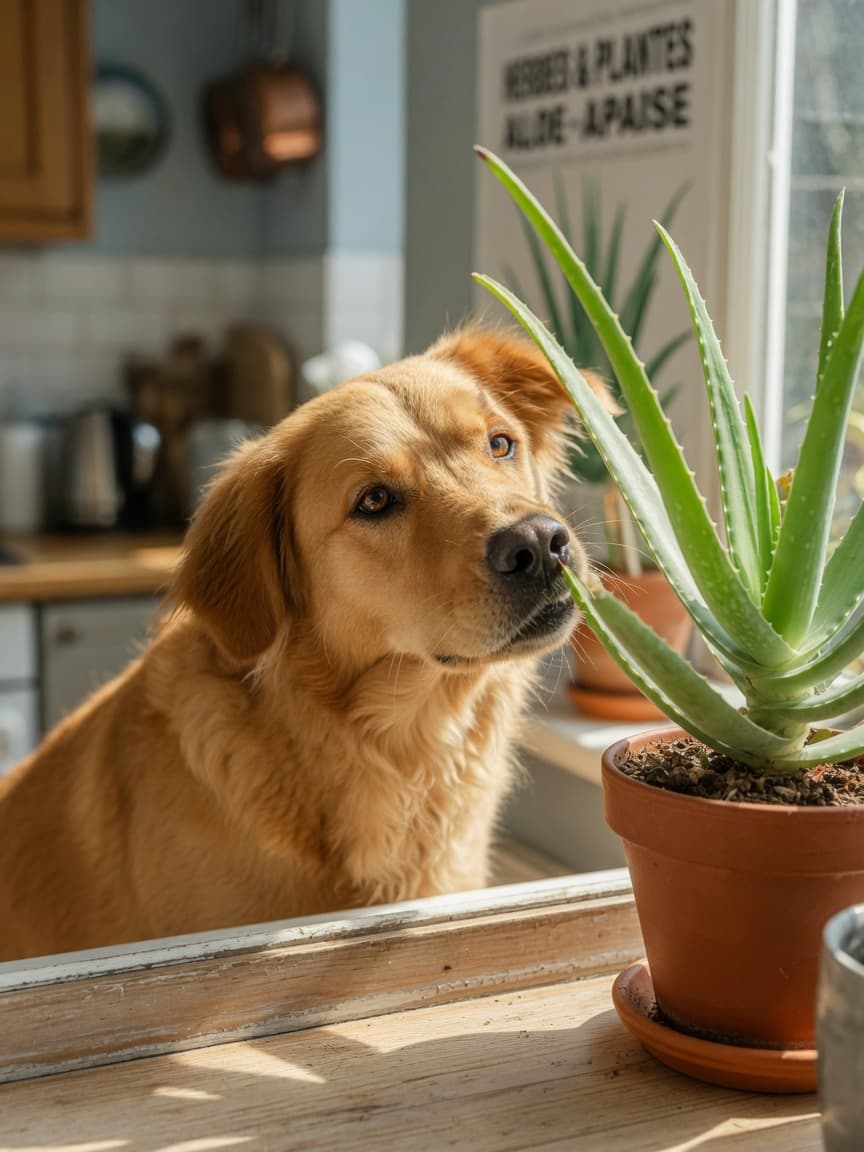
Ist Aloe vera giftig für Hunde?
Aktualisiert: Juni 2026
Warum Aloe vera für Hunde gefährlich ist
Aloe vera ist eine der beliebtesten Zimmerpflanzen der Welt, geschätzt für ihr hautberuhigendes Gel und ihre Verwendung in Gesundheitsprodukten für Menschen. Leider kann das, was für Menschen von Nutzen ist, für Ihren Hund tatsächlich schädlich sein. Die giftigen Verbindungen der Aloe vera finden sich vor allem in der Latexschicht – der gelblichen Flüssigkeit, die direkt unter der dicken Außenhaut der Pflanze liegt – sowie in den Blättern selbst.
Die Hauptverursacher sind Saponine und Anthrachinone (darunter Barbaloin und Isobarbaloin). Saponine sind natürlich vorkommende Glykoside, die im Magen-Darm-Trakt als schäumender Reizstoff wirken, die normale Verdauung stören und dazu führen, dass sich die Darmschleimhaut entzündet. Anthrachinone sind starke Abführmittel, die die Darmmotilität beschleunigen und zu wässrigem, manchmal blutigem Durchfall führen. Gemeinsam erzeugen diese Verbindungen ein quälendes und potenziell gefährliches klinisches Bild für Ihr Tier.
Wichtig zu wissen: Das klare innere Gel – der Teil, der in vielen kommerziellen Produkten verwendet wird – enthält geringere Konzentrationen dieser Giftstoffe. Hunde, die an einer rohen Aloe-Pflanze kauen, nehmen jedoch unweigerlich die Latexschicht zusammen mit dem Gel auf, weshalb das Verzehren der rohen Pflanze durchweg gefährlich ist. Sie sollten niemals davon ausgehen, dass ein Aloe-Produkt sicher für Hunde ist, nur weil es „natürlich“ ist.
Symptome einer Aloe-vera-Vergiftung bei Hunden

Die Symptome treten typischerweise innerhalb von zwei bis sechs Stunden nach der Aufnahme auf, wobei dies je nach aufgenommener Menge und Größe des Hundes variieren kann. Größere Hunde, die nur eine kleine Menge gefressen haben, zeigen möglicherweise mildere Anzeichen, während kleine Hunde oder Welpen, die einen erheblichen Teil eines Blattes aufgenommen haben, schwer erkranken können.
Achten Sie auf die folgenden Anzeichen:
- Erbrechen – oft das erste und unmittelbarste Anzeichen
- Durchfall – häufig wässrig und möglicherweise mit Blut versetzt
- Lethargie und Niedergeschlagenheit – Ihr Hund wirkt möglicherweise ungewöhnlich müde oder reagiert kaum
- Appetitlosigkeit – Futterverweigerung ist nach einer Magen-Darm-Reizung häufig
- Bauchschmerzen oder Krämpfe – Ihr Hund macht möglicherweise einen Rundrücken, winselt oder lässt sich am Bauch nicht anfassen
- Zittern – in schwereren Fällen kann es zu neurologischer Beteiligung kommen
- Veränderungen der Urinfarbe – der Urin kann durch die Anthrachinon-Verbindungen rot oder braun erscheinen
- Dehydrierung – eine Folgeerscheinung von anhaltendem Erbrechen und Durchfall
Dehydrierung ist ein ernstes Problem, besonders bei kleinen Hunden, Welpen, älteren Hunden oder Hunden mit bestehenden Vorerkrankungen. Anhaltendes Erbrechen und Durchfall können zu gefährlichen Elektrolytstörungen führen, die eine intravenöse Flüssigkeitstherapie erfordern.
Was tun, wenn Ihr Hund Aloe vera gefressen hat
Warten Sie nicht ab, ob sich von selbst Symptome entwickeln. Rufen Sie sofort Ihren Tierarzt an. Wenn Ihr behandelnder Tierarzt nicht erreichbar ist, wenden Sie sich an das ASPCA Animal Poison Control Center unter (888) 426-4435 (Hinweis: Es kann eine Beratungsgebühr anfallen). Halten Sie beim Anruf die folgenden Informationen bereit:
- Das ungefähre Gewicht Ihres Hundes
- Wie viel Aloe aufgenommen wurde (schätzen Sie die Anzahl der Blätter oder die Größe des angekauten Stücks)
- Ob der Hund rohes Pflanzenmaterial oder ein verarbeitetes Produkt gefressen hat
- Wann die Aufnahme erfolgt ist
- Alle bereits vorhandenen Symptome
Ihr Tierarzt kann empfehlen, Erbrechen auszulösen, wenn die Aufnahme sehr kurz zurückliegt (innerhalb von einer bis zwei Stunden) und der Hund noch keine Symptome zeigt. Versuchen Sie niemals, zu Hause ohne tierärztliche Anleitung Erbrechen auszulösen, da dies je nach aufgenommener Substanz zusätzlichen Schaden verursachen kann.
Die Behandlung umfasst in der Regel unterstützende Maßnahmen: Medikamente gegen Übelkeit, intravenöse Flüssigkeitsgaben gegen die Dehydrierung und Medikamente zur Beruhigung des Magen-Darm-Trakts. Die meisten Hunde erholen sich bei zügiger Behandlung vollständig.
Wie viel Aloe ist giftig?
Es gibt keine sichere Menge roher Aloe vera für Hunde. Die toxische Dosis hängt stark vom Körpergewicht des Hundes und der Saponinkonzentration in der jeweiligen Pflanze ab. Ein einzelner großer Bissen eines ausgewachsenen Aloe-Blattes kann bei einem kleinen Hund ausreichen, um schwere Magen-Darm-Beschwerden auszulösen. Selbst kleine Mengen sollten ernst genommen werden, besonders wenn der Hund die latexreichen äußeren Teile der Blätter aufgenommen hat.
Auch wiederholte kleine Kontakte sind gefährlich – manche Halter machen den Fehler, ihren Hunden über längere Zeit das Knabbern an Aloe-Pflanzen zu erlauben, ohne die kumulative Wirkung auf das Verdauungssystem zu erkennen.
Aloe in kommerziellen Produkten: Ist das sicher?
Viele kommerzielle Tierprodukte und Hautpflegeartikel für Menschen enthalten Aloe-vera-Extrakt. Der entscheidende Unterschied besteht darin, ob das Aloin (das anthrachinonreiche Latex) entfernt wurde. Bei einigen Produkten mit der Bezeichnung „Aloe vera“ sind die giftigen Verbindungen herausgefiltert worden, was sie unbedenklicher macht – aber nicht zwangsläufig sicher. Wenn Ihr Hund eine kleine Menge einer aloehaltigen Lotion von seiner Haut ableckt, wird das wahrscheinlich keinen ernsten Schaden verursachen. Sie sollten Ihrem Hund jedoch niemals absichtlich ein Produkt auf Aloe-Basis geben, ohne dass Ihr Tierarzt dies ausdrücklich befürwortet, und Sie sollten rohe Aloe-Pflanzen immer außer Reichweite aufbewahren.
So halten Sie Ihren Hund sicher
Die einfachste Lösung besteht darin, Aloe-vera-Pflanzen aus Bereichen zu entfernen, die für Ihren Hund zugänglich sind. Wenn Sie Aloe lieben und sie in Ihrem Zuhause behalten möchten, stellen Sie sie hoch auf Regale, die Ihr Hund nicht erreichen kann, oder bewahren Sie sie in Räumen auf, zu denen Ihr Hund keinen Zugang hat. Seien Sie besonders vorsichtig bei Hunden, die als Kauer bekannt sind oder die sich bereits früher für Zimmerpflanzen interessiert haben.
Wenn ein Familienmitglied Aloe-vera-Gel zur äußerlichen Anwendung nutzt, achten Sie darauf, dass es sicher aufbewahrt wird und dass Ihr Hund es nicht von der Haut ablecken kann, bevor es eingezogen ist. Bringen Sie Kindern im Haushalt bei, kein Pflanzenmaterial mit Haustieren zu teilen.
Das Wichtigste in Kürze
- Aloe vera ist für Hunde giftig, und zwar aufgrund von Saponinen und Anthrachinonen in der Latexschicht der Pflanze.
- Zu den Symptomen gehören Erbrechen, Durchfall, Lethargie, Zittern und Veränderungen der Urinfarbe.
- Eine Aloe-Vergiftung ist in der Regel kein tödlicher Notfall mit Organversagen, sie kann aber zu schwerer Dehydrierung und starkem Leiden führen.
- Rufen Sie sofort Ihren Tierarzt an oder wenden Sie sich an die ASPCA Poison Control unter (888) 426-4435, wenn Ihr Hund Aloe aufgenommen hat.
- Es gibt keine sichere Menge roher Aloe vera für Hunde – entfernen Sie die Pflanzen aus zugänglichen Bereichen.
- Kommerzielle Aloe-Produkte unterscheiden sich in ihrer Giftigkeit; geben Sie Ihrem Hund niemals Produkte auf Aloe-Basis ohne tierärztliche Anleitung.
Quellen
- Vohra R, Vohra A, Menendez M. „Adverse events associated with the use of botanical preparations and dietary supplements: a 5-year retrospective study.“ Journal of Medical Toxicology. 2011. PMID: 21107921
- Reyes-Trejo B, et al. „Aloe vera leaf gel components and their anthraquinone content: biological activity.“ Journal of Ethnopharmacology. 2009. PMID: 19481887