
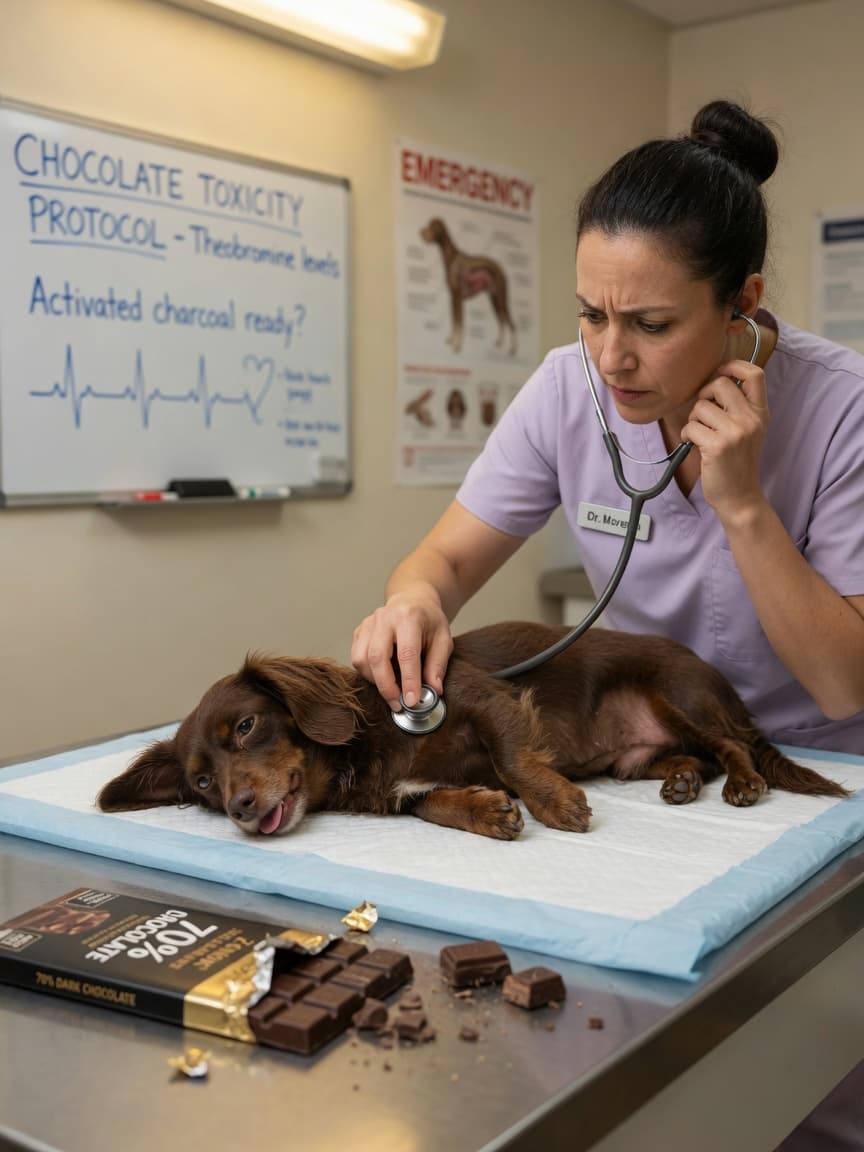
Dürfen Hunde Schokolade essen? Nein — Sie ist ein potenziell tödliches Gift
Schokolade ist eines der gefährlichsten Lebensmittel, die ein Hund zu sich nehmen kann, und sie ist auch eine der häufigsten Ursachen für tödliche Hundevergiftungen jedes Jahr. Die meisten Haustierbesitzer wissen, dass Schokolade für Hunde „schlecht“ ist, aber viel zu wenige verstehen, wie tödlich sie sein kann — oder wie schnell sich der Zustand eines Hundes nach der Aufnahme verschlechtern kann. Dieser Artikel erklärt genau, warum Schokolade Hunde tötet, wie viel zu viel ist und was Sie tun müssen, wenn Ihr Hund welche frisst.
Warum ist Schokolade für Hunde so tödlich?
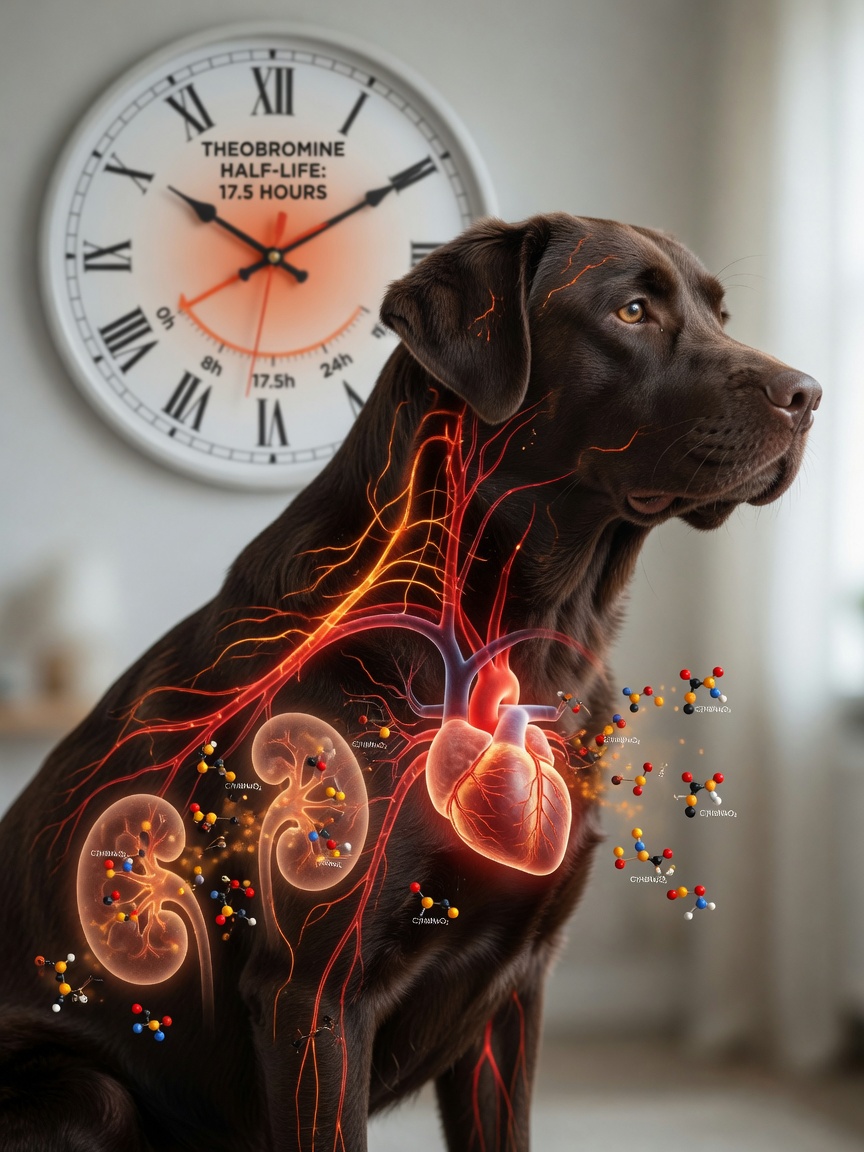
Schokolade enthält zwei Substanzen, die für Hunde hochgiftig sind: Theobromin und Koffein. Beide sind Methylxanthine — stimulierende Verbindungen, die der Mensch schnell und sicher verstoffwechselt. Hunde können das nicht. Ihr Körper verarbeitet diese Chemikalien nur mit einem Bruchteil der Geschwindigkeit, mit der Menschen das tun, wodurch sie sich im Blutkreislauf bis zu tödlichen Konzentrationen anreichern.
Theobromin ist der Hauptverursacher. Es stimuliert das zentrale Nervensystem, beschleunigt die Herzfrequenz und wirkt als Diuretikum. Im Organismus eines Hundes hat Theobromin eine Halbwertszeit von etwa 17,5 Stunden — das bedeutet, dass der Körper des Hundes fast einen ganzen Tag braucht, nur um die Hälfte der aufgenommenen Menge zu eliminieren. Während dieser Zeit schädigt die Verbindung aktiv Herz, Nieren und Nervensystem des Hundes.
Koffein verschärft das Problem, indem es zusätzlich zur Theobrominbelastung weiteren kardiovaskulären und neurologischen Stress verursacht. Zusammen können diese beiden Verbindungen innerhalb von Stunden nach der Aufnahme eine Kaskade lebensbedrohlicher Ereignisse auslösen.
Theobromingehalt nach Schokoladenart — Die Gefahrentabelle
Nicht jede Schokolade ist gleich gefährlich, aber keine davon ist sicher. Je dunkler und konzentrierter die Schokolade, desto höher der Theobromingehalt und desto tödlicher wird sie.
| Schokoladenart | Theobromin pro 100g | Gefahrenstufe |
|---|---|---|
| Backschokolade / ungesüßte Schokolade | 1.200–1.500 mg | EXTREM |
| Dunkle Schokolade (70–85%) | 800–900 mg | SEHR HOCH |
| Dunkle Schokolade (50–70%) | 400–600 mg | HOCH |
| Milchschokolade | 150–220 mg | MITTEL–HOCH |
| Kakaopulver | 600–800 mg | SEHR HOCH |
| Weiße Schokolade | <1 mg | Sehr niedrig (trotzdem nicht sicher) |
Um das in eine erschreckende Perspektive zu rücken: Eine toxische Dosis Theobromin für Hunde beträgt etwa 20 mg pro Kilogramm Körpergewicht. Für einen kleinen 5 kg schweren Hund (etwa 11 lbs) können bereits 7 Gramm Backschokolade — weniger als eine Viertelunze — eine schwere Vergiftung verursachen. Ein einziges Stück dunkler Backschokolade könnte einen Chihuahua oder einen Toypudel töten.
Symptome einer Schokoladenvergiftung bei Hunden
Die Symptome beginnen in der Regel innerhalb von 6 bis 12 Stunden nach der Aufnahme, können bei großen Mengen aber auch früher auftreten. Der Verlauf ist schnell und brutal:
Frühe Symptome (1–6 Stunden):
- Erbrechen und Durchfall (oft die ersten Anzeichen)
- Übermäßiger Durst und vermehrtes Wasserlassen
- Unruhe, Hyperaktivität, Umherlaufen
- Hecheln und Speicheln
Fortgeschrittene Symptome (6–12 Stunden):
- Muskelzittern und Zuckungen
- Erhöhte Herzfrequenz (Tachykardie) und unregelmäßiger Herzschlag
- Bluthochdruck
- Extreme Unruhe oder Winseln
Schwere / lebensbedrohliche Symptome:
- Krampfanfälle
- Herzrhythmusstörungen
- Atemversagen
- Koma und Tod
Einer der gefährlichsten Aspekte der Schokoladenvergiftung ist, dass Besitzer oft abwarten, ob sich die Symptome bessern, bevor sie einen Tierarzt anrufen. Warten Sie nicht. Wenn ein Hund erst einmal Krampfanfälle hat oder ein kardiales Ereignis eintritt, sind die Behandlungsmöglichkeiten stark eingeschränkt. In dem Moment, in dem Sie wissen oder vermuten, dass Schokolade aufgenommen wurde, erfolgt der Anruf bei Ihrem Tierarzt sofort — nicht nachdem Sie „schauen, wie es ihm geht“.
Versteckte Schokoladenquellen, die Sie kennen müssen
Schokolade kommt nicht nur in Riegelform vor. Hundehalter müssen bei diesen häufigen versteckten Quellen wachsam sein:
- Backwaren — Brownies, Kekse, Kuchen, Muffins
- Proteinpulver und Nahrungsergänzungsmittel mit Schokoladengeschmack
- Trinkkakao-Mischungen
- Schokoladenüberzogene Nüsse, Rosinen oder Früchte (doppelt giftig, wenn sie Rosinen oder Macadamianüsse enthalten)
- Schokoladeneis
- Getränke mit Mokkageschmack, die in Reichweite eines Hundes gelassen werden
- Adventskalender und festliche Geschenke, die unter dem Weihnachtsbaum liegen
In der Festtagszeit — Halloween, Weihnachten, Ostern, Valentinstag — steigen die Fälle von Schokoladenvergiftungen in tierärztlichen Notfallkliniken dramatisch an. Lassen Sie Schokolade in diesen Zeiten niemals für Hunde zugänglich, auch nicht in Tüten oder Geschenkboxen, die versiegelt erscheinen.
Was tun, wenn Ihr Hund Schokolade frisst — Handeln Sie sofort
- Geraten Sie nicht in Panik, sondern handeln Sie sofort. Jede Minute zählt.
- Stellen Sie fest, welche Schokoladensorte gefressen wurde, und schätzen Sie die Menge so gut wie möglich.
- Notieren Sie das Gewicht Ihres Hundes — das bestimmt, wie ernst die Aufnahme ist.
- Rufen Sie sofort Ihren Tierarzt an oder, außerhalb der Sprechzeiten, das ASPCA Animal Poison Control: 888-426-4435 (es können Gebühren anfallen) oder die Pet Poison Helpline: 855-764-7661.
- Lösen Sie KEIN Erbrechen aus, es sei denn, Sie werden ausdrücklich von einer tierärztlichen Fachkraft dazu angewiesen.
- Begeben Sie sich in eine tierärztliche Notfallklinik, wenn Sie dazu angewiesen werden. Zögern Sie nicht.
Die Behandlung beim Tierarzt kann ausgelöstes Erbrechen (wenn die Aufnahme erst kürzlich erfolgte), Aktivkohle zur Bindung der Toxine, intravenöse Flüssigkeiten, Medikamente zur Kontrolle der Herzfrequenz, Muskelrelaxantien gegen das Zittern und in schweren Fällen Antikonvulsiva umfassen. Es gibt kein Gegenmittel für eine Theobrominvergiftung — die Behandlung ist unterstützend und muss so früh wie möglich beginnen.
Was ist mit Johannisbrot? Eine sichere Alternative
Wenn Sie Ihrem Hund ein „schokoladenähnliches“ Leckerchen geben möchten, ist Johannisbrot eine sichere, von Natur aus süße Alternative, die vollständig frei von Theobromin und Koffein ist. Viele handelsübliche Hundeleckerchen werden speziell mit Johannisbrot als hundesicheres Schokoladensubstitut hergestellt. Achten Sie auf Hundeleckerchen, die ausdrücklich als johannisbrotaromatisiert gekennzeichnet sind — sie sehen aus und riechen ähnlich wie Schokolade, bergen aber keine der Gefahren.
- Schokolade ist für Hunde giftig aufgrund von Theobromin und Koffein — Verbindungen, die Hunde nicht sicher verstoffwechseln können.
- Backschokolade und dunkle Schokolade sind am tödlichsten; selbst winzige Mengen können einen kleinen Hund töten.
- Zu den Symptomen gehören Erbrechen, Zittern, Krampfanfälle und Herzversagen.
- Es gibt keine sichere Menge Schokolade für Hunde — null ist die einzig akzeptable Menge.
- Wenn Ihr Hund Schokolade frisst, rufen Sie sofort einen Tierarzt oder die Giftnotrufzentrale an — warten Sie nicht auf Symptome.
- Verwenden Sie Hundeleckerchen auf Johannisbrotbasis als sichere Alternative.
Wissenschaftliche Quellen
- Stidworthy MF, Bleakley JS, Cheeseman MT, Kelly DF. „Chocolate poisoning in dogs.“ Vet Rec. 1997;141(2):28. PMID: 9253768.
- Gwaltney-Brant SM. „Chocolate intoxication.“ Vet Med. 2001;96(2):108–111.
- Brutlag A, Hovda L. „Methylxanthine toxicosis in dogs and cats.“ Vet Clin North Am Small Anim Pract. 2018;48(6):1087–1099. PMID: 30126580.