
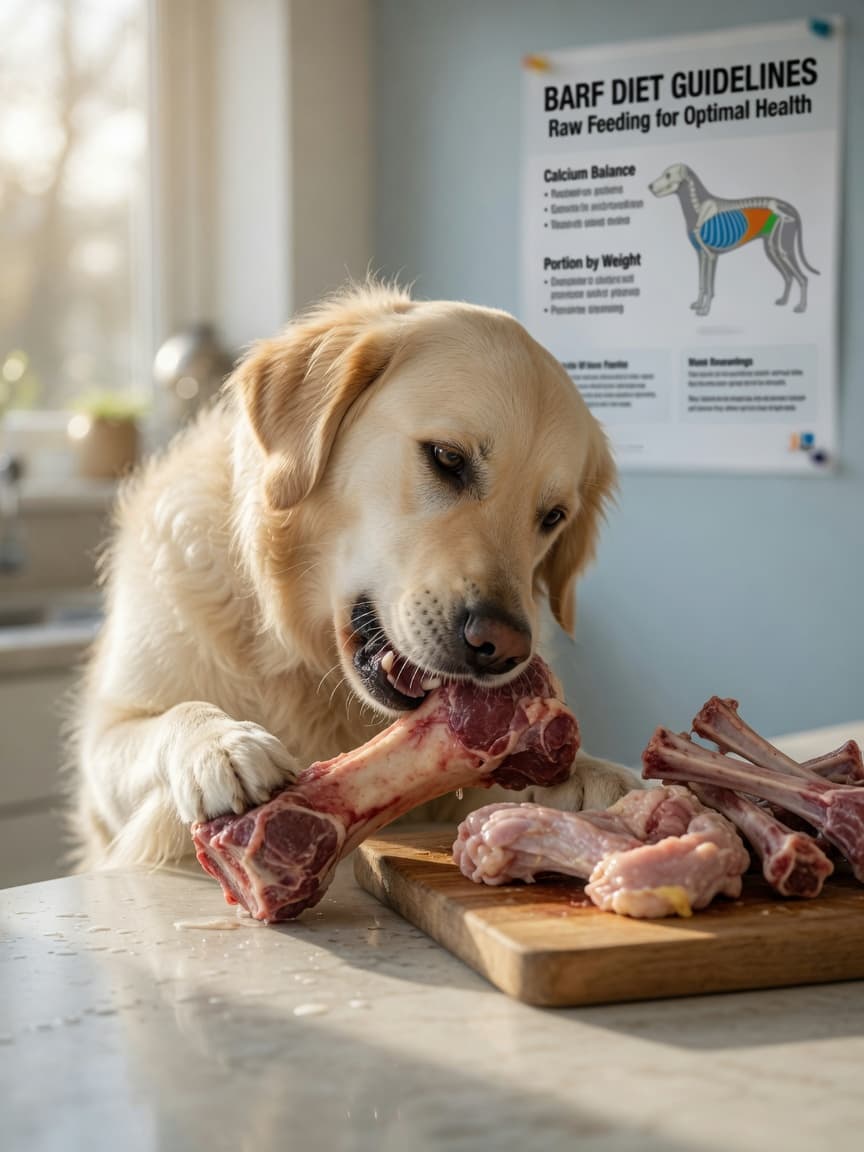
Ossos crus para cães: quais são seguros, quais são mortais
Poucos temas da nutrição canina geram tanto desacordo — entre médicos veterinários, entre defensores da alimentação crua e entre donos ansiosos — como a questão dos ossos. A verdade situa-se entre os extremos: os ossos crus podem oferecer benefícios genuínos, mas os riscos são reais e dependem muito do tipo de osso, do tamanho do cão, da supervisão e de fatores de saúde individuais. Este artigo dá-lhe o enquadramento baseado na evidência para tomar uma decisão informada.
A distinção entre osso cru e osso cozinhado: porque é tão importante
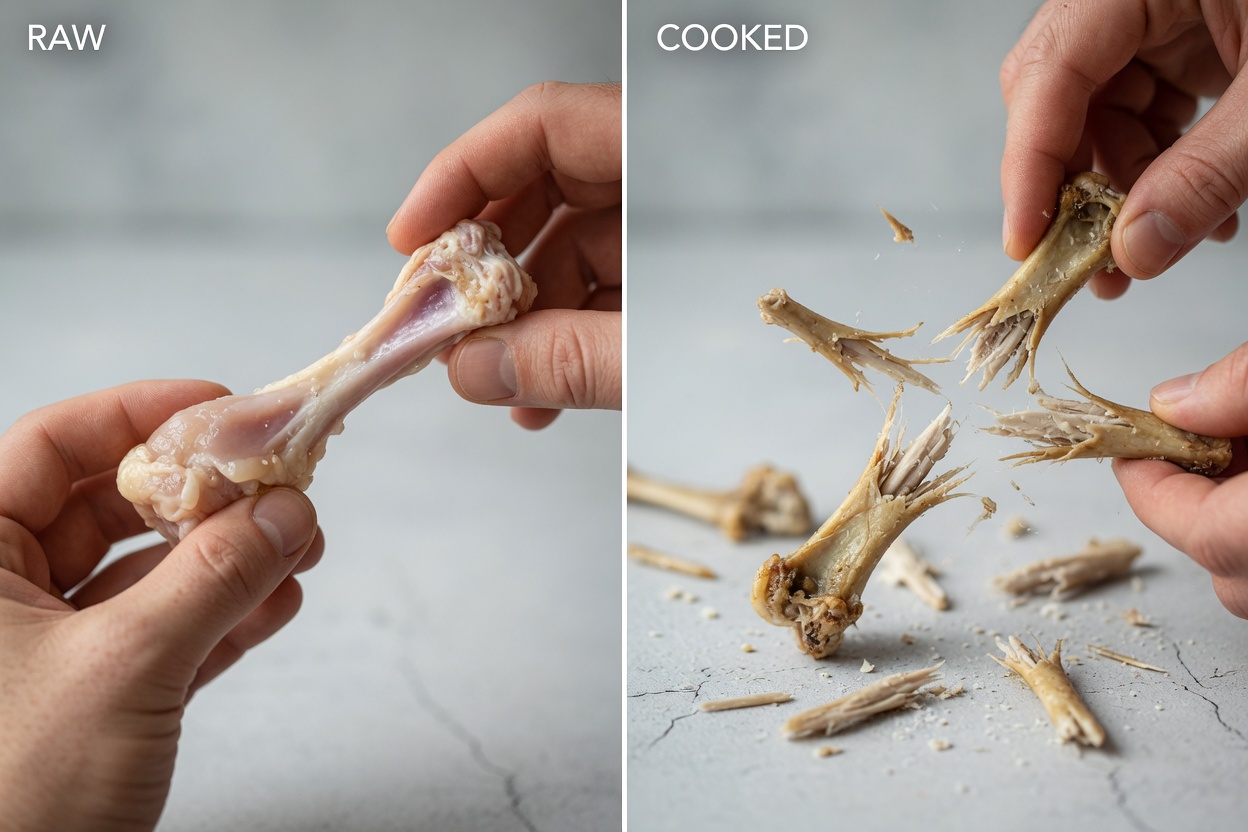
Um osso cru e um osso cozinhado do mesmo tipo são objetos fundamentalmente diferentes. Eis a razão:
Os ossos crus conservam a sua humidade natural, o colagénio e a elasticidade. Fletem sob pressão em vez de se estilhaçarem. Quando roídos, desgastam-se normalmente de forma progressiva em pedaços mais pequenos e mais moles, que são geralmente digeríveis — em particular os ossos mais pequenos e moles das aves.
Os ossos cozinhados sofreram alterações estruturais significativas. O calor desnatura a matriz de colagénio que confere flexibilidade ao osso. Há perda de humidade. O resultado é uma estrutura rígida e quebradiça que se fratura sob pressão em fragmentos afiados como lâminas. Estes fragmentos podem:
- Penetrar nos tecidos moles da boca, da garganta ou do esófago
- Causar perfuração intestinal (uma emergência cirúrgica com elevada mortalidade)
- Formar uma impactação nos intestinos, exigindo cirurgia de urgência
- Lascar-se e alojar-se na traqueia, causando asfixia
Os ossos fumados, os ossos secos e os «snacks de osso» comprados em loja que foram processados comercialmente a altas temperaturas acarretam riscos semelhantes e devem ser abordados com igual cautela.
Tipos de ossos crus seguros por tamanho do cão
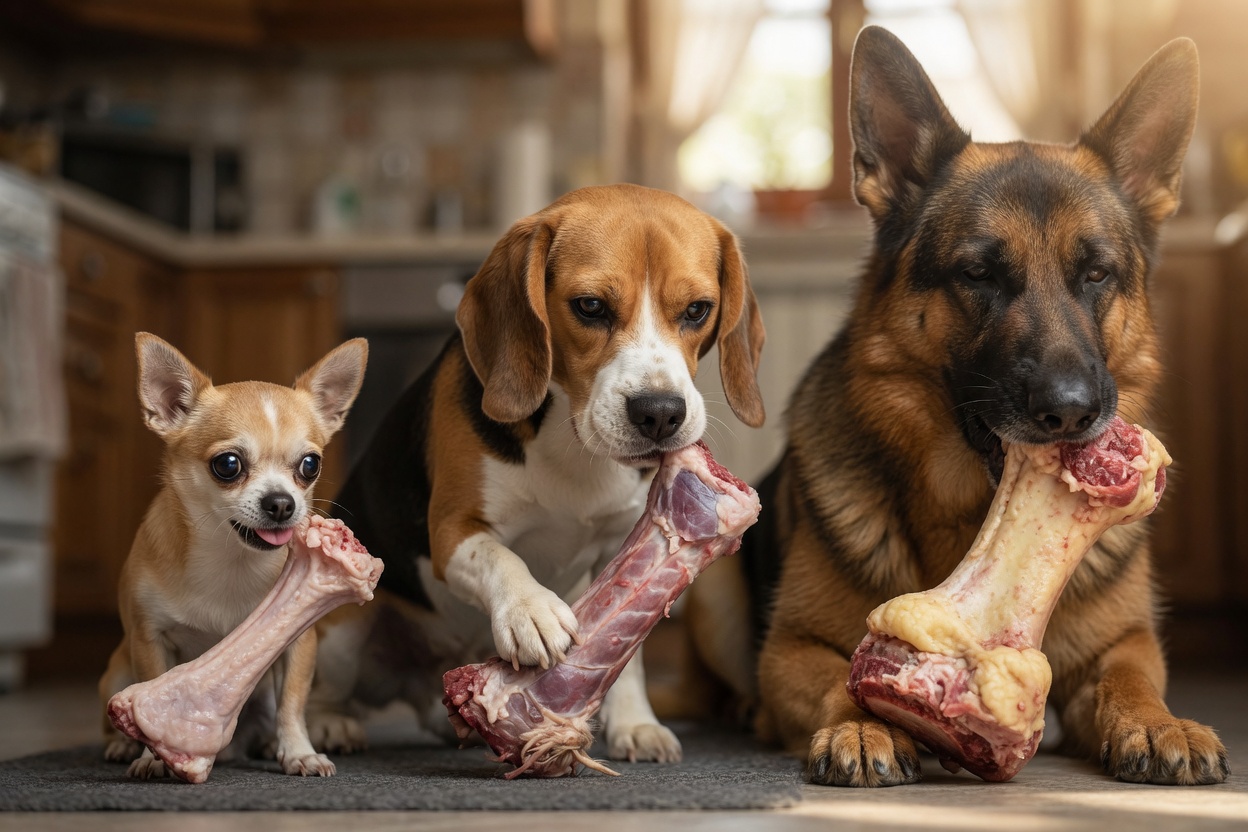
A regra cardinal da escolha do osso: o osso tem de ser suficientemente grande para que o cão não o possa engolir inteiro, mas suficientemente mole para que o cão não o consiga estilhaçar e fraturar os próprios dentes. O tamanho é tudo.
Cães de pequeno porte (menos de 10 kg / 22 lbs)
- Pescoços de galinha (crus): Moles, flexíveis e de tamanho adequado para cães pequenos. Ricos em cartilagem e osso comestível. Um dos ossos iniciais mais universalmente recomendados para raças pequenas.
- Asas de galinha (cruas): Ligeiramente maiores do que os pescoços; adequadas para cães de 5 kg ou mais. Vigie para garantir que o cão mastiga em vez de engolir de uma vez.
- Ossos de coelho (carcaça inteira, crua): Ossos pequenos e moles, totalmente digeríveis para cães pequenos; frequentemente usados em rotações de refeições cruas.
- Pescoços de pato (crus): Ligeiramente mais densos do que os pescoços de galinha; adequados para cães no limite superior da categoria de porte pequeno.
Cães de porte médio (10–25 kg / 22–55 lbs)
- Carcaças de galinha (cruas): Galinha crua inteira após remoção da carne; proporciona enriquecimento pela mastigação e osso comestível.
- Pescoços de peru (crus): Densos, cartilaginosos e carnudos; excelentes para cães de porte médio com bons hábitos de mastigação.
- Pescoços de cordeiro (crus): Proporção osso/carne adequada; mais densos do que as aves, mas ainda manejáveis.
- Costelas de vaca (cruas, com carne): Suficientemente grandes para evitar que sejam engolidas de uma vez; proporcionam tempo de mastigação prolongado.
Cães de grande porte (mais de 25 kg / 55 lbs)
- Ossos de articulação (joelho) de vaca (crus): Ossos articulares grandes e densos que mantêm ocupados os mastigadores poderosos durante longos períodos. A cartilagem e o tecido conjuntivo fornecem nutrientes de suporte articular. Substitua quando estiverem desgastados até um tamanho que possa ser engolido.
- Ossos com medula de vaca (crus): Secções cilíndricas de ossos grandes das pernas. Ricos em gordura — limite a frequência em cães propensos a pancreatite. Vigie a possibilidade de fratura dentária nas secções muito densas.
- Secções de fémur de bisonte ou de vaca (cruas): Adequadas para raças grandes e poderosas. Tenha em conta que as secções mais duras do fémur podem fraturar os dentes carniceiros (os grandes pré-molares de corte), mesmo em forma crua.
Ossos perigosos: nunca dê estes
| Tipo de osso | Seguro / Não seguro | Nível de risco | Porte de cão adequado | Principal preocupação |
|---|---|---|---|---|
| Ossos de galinha cozinhados | NÃO SEGURO | CRÍTICO | Nenhum | Lascam-se em fragmentos afiados; perfuração intestinal |
| Ossos de costeleta de porco (cozinhados ou crus) | NÃO SEGURO | ELEVADO | Nenhum | Lascam-se perigosamente; além disso, o elevado teor de gordura desencadeia pancreatite |
| Ossos de costela (cozinhados) | NÃO SEGURO | CRÍTICO | Nenhum | Formação de lascas; risco de obstrução |
| Ossos de bife T-bone / ribeye | CAUTELA | ELEVADO se cozinhados | Apenas cães de grande porte, se crus | Os ossos planos podem lascar-se; a forma do T-bone cria risco de engolir |
| Pescoço de galinha cru | SEGURO | BAIXO | Pequeno a médio | Risco de engolir de uma vez em comedores rápidos; supervisione |
| Osso de articulação de vaca cru | SEGURO | BAIXO–MODERADO | Médio a grande | Substituir quando ficar pequeno pelo desgaste; elevado teor de gordura |
| Ossos comerciais fumados/secos | NÃO SEGURO | ELEVADO | Nenhum | O processamento torna-os quebradiços como os ossos cozinhados |
| Pescoço de peru cru | SEGURO | BAIXO | Médio a grande | Excelente fonte de cartilagem e enriquecimento pela mastigação |
Benefícios dentários dos ossos crus
Ao contrário da ração seca, que praticamente não traz benefício dentário, os ossos crus podem contribuir de forma significativa para a saúde oral através de uma ação mecânica de raspagem, à medida que o cão rói e dilacera a superfície do osso. Estudos em cães alimentados com ossos crus carnudos documentaram menor acumulação de placa e de cálculo dentário em comparação com cães alimentados apenas com alimentos processados.
O Veterinary Oral Health Council (VOHC) não avaliou formalmente os ossos crus como categoria, mas o princípio mecânico — contacto de mastigação lateral sustentado contra uma superfície ligeiramente abrasiva — é coerente com o modo de funcionamento das barras dentárias aprovadas. A diferença fundamental é que os ossos crus proporcionam esse contacto através de um comportamento natural e não através de um produto desenhado para o efeito.
No entanto, os ossos demasiado duros (ossos densos de suporte de carga, ossos congelados) acarretam risco de fratura em lasca dos dentes carniceiros — uma lesão dolorosa e dispendiosa que exige extração veterinária ou tratamento endodôntico. A regra prática: se não conseguir deixar uma marca com a unha do polegar no osso, ele é demasiado duro.
Riscos de asfixia e de obstrução
Mesmo os ossos crus seguros acarretam riscos que têm de ser geridos:
- Engolir de uma vez: Alguns cães, em particular Labradores, Golden Retrievers e raças muito motivadas pela comida, tentam engolir os ossos inteiros. Segure o osso durante os primeiros minutos se souber que o seu cão tem esse hábito, ou escolha um osso substancialmente maior do que a boca do cão.
- Obstrução: Mesmo fragmentos de osso completamente mastigados podem agregar-se no intestino e formar uma impactação, sobretudo em cães propensos a constipação intestinal. Fezes brancas e calcárias após a ingestão de osso indicam sobrecarga de cálcio — reduza a frequência.
- Corpo estranho esofágico: Um fragmento de osso alojado no esófago é uma emergência cirúrgica. Os sinais incluem deglutição excessiva, engasgo, hipersalivação e extensão do pescoço. Procure assistência veterinária imediatamente.
Orientações de supervisão
Recomendações de frequência
Os ossos crus não são um alimento diário de base — são um complemento a uma dieta equilibrada:
- Ossos comestíveis (pescoços e asas de galinha): Podem ser incorporados 3–5 vezes por semana como parte de uma dieta crua, contando para a ingestão total diária de cálcio
- Ossos recreativos (articulações, medula): 1–2 vezes por semana, 20–30 minutos por sessão; retire e refrigere ou descarte depois da sessão
- Cães com dietas comerciais completas: Use ossos recreativos apenas como enriquecimento e não como fonte de cálcio
Contraindicações: quando não dar ossos
Os ossos crus não são adequados para todos os cães. Evite dar ossos nas seguintes situações:
- Historial de pancreatite: A medula óssea rica em gordura e os cortes gordurosos podem desencadear crises agudas de pancreatite, que podem ser fatais.
- Doença dentária ou dentes fraturados: Roer ossos com dentes comprometidos acarreta risco de nova fratura e de dor. Faça uma avaliação dentária antes de introduzir ossos.
- Comportamento de guarda de recursos: Cães que rosnam, ficam tensos ou tentam morder quando alguém se aproxima de itens de elevado valor representam um risco de segurança para pessoas e outros animais quando recebem um osso. Trate a guarda de recursos com um treinador profissional antes de introduzir ossos.
- Recuperação pós-cirúrgica ou doença intestinal: Cães com cirurgia abdominal recente, inflamação intestinal ou historial de obstruções não devem receber ossos sem autorização veterinária explícita.
- Cachorros muito jovens (com menos de 12 semanas) ou cães geriátricos com fragilidade dentária
- Cães imunocomprometidos: A carne e os ossos crus transportam agentes patogénicos bacterianos, incluindo Salmonella e Campylobacter; cães sob medicação imunossupressora têm risco elevado de infeção sistémica.
O que dizem os médicos veterinários
A comunidade veterinária está genuinamente dividida quanto à alimentação com ossos crus, e essa divisão reflete uma incerteza real e não dogma. A American Veterinary Medical Association (AVMA) recomenda não usar alimentação crua, invocando os riscos de agentes patogénicos. Muitos nutricionistas veterinários certificados defendem o uso supervisionado de ossos crus como enriquecimento e apoio dentário, sobretudo em cães que comem essencialmente dietas cruas.
Os veterinários de urgência vêem os piores desfechos — impactações, perfurações, dentes fraturados — e a sua cautela é bem fundamentada. Os donos devem ponderar estes desfechos face aos benefícios genuínos (saúde dentária, enriquecimento comportamental, diversidade nutricional) e tomar decisões adequadas ao seu cão em particular, à sua própria capacidade de supervisão e às orientações específicas do seu médico veterinário.
- Os ossos cozinhados são sempre perigosos — o calor torna-os quebradiços e propensos a lascar-se em fragmentos afiados. Isto inclui ossos de galinha, de porco e de vaca provenientes de refeições cozinhadas.
- Os ossos crus conservam a elasticidade e são geralmente mais seguros; as melhores escolhas são ossos de aves de tamanho adequado (pescoços e asas de galinha) para cães pequenos e ossos de articulação de vaca para raças grandes.
- Os ossos crus proporcionam benefícios dentários reais através da raspagem mecânica — ao contrário da ração seca, que não limpa os dentes.
- Supervisione sempre o consumo de ossos; retire o osso quando estiver roído até um tamanho que possa ser engolido ou quando o cão perder o interesse.
- Os ossos estão contraindicados em cães com pancreatite, doença dentária, guarda de recursos, recuperação pós-cirúrgica ou imunocomprometimento.
- Aponte para 1–2 sessões de ossos recreativos por semana, cada uma com 20–30 minutos, e consulte o seu médico veterinário antes de começar — em particular se o seu cão tiver alguma condição de saúde existente.
- Marx FR, Machado GS, Pezzali JG, et al. Raw beef bones as chewing items to reduce dental calculus and the periodontal bacterial load in dogs. Aust Vet J. 2016;94(1–2):18–23. PMID: 26775699
- Freeman LM, Chandler ML, Hamper BA, Weeth LP. Current knowledge about the risks and benefits of raw meat–based diets for dogs and cats. J Am Vet Med Assoc. 2013;243(11):1549–1558. PMID: 24261527
- Thompson RR, Kelman M, Ward MP. Canine gastrointestinal foreign bodies: retrospective analysis of 116 cases. Aust Vet J. 2012;90(12):482–487. PMID: 23163813