
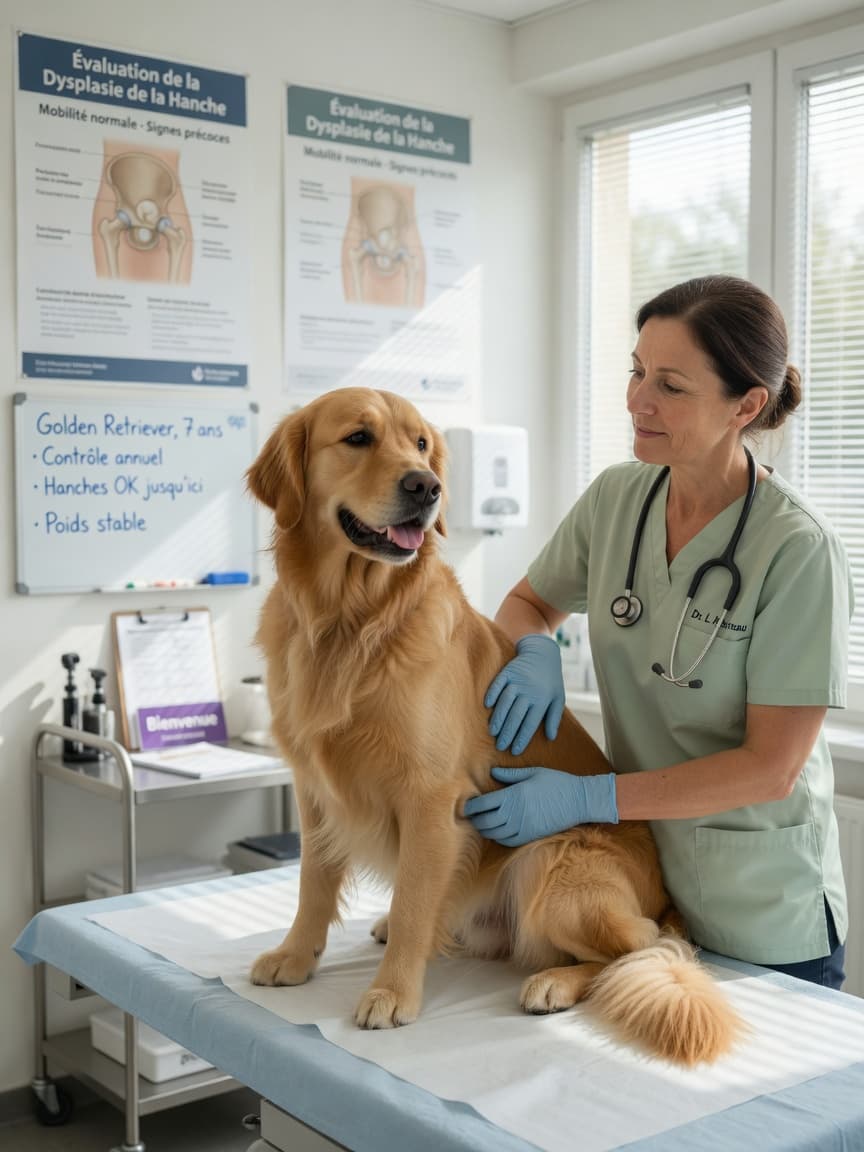
Os Golden Retrievers são uma das raças mais comumente afetadas pela displasia da anca, porque seus corpos grandes e de crescimento rápido colocam enorme pressão nas articulações da anca que já são geneticamente propensas a desenvolverem-se de forma instável. A coisa mais importante a saber é que o reconhecimento precoce e o manejo veterinário imediato fazem uma enorme diferença no conforto e na mobilidade a longo prazo do seu cão — esta é uma condição em que esperar e torcer raramente compensa.
Por Que Golden Retrievers São Propensos à Displasia da Anca
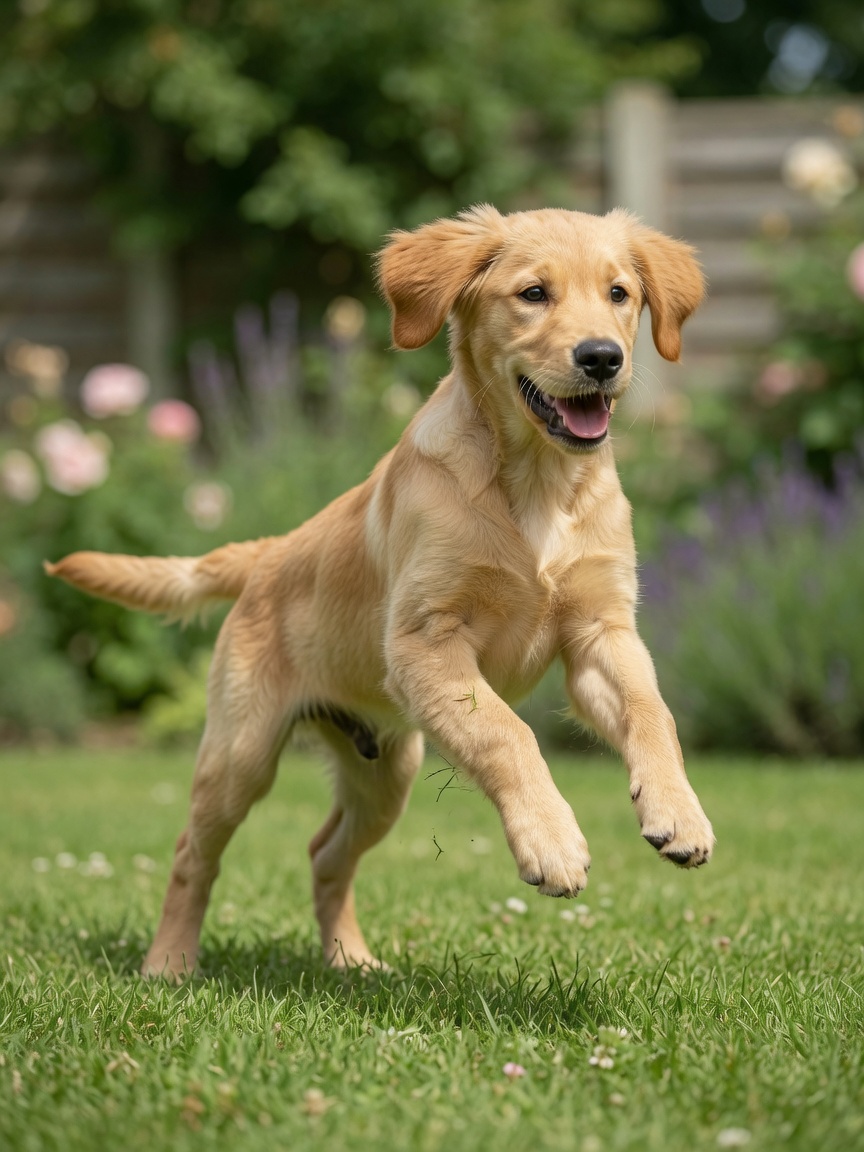
A displasia da anca é uma condição do desenvolvimento em que a articulação esférica da anca não se forma nem se encaixa adequadamente. Em vez de a cabeça do fémur estar bem encaixada numa cavidade profunda e bem formada (o acetábulo), a articulação desenvolve-se com uma laxidão excessiva ou uma cavidade rasa. Com o tempo, esta instabilidade causa desgaste anormal, inflamação e eventualmente osteoartrite.
Os Golden Retrievers são uma raça grande com crescimento esquelético rápido durante a infância. Esta taxa de crescimento, combinada com uma predisposição genética transmitida através de linhagens de criação, significa que os tecidos moles que suportam a articulação da anca (músculos, ligamentos e cápsula articular) podem ter dificuldade em acompanhar o crescimento ósseo. O resultado é uma laxidão articular que pode começar a causar danos microscópicos muito antes de qualquer sintoma externo aparecer. A genética desempenha o papel dominante — a displasia da anca é uma condição hereditária, razão pela qual criadores responsáveis analisam o stock de criação usando esquemas de pontuação da anca antes do acasalamento.
O excesso de peso corporal, o crescimento rápido causado pelo excesso de alimentação e certos tipos de exercício de alto impacto durante a fase de crescimento podem piorar a expressão de uma predisposição genética subjacente, embora não causem a condição por si só num cão com genética de anca saudável.
Sinais e Sintomas Precoces para Observar
A displasia da anca pode apresentar-se em qualquer idade, mas muitos proprietários de Golden Retrievers notam pela primeira vez mudanças subtis na infância (a partir de cerca de cinco meses) ou na meia-idade conforme a osteoartrite se desenvolve. Os sinais para observar incluem:
- Dificuldade ou relutância em levantar-se do chão, particularmente após repouso
- Uma marcha de "coelho saltitante", em que as duas patas traseiras se movem juntas em vez de num passo alternado normal
- Rigidez que melhora uma vez aquecido, depois piora novamente após exercício
- Reduzido entusiasmo pelo exercício, saltar para o carro ou subir escadas
- Atrofia muscular sobre as coxas e região traseira, às vezes com uma frente mais larga e musculosa em comparação
- Uma claudicação intermitente ou persistente dos membros traseiros, às vezes pior em tempo frio ou húmido
- Um movimento da anca oscilante ou "bamboleante" ao caminhar
Como os Golden Retrievers são tipicamente estoicos e ansiosos por agradar, podem mascarar o desconforto por mais tempo do que o esperado, portanto as mudanças comportamentais subtis são frequentemente o primeiro indício em vez de dor óbvia.
Quando É uma Emergência
A displasia da anca em si é geralmente uma condição crónica e gradualmente progressiva em vez de uma emergência súbita. No entanto, deve procurar atenção veterinária urgente se o seu cão:
- De repente não conseguir suportar peso numa pata traseira
- Gritar de dor aguda, particularmente após uma queda, salto ou colisão
- Mostrar sinais de uma anca luxada, como uma pata mantida num ângulo anormal
- Ter claudicação súbita grave combinada com letargia, febre ou perda de apetite, que pode indicar uma infeção articular secundária ou lesão não relacionada
Estas situações podem representar uma lesão aguda sobreposta à instabilidade articular existente e precisam de uma avaliação veterinária no mesmo dia.
Diagnóstico
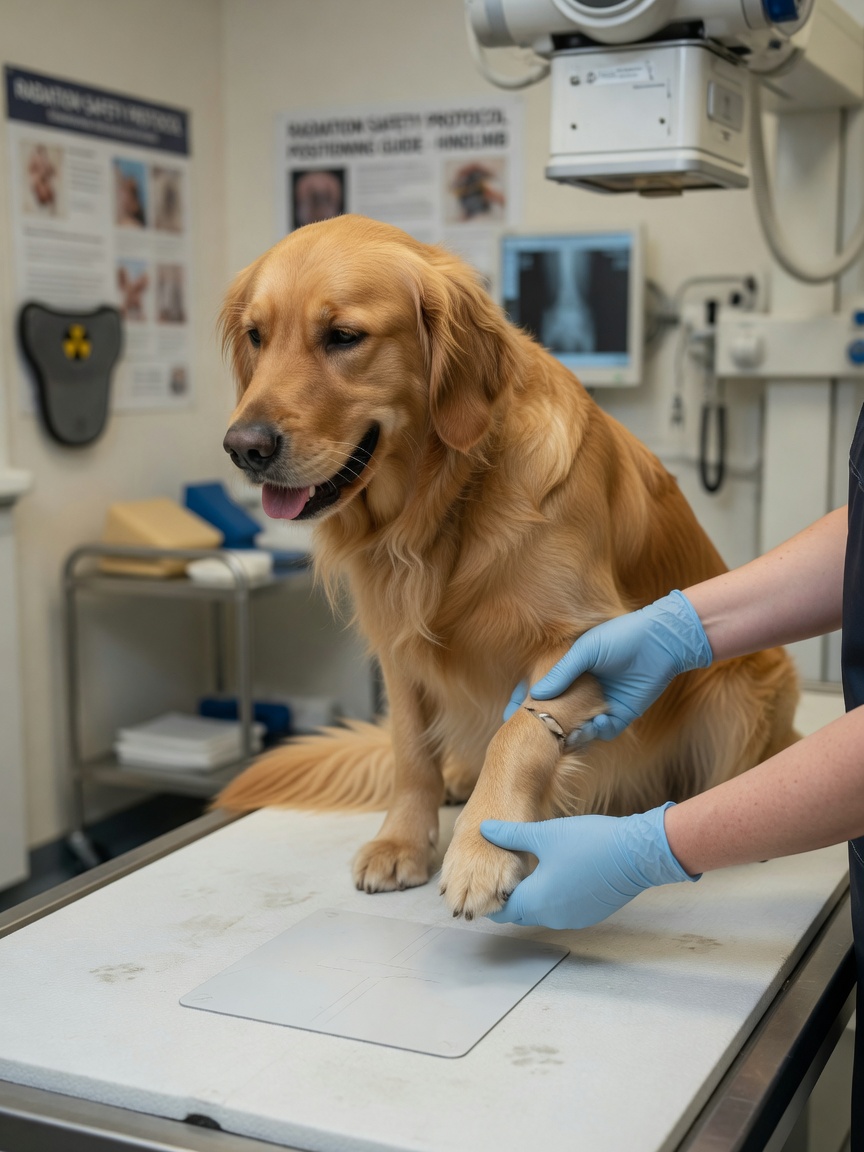
Um exame veterinário começa normalmente com uma avaliação da marcha, tónus muscular e manipulação das articulações da anca para verificar dor, amplitude de movimento reduzida ou laxidão (às vezes detetada através de manipulações específicas como o teste de Ortolani). O diagnóstico definitivo depende de radiografias tiradas sob sedação ou anestesia geral, que permitem um posicionamento preciso e avaliação da conformação articular, subluxação e eventuais mudanças artríticas precoces.
Para cães de criação, ou quando é necessário um planeamento cirúrgico mais detalhado, os veterinários podem usar esquemas formais de pontuação da anca (como o sistema BVA/KC de pontuação da anca no Reino Unido) ou imagens avançadas como tomografias computorizadas. O seu veterinário pode também recomendar análises sanguíneas e imagens adicionais para descartar outras causas de claudicação dos membros traseiros, uma vez que condições como a doença do ligamento cruzado podem apresentar-se de forma semelhante.
Opções de Manejo e Tratamento
O tratamento é adaptado à idade, gravidade e estilo de vida do cão individual, e frequentemente combina várias abordagens:
- Gestão do peso: Manter o seu cão magro reduz significativamente a carga nas articulações afetadas e é uma das intervenções mais eficazes e de baixo custo disponíveis.
- Exercício controlado: Atividade regular e de baixo impacto, como caminhadas com trela e natação, ajuda a manter a massa muscular e a mobilidade articular sem tensão excessiva.
- Alívio da dor e anti-inflamatórios: Os medicamentos anti-inflamatórios não esteroides prescritos pelo seu veterinário podem controlar a dor e a inflamação, particularmente conforme a osteoartrite se desenvolve.
- Suplementos articulares: Produtos contendo glucosamina, condroitina ou ácidos gordos ómega-3 são comumente utilizados para apoiar a saúde articular, embora os proprietários devam discutir as evidências e expectativas com o seu veterinário.
- Fisioterapia e hidroterapia: Estas podem melhorar a força muscular, flexibilidade e conforto geral, e são frequentemente recomendadas juntamente com outros tratamentos.
- Opções cirúrgicas: Para cães mais gravemente afetados, procedimentos que variam desde excisão da cabeça e pescoço femoral até substituição total da anca podem ser considerados. Cães mais jovens com laxidão significativa também podem ser candidatos a procedimentos como sinfisiodese púbica juvenil ou osteotomia pélvica tripla, realizados antes da artrite se ter desenvolvido. O seu veterinário ou um especialista ortopédico de referência aconselhará sobre a opção mais adequada com base na conformação articular e idade individuais do seu cão.
Prevenção e Cuidados Diários
Embora a componente genética da displasia da anca seja não modificável, existem várias medidas que pode tomar para minimizar o seu impacto e melhorar a qualidade de vida do seu cão:
Nutrição Adequada desde o Início
Durante a infância, um crescimento demasiado rápido pode piorar a displasia da anca. Para filhotes de Golden Retriever, escolha uma ração para cachorro de raça grande especificamente formulada com níveis de cálcio e fósforo apropriados, e evite suplementar com cálcio extra a menos que recomendado pelo seu veterinário. A ração deve apoiar o crescimento controlado, não acelerado. Uma vez adulto, uma ração para cães de qualidade, equilibrada e adequada ao seu nível de atividade ajudará a manter um peso corporal ideal.
Exercício Apropriado à Idade
Durante a infância (antes de 12-15 meses), evite exercício de alto impacto excessivo como corrida repetida, saltos ou escalada de escadas íngremes. Em vez disso, opte por caminhadas curtas e frequentes com trela com seu cachorro. Uma vez totalmente crescido, o exercício regular moderado é benéfico e ajuda a manter um peso saudável e uma musculatura forte que apoia as articulações.
Monitoramento Regular
Consulte o seu veterinário anualmente, ou com mais frequência se notar qualquer mudança na mobilidade ou comportamento. A detecção precoce de osteoartrite significa que pode iniciar o manejo anti-inflamatório enquanto o dano ainda é ligeiro.
Ambiente do Lar
Forneça camas de memória de espuma ou ortopédicas, almofadas macias para as áreas de repouso, e minimize os degraus ou forneça rampas se necessário. Em climas frios, um casaco mantém os músculos quentes e pode reduzir a rigidez matinal.
Suporte a Longo Prazo
À medida que a osteoartrite se desenvolve ou progride com a idade, trabalhe em conjunto com o seu veterinário para adaptar o plano de manejo — isto pode incluir ajustes nos medicamentos, fisioterapia, ou outras intervenções. O objectivo é manter a qualidade de vida e a mobilidade pelo máximo tempo possível.
Quando Consultar um Especialista
Uma referência para um cirurgião ortopédico especializado é recomendada se:
- O seu cachorro for diagnosticado com displasia da anca significativa e estiver a considerar cirurgia preventiva
- O seu cão não responde bem aos tratamentos conservadores
- Há uma possibilidade realista de procedimentos como triple pelvic osteotomy ou total hip replacement serem apropriados
- Você necessite de conselhos de diagnóstico avançado, como pontuação formal ou CT imaging
O Papel da Criação Responsável
Se está a considerar adicionar um Golden Retriever à sua família, escolha um criador que realize testes de displasia da anca (como pontuação BVA/KC ou OFA nos EUA) em progenitores antes da criação, e que forneça essa documentação. Embora nenhum criador possa eliminar completamente o risco genético, esta prática reduz substancialmente a probabilidade de displasia grave.
Perspetiva a Longo Prazo
Embora a displasia da anca seja uma condição vitalícia, a maioria dos Golden Retrievers com diagnóstico precoce e manejo apropriado vivem vidas felizes e ativas. A chave é reconhecer as mudanças iniciais, trabalhar de perto com o seu veterinário, e adaptar os cuidados conforme necessário ao longo dos anos. Com medicação, fisioterapia, exercício controlado e atenção ao peso, muitos cães desfrutam de qualidade de vida excelente e longevidade mesmo com displasia.
Aviso Legal: Este artigo destina-se apenas a fins educacionais. Sempre consulte o seu veterinário para diagnóstico, tratamento e conselhos médicos específicos adaptados ao seu cão.