
Pontos Essenciais
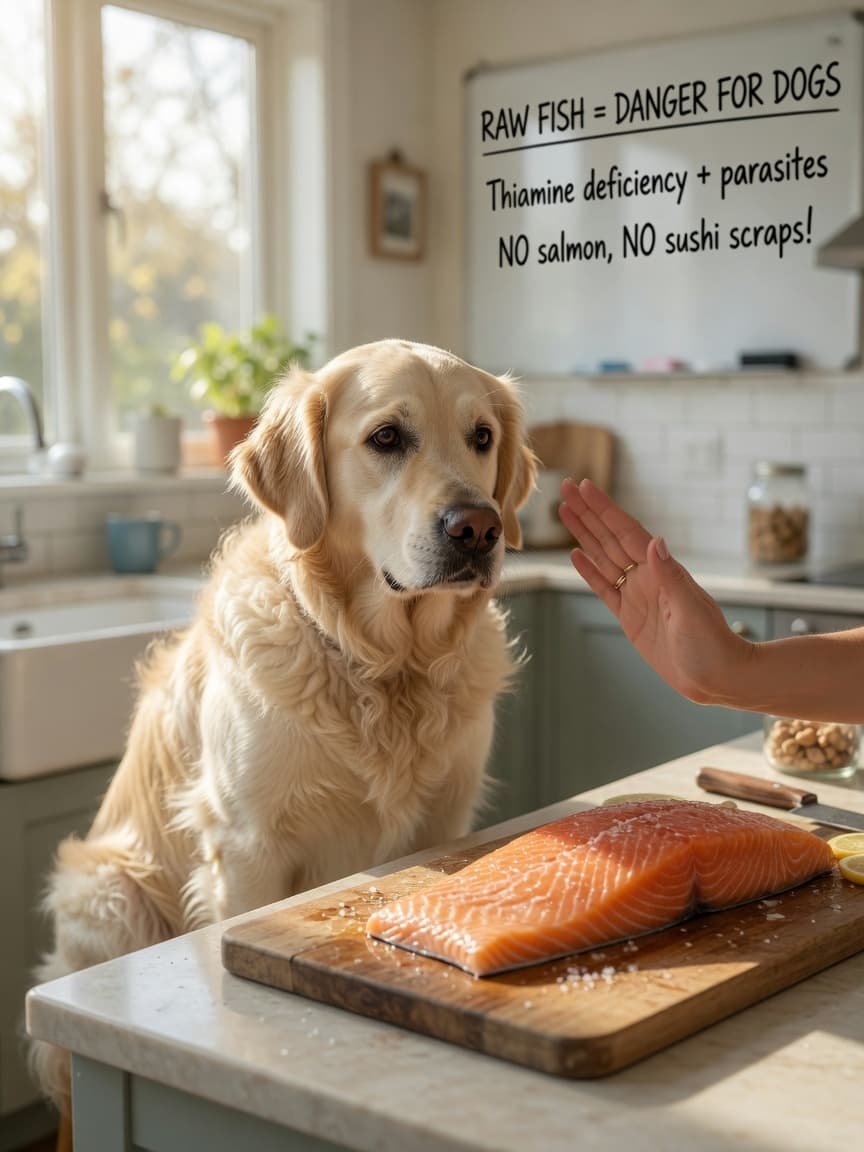
- Salmão cozinhado: SIM — o salmão bem cozinhado e sem espinhas é seguro e altamente nutritivo para cães.
- Salmão cru: NÃO — o salmão cru ou mal cozinhado pode causar a Doença do Envenenamento por Salmão (SPD), que é fatal se não for tratada.
- O salmão é rico em ácidos gordos ómega-3, proteína de alta qualidade e vitaminas do complexo B — todos benéficos para os cães.
- Retire todas as espinhas antes de servir. Nunca adicione sal, alho, cebola ou manteiga.
- Uma porção segura é aproximadamente 10g de salmão cozinhado por 450g (1 lb) de peso corporal, 1–2 vezes por semana.
- O salmão em conserva em água (sem sal adicionado) é geralmente seguro em pequenas quantidades.
- Se o seu cão comeu salmão cru e apresenta vómitos, diarreia ou febre, consulte um veterinário imediatamente — a SPD é uma emergência médica.
Introdução: O Salmão é Bom para Cães?
O salmão é frequentemente considerado um superalimento para os humanos — e os mesmos nutrientes que o tornam valioso para nós também beneficiam os nossos cães. Rico em ácidos gordos ómega-3, proteína completa e vitaminas essenciais, o salmão cozinhado pode ser um excelente complemento à dieta do seu cão.
Mas eis o que torna o salmão diferente da maioria dos outros alimentos saudáveis: na sua forma crua, o salmão pode matar o seu cão. Não por causa do peixe em si, mas por causa de um parasita microscópico que pode transportar. Isto não é um pormenor menor — é um facto crítico de segurança que todos os donos de cães devem compreender antes de partilhar salmão com o seu animal.
Neste guia, a nutricionista animal certificada Julia Wrenfield apresenta o quadro completo: os verdadeiros benefícios, os verdadeiros perigos, como preparar o salmão de forma segura, exatamente quanto dar e quais os alimentos comerciais para cães à base de salmão que vale a pena considerar.
Benefícios Nutricionais do Salmão para Cães
Uma porção de 100g de salmão do Atlântico cozinhado contém aproximadamente:
- 208 calorias
- 20g de proteína de alta qualidade — com um perfil completo de aminoácidos
- 13g de gordura — predominantemente gorduras insaturadas saudáveis
- 2.260mg de EPA + DHA (ácidos gordos ómega-3)
- Vitamina B12: 3,2mcg (318% da DDR humana — os cães têm necessidades semelhantes)
- Vitamina D: 447 IU — uma das poucas fontes alimentares
- Selénio: 36,5mcg — mineral antioxidante
- Niacina (B3): 8,6mg
- Potássio: 490mg
Ácidos Gordos Ómega-3: O Principal Benefício
O contributo de destaque do salmão para a saúde canina é o seu teor extraordinariamente elevado de EPA (ácido eicosapentaenoico) e DHA (ácido docosa-hexaenoico) — as duas formas mais biodisponíveis de ácidos gordos ómega-3. Ao contrário das fontes vegetais de ómega-3, como a linhaça (que fornecem ALA, um precursor que os cães convertem de forma muito ineficiente), o EPA e o DHA provenientes do peixe são utilizados diretamente pelo organismo.
A investigação revista por pares documenta de forma consistente os benefícios da suplementação com EPA e DHA em cães, incluindo a redução de marcadores inflamatórios, a melhoria da condição da pelagem, o reforço da função cognitiva em cachorros e cães seniores, e o apoio à saúde cardiovascular. Um estudo de referência publicado na JAVMA demonstrou que cães com osteoartrite alimentados com dietas enriquecidas com óleo de peixe ómega-3 apresentaram pontuações na placa de força significativamente melhores — uma melhoria mensurável da mobilidade — em comparação com cães alimentados com dietas à base de óleo de milho.[1]
Proteína de Alta Qualidade e Altamente Digestível
A proteína do salmão é completa — contém todos os aminoácidos essenciais de que os cães necessitam — e é altamente digestível, atingindo tipicamente coeficientes de digestibilidade superiores a 90%. Isto torna-a uma excelente fonte de proteína para cães com sensibilidades digestivas ou intolerâncias alimentares. Muitos dermatologistas veterinários recomendam o salmão como proteína nova em ensaios de dieta de eliminação em cães com suspeita de alergias a frango ou a carne de vaca.
Vitaminas e Minerais
A vitamina D é particularmente notável: os cães sintetizam muito pouca a partir da exposição solar e devem obtê-la principalmente através da dieta. A deficiência de vitamina D está associada a anomalias esqueléticas, disfunção imunitária e problemas cardiovasculares nos cães. O salmão é uma das fontes alimentares naturais mais ricas disponíveis. O selénio, por sua vez, atua sinergicamente com a vitamina E como antioxidante, protegendo as membranas celulares dos danos oxidativos.[2]
O Perigo do Salmão Cru: Doença do Envenenamento por Salmão
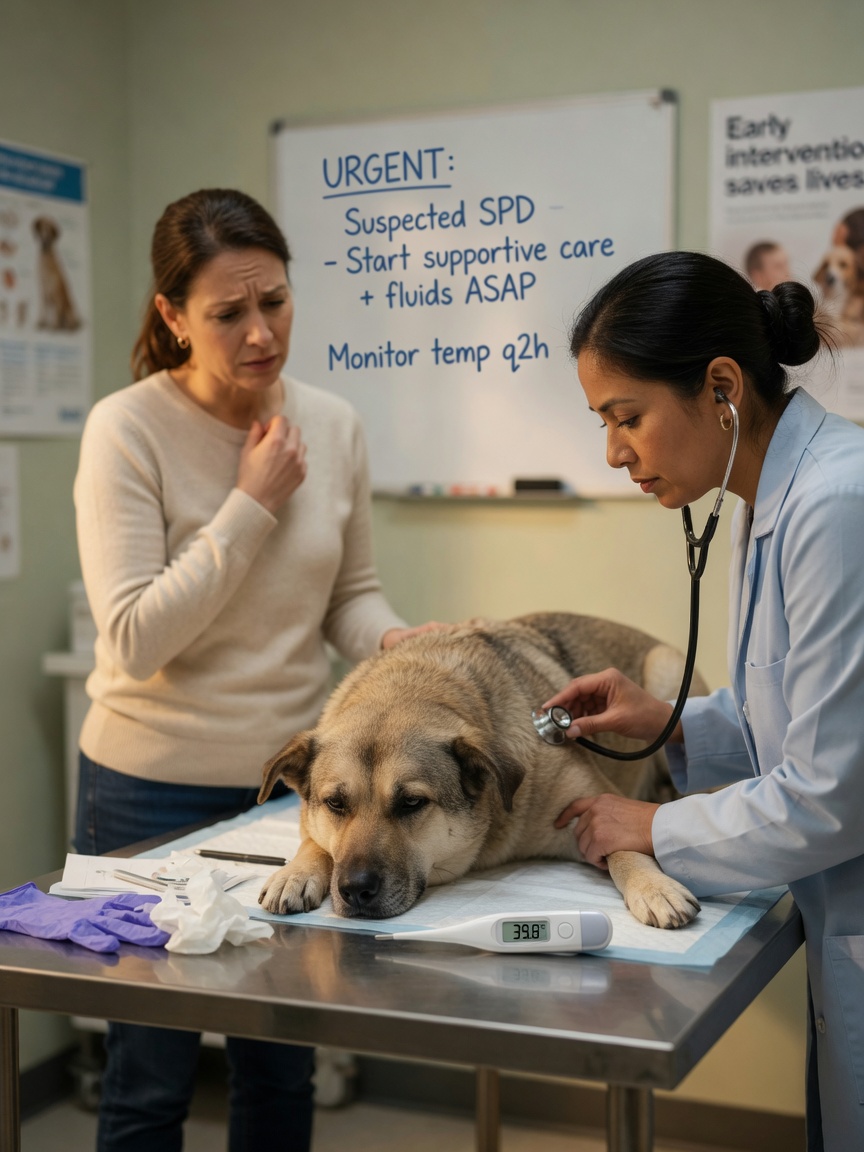
Esta secção é a parte mais importante deste artigo. Leia-a com atenção.
O salmão cru, fumado ou mal cozinhado — e outros peixes crus do Noroeste do Pacífico — podem causar a Doença do Envenenamento por Salmão (SPD), uma condição que é fatal em aproximadamente 90% dos casos não tratados.
O Que Causa a Doença do Envenenamento por Salmão?
A SPD não é causada diretamente pelo salmão. A cadeia de infeção envolve dois organismos:
- Nanophyetus salmincola — um parasita tremátode (fascíola) que infeta frequentemente peixes salmonídeos (salmão, truta, steelhead) na Costa do Pacífico da América do Norte. Os cães ingerem a fascíola ao comer peixe cru infetado.
- Neorickettsia helminthoeca — uma bactéria rickettsial que vive no interior da fascíola. Quando a fascíola é digerida, esta bactéria é libertada e causa a doença propriamente dita. É a Neorickettsia helminthoeca que mata os cães.[3]
A SPD está geograficamente concentrada no Noroeste do Pacífico dos Estados Unidos (Califórnia, Oregon, Washington) e em partes do Canadá, embora tenham sido notificados casos noutros locais devido a peixe importado. Não se sabe que o salmão do Atlântico transporte N. helminthoeca, mas outros peixes crus transportam parasitas diferentes. A regra mais segura, universalmente, é: nunca dê peixe cru aos cães.
Porque É a SPD Tão Perigosa?
A Neorickettsia helminthoeca ataca os gânglios linfáticos e espalha-se de forma sistémica. Os sinais clínicos surgem 6–10 dias após a ingestão de peixe infetado e agravam-se rapidamente. Sem tratamento antibiótico atempado (tipicamente tetraciclinas como a doxiciclina), a taxa de mortalidade em cães não tratados aproxima-se dos 90%.[3]
É fundamental saber que os gatos e os humanos não contraem a Doença do Envenenamento por Salmão — a condição é específica dos canídeos (cães, coiotes, raposas, lobos). Isto significa que um gato no mesmo agregado familiar pode comer peixe cru em segurança, sem qualquer risco, enquanto um cão que coma o mesmo pedaço pode morrer em poucos dias.
Sinais de Envenenamento por Salmão a Que Deve Estar Atento
Se o seu cão comeu salmão cru ou mal cozinhado nos últimos 6–10 dias e apresenta algum dos seguintes sinais, trate-o como uma emergência veterinária:
- Vómitos súbitos e intensos
- Diarreia com sangue ou aquosa
- Febre alta (acima de 40°C / 104°F)
- Perda de apetite / recusa total de comida
- Letargia e fraqueza extrema
- Gânglios linfáticos inchados (palpáveis por baixo da mandíbula, à frente dos ombros, atrás dos joelhos)
- Corrimento ocular ou nasal
- Perda de peso rápida
Não espere para ver se os sintomas melhoram. Contacte o seu veterinário imediatamente. A SPD é tratável quando detetada precocemente — o prognóstico com tratamento atempado é excelente. Sem tratamento, a maioria dos cães morre no prazo de 5–10 dias após o aparecimento dos sintomas.
Como Preparar Salmão de Forma Segura para Cães
A boa notícia: cozinhar elimina completamente tanto a fascíola como a bactéria Neorickettsia. Não é necessário evitar o salmão — basta cozinhá-lo corretamente.
Métodos de Confeção Seguros
- Assar: A melhor opção. Asse o salmão simples a 180°C (350°F) durante 20–25 minutos (consoante a espessura) até a temperatura interna atingir 63°C (145°F).
- Cozer a vapor: Excelente — preserva mais nutrientes do que os métodos de alta temperatura e fica completamente simples.
- Escalfar: Cozer em água simples é ideal para cães.
- Fritar numa frigideira antiaderente seca: Aceitável se não for adicionado óleo nem manteiga.
O Que Evitar
- Salmão cru ou fumado — o salmão fumado é tecnicamente cru e acarreta risco de SPD.
- Salmão com espinhas — as espinhas de peixe cozinhado estilhaçam-se facilmente e podem causar engasgamento, lacerações na boca ou perfuração intestinal. Retire sempre todas as espinhas antes de servir.
- Temperos de qualquer tipo — o sal, o alho, a cebola, o limão, a manteiga, as ervas aromáticas e os óleos podem todos causar danos que vão desde mal-estar digestivo (sal) até toxicidade grave (alho, cebola).
- Pele do salmão — a pele em si não é tóxica, mas é muito rica em gordura e pode desencadear pancreatite em cães suscetíveis, sobretudo em porções maiores. É preferível omiti-la.
Preparação Segura do Salmão Passo a Passo
- Compre salmão fresco ou congelado (qualquer variedade — Atlântico, sockeye, coho).
- Descongele completamente se estiver congelado.
- Retire todas as espinhas visíveis (passe o dedo ao longo da carne e use uma pinça de cozinha para extrair as que encontrar).
- Retire a pele.
- Cozinhe simples até a temperatura interna atingir pelo menos 63°C (145°F).
- Deixe arrefecer completamente antes de servir — nunca dê comida quente aos cães.
- Desfie em pedaços pequenos adequados ao tamanho do seu cão.
Quanto Salmão Podem os Cães Comer? Guia de Porções por Peso
O salmão deve ser um petisco ocasional ou um suplemento a uma dieta equilibrada — não a fonte primária de proteína, a menos que esteja a utilizar uma dieta comercial à base de salmão nutricionalmente completa. A orientação geralmente aceite para o peixe como petisco é de aproximadamente 10g de peixe cozinhado por 450g (1 lb) de peso corporal, oferecido 1–2 vezes por semana.
| Tamanho do Cão | Peso Aproximado | Tamanho da Porção Segura (cozinhado) | Frequência |
|---|---|---|---|
| Extra pequeno | Menos de 5kg (11 lbs) | 10–20g (cerca de 1 colher de sopa, desfiado) | Uma ou duas vezes por semana |
| Pequeno | 5–10kg (11–22 lbs) | 20–50g | Uma ou duas vezes por semana |
| Médio | 10–25kg (22–55 lbs) | 50–100g | Uma ou duas vezes por semana |
| Grande | 25–40kg (55–88 lbs) | 100–150g | Uma ou duas vezes por semana |
| Gigante | Mais de 40kg (88 lbs) | 150–200g | Uma ou duas vezes por semana |
Notas importantes: Estas são porções máximas ao nível de petisco, assumindo que a dieta regular do cão é nutricionalmente completa. Os cães com pancreatite, doença inflamatória intestinal ou doença renal ativa devem ter as porções de salmão discutidas com um veterinário, uma vez que o teor de gordura e os níveis de fósforo requerem consideração individual. Os cachorros podem comer pequenas quantidades de salmão cozinhado, mas as suas necessidades nutricionais são complexas — consulte o seu veterinário antes de adicionar salmão regularmente à dieta de um cachorro.
Salmão em Conserva: É Seguro para Cães?
O salmão em conserva pode ser uma alternativa conveniente e económica ao peixe fresco — e sim, é geralmente seguro para cães, com algumas ressalvas importantes.
O Que Procurar
- Conservado em água, não em óleo nem em salmoura. O salmão conservado em óleo tem demasiada gordura; a salmoura adiciona sódio em excesso.
- «Sem sal adicionado» ou «baixo teor de sódio». O salmão em conserva standard para humanos é demasiado salgado para os cães. Uma única lata de 213g de salmão em conserva normal pode conter mais de 800mg de sódio — demasiado para a maioria dos cães.
- Sem sabores, molhos ou temperos adicionados. O simples é sempre o melhor.
A Questão das Espinhas no Salmão em Conserva
O salmão em conserva contém frequentemente espinhas moles, cozinhadas sob pressão, que foram tornadas completamente macias e flexíveis — estas são geralmente seguras e, na verdade, fornecem um reforço útil de cálcio. No entanto, deve verificar o rótulo do produto e sentir o peixe entre os dedos antes de servir para confirmar que não restam fragmentos de espinha duros.
Quanto Salmão em Conserva?
Aplique as mesmas orientações de porção do salmão fresco cozinhado. Utilize-o como petisco ocasional ou cobertura da comida, não como alimento diário de base — mesmo as variedades com baixo teor de sódio contêm mais sódio do que o peixe fresco cozinhado em casa.
Alimentos Comerciais para Cães à Base de Salmão
Se quiser proporcionar ao seu cão acesso regular e fiável aos benefícios nutricionais do salmão sem o esforço de preparação, um alimento comercial de alta qualidade à base de salmão é a opção mais segura e prática. Estes produtos utilizam salmão cozinhado e sem espinhas como proteína principal e são formulados para cumprir normas nutricionais completas.
Ao escolher um alimento para cães à base de salmão, procure:
- Salmão (ou «farinha de salmão») listado como o primeiro ingrediente
- Declaração de adequação nutricional AAFCO ou FEDIAF para a fase de vida do seu cão
- Sem conservantes artificiais (BHA, BHT, ethoxyquin)
- Listas de ingredientes limitadas se o seu cão tiver sensibilidades conhecidas
Para os donos de cães europeus, a Zooplus dispõe de uma excelente gama de alimentos secos e húmidos para cães à base de salmão — incluindo opções sem cereais e fórmulas de proteína única ideais para cães com sensibilidades alimentares. As receitas de salmão das suas marcas próprias Rocco e Crave são particularmente populares e oferecem uma excelente relação qualidade nutricional/preço. A entrega está disponível na maior parte da Europa, frequentemente com portes grátis em encomendas acima de um determinado valor.
Perguntas Frequentes
Os cães podem comer pele de salmão?
A pele de salmão cozinhada não é tóxica para os cães, mas é muito rica em gordura e pode desencadear pancreatite — especialmente em cães predispostos à condição ou quando dada em grandes quantidades. O mais seguro é retirar a pele antes de servir. Se o seu cão receber ocasionalmente um pequeno pedaço de pele cozinhada, é pouco provável que cause danos, mas não deve ser um complemento regular.
Os cães podem comer salmão fumado?
Não. Apesar de ser um produto processado, o salmão fumado é tecnicamente cru — o processo de fumagem não atinge temperaturas suficientes para matar a Neorickettsia helminthoeca nem para destruir parasitas. O salmão fumado contém também níveis muito elevados de sódio, o que é prejudicial para os cães. Evite-o por completo.
Os cães podem comer salmão todos os dias?
Dar salmão cozinhado diariamente provavelmente não será prejudicial em porções adequadas, mas não é ideal como única fonte de proteína, a menos que se trate de uma dieta comercial nutricionalmente completa. Rodar as proteínas — salmão, frango, carne de vaca, peru — proporciona um espetro mais amplo de aminoácidos e micronutrientes. Procure dar 1–2 vezes por semana como petisco ou cobertura.
O meu cão comeu salmão cru. O que devo fazer?
Não entre em pânico, mas aja rapidamente. Contacte o seu veterinário imediatamente e informe-o de que o seu cão ingeriu salmão cru. Indique a quantidade aproximada consumida e a hora a que aconteceu. Não espere que os sintomas se desenvolvam — os sintomas de SPD surgem 6–10 dias após a ingestão, e o tratamento precoce melhora drasticamente os resultados. O seu veterinário poderá recomendar vigilância ou tratamento profilático, consoante as circunstâncias.
O óleo de salmão é seguro para cães?
Sim — o óleo de salmão puro (e o óleo de peixe em geral) é seguro e benéfico para os cães. Por se tratar de óleo processado, o risco de transmissão de parasitas não se aplica. Os suplementos de óleo de peixe são frequentemente recomendados pelos veterinários para apoiar a saúde da pele, da pelagem, das articulações e cardiovascular. Procure produtos que tenham sido testados quanto a metais pesados e ranço oxidativo, uma vez que a qualidade varia significativamente entre marcas.[4]
Os cachorros podem comer salmão?
Sim, em quantidades muito pequenas de salmão bem cozinhado, sem espinhas e simples. No entanto, os cachorros têm rácios calóricos e nutricionais específicos que devem ser cumpridos para um desenvolvimento saudável — o salmão deve ser um petisco ocasional e não um alimento de base da dieta. Consulte o seu veterinário antes de adicionar regularmente qualquer alimento humano à dieta de um cachorro.
Que peixes os cães não podem comer?
Os cães devem evitar: peixe cru de qualquer tipo (risco de parasitas), peixes predadores de grande porte como o atum, o peixe-espada e a cavala-rei (acumulação de metais pesados com alimentação regular), peixe em pickles ou marinado (sal, vinagre, especiarias) e qualquer peixe preparado com cebola ou alho. Os mariscos devem ser dados com precaução — pequenas quantidades de camarão ou vieiras cozinhados são tipicamente aceitáveis, mas os mariscos e bivalves crus acarretam riscos bacterianos.
A Conclusão
O salmão é um dos alimentos nutricionalmente mais valiosos que pode oferecer ao seu cão — quando é devidamente preparado. Os ácidos gordos ómega-3, a proteína de alta qualidade, a vitamina D e o selénio que fornece são genuinamente benéficos e estão sustentados por ciência veterinária sólida.
A única regra inegociável: cozinhe-o completamente, sempre. O risco de Doença do Envenenamento por Salmão associado ao peixe cru é demasiado grave e evolui demasiado depressa para ser tratado como uma preocupação menor. Alguns minutos de preparação adequada eliminam todo o risco e deixam-no com um petisco seguro e denso em nutrientes de que o seu cão quase de certeza vai gostar.
Sirva-o simples, sem espinhas, em porções adequadas, e o seu cão colhe todos os benefícios sem nenhum dos perigos.
Citações PubMed
[1] Roush JK, Dodd CE, Fritsch DA, et al. Multicenter veterinary practice assessment of the effects of omega-3 fatty acids on osteoarthritis in dogs. Journal of the American Veterinary Medical Association. 2010;236(1):59-66. PMID: 20043801
[2] Wedekind KJ, Combs GF Jr, Shen H, et al. Selenium status of dogs and cats in different geological regions and effects of dietary selenium on selenium status. Nutrition Research. 2004;24(9):755-762. PMID: 15350840
[3] Headley SA, Scorpio DG, Vidotto O, Dumler JS. Neorickettsia helminthoeca and salmon poisoning disease: a review. The Veterinary Journal. 2011;187(2):165-173. PMID: 20097581
[4] Bauer JE. Therapeutic use of fish oils in companion animals. Journal of the American Veterinary Medical Association. 2011;239(11):1441-1451. PMID: 22087720
[5] Hall JA, Fritsch DA, Bobe G, et al. Dietary long-chain n-3 fatty acid supplementation effects on immunity, inflammation, and oxidative stress in healthy dogs. Journal of Nutritional Science. 2020;9:e58. PMID: 33304591