
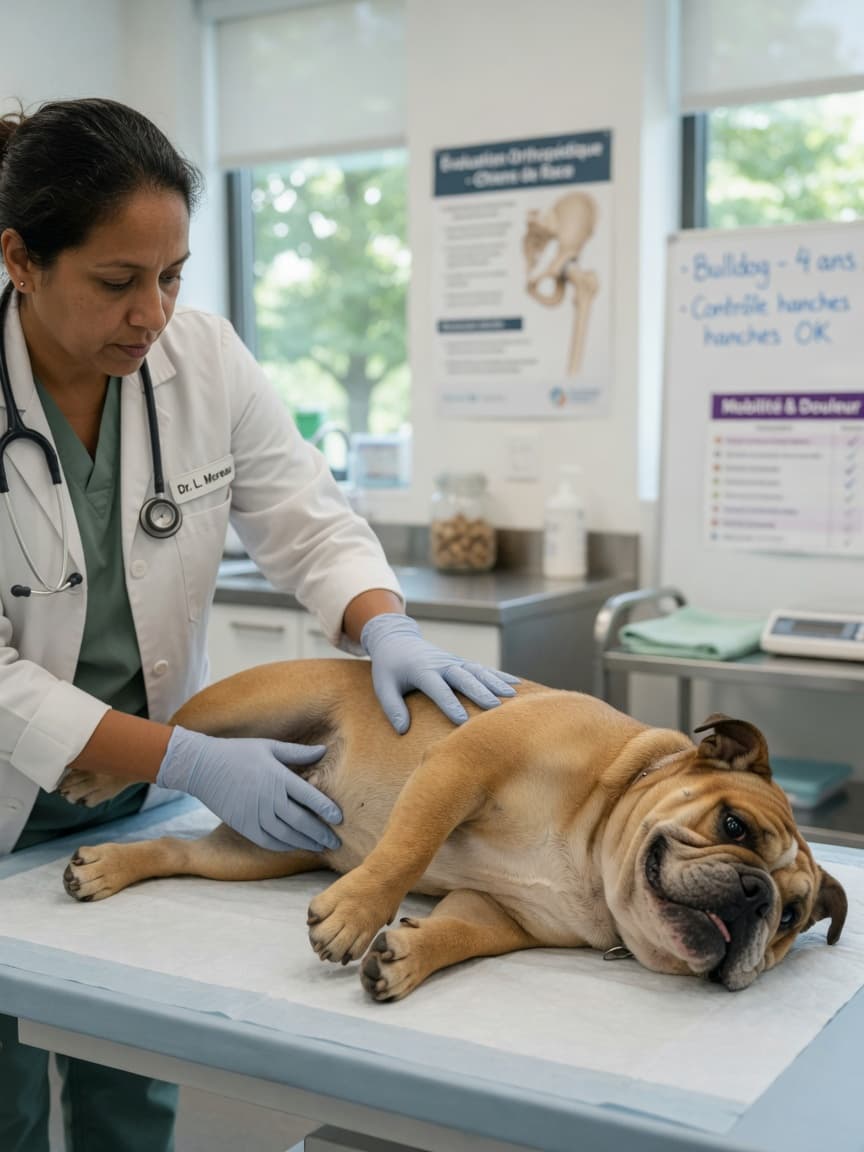
Bulldogs are one of the breeds most commonly affected by hip dysplasia because of their compact, heavily muscled build, rapid puppy growth, and a gene pool that has historically prioritised looks over structural soundness. The single most important thing to understand is that hip dysplasia is a developmental condition, not a sudden injury, so early recognition, weight control, and appropriate exercise management make a genuine difference to your dog's comfort and long-term mobility. Left unmanaged, it can lead to painful arthritis, but with the right approach many Bulldogs live full, happy lives.
Why Bulldogs Are Prone to Hip Dysplasia
Hip dysplasia occurs when the ball and socket of the hip joint don't fit together snugly during growth, leading to laxity, abnormal wear, and eventually degenerative joint disease. Bulldogs are particularly predisposed for several interlinked reasons:
- Body conformation: The breed's broad chest, narrow pelvis relative to body mass, and short-limbed, heavily muscled frame place unusual stresses on the hip joints.
- Rapid growth in puppyhood: Bulldogs often gain weight quickly relative to their skeletal development, and fast growth is a recognised contributor to joint laxity in predisposed breeds.
- Genetics: Hip dysplasia has a strong hereditary component. Because Bulldogs are a breed with a relatively narrow gene pool, poor hip conformation can be passed down more readily if breeding dogs haven't been properly screened.
- Reduced activity tolerance: Many Bulldogs are less naturally inclined to sustained exercise, partly due to their airway conformation, which can contribute to excess weight — a major aggravating factor for joint disease of any kind.
It's worth noting that hip dysplasia in Bulldogs often exists alongside other orthopaedic and airway-related issues typical of the breed, which is why a whole-dog approach to health matters. You can read more about the breed's general health profile in the Bulldog breed guide.
Early Signs and Symptoms to Watch For
Hip dysplasia can be subtle in its early stages, especially in a breed that isn't naturally athletic. Owners sometimes mistake early signs for "just being a lazy Bulldog." Signs to watch for include:
- Reluctance or hesitation to jump onto furniture, climb stairs, or get into the car
- A "bunny hopping" gait, where both back legs move together rather than alternating
- Stiffness after rest that improves once the dog has warmed up, or conversely, stiffness that worsens after exercise
- Difficulty rising from lying down
- Reduced tolerance for walks, or reluctance to walk as far as before
- Muscle loss over the hindquarters and thighs, sometimes making the shoulders look comparatively bulky
- Visible discomfort when the hips are touched, stretched, or manipulated
- A swaying or waddling walk
Because Bulldogs can be stoic and are prone to generally lower activity levels, subtle lameness is easy to miss. Any persistent change in how your dog moves, sits, or plays is worth a veterinary check.
When It's an Emergency
Hip dysplasia itself is usually a gradual, chronic condition rather than an emergency, but you should seek urgent veterinary attention if your Bulldog:
- Suddenly cannot bear weight on a hind leg or collapses in the back end
- Shows signs of acute, severe pain (crying out, panting excessively, reluctance to move at all)
- Has a hind leg that appears out of place, shortened, or held at an odd angle (which could indicate a hip luxation rather than straightforward dysplasia)
- Shows sudden severe lameness after a fall, jump, or rough play
These signs may indicate a secondary injury, such as a luxated hip or soft tissue damage, on top of underlying joint laxity, and need prompt assessment.
Diagnosis
If hip dysplasia is suspected, your vet will typically begin with a physical examination, assessing gait, muscle mass, range of motion, and pain response in the hip joints. A specific manipulation called the Ortolani test can help detect joint laxity. Definitive diagnosis usually requires X-rays under sedation or general anaesthetic, which allow the vet to assess:
- The depth and shape of the hip socket (acetabulum)
- How well the femoral head sits within the socket
- Signs of secondary arthritis, bone remodelling, or joint space changes
Some owners choose to have hip scoring performed through recognised schemes as part of responsible breeding practice, though this is more relevant to breeding dogs than pets diagnosed after symptoms appear. Your vet may also recommend screening for other orthopaedic issues common in Bulldogs, since hip dysplasia can occasionally overlap with or be mistaken for other hind-limb problems.
Management and Treatment Options
Treatment depends on the severity of the dysplasia, the dog's age, weight, and overall health. Options generally fall into two categories:
Conservative (Non-Surgical) Management
- Weight management: Keeping your Bulldog lean is arguably the single most impactful thing you can do, as excess weight dramatically increases joint stress.
- Controlled exercise: Regular, low-impact activity such as short, frequent walks helps maintain muscle tone without overloading the joints. Avoid high-impact activities like jumping or repetitive stair use.
- Joint supplements: Products containing glucosamine, chondroitin, or omega-3 fatty acids are commonly used, though owners should discuss evidence and appropriate dosing with their vet.
- Pain relief and anti-inflammatories: Prescribed and monitored by your vet, particularly important given that some pain medications carry risks that need careful oversight, especially in a breed prone to other health complications.
- Physiotherapy and hydrotherapy: Can help maintain muscle strength and joint mobility with minimal impact.
- Supportive home adaptations: Ramps instead of stairs, non-slip flooring, and orthopaedic bedding all reduce strain on the hips.
Surgical Options
For more severe cases, or when conservative management isn't providing adequate quality of life, surgical options may be discussed, including femoral head and neck excision or total hip replacement. The suitability of each depends on the individual dog's size, age, and overall health — and because Bulldogs carry higher anaesthetic and respiratory risks than many breeds, any surgical decision needs careful discussion with a vet experienced in brachycephalic patients.
Prevention and Daily Care
While genetics can't be changed once a dog is born, several practical steps help reduce severity and slow progression:
- Choose puppies from breeders who screen breeding dogs for hip quality where possible
- Feed a diet appropriate for growth stage to avoid excessively rapid weight gain in puppyhood
- Maintain a lean body condition throughout life
- Provide regular, moderate exercise rather than sporadic bursts of intense activity
- Avoid excessive jumping, especially from furniture or vehicles, in puppies and adults alike
- Attend regular veterinary check-ups so early joint changes can be caught sooner rather than later
Cost and Prognosis Realism
Costs vary widely depending on whether management is conservative or surgical, geographic location, and the individual vet practice. Ongoing conservative management (supplements, weight control, occasional vet visits, physiotherapy) tends to be a manageable recurring cost, while surgical treatment represents a significant one-off expense with additional aftercare and rehabilitation costs. Pet insurance, taken out early before any symptoms appear, can help offset these costs considerably.
Prognosis is genuinely variable. Many Bulldogs with mild to moderate hip dysplasia live comfortable lives with consistent weight management and activity modification, though they may develop some degree of arthritis with age. Dogs with more severe joint changes may need surgical intervention to maintain good quality of life. The key realistic takeaway is that hip dysplasia is a manageable, not usually life-threatening, condition — but it requires lifelong attention rather than a one-off fix.
Frequently Asked Questions
Can puppies be born with hip dysplasia, or does it develop later?
Puppies aren't typically born with visibly abnormal hips, but they can inherit a genetic predisposition. The joint laxity and subsequent changes usually develop during the rapid growth phase in the first year of life, which is why controlling growth rate and weight during puppyhood is so important.
Will my Bulldog definitely need surgery?
Not necessarily. Many dogs with hip dysplasia are managed successfully with weight control, exercise modification, and pain relief. Surgery is generally reserved for dogs whose quality of life is significantly affected despite conservative management, or where imaging shows severe joint damage.
Is hip dysplasia the same as the hind-limb weakness common in older Bulldogs?
Not always. Older Bulldogs can develop hind-limb weakness from various causes, including arthritis unrelated to dysplasia, spinal issues, or general muscle loss. A veterinary examination and imaging are needed to confirm whether hip dysplasia is the underlying cause rather than assuming it based on symptoms alone.
This article is for general informational purposes only and does not replace professional veterinary advice. Always consult your vet for an accurate diagnosis and a treatment plan tailored to your dog.