
Kattenvisvlo-behandeling: Veilige opties & Wat u moet vermijden
Door Julia Wrenfield, Pet Wellness Researcher
Veel hondenvisvlo-behandelingen — inclusief veel voorkomende spot-ons en shampoos — bevatten permethrine, een synthetisch pyrethroïde insecticide. Hoewel veilig voor honden, is permethrine acuut giftig voor katten. Zelfs een kleine hoeveelheid aangebracht op de huid van een kat, of een kat die een recent behandelde hond verzorgt, kan permethrine-giftigheid veroorzaken — een neurologische noodsituatie gekenmerkt door tremoren, convulsies, hypersalivatie en dood. Dit is een levensbedreigende situatie die spoeddierenartsenzorg vereist. Controleer altijd of een visvlo-product specifiek gelabeld is voor gebruik bij katten voordat u het aanbrengt.
Visvlo-behandeling voor katten vereist een voorzichtigheid die eenvoudigweg niet van toepassing is op honden. Het verschil tussen soorten in hoe katten bepaalde stoffen metaboliseren — vooral pyrethroïden — betekent dat een product dat volkomen veilig is voor uw hond dodelijk kan zijn voor uw kat. Deze gids behandelt alles wat u moet weten over het veilig en effectief behandelen van vlooien bij katten, inclusief welke producten werkelijk veilig zijn, welke u moet vermijden, en hoe u zowel het huis als het huisdier aanpakt.
Waarom katten uniek kwetsbaar zijn
Katten zijn obligate carnivoren en hebben zich ontwikkeld met een zeer ander hepatisch enzym-profiel in vergelijking met honden en mensen. Specifiek hebben katten zeer beperkte glucuronidatie-capaciteit — een belangrijk ontgiftingspad in de lever. Dit betekent dat veel stoffen die honden en mensen veilig kunnen metaboliseren en uitscheiden, zich tot giftige niveaus in katten ophopen. Permethrine is het gevaarlijkste voorbeeld in de context van visvlo-behandeling voor katten, maar katten zijn ook kwetsbaar voor veel etherische oliën (theeboomolie, eucalyptus, kruidnagel, pennyroyal) die soms in "natuurlijke" visvlo-producten worden gebruikt.
Permethrine-giftigheid bij katten gaat verschrikkelijk snel. Tekenen kunnen minuten tot uren na blootstelling verschijnen en omvatten spiertremoren, loopmoeilijkheden, convulsies, buitensporige speekselafscheiding, hyperthermie en dood. De VPIS (Veterinary Poisons Information Service) ontvangt het hele jaar door telefoontjes over permethrine-giftigheid bij katten door onopzettelijke toepassing van hondenproducten. Als u zowel een hond als een kat hebt, en u gebruikt een permethrine-houdende spot-on op uw hond, houd de dieren gescheiden tot de toepastingsplek volledig droog is — meestal 24–48 uur.
Veilige farmaceutische visvlo-behandelingen voor katten
Het goede nieuws is dat er verschillende uitstekende, goed gevestigde visvlo-behandelingen zijn die specifiek voor katten zijn geformuleerd en getest. Controleer altijd het productlabel — het moet expliciet "voor gebruik bij katten" vermelden.
Frontline (fipronil) is een van de meest gebruikte visvlo-behandelingen die veilig zijn voor katten. Het wordt aangebracht als een spot-on op de huid tussen de schouderbladen. Fipronil verstoort het zenuwstelsel van vlooien en teken zonder de risico's die permethrine voor katten met zich meebrengt. Frontline Combo voegt (s)-methoprene toe, een insectengroeiregelaar die ook visvlo-eitjes en larven doodt. Het biedt vier weken bescherming tegen vlooien.
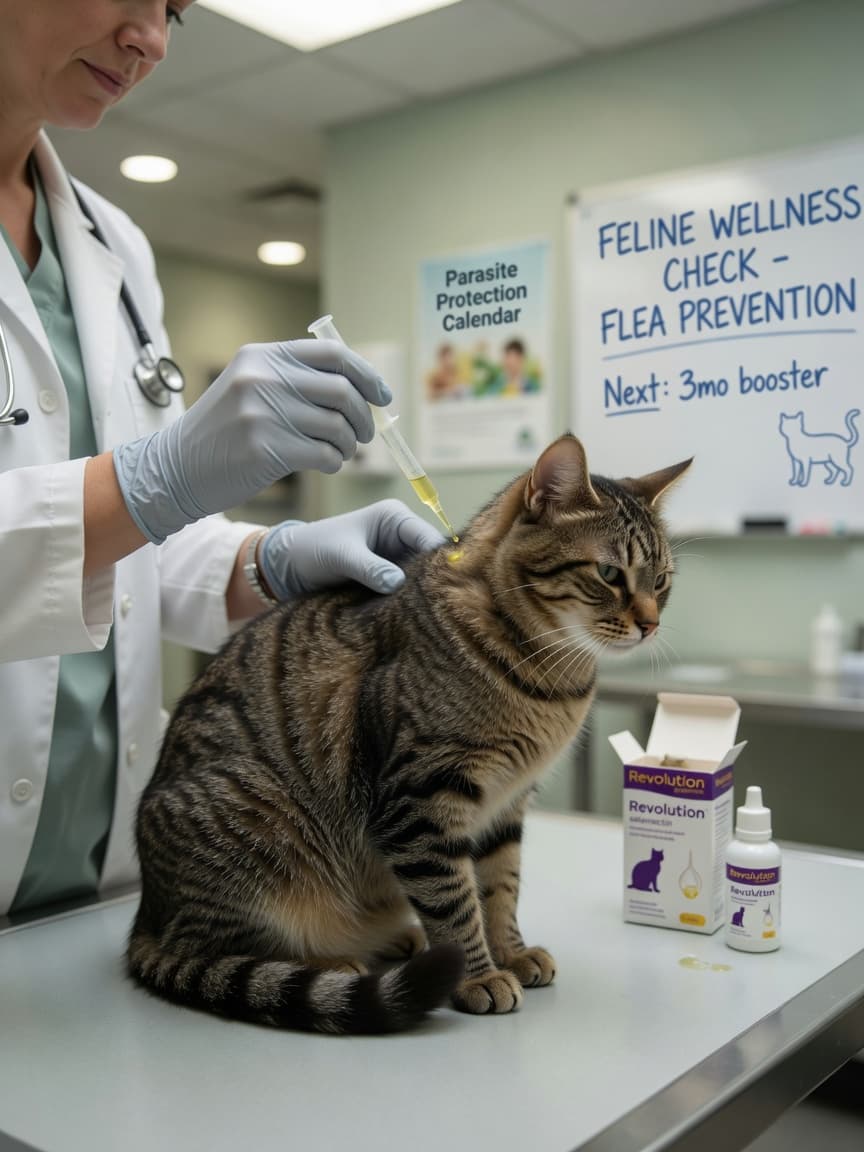
Revolution / Stronghold (selamectine) is een spot-on die brede bescherming biedt — tegen vlooien, oormijten, hartworm (in endemische gebieden) en bepaalde ingewormparasieten. Het wordt goed verdragen door katten en biedt een maandelijkse alles-in-één-benadering die veel katteneigenaren handig vinden, vooral voor katten die zowel binnen als buiten lopen.
Advantage (imidacloprid) is een spot-on die vlooien bij contact doodt — vlooien hoeven de kat niet te bijten om gedood te worden. Het is veilig voor katten en zeer effectief tegen volwassen vlooien en larven. Advocate (imidacloprid + moxidectine) voegt bescherming toe tegen longworm, hartworm en mijten. Beide zijn veilig voor katten.
Bravecto voor katten (fluralaner) is een nieuwere orale optie die tot 12 weken bescherming tegen vlooien en teken biedt. Het is een kouwbare tablet of spot-on en is een handige keuze voor katten die orale medicatie verdragen. Het is zeer effectief en goed verdragen.
Wat u NIET op katten moet gebruiken
Vermijd elk product dat permethrine, cypermetrine of andere pyrethroïden bevat, tenzij specifiek gelabeld als veilig voor katten (zeldzaam). Vermijd producten voor honden die niet expliciet veilig voor katten vermelden. Vermijd huisvisvloespraysin de directe omgeving van de kat, tenzij bevestigd is dat deze niet giftig zijn voor katten als ze droog zijn — lees labels zorgvuldig. Vermijd theeboomolie, eucalyptus-olie, pennyroyal, kruidnagelolie en andere etherische oliën, die vaak in "natuurlijke" visvlo-producten voorkomen en toxiciteit bij katten kunnen veroorzaken, zelfs in lage doses.
Wees met name voorzichtig met goedkope, niet-veterinaire visvlo-producten die in supermarkten of online marktplaatsen worden gekocht. Deze bevatten soms permethrine of andere pyrethroïden en kunnen op manieren worden gelabeld die gemakkelijk verkeerd kunnen worden gelezen. In geval van twijfel koopt u visvlo-producten alleen van een dierenarts of een geregistreerde veterinaire apotheker.
Natuurlijke opties voor katten
De mogelijkheden voor werkelijk veilige natuurlijke visvloebestrijding bij katten zijn beperkt, precies omdat zoveel plantaardige stoffen hepatotoxisch zijn voor felinen. De veiligste opties zijn:
Regelmatig kammen met een fijngetande vlooienkam is effectief voor het verwijderen van volwassen vlooien en vlooienuitwerpselen uit de vacht, vooral bij katten met korte haren.