
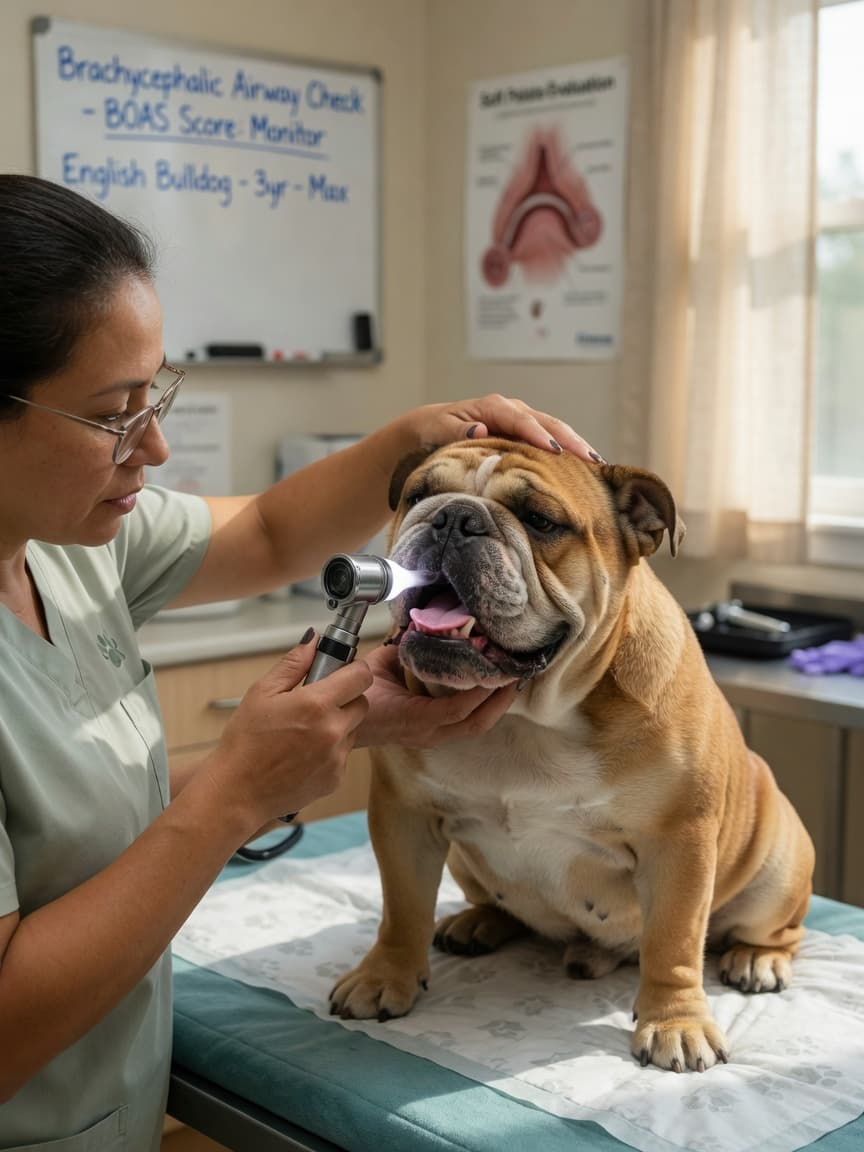
Bulldogs are prone to breathing problems because their entire skull and airway have been shaped by generations of selective breeding for a flat face, leading to a condition called Brachycephalic Obstructive Airway Syndrome (BOAS). This affects the vast majority of Bulldogs to some degree, from mild snoring to serious, life-limiting airway obstruction. The single most important thing to understand is that noisy breathing in a Bulldog is not normal or "just how the breed sounds" — it is a sign of restricted airflow, and any worsening in noise, effort, or exercise tolerance should be taken seriously and checked by a vet.
Why Bulldogs Are Prone to Breathing Problems
BOAS is a structural problem, not an infection or allergy. Bulldogs have been bred to have very short, wide skulls, but the soft tissue inside their heads and throats hasn't shrunk to match the bone. The result is too much soft tissue crammed into too small a space, which narrows the airway at several points at once. Features commonly involved include:
- Stenotic nares – narrow, pinched nostrils that restrict airflow from the very first breath.
- Elongated soft palate – the soft palate is too long for the shortened mouth and hangs down, partially blocking the entrance to the windpipe.
- Everted laryngeal saccules – small tissue pouches inside the larynx that can be sucked outward and obstruct airflow further, often as a secondary change from years of increased effort to breathe.
- Hypoplastic trachea – a windpipe that is narrower in diameter than normal, reducing the overall airway capacity.
- Nasal turbinate abnormalities – overgrown or misshapen internal nasal structures that add to resistance in the nasal passages.
Because these features are a direct consequence of the breed's characteristic shape, BOAS is considered a genetic and conformational condition rather than a random illness — it is intrinsic to being a Bulldog, and severity varies from dog to dog depending on how extreme these features are. For more on the breed's background and typical build, see the Bulldog breed guide.
Early Signs and Symptoms to Watch
Many owners are used to Bulldogs snoring, snorting, and grunting, which can make it hard to spot when things are getting worse. Signs to monitor include:
- Loud snoring or snorting at rest, not just during sleep or excitement
- Noisy, laboured breathing that increases with mild exercise, heat, or excitement
- Frequent gagging, retching, or reverse sneezing
- Difficulty settling, restless sleep, or sleeping in unusual positions (such as propped upright) to keep the airway open
- Reduced exercise tolerance or reluctance to walk far or in warm weather
- Blue or grey-tinged gums or tongue during exertion (a sign of low oxygen)
- Regurgitation, vomiting, or signs of digestive upset, which are common alongside BOAS because of the pressure changes in the chest and throat
- Fainting or collapse after exercise or excitement
A useful home check is to watch your dog resting quietly after a short walk on a mild day — persistent open-mouth breathing, prolonged panting, or laboured chest movement well after exercise has stopped is not normal and warrants veterinary assessment.
When It's an Emergency
Some situations require immediate veterinary attention rather than a routine appointment. Treat the following as emergencies:
- Blue, purple, or grey gums or tongue
- Collapse or fainting
- Extreme distress, panic, or inability to get comfortable while breathing
- Breathing that sounds like it's about to stop working, or very shallow rapid breaths with visible effort
- Heatstroke signs — heavy panting, drooling, wobbliness, vomiting, or collapse after heat exposure
Bulldogs are especially vulnerable to heat because panting is their main cooling mechanism, and a compromised airway makes this far less effective. Heatstroke in brachycephalic breeds can progress extremely quickly and is genuinely life-threatening — do not wait to see if it improves.
Diagnosis
Your vet will usually begin with a physical examination, listening to airflow through the nose and throat and assessing exercise tolerance and body condition. Because the throat structures relax under sedation (mimicking sleep, when obstruction is often worse), a full internal assessment of the soft palate, larynx, and saccules typically requires a short sedated or anaesthetic examination. This may be combined with:
- X-rays of the chest and neck to assess the trachea and rule out related complications such as aspiration pneumonia
- CT scanning in more complex or severe cases, particularly to assess nasal airway anatomy in detail
- Grading of BOAS severity, which many veterinary teams now do to guide treatment decisions and monitor change over time
Management and Treatment Options
Treatment depends on severity, ranging from lifestyle management to surgery.
- Weight management is one of the most effective non-surgical tools — excess weight adds fatty tissue around the throat and increases airway resistance, making symptoms noticeably worse.
- Environmental and exercise adjustments, such as walking in the cool of early morning or evening, avoiding hot or humid conditions, and using a harness rather than a neck collar to avoid pressure on the throat.
- Surgical correction is often recommended, ideally before secondary changes (like everted saccules or laryngeal collapse) develop. Common procedures include widening the nostrils (rhinoplasty for stenotic nares) and shortening/reshaping the soft palate (staphylectomy). Early surgical intervention, sometimes in young dogs showing clear signs, tends to give better long-term results than waiting until the airway is severely compromised.
- Ongoing veterinary monitoring for related conditions, since BOAS is often linked with digestive issues (such as reflux) and skin fold problems, which may also need managing.
- Emergency stabilisation — for dogs in acute respiratory distress, treatment may include oxygen support, cooling, sedation to reduce panic-driven airway strain, and anti-inflammatory medication, sometimes followed by more urgent surgical intervention.
Prevention and Daily Care
You cannot change your dog's anatomy, but you can significantly reduce the daily burden it places on them:
- Keep your Bulldog at a lean, healthy body weight throughout life
- Avoid exercise during heat; opt for short, gentle walks rather than long or intense ones
- Never leave a Bulldog in a hot car or conservatory, even briefly
- Use a well-fitted harness instead of a collar
- Provide cool water, shade, and fans or air conditioning in warm weather
- Watch closely for the early warning signs listed above and don't dismiss them as "normal Bulldog noises"
- Discuss BOAS screening or grading with your vet, particularly if you're considering breeding from your dog
Cost and Prognosis Realism
Costs vary widely by region and clinic, but owners should budget for the possibility of a sedated airway examination, diagnostic imaging, and corrective surgery, which is a significant but often manageable expense compared with the ongoing cost of repeated emergency visits for a dog with untreated severe BOAS. Prognosis is generally good for dogs treated appropriately, especially when surgery is performed before severe secondary airway changes set in. Dogs left unmanaged can develop progressive, irreversible changes in the larynx that make later treatment far more difficult and reduce quality of life. Honest, early conversations with your vet about severity and treatment timing make a real difference to long-term outcomes.
Frequently Asked Questions
Is it normal for my Bulldog to snore loudly every night?
Mild snoring is common in the breed, but loud, persistent snoring combined with snorting, gasping, or restless sleep suggests a meaningful degree of airway restriction and is worth discussing with your vet, particularly if it's getting louder or more frequent over time.
Will my Bulldog definitely need surgery?
Not necessarily — some Bulldogs manage well with weight control and lifestyle adjustments alone, especially if their anatomy is only mildly affected. Others benefit significantly from surgery, particularly if signs are progressing. A veterinary assessment and BOAS grading can help determine which approach suits your individual dog.
Can BOAS come on suddenly, or does it always develop slowly?
BOAS itself usually develops gradually as a dog grows, but acute crises can appear suddenly, particularly triggered by heat, excitement, stress, or strenuous activity, even in a dog that has seemed stable. This is why prevention around heat and exertion matters even in dogs with mild symptoms.
This article is for general information only and is not a substitute for professional veterinary advice. Always consult your vet for diagnosis and treatment tailored to your individual dog.