
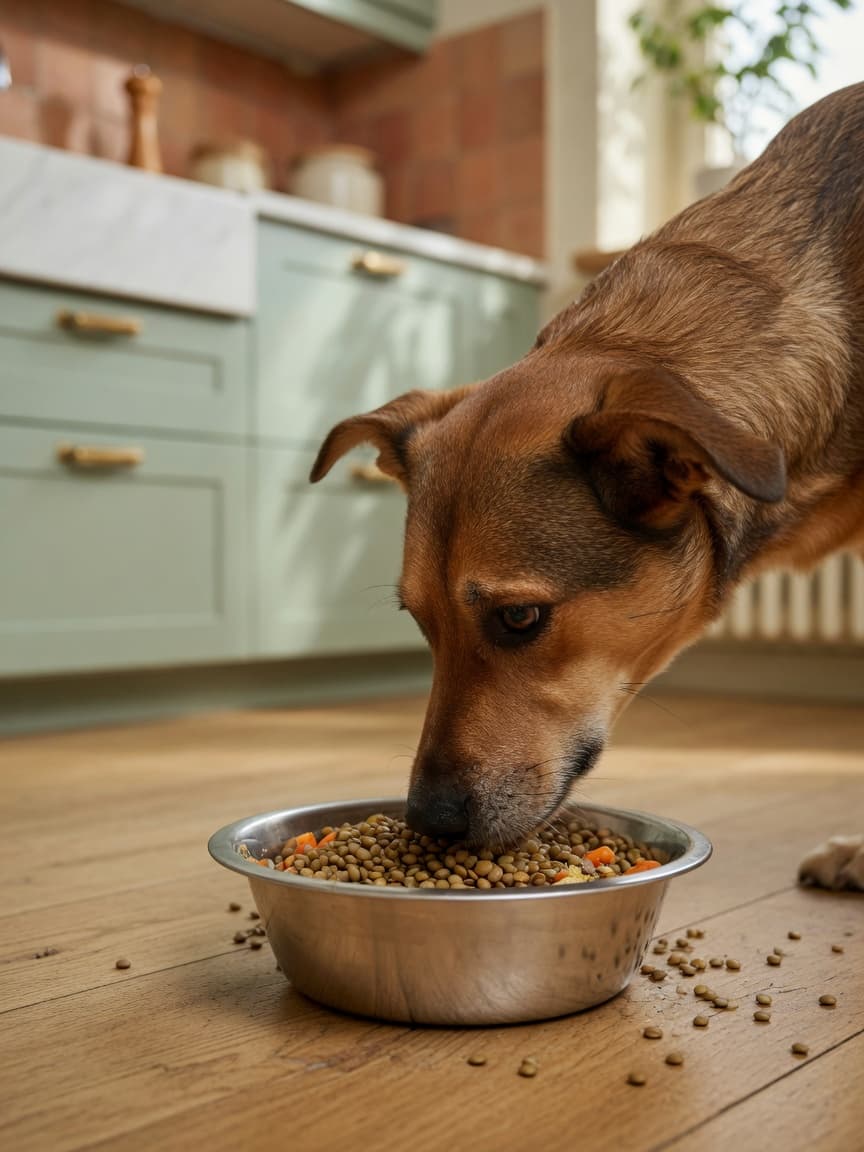
Kunnen honden lenzen eten? De DCM-link uitgelegd
- Veilig: Kleine hoeveelheden gekookte lenzen als occasionele snack voor de meeste gezonde volwassen honden.
- Onveilig: Rauwe lenzen (bevatten lectines en trypsine-inhibitoren); grote of dagelijkse porties; graanvrije diëten waarbij lenzen een primair ingrediënt zijn.
- Risico: Mogelijke link naar gedilateerde cardiomyopathie (DCM), vooral bij gevoelige rassen; spijsverteringsproblemen en gasvorming; taurine-deficiëntieproblemen.
- Portie: Niet meer dan 1–2 eetlepels gewone gekookte lenzen voor een middelgrote hond, en alleen occasioneel.
Wat zijn lenzen en waarom eindigen ze in hondenvoer?
Lenzen zijn kleine peulvruchten vol plantaardig eiwit, voedingsvezel, ijzer, folaat en een scala aan B-vitamines. In menselijke voeding worden zij geprezen als een van de meest betaalbare en voedingsdichte voedingsmiddelen ter wereld. Het is dus niet verwonderlijk dat hondenvoerfabrikanten begin jaren 2010 lenzen — samen met erwten, kikkererwten en andere peulvruchten — in graanvrije hondenvoerformuleringen begonnen op te nemen. Het idee was rechtlijnig: granen vervangen door vezelrijke, eiwitrijke peulvruchten om eigenaren aan te trekken die geloofden dat graanvrije diëten dichter bij het voorouderlijke eetpatroon van een hond aansloten. Een tijdje steeg deze trend onweersproken. Toen greep het U.S. Food and Drug Administration in.
Het FDA DCM-onderzoek: wat u moet weten
In juli 2018 kondigde de FDA een waarschuwing af waarin zij aankondigde een onderzoek in te stellen naar een mogelijke link tussen graanvrije diëten — vooral die met peulvruchten, lenzen en aardappelen als primaire ingrediënten — en een verhoogde incidentie van gedilateerde cardiomyopathie (DCM) bij honden. DCM is een ernstig hartaandoening waarbij de hartspier verzwakt en de kamers uitzetten, waardoor het hart niet langer bloed effectief kan rondpompen. Onbehandeld kan dit leiden tot hartdecompensatie en dood.
Tussen januari 2014 en april 2019 ontving de FDA meer dan 500 meldingen van DCM bij honden die op deze diëten voedselgewonten, een aantal ver boven de historische norm. Rassen die typisch gevoelig zijn voor DCM — zoals Doberman Pinschers, Boxers en Great Danes — werden verwacht in de gegevens, maar wat onderzoekers alarmeert was het verschijnen van rassen niet historisch geassocieerd met de ziekte, waaronder Golden Retrievers, Labrador Retrievers en French Bulldogs. Dit suggereerde een milieu- of voedingstrigger in plaats van een zuiver genetische oorzaak.
De FDA's update van 2019 identificeerde 16 merken die het vaakst werden genoemd in gerapporteerde DCM-gevallen. Hoewel het agentschap voorzichtig stelde dat een oorzakelijk verband niet was vastgesteld, maakten het pure volume van meldingen en de rassendiversiteit van aangetaste honden de hypothese van graanvrij/peulvrucht onmogelijk om af te wijzen. Sinds hun meest recente update blijft het onderzoek lopende en is geen enkele definitieve oorzaak bevestigd.
De taurine-deficiëntiehypothese
De toonaangevende wetenschappelijke hypothese ter verklaring van de DCM-verbinding richt zich op taurine, een zwavelbevattend aminozuur dat kritiek is voor de hartspierwerking bij honden en katten. Taurine is normaal gesproken geen essentieel aminozuur voor honden — gezonde honden synthetiseren het uit de precursor-aminozuren methionine en cysteïne. Echter, verschillende factoren kunnen deze synthese belemmeren.
Onderzoekers aan de University of California, Davis, en het Cummings Veterinary Medical Center van Tufts University hebben gesteld dat peulvruchten taurine-metabolisme op meerdere manieren kunnen verstoren. Lenzen en erwten bevatten stoffen die de biobeschikbaarheid van precursor-aminozuren kunnen verminderen, de samenstelling van het darmmicrobioom op manieren kunnen veranderen die taurine-synthese beïnvloeden, of eenvoudigweg het totale dierlijke eiwitgehalte van het dieet kunnen verdunnen — omdat dierlijke eiwitten de rijkste bron van methionine en cysteïne zijn. Sommige aangetaste honden vertoonden lage taurine-concentraties in volledig bloed, en een subset verbeterde klinisch wanneer zij overschakelden naar graanbevattende diëten of aangevuld met taurine, hoewel deze respons niet universeel was.
Het is belangrijk om eerlijk te zijn over de grenzen van huidige kennis: de wetenschap is niet definitief. Niet elke hond die graanvrij peulvruchtenrijke voer eet, ontwikkelt DCM, en niet elk DCM-geval betreft lage taurine. Genetica, totale diëtsamenstelling, vezeltype en individuele metabolische verschillen spelen allemaal een rol. Toch geldt het voorzorgsprincipe hier sterk, vooral voor gevoelige rassen.
Welke honden lopen het meeste risico?
Bepaalde rassen dragen onafhankelijk van dieet een genetische gevoeligheid voor DCM, en deze honden worden geconfronteerd met vergroot risico als hun voer ook grote hoeveelheden lenzen of andere peulvruchten bevat. Rassen met het meeste risico zijn Doberman Pinschers, Boxers, Great Danes, Irish Wolfhounds en Dalmatians. Golden Retrievers zijn als bijzonder zorgwekkend naar voren gekomen in de FDA-gegevens, met een onevenredig aantal gevallen dat in dit verder hartgezonde ras wordt gerapporteerd.
Als uw hond tot een van deze rassen behoort en momenteel een graanvrij dieet eet met lenzen, erwten of kikkererwten onder de vijf beste ingrediënten vermeld, is het sterk aan te raden om uw dierenarts te raadplegen over een voedingswisseling en een cardiologische evaluatie. Uw dierenarts kan een echocardiogram en taurine-bloedtest aanbevelen voordat klinische symptomen verschijnen.
Rauwe versus gekookte lenzen: waarom koken altijd belangrijk is
Ook buiten de DCM-zorg zijn rauwe lenzen ronduit schadelijk voor honden en mogen nooit worden gegeven. Rauwe lenzen bevatten lectines — antivoedingsstoffen die zich aan de darmvoering hechten en ernstige maagdarmstoornissen kunnen veroorzaken — en trypsine-inhibitoren, die het digestieve enzym blokkeren dat verantwoordelijk is voor het afbreken van eiwit. Bij mensen worden deze stoffen geneutraliseerd door weken en koken. Hetzelfde geldt voor honden. Zorg altijd dat lenzen volledig gekookt, zacht en gewoon zijn voordat u zelfs een kleine hoeveelheid als snack aanbiedt. Voeg geen zout, uien, knoflook of kruiden toe — dit alles is giftig of irriterend voor honden.
Spijsverteringsbijverschijnselen om op te letten
Zelfs correct gekookte lenzen kunnen spijsverteringsproblemen bij honden veroorzaken, vooral bij honden die niet gewend zijn aan vezelrijke voeding. De meest voorkomende klachten zijn flatulentie, opgeblazenheid, losse ontlasting en bij gevoelige honden braken. De fermenteerbare vezel in lenzen voeding bacteriën in het colon, wat gasvorming en ongemak produceert.