
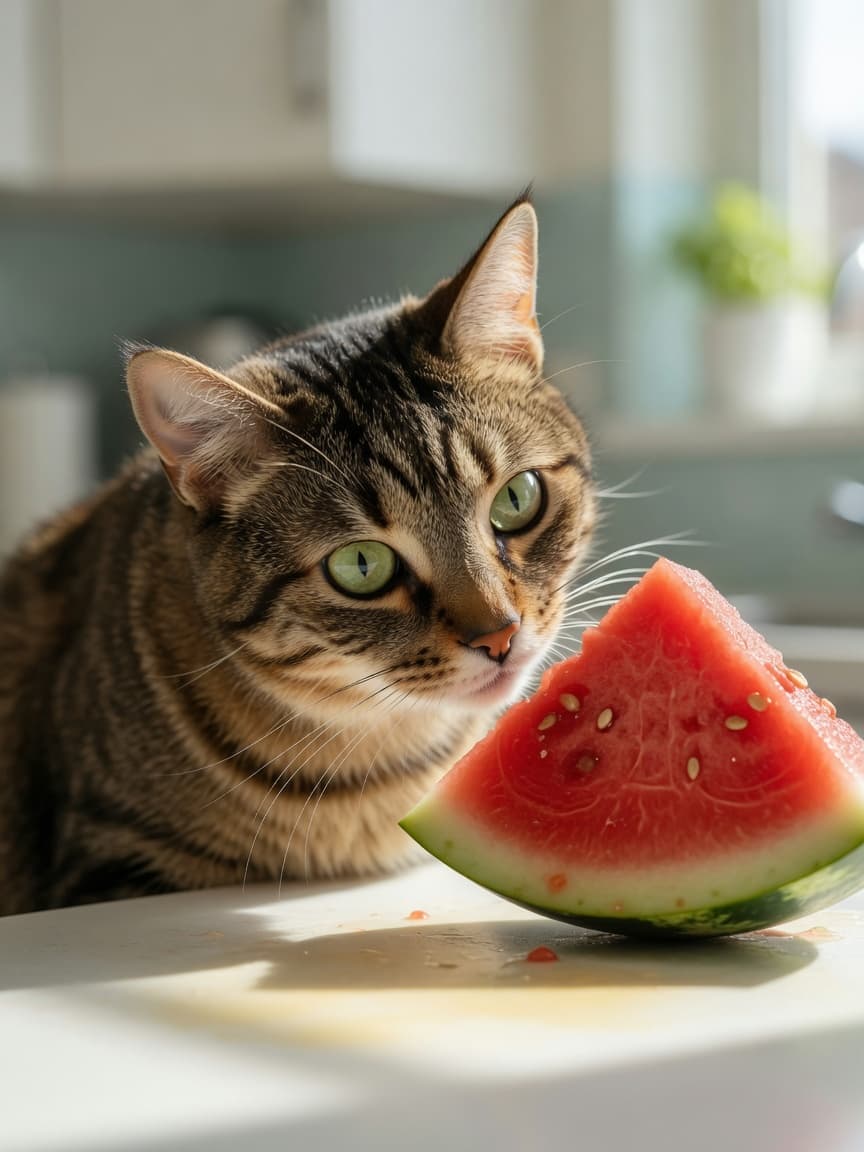
Kunnen Katten Watermeloen Eten? Zaden, Schil en Veilige Porties Uitgelegd
Is Watermeloen Veilig voor Katten?
Watermeloenvlees is niet giftig voor katten. De ASPCA vermeldt watermeloen niet als giftig voor felines, en diervoedingsdeskundigen beschouwen het vlees over het algemeen als een onschuldige occasionele snack. Anders dan druiven of citrusvruchten — die echte gezondheidsrisico's voor katten opleveren — is het belangrijkste nadeel van watermeloen simpelweg dat het zeer weinig relevant voor kattengezondheid biedt, niet dat het veroorzaakt actieve schade.
Het hoge watergehalte van watermeloen wordt soms genoemd als een mogelijk voordeel. Katten, als afstammelingen van woestijn-bewonende voorouders, hebben van nature een lage dorstdrang en drinken vaak niet genoeg water vrijwillig. Chronische lichte uitdroging is gebruikelijk bij katten die uitsluitend droog kattenvoer eten en is een bijdragende factor aan urinewegruimteziekten, nierstrain en constipatie. Een klein stukje watermeloen, met ongeveer 92% water naar gewicht, draagt theoretisch bij aan vochtinname — hoewel de hoeveelheid van een minuscuul stukje verwaarloosbaar is vergeleken met wat een kat dagelijks nodig heeft.
Het Zadenrisico: Waarom Ontzaad Belangrijk Is
Watermloenzaden zijn een punt van bezorgdheid. Net als appelpitten bevatten watermloenzaden sporen van amygdaline, een verbinding die kan omzetten in waterstofcyanide wanneer gekauwd en verteerd. De concentratie in watermloenzaden is veel lager dan in appelpitten, en een kat zou een aanzienlijke hoeveelheid moeten opnemen om acute toxiciteit te ervaren. Zaden vormen echter ook een fysiek risico — ze kunnen darmen verstoppen, vooral bij kleinere katten of kittens.
De eenvoudigste en veiligste aanpak is het gebruik van ontzaaide watermeloen variëteiten, of het zorgvuldig verwijderen van alle zichtbare zaden voordat u een stuk aan uw kat aanbiedt. Dit elimineert zowel het chemische risico als het obstructierisico in één stap. Ga niet ervan uit dat het slikken van één of twee zaden per se een noodgeval is, maar maak het een gewoonte om ze volledig te verwijderen.
De Schil: Verwijder Altijd
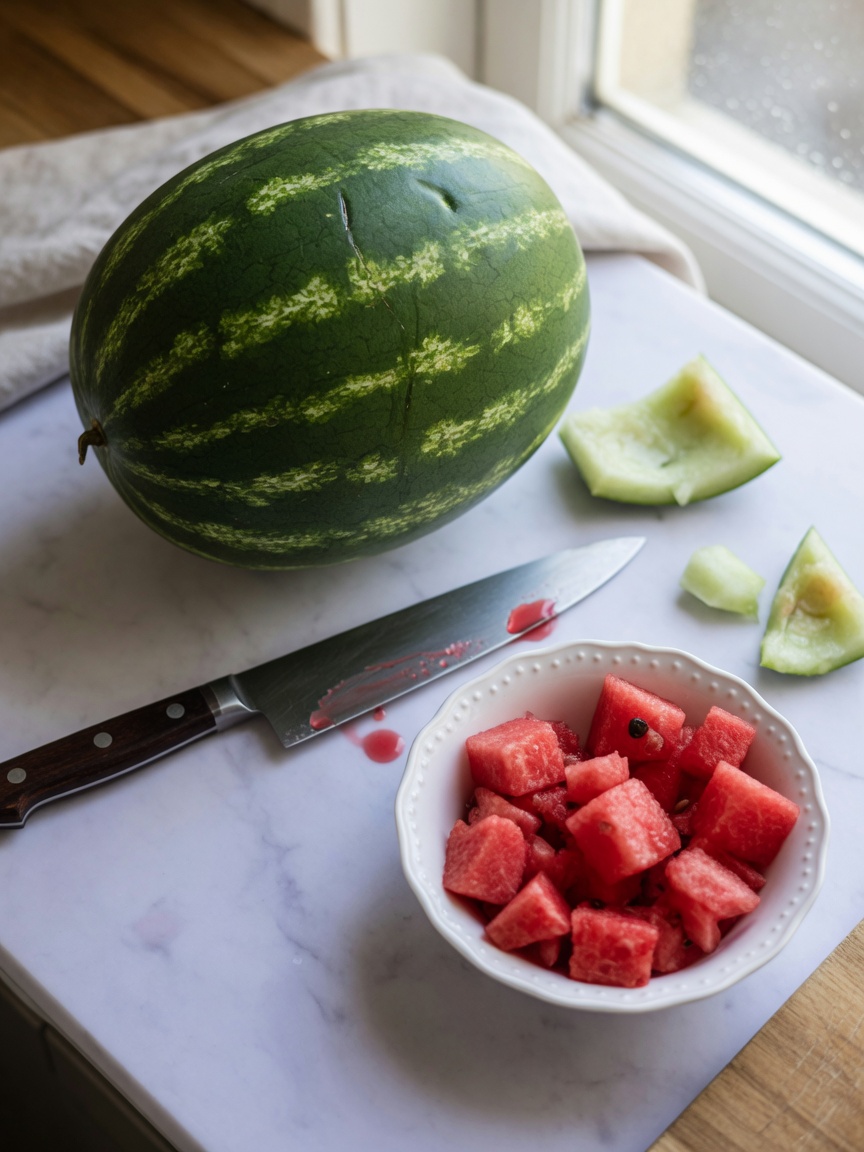
Watermloenschil — de stevige groene buitenlaag en het bleke witte vlees er meteen onder — mag nooit aan katten worden gegeven. De schil is extreem vezelig en moeilijk voor het spijsverteringsstelsel van een kat om af te breken. Het opnemen van schil kan braken, diarree, of in ernstiger gevallen, darmen obstructie veroorzaken die dierenarts aandacht vereist.
De schil bevat ook een veel hogere concentratie van het aminozuur citrulline dan het rode vlees, wat in de hoeveelheden die in katgrootte-porties voorkomen niet voordelig voor felines is. Bovendien kunnen commercieel geteelde watermeloenen pesticideresten hebben geconcentreerd op de buitenschil en huid — nog een reden om deze ver weg van uw kat te houden.
Bij het bereiden van watermeloen voor uw kat, verwijdert u alle schil ruim, waardoor alleen het diepste rode vlees achterblijft. Snijd het in zeer kleine, beheersbare stukken om enig verstikkingsrisico te verminderen.
Katten kunnen zoet niet proeven — Dus Waarom Lijken Sommigen Geïnteresseerd?
Net als alle katten beschikt uw feline metgezel niet over functionele zoete smaakbotten vanwege een pseudogenisatie van het Tas1r2 gen. Dit betekent dat de karakteristieke zoetigheid van watermeloen — de kwaliteit die het voor mensen zo aangenaam maakt — volledig onmerkbaar is voor katten. Ze kunnen suiker niet proeven.
Als uw kat belangstelling voor watermeloen toont, reageert het waarschijnlijk op:
- De onderscheidende aroma-verbindingen in het fruit
- De vochtigheid en koude temperatuur op een warme dag
- Nieuwsgierigheid naar wat u eet en uw behandeling van het voedsel
- De nieuwe textuur, die sommige katten stimulerend vinden
Veel katten zullen aan watermeloen snuffelen en onmiddellijk ongeïnteresseerd raken. Anderen kunnen uit nieuwsgierigheid aan het vochtige oppervlak likken. Zeer weinig katten zullen vrijwillig een betekenisvolle hoeveelheid eten, wat eigenlijk handig is — het beperkt natuurlijk hoeveel ze consumeren.
Suikergehalte: Een Klein Probleem
Watermeloen bevat minder suiker dan veel ander fruit — meestal ongeveer 6% naar gewicht — wat relatief bescheiden is. Dit maakt het minder problematisch dan bijvoorbeeld druiven (als ze niet giftig waren om andere redenen) of vijgen. Echter, elk fruitsuiker vormt dezelfde basismetabolische uitdaging voor katten: hun systemen zijn niet ontworpen
```