
Pourquoi Mon Chat Éternue-t-il ? Causes et Soins à Domicile
Mis à jour juin 2026
- Éternuements avec écoulement nasal vert ou jaune (indique une infection bactérienne)
- Écoulement nasal sanglant ou saignement de nez d'une seule narine
- Éternuements accompagnés d'une respiration difficile, respiration bouche ouverte, ou gencives bleues
- Le chat arrête complètement de manger pendant plus de 24 heures en même temps que les éternuements
- Les éternuements persistent plus de 5–7 jours sans amélioration
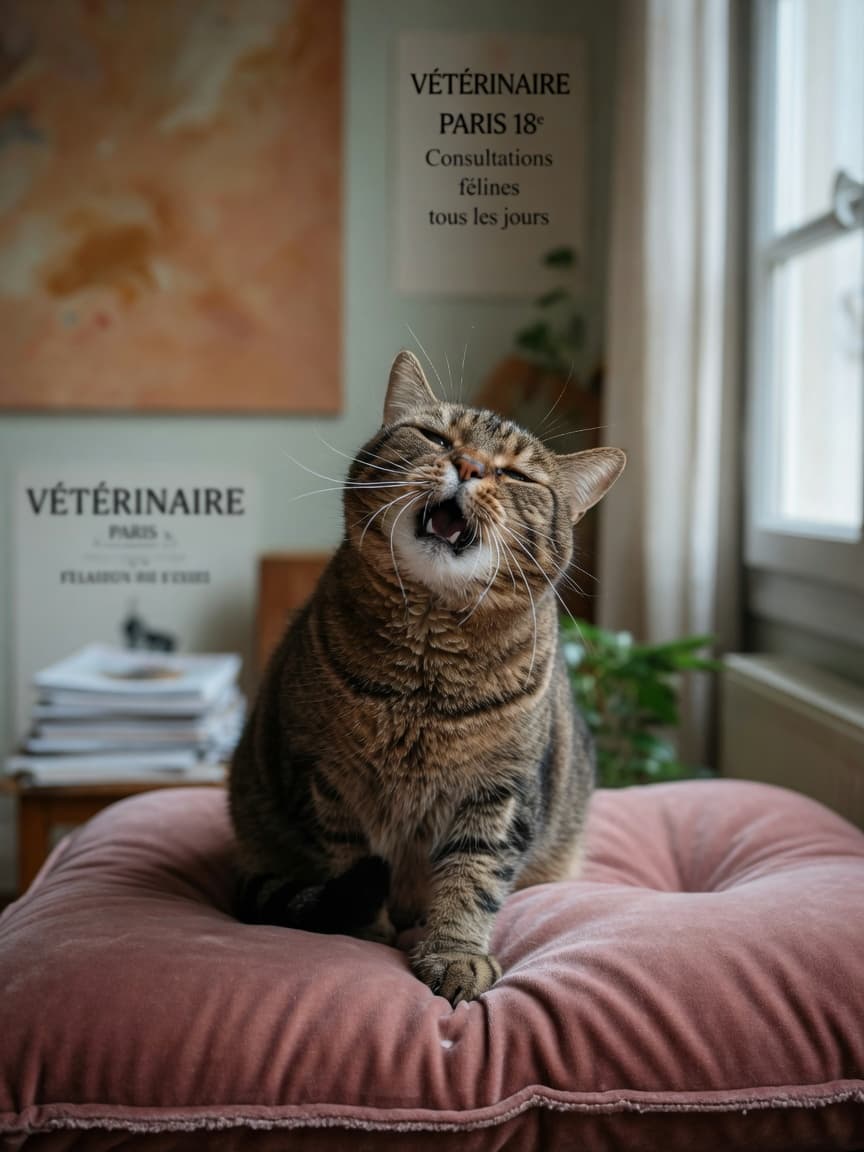
Un éternuement occasionnel est aussi normal pour les chats que pour les humains. Mais quand votre chat commence une crise d'éternuements qui dure plusieurs jours, ou quand vous remarquez un écoulement autour du nez et des yeux, il est temps d'examiner la situation de plus près. Les éternuements peuvent être une simple réaction à la poussière ou le signe d'une infection respiratoire grave ou même d'un cancer nasal. Comprendre la différence vous aide à réagir de manière appropriée et à garder votre chat confortable.
1. Infection Respiratoire Supérieure (Grippe Féline) — La Plus Courante
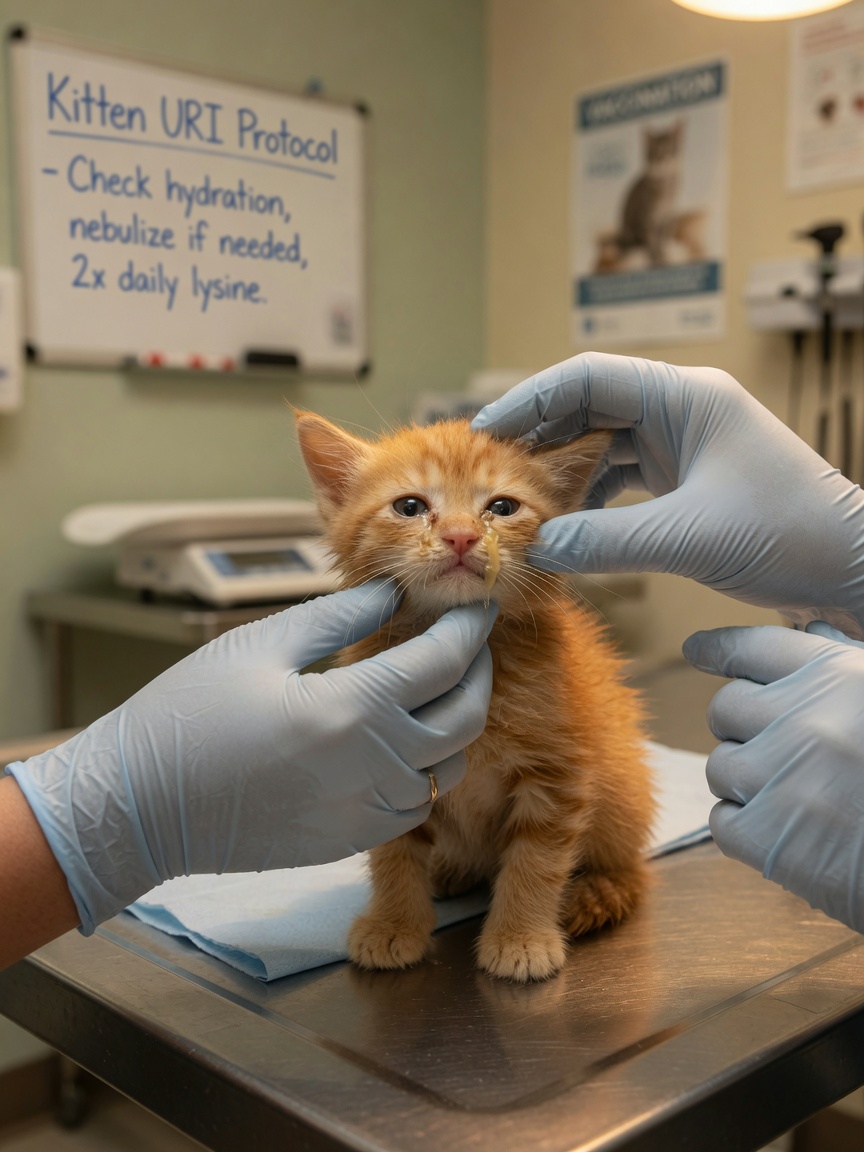
Les infections respiratoires supérieures (IRS) sont la cause la plus fréquente d'éternuements chez les chats, particulièrement chez les jeunes chats, les chats de refuge ou dans les foyers multi-chats. L'herpèsvirus félin-1 (FHV-1) et le calicivirus félin (FCV) sont responsables de la grande majorité des IRS félines. Les symptômes incluent des éternuements, un écoulement nasal et oculaire clair ou coloré, une conjonctivite, de la léthargie et une réduction de l'appétit. L'herpèsvirus est une infection latente à vie — le stress peut déclencher des rechutes même chez les chats vaccinés. Le traitement est symptomatique : humidification à la vapeur, rinçages nasaux avec du sérum physiologique, stimulation de l'appétit et antiviraux (famciclovir) pour les poussées d'herpès.
2. Irritants Environnementaux
Les chats ont des nez sensibles et peuvent éternuer en réaction aux irritants domestiques courants : fumée de cigarette, bougies parfumées, désodorisants, vapeurs de produits nettoyants, parfum, litière poussiéreuse et même épices de cuisine. Les éternuements déclenchés par des irritants disparaissent généralement rapidement une fois que le chat s'éloigne de la source. Si les éternuements ont commencé après un changement de produit ménager, essayez d'éliminer l'irritant suspect avant de supposer une maladie.
3. Allergies
Les allergies environnementales chez les chats causent plus souvent des symptômes cutanés que respiratoires, mais certains chats développent une rhinite allergique — éternuements, écoulement nasal clair et yeux qui démangent en réaction au pollen, aux acariens de poussière ou à la moisissure. Les éternuements allergiques sont généralement saisonniers, bilatéraux (deux narines) et produisent un écoulement clair sans fièvre ni perte d'appétit. Les antihistaminiques et la gestion environnementale (filtres HEPA, aspirateur fréquent) peuvent aider les chats allergiques.
4. Maladie Dentaire
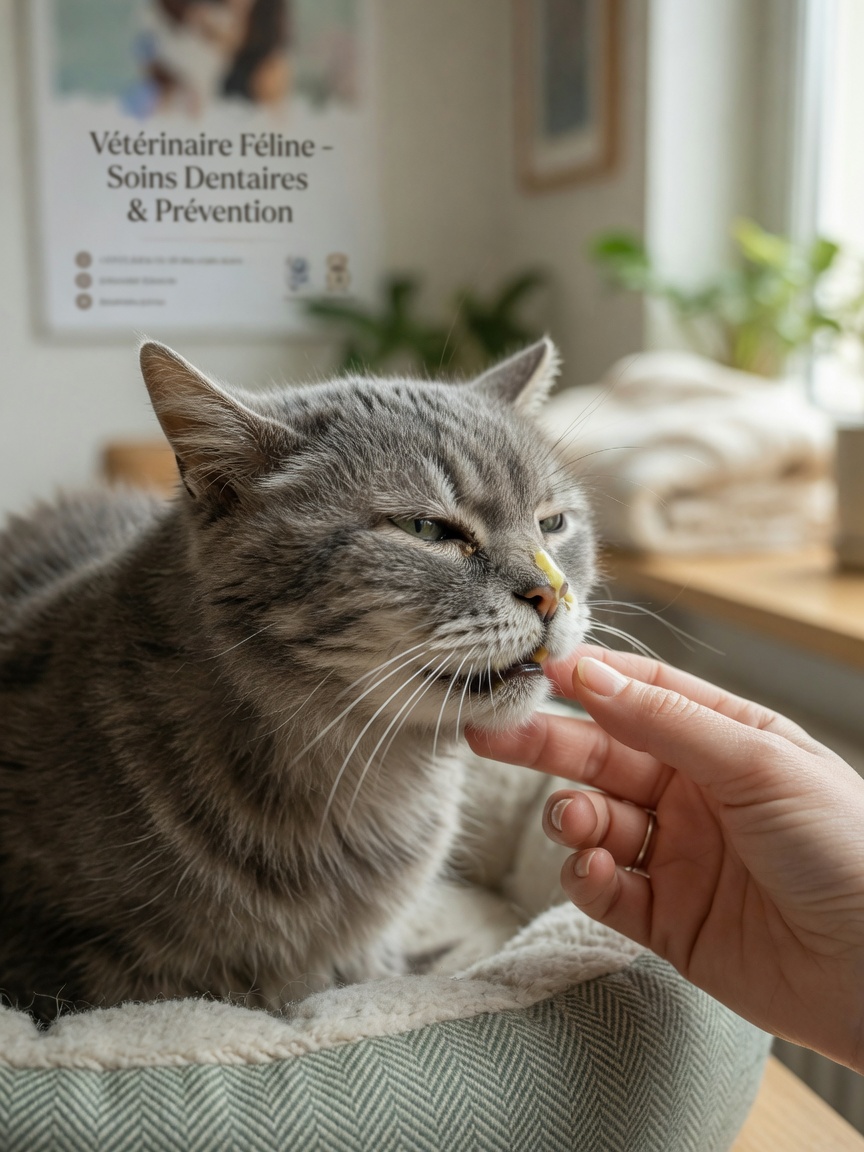
Cette cause surprend de nombreux propriétaires de chats : les racines des canines supérieures et des prémolaires sont très proches de la cavité nasale. Les abcès des racines dentaires avancées peuvent éroder les passages nasaux, causant un écoulement nasal unilatéral chronique et des éternuements qui ne répondent pas aux traitements antiviraux ou antibiotiques. Si votre chat présente des éternuements persistants avec un écoulement provenant d'une seule narine, un examen dentaire sous anesthésie doit faire partie de la liste diagnostique. L'extraction de la dent affectée résout généralement les symptômes nasaux.
5. Polypes Nasaux ou Corps Étrangers
Les jeunes chats développent occasionnellement des polypes nasopharyngés — des croissances inflammatoires bénignes dans le passage nasal ou la gorge qui causent des éternuements chroniques, un écoulement nasal et parfois un bruit de ronflement ou une difficulté respiratoire. Les corps étrangers (une graine d'herbe, une lame d'herbe sèche) logés dans le passage nasal causent des éternuements violents d'apparition soudaine, souvent avec un comportement de grattage du nez. Un vétérinaire peut examiner les passages nasaux avec un endoscope ou sous anesthésie et retirer l'obstruction.
6. Chlamydophilose Féline
Chlamydophila felis est un agent pathogène bactérien qui cause principalement une conjonctivite mais s'accompagne fréquemment d'éternuements et d'un léger écoulement nasal. C'est plus courant dans les environnements multi-chats et chez les jeunes chats. Le diagnostic se fait par test PCR à partir de frottis conjonctivaux. Le traitement à la doxycycline pendant 4–6 semaines est efficace, et l'infection répond mal à de nombreux autres antibiotiques.
7. Tumeurs Nasales (Chats Âgés)
Chez les chats de plus de 10 ans, un écoulement nasal unilatéral persistant et des éternuements — particulièrement s'ils sont tachés de sang et ne répondent pas aux antibiotiques — soulèvent des préoccupations concernant le lymphome nasal ou l'adénocarcinome nasal. Ces tumeurs sont rares mais ont un pronostic plus réservé. Le diagnostic nécessite une imagerie CT et une biopsie. La radiothérapie peut obtenir une rémission significative en cas de lymphome nasal. Tout chat âgé présentant un écoulement nasal unilatéral, chronique ou teinté de sang a besoin d'une évaluation vétérinaire rapide incluant une imagerie.
Pour les chats ayant un diagnostic confirmé d'herpèsvirus, la supplémentation en L-lysine a historiquement été recommandée pour réduire la réplication virale — bien que les preuves récentes de son efficacité soient mitigées. Plus fiablement utile : réduire le stress (un déclencheur majeur d'herpès), utiliser un humidificateur à brume froide dans la pièce où dort votre chat, et essuyer délicatement les écoulements croûteux du nez et des yeux avec un chiffon humide et chaud. Maintenir à jour le statut vaccinal de votre chat (les vaccins essentiels incluent FHV-1 et FCV) réduit la gravité des IRS même s'il ne prévient pas totalement l'infection.
Quand Est-ce Juste un Éternuement Normal ?
Un chat en bonne santé qui éternue une ou deux fois, ne présente pas d'écoulement et continue à manger et jouer normalement a