
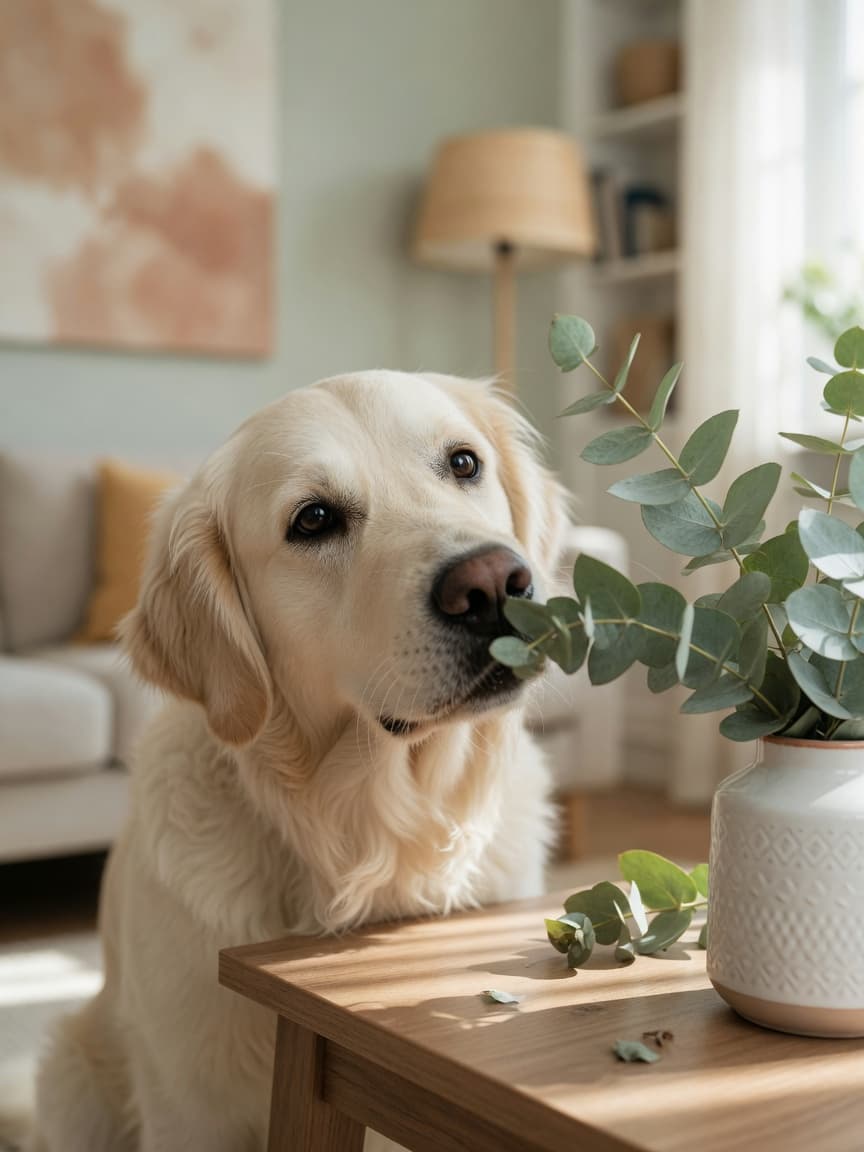
L'eucalyptus est-il toxique pour les chiens ?
Mis à jour : juin 2026
L'eucalyptus : beau, aromatique et dangereux
Les eucalyptus (Eucalyptus spp.) figurent parmi les plantes les plus reconnaissables au monde — leurs feuilles argentées et vertes distinctives, leur écorce qui s'exfolie et leur parfum puissamment aromatique les rendent inconfondables. Originaire d'Australie mais cultivé mondialement, l'eucalyptus s'est implanté dans l'aménagement paysager, la décoration intérieure, les compositions florales et un nombre énorme de produits de soins personnels et de bien-être : baumes, inhalants, pastilles pour la gorge, huiles essentielles, et mélanges pour diffuseurs.
Ce que de nombreux propriétaires de chiens ne savent pas, c'est que l'eucalyptus, sous toutes ses formes, est véritablement toxique pour les chiens. C'est un fait important étant donné la fréquence à laquelle les branches d'eucalyptus apparaissent dans les arrangements floraux décoratifs pour la maison, la fréquence à laquelle l'eucalyptus est planté dans les jardins des régions chaudes, et l'utilisation généralisée des produits à base d'eucalyptus — souvent à proximité d'animaux de compagnie curieux.
Les chats sont tout aussi vulnérables à la toxicité de l'eucalyptus et à certains égards encore plus, car leur capacité limitée à métaboliser certains composés les rend particulièrement sensibles. Si vous avez des chats et des chiens, l'eucalyptus est un danger pour les deux.
Le toxine : 1,8-cinéole (eucalyptol)
Le composé toxique principal dans l'eucalyptus est le 1,8-cinéole, couramment appelé eucalyptol. C'est le composé responsable de l'odeur distinctive et piquante de camphre de l'eucalyptus, et il est présent en fortes concentrations dans toute la plante — particulièrement dans les feuilles et l'écorce. L'huile essentielle d'eucalyptus, qui est essentiellement un extrait concentré des composés volatils de la plante, contient l'eucalyptol comme composant dominant, comprenant généralement 70-90 % de la composition totale de l'huile.
L'eucalyptol est un éther cyclique qui agit sur le système nerveux central. Après ingestion, il est rapidement absorbé par le tractus gastro-intestinal et se distribue dans tout le corps, franchissant la barrière hémato-encéphalique et produisant des effets neurologiques. Chez les chiens et les chats, la capacité du foie à métaboliser l'eucalyptol est limitée par rapport aux humains, les rendant plus sensibles à ses effets toxiques à des doses plus faibles.
En plus de l'eucalyptol, les plantes d'eucalyptus contiennent diverses autres substances potentiellement irritantes, notamment l'alpha-pinène, le limonène et divers terpènes qui contribuent à l'irritation du tractus gastro-intestinal et des muqueuses.
Symptômes d'empoisonnement à l'eucalyptus chez les chiens
Les symptômes peuvent se développer dans les 30 minutes à 2 heures suivant l'ingestion, selon la quantité consommée et s'il s'agissait de la plante entière ou d'une huile essentielle concentrée. L'huile essentielle produit des symptômes plus rapides et plus graves en raison de sa concentration beaucoup plus élevée en eucalyptol.
Symptômes gastro-intestinaux (généralement les premiers) :
- Salivation excessive — souvent dramatique et l'un des signes les plus immédiatement visibles
- Vomissements, qui peuvent être répétés
- Diarrhée
- Nausée (léchage des lèvres, agitation ou immobilité inhabituelle avant les vomissements)
Symptômes neurologiques (surtout avec des expositions plus importantes) :
- Faiblesse et léthargique
- Manque de coordination et trébuchement (ataxie)
- Désorientation ou confusion
- Dépression du système nerveux central — le chien peut sembler sédaté ou ne pas réagir
- Tremblements musculaires
- Dans les cas graves : convulsions
Symptômes respiratoires :
- Respiration ralentie ou anormale dans les cas graves
- Irritation respiratoire, particulièrement liée à la diffusion d'huile essentielle dans des espaces clos
La combinaison de détresse gastro-intestinale et de symptômes neurologiques est caractéristique de la toxicité de l'eucalyptus chez les chiens. La présence de symptômes neurologiques — manque de coordination, tremblements ou convulsions — indique qu'une quantité importante a été absorbée et nécessite une attention vétérinaire immédiate.
Huile essentielle vs plante fraîche : laquelle est plus dangereuse ?
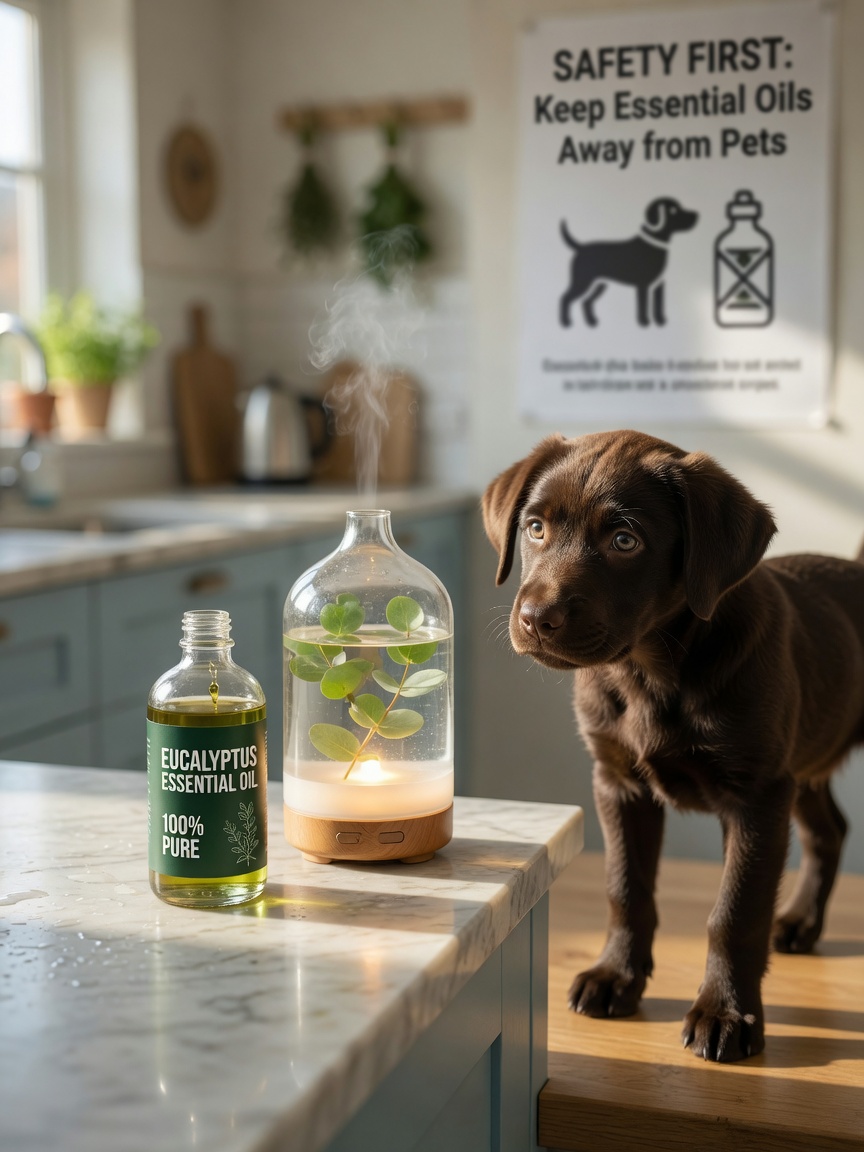
Comme avec la lavande et de nombreuses autres plantes aromatiques, la forme d'huile essentielle présente un risque nettement plus important que la plante entière, simplement en raison de la concentration. Un chien qui mâche brièvement une feuille d'eucalyptus d'un arbre de jardin est exposé à beaucoup moins d'eucalyptol qu'un chien qui lèche une cuillère à soupe d'huile essentielle d'eucalyptus renversée par une bouteille de diffuseur.
Cependant — et c'est crucial — la plante entière est véritablement toxique en quantités suffisantes. Contrairement à la lavande, où les expositions à la plante entière sont généralement légères, l'ingestion d'eucalyptus entier peut causer des symptômes importants même sans implication d'huile. Les chiens ne devraient pas être autorisés à accéder aux eucalyptus, aux feuilles d'eucalyptus tombées ou aux branches d'eucalyptus utilisées dans les arrangements floraux.
L'huile essentielle d'eucalyptus utilisée dans les diffuseurs représente un risque faible mais non nul, particulièrement dans les petites pièces fermées où les concentrations s'accumulent, et pour les chiens ayant une sensibilité respiratoire.
L'eucalyptus décoratif : un danger souvent négligé
L'un des danger fréquemment négligé