
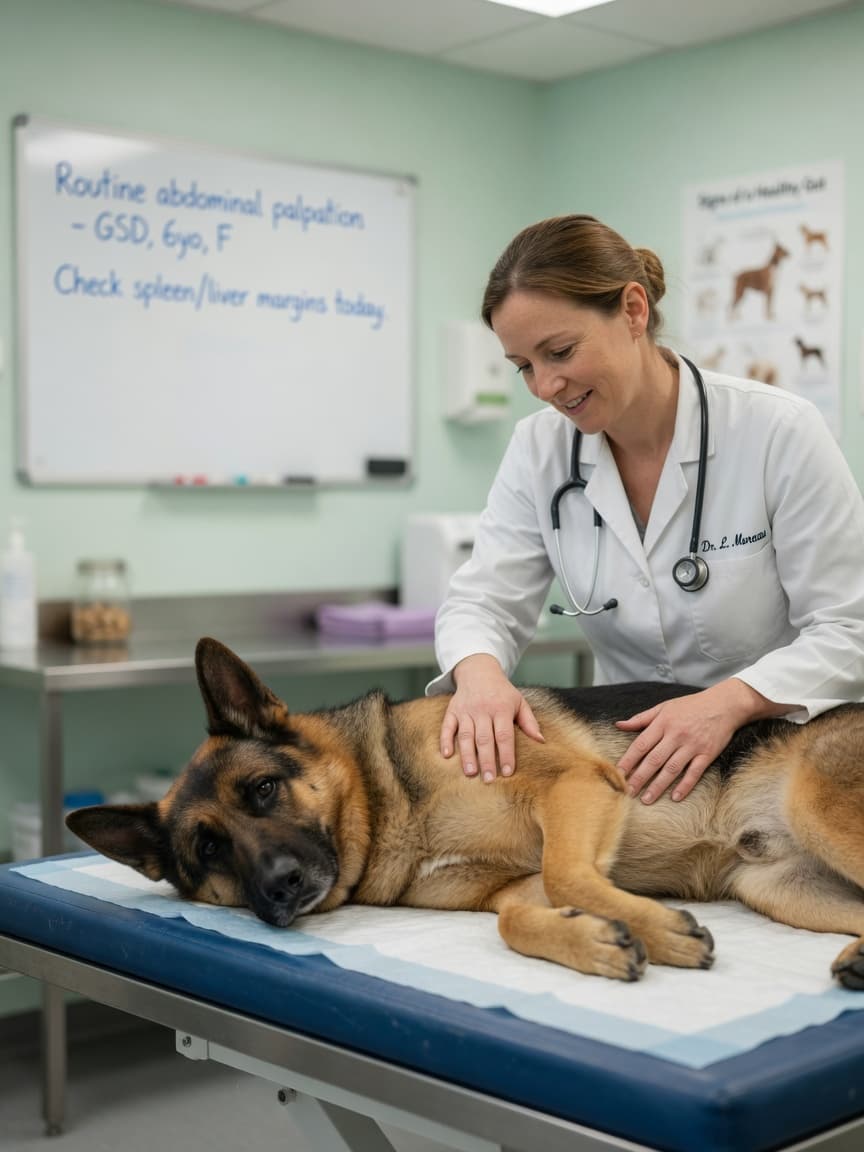
Les Bergers Allemands font partie des races les plus vulnérables au ballonnement, ou dilatation-torsion gastrique (GDV), en raison de leur poitrine profonde et étroite, qui permet à l'estomac de se remplir de gaz et de se tordre sur lui-même. Il s'agit d'une véritable urgence vétérinaire, non pas d'une situation à "attendre et voir" — un chien présentant des signes de ballonnement doit être examiné par un vétérinaire immédiatement, car chaque heure de délai réduit les chances de survie.
Pourquoi les Bergers Allemands Sont Prédisposés au Ballonnement
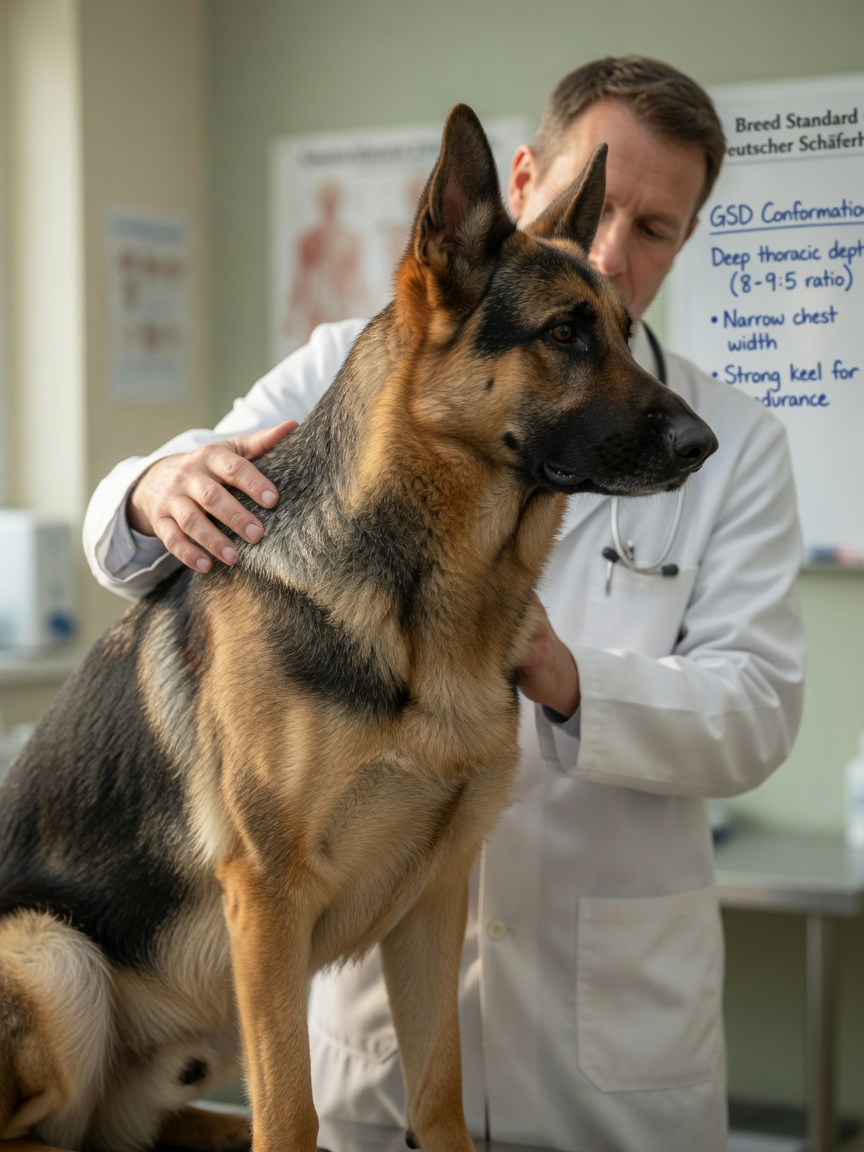
Le ballonnement, correctement appelé dilatation-torsion gastrique (GDV), se produit lorsque l'estomac se remplit de gaz et de liquide (dilatation), puis se tord sur son propre axe (torsion). Cette rotation emprisonne le gaz, coupe l'apport sanguin à la paroi stomacale et peut rapidement entraîner un choc, la mort des tissus et une insuffisance organique. C'est l'une des rares conditions chez les chiens qui peut tuer un animal en apparence sain en quelques heures.
Les Bergers Allemands sont reconnus comme une race à haut risque largement en raison de leur morphologie. Les chiens ayant une poitrine profonde et étroite (un rapport profondeur-largeur thoracique élevé) ont plus d'espace pour que l'estomac se déplace et se torde comparé aux races à poitrine plus large et moins profonde. Cette caractéristique anatomique est partagée avec d'autres grandes races à poitrine profonde telles que les Grands Danois, les Weimaraners et les Caniches Standard.
Au-delà de la conformation de la poitrine, les facteurs qui sont censés contribuer au risque de ballonnement chez les races prédisposées incluent la consommation rapide de nourriture, le fait de manger un seul grand repas par jour plutôt que plusieurs petits, l'exercice vigoureux autour des repas, et une disposition nerveuse ou anxieuse — les Bergers Allemands sont souvent signalés par les vétérinaires comme une race prédisposée aux troubles digestifs liés au stress, ce qui peut augmenter le risque. L'âge est également pertinent, car les chiens plus âgés et de plus grande taille sont généralement plus susceptibles que les jeunes chiots. Un historique familial de ballonnement chez les proches parents est également considéré comme un facteur de risque, donc si vous connaissez la généalogie de votre chien, cela vaut la peine d'en discuter avec votre éleveur ou votre vétérinaire. Pour des informations générales sur les caractéristiques et les tendances sanitaires de la race, le guide de la race Berger Allemand est un bon point de départ.
Signes Précoces et Symptômes à Surveiller
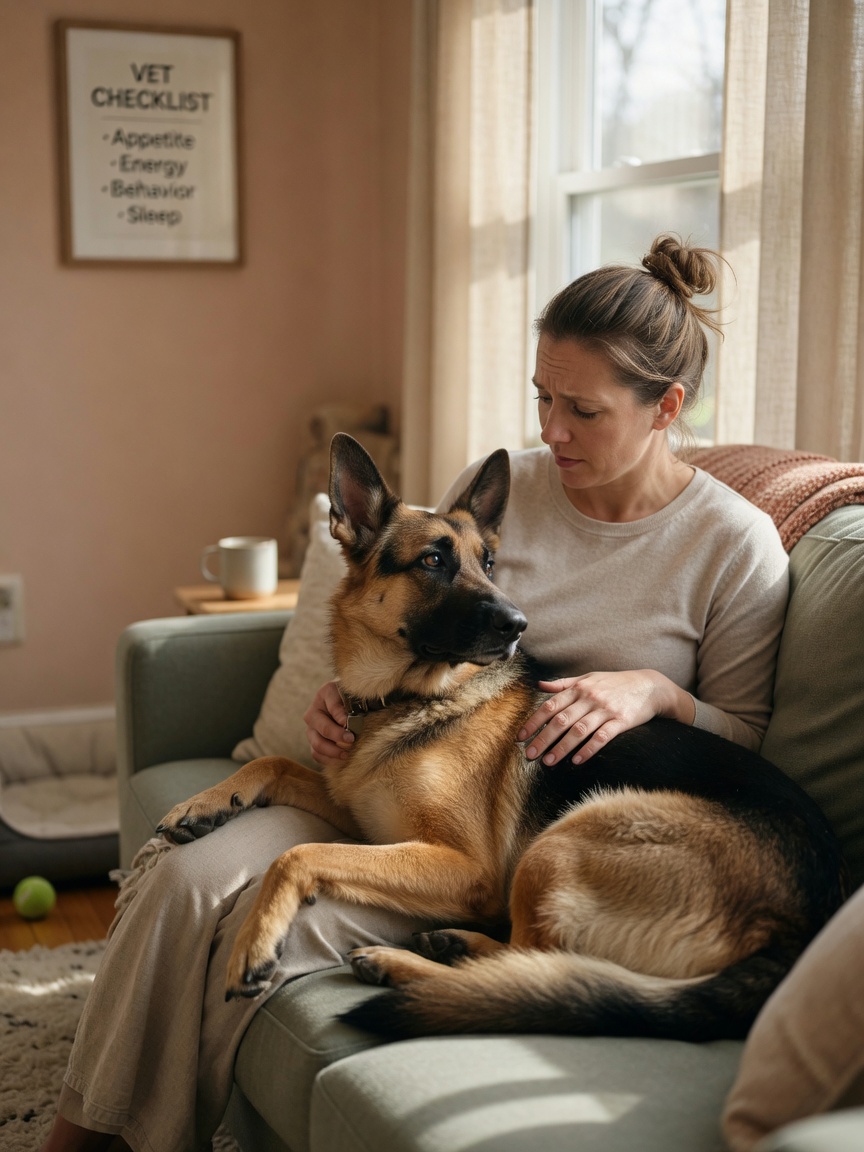
Le ballonnement peut progresser extrêmement rapidement, donc reconnaître les signes précoces est important. Les propriétaires doivent surveiller :
- Un abdomen visiblement gonflé, tendu ou distendu
- Des haut-le-cœur improductifs — le chien essaie de vomir mais ne rejette peu ou rien
- L'agitation, la pacing, ou une incapacité à être confortable ou à se détendre
- Une salivation excessive
- Une halètement ou une respiration rapide qui ne correspond pas au niveau d'activité
- Une posture courbée ou anxieuse, parfois s'étiran répétées comme pour soulager l'inconfort
- Des gencives pâles ou décolorées à mesure que la condition progresse
- Un effondrement ou une faiblesse dans les cas avancés
Ces signes peuvent apparaître soudainement, souvent dans l'heure ou deux suivant un gros repas, un exercice vigoureux, ou la consommation rapide d'un grand volume d'eau, bien que le ballonnement puisse occasionnellement se produire sans aucun déclencheur apparent.
Quand c'est une Urgence
Le ballonnement est toujours une urgence. Il n'existe aucune version de cette condition qui puisse être en toute sécurité surveillée à la maison pendant la nuit ou gérée avec une approche "attendre et voir". Si votre Berger Allemand présente un abdomen gonflé associé à des haut-le-cœur improductifs, ou toute combinaison des symptômes ci-dessus, vous devez traiter cette situation comme une situation potentiellement mortelle et vous rendre immédiatement chez un vétérinaire d'urgence — n'attendez pas que votre clinique régulière ouvre. Le temps est le facteur le plus important pour la survie, car plus longtemps l'estomac reste tordu, plus de dommages se produisent à la paroi stomacale, à la rate et à l'apport sanguin environnant, et plus le risque que le chien entre en choc est grand.
Appelez à l'avance si vous le pouvez, afin que l'équipe vétérinaire puisse se préparer à votre arrivée, mais ne retardez pas le voyage pour faire l'appel — commencez d'abord à vous diriger vers l'aide.
Diagnostic
Les vétérinaires diagnostiquent généralement le GDV en combinant les signes cliniques, les résultats de l'examen physique (comme un abdomen tendu et sonore), et l'imagerie. Une radiographie abdominale est l'outil standard utilisé pour confirmer si l'estomac s'est simplement dilaté avec du gaz ou s'il s'est réellement tordu (volvulus), car l'approche thérapeutique diffère considérablement entre les deux. Les analyses sanguines sont généralement effectuées parallèlement à l'imagerie pour évaluer l'état général du chien, vérifier les signes de choc et évaluer la fonction organique, car le GDV peut affecter l'apport sanguin à plusieurs organes très rapidement.
Gestion et Options de Traitement
Le traitement du GDV confirmé est chirurgical dans presque tous les cas et est considéré comme une véritable procédure d'urgence. L'approche générale implique :
- Stabilisation en premier : Les chiens en choc nécessitent des liquides intraveineux immédiats et des soins de soutien pour stabiliser la pression artérielle et la circulation avant que l'anesthésie et la chirurgie ne puissent être effectuées en toute sécurité.
- Décompression : Le vétérinaire peut soulager la pression dans l'estomac, soit via un tube passé dans l'oesophage, soit en insérant une aiguille ou un cathéter à travers la paroi corporelle, pour réduire l'accumulation de gaz et améliorer la circulation sanguine.
- Chirurgie : Une fois stabilisé, une intervention chirurgicale est effectuée pour dérouler l'estomac, évaluer l'état de santé de la paroi stomacale et de la rate (enlever tout tissu qui est mort), et corriger la volvulus.
- Gastropexie : Pendant la même intervention chirurgicale, les vétérinaires effectueront presque toujours une gastropexie — une procédure qui fixe de manière permanente l'estomac à la paroi corporelle pour l'empêcher de se tordre à nouveau à l'avenir. Cela réduit considérablement le risque de récurrence, bien que cela n'élimine pas la possibilité que l'estomac se ballonne avec du gaz à nouveau (sans rotation complète).
- Soins postopératoires : La récupération implique une surveillance étroite des complications telles que les arythmies cardiaques, l'infection ou le dysfonctionnement organique continu, ainsi que le soulagement de la douleur et un retour graduel à l'alimentation normale.
Parce que le GDV affecte l'apport sanguin et peut déclencher une cascade de complications dans tout le corps, les chiens sont généralement hospitalisés pendant plusieurs jours après la chirurgie pour surveillance.
Prévention et Soins Quotidiens
Bien qu'aucune méthode ne garantisse qu'un Berger Allemand ne développera jamais de ballonnement, plusieurs mesures pratiques peuvent aider