
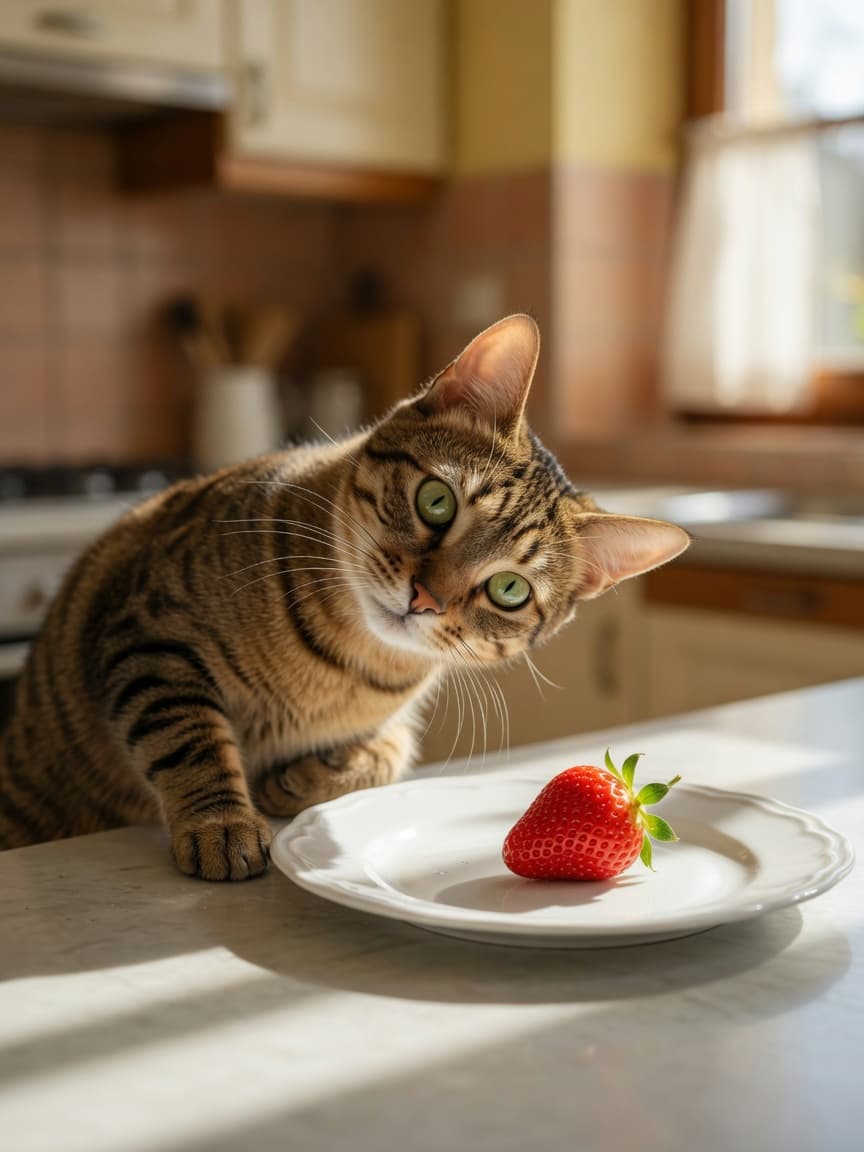
Les Chats Peuvent-ils Manger des Fraises ? Ce que la Science Nous Dit
Les Fraises Sont-elles Sans Danger pour les Chats ?
Les fraises ne sont pas classées comme toxiques pour les chats par les autorités en toxicologie vétérinaire, y compris l'ASPCA. Cela les distingue des fruits véritablement dangereux comme les raisins et les raisins secs, qui peuvent causer une insuffisance rénale aiguë chez les chats et les chiens, ou les agrumes, qui contiennent des "/en/articles/essential-oils-dogs-safety" title="Les Chats Peuvent-ils Goûter les Fraises ?
L'un des faits les plus frappants concernant la biologie gustative féline est que les chats manquent de la capacité à détecter la douceur. Ce n'est pas une question de préférence — c'est un fait génétique structurel. Le gène Tas1r2, qui code l'une des deux sous-unités protéiques nécessaires pour former un récepteur fonctionnel du goût sucré, est un pseudogène non fonctionnel chez les chats. Une recherche publiée dans PLoS Genetics a confirmé cette découverte, expliquant pourquoi les chats n'affichent aucun intérêt pour les aliments riches en sucre de la façon que les omnivores le font. La principale qualité qui rend les fraises attrayantes pour les humains — leur saveur douce et brillante — est complètement imperceptible pour les chats. Si un chat montre de l'intérêt pour une fraise, il réagit à l'arôme du fruit (les fraises contiennent un mélange complexe d'esters volatils) ou simplement à votre comportement en manipulant quelque chose. Ils ne vivent pas l'expérience de la fraise de la même manière que vous. Cela signifie qu'il n'y a également aucun bénéfice particulier à introduire les fraises comme une « récompense » pour votre chat. Les chats ne peuvent pas associer le goût de la fraise à aucune sensation gustative positive. Les friandises de haute qualité à base de viande sont bien plus significatives pour eux du point de vue sensoriel. Les fraises contiennent environ 7 grammes de sucre par 100 grammes de fruit — une quantité relativement modeste comparée aux mangues ou aux dattes, mais significative dans le contexte des besoins quotidiens d'un chat. Les chats n'ont aucune exigence métabolique pour les glucides alimentaires. Leurs foies utilisent la gluconéogenèse — la synthèse du glucose à partir d'acides aminés dérivés des protéines — comme voie primaire de génération de glucose. Contrairement aux omnivores, les chats ne régulent pas efficacement la glycémie en réponse à l'apport en glucides, car ils ont évolué sans avoir besoin de le faire. La consommation régulière d'aliments sucrés — même des fruits — par les chats a été associée dans la littérature vétérinaire à un risque accru d'obésité et de diabète sucré de type 2 chez le félidé. Le diabète félin est une préoccupation grave et croissante, avec une prévalence estimée à 1 sur 200 chats dans certaines études, et la charge en glucides alimentaires est considérée comme un facteur de risque contributif. Bien qu'un minuscule morceau occasionnel de fraise ne causera pas le diabète, il vaut la peine de comprendre pourquoi les fruits ne sont jamais un ajout alimentaire recommandé pour les chats. Les fraises sont impressionnantes sur le plan nutritionnel pour les humains — elles sont riches en vitamine C, en folate, en manganèse et en antioxydants comme les anthocyanes et l'acide ellagique. Cependant, les chats synthétisent leur propre vitamine C et n'en ont pas besoin provenant de la nourriture. Les composés antioxydants dans les fraises n'ont pas été étudiés pour un bénéfice significatif chez les chats. Le folate est essentiel pour les chats mais est abondamment disponible dans les régimes à base de viande. En bref, les nutriments qui rendent les fraises précieuses pour la santé humaine sont soit sans pertinence, soit déjà fournis par un régime félin approprié, soit présents en quantités trop petites pour avoir de l'importance aux quantités que les chats consommeraient. Il n'y a aucun bénéfice documenté à ajouter des fraises à l'alimentation d'un chat. Si vous décidez de laisser votre chat essayer un petit morceau de fraise, la chair rouge est la partie la plus sûre. La calice verte feuillue (le feuillage) et la tige ne sont techniquement pas toxiques, mais ils peuvent être difficiles à digérer et peuvent causer une légère perturbation gastrique. RetirezTeneur en Sucre : Le Problème Clé
Profil Nutritionnel des Fraises : Pertinent pour les Chats ?
Quelles Parties de la Fraise Sont Sans Danger ?
À lire aussi