
Key Takeaways
- Cats should not go more than 24–48 hours without eating — beyond 48 hours, hepatic lipidosis (fatty liver disease) risk rises sharply.
- The most common causes are dental pain, kidney disease, stress, respiratory infections, and food changes.
- Warming food, trying different textures, and appetite stimulants can help at home — but vet evaluation is essential if anorexia persists.
- Kittens and senior cats are at higher risk and should see a vet sooner if they stop eating.
- Sudden complete food refusal combined with lethargy, vomiting, or weight loss is a veterinary emergency.
Introduction
Few things worry a cat owner more than watching their pet walk away from a full food bowl. Cats are famously opinionated about food, but when a cat that normally eats enthusiastically suddenly stops, something is usually wrong. Unlike dogs, cats cannot safely go long periods without eating. Within 24–72 hours of complete food refusal, they risk developing hepatic lipidosis — a potentially fatal liver disease unique to felines. Understanding why your cat isn't eating, and acting quickly, can literally save their life.
This guide covers every major cause of feline inappetence, clear timelines for when to worry, and practical steps you can take right now — all grounded in peer-reviewed veterinary research.
How Long Is Too Long Without Eating?
24 Hours: Monitor Carefully
A cat skipping one meal is not automatically cause for alarm. Cats can be highly sensitive to environmental changes — a new person in the home, a moved food bowl, or even a different brand of food can cause a temporary appetite dip. Monitor closely but don't panic yet.
48 Hours: Take Action
If your cat has not eaten meaningfully in 48 hours, it's time to act. Begin trying the appetite-stimulation strategies below and call your veterinarian to schedule an appointment. At 48 hours, the risk of metabolic complications begins to climb significantly.
72 Hours and Beyond: Veterinary Emergency
A cat that has eaten nothing for 72 hours or more is at serious risk of hepatic lipidosis regardless of the underlying cause. This is a medical emergency. Take your cat to the vet immediately — do not wait to see if they improve on their own. According to a landmark study published in the Journal of Veterinary Internal Medicine, hepatic lipidosis carries a mortality rate of up to 30% without aggressive nutritional support, but recovery rates exceed 85% with early intervention.
Most Common Reasons Your Cat Stopped Eating
1. Dental Pain and Oral Disease
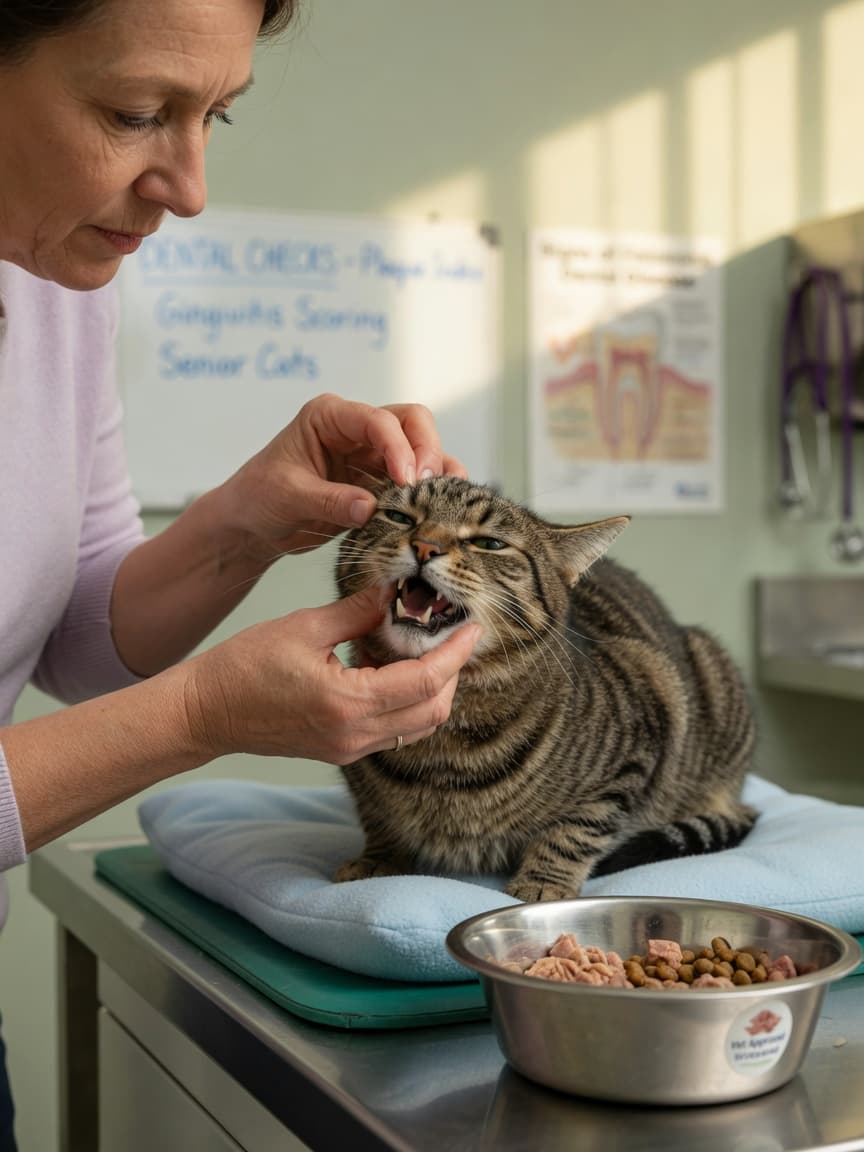
Dental disease is the most frequently overlooked cause of feline inappetence. Studies suggest that over 70% of cats show signs of dental disease by age three. Gingivitis, tooth resorption, and oral ulcers can make eating acutely painful. A cat in dental pain may approach the bowl, sniff, and then walk away — or may drop food repeatedly while chewing. Look for pawing at the mouth, drooling, and bad breath as additional clues. A veterinary dental examination under anaesthesia is the only reliable way to assess the full extent of oral pathology in cats.
2. Chronic Kidney Disease (CKD)
CKD is one of the most common diseases in middle-aged and senior cats, affecting an estimated 30–40% of cats over 10 years old. As kidney function declines, toxins accumulate in the blood (uraemia), causing profound nausea and appetite suppression. Cats with CKD may also develop oral ulcers from uraemia, compounding the dental pain problem. A blood panel including BUN and creatinine is the standard diagnostic test. CKD is manageable — prescription renal diets and phosphate binders can significantly extend quality of life and restore appetite.
3. Stress and Anxiety
Cats are exquisitely sensitive to environmental change. Moving house, a new pet or family member, rearranged furniture, loud construction nearby, or even a change in the owner's schedule can trigger stress-induced inappetence. Stressed cats often show additional signs: hiding, over-grooming, litter box changes, or increased vocalisation. The ISFM (International Society of Feline Medicine) recommends environmental enrichment and feliway diffusers as first-line management for stress-related appetite loss.
4. Upper Respiratory Infections
Cats rely heavily on their sense of smell to identify and enjoy food. Upper respiratory infections — most commonly caused by feline herpesvirus (FHV-1) and feline calicivirus (FCV) — cause nasal congestion that effectively makes food smell like nothing, leading to complete appetite loss. Additional signs include sneezing, nasal discharge, eye discharge, and fever. Treatment typically involves supportive care, sometimes antibiotics for secondary bacterial infections, and anti-viral medications for herpesvirus cases.
5. Gastrointestinal Disease
Inflammatory bowel disease (IBD), pancreatitis, and intestinal parasites are common GI causes of reduced appetite in cats. IBD in particular is frequently underdiagnosed — cats present with intermittent vomiting, weight loss, and appetite fluctuations over months to years before diagnosis. A combination of blood work, ultrasound, and sometimes intestinal biopsy is required for definitive diagnosis.
6. Food Aversion and Food Changes
Some cats develop strong aversions to foods they associate with a negative experience — even a previous bout of nausea can cause a lasting food aversion. Additionally, cats imprint on food textures and flavours during their early development. A sudden switch from wet to dry food, or a formula change by a manufacturer, can cause complete refusal in texture-sensitive cats. The fix is usually gradual transition over 7–10 days.
7. Pain from Other Sources
Any source of pain — arthritis, post-surgical recovery, trauma, or cancer — can suppress appetite. Cats are particularly skilled at hiding pain, so a cat that is simply "not eating" may be in significant discomfort from a source that isn't immediately obvious.
Warning Signs That Need Immediate Veterinary Attention
Take your cat to the vet today if appetite loss is accompanied by any of the following:
- Yellowing of the skin, gums, or whites of the eyes (jaundice — a sign of liver disease)
- Vomiting more than twice in 24 hours
- Complete lethargy — cat won't move or respond normally
- Difficulty breathing
- Noticeable weight loss in less than a week
- Blood in vomit or stools
- Drooling excessively or pawing at the mouth
- Not using the litter box at all
What You Can Do at Home
If your cat has been off food for less than 48 hours and shows no emergency warning signs, these strategies can help stimulate appetite while you arrange a vet visit:
Warm the Food
Heating wet food to approximately 38°C (body temperature) dramatically intensifies the aroma, which is the primary driver of appetite in cats. Microwave for 10 seconds, stir thoroughly, and test the temperature before serving to avoid hot spots. A 2021 survey published in Journal of Feline Medicine and Surgery found that food temperature was one of the most reported factors influencing food acceptance in cats.
Try Different Textures and Formats
If your cat normally eats dry food, offer wet food — the higher moisture content and stronger smell may be more appealing. Try pâté, chunks in gravy, and broth varieties. A good quality wet food, such as those available through Zooplus's veterinary nutrition range, offers both high palatability and complete nutrition to support recovery. If your cat eats wet food, try a different protein source (chicken vs. fish vs. rabbit).
Offer Small Amounts Frequently
A large bowl of food left out can feel overwhelming and "stale" to a cat. Offer very small portions — a tablespoon at a time — every 2–3 hours. Fresh food is always more appealing.
Hand-Feeding
Some cats, particularly those experiencing stress or illness, will eat from a trusted owner's hand when they won't eat from a bowl. This is not spoiling them — it's meeting a genuine emotional need during a stressful time.
Appetite Stimulants (Under Veterinary Guidance)
Mirtazapine is a licensed appetite stimulant for cats and is highly effective, available in both tablet and transdermal gel form. Capromorelin (Elura) is another veterinary-licensed option. Both require a prescription and should only be used under veterinary guidance — they treat the symptom, not the cause, and should not delay investigation of the underlying problem.
When to Go to the Vet
To summarise the timeline clearly:
- Under 24 hours: Monitor at home, try appetite stimulation strategies
- 24–48 hours: Call your vet, begin home strategies, schedule appointment
- Over 48 hours: See the vet that day — do not wait
- Any time + emergency signs: Go immediately, this is urgent
Your vet will likely recommend blood work, urinalysis, and possibly imaging to determine the underlying cause. This information is essential — without a diagnosis, treatment is guesswork.
Frequently Asked Questions
My cat is drinking water but not eating — is that okay?
Drinking water is a positive sign, but it doesn't eliminate the urgency. A cat that is drinking more than usual and not eating may have kidney disease or diabetes. If your cat hasn't eaten in 48 hours, visit the vet regardless of water intake.
Can I give my cat human appetite stimulants?
No. Human appetite stimulants — including cyproheptadine and many supplements — can be toxic to cats or dosing is not established. Only use veterinary-licensed products under professional supervision.
My cat only eats one type of food and won't eat anything else — what do I do?
This is called "fixed food preference" and is common in cats that were exposed to a narrow range of foods early in life. Work with your vet to gradually expand food variety while your cat is healthy — trying to switch foods during illness is much harder.
Could stress from a new kitten cause my cat to stop eating?
Absolutely. Multi-cat household tension is a major stressor. Ensure each cat has its own feeding station in separate locations, ideally out of sight of each other. Feliway MultiCat diffusers and vertical space (cat trees) can significantly reduce inter-cat tension.
References
[1] Center SA, et al. Hepatic lipidosis in cats: 157 cases (1992–2004). J Vet Intern Med. 2011. PMID: 21418320
[2] Sparkes AH, et al. ISFM consensus guidelines on the practical management of diabetes mellitus in cats. J Feline Med Surg. 2015;17(3):235-50. PMID: 25701861
[3] Bartges JW. Chronic kidney disease in dogs and cats. Vet Clin North Am Small Anim Pract. 2012;42(4):669-92. PMID: 22720808
[4] Gaskell R, et al. Feline herpesvirus. Vet Res. 2007;38(2):337-54. PMID: 17296158
[5] Quimby JM, Lunn KF. Mirtazapine as an appetite stimulant and anti-emetic in cats with chronic kidney disease. J Vet Intern Med. 2011;25(5):985-9. PMID: 21848990
[6] Vester Boler BM, et al. Influence of feeding management on voluntary food intake and body weight in cats. J Feline Med Surg. 2021. PMID: 32945229
[7] Lund EM, et al. Prevalence and risk factors for obesity in adult cats from private US veterinary practices. Int J Appl Res Vet Med. 2005;3(2):88-96.
This article is for informational purposes only and does not constitute veterinary advice. Always consult a qualified veterinarian for your pet's health concerns.