
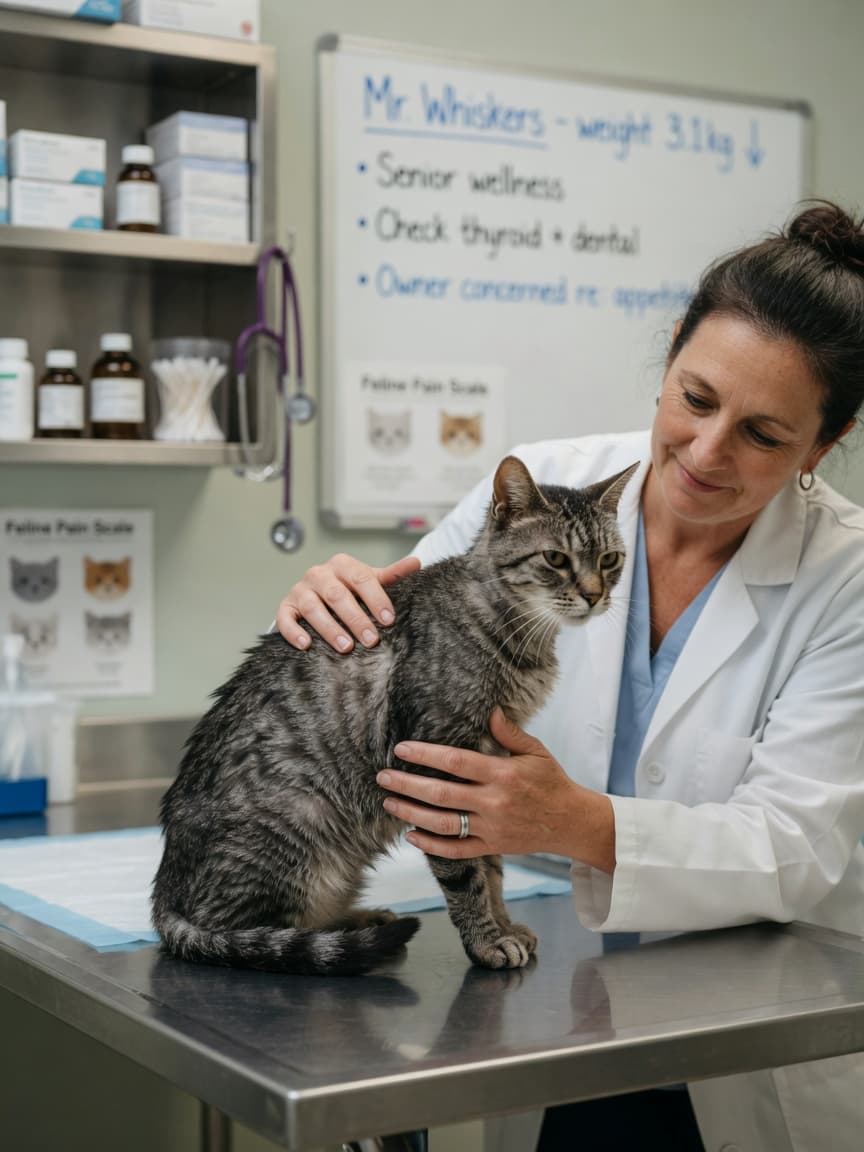
¿Por qué mi gato está perdiendo peso? 9 causas explicadas
Actualizado Junio 2026
- Pérdida de peso superior al 10% del peso corporal en menos de un mes
- El gato no come en absoluto (anorexia durante 24+ horas)
- Pérdida de peso acompañada de vómitos, diarrea o dificultad para respirar
- Coloración amarillenta de la piel u ojos (ictericia)
Cuando un gato comienza a perder peso, puede ser engañosamente fácil no notarlo, especialmente en razas de pelo largo donde el pelaje oculta la pérdida muscular. Cuando la pérdida de peso es visualmente obvia, el proceso puede llevar semanas o meses en marcha. Cualquier pérdida de peso inexplicada en un gato merece atención veterinaria, porque a diferencia de los humanos, la pérdida de peso en gatos rara vez es "nada". Aquí están las nueve causas más comunes, ordenadas por frecuencia en la práctica clínica veterinaria.
1. Hipertiroidismo
El hipertiroidismo es la causa más común de pérdida de peso en gatos mayores de 8 años. La glándula tiroides produce exceso de hormona tiroidea, acelerando dramáticamente el metabolismo. Los gatos afectados a menudo tienen un apetito voraz: comen más pero siguen perdiendo peso, junto con aumento de la sed, hiperactividad, vómitos y un pelaje áspero. El diagnóstico se confirma con un simple análisis de sangre que mide la tiroxina total (T4). Las opciones de tratamiento incluyen medicación diaria, terapia con yodo radiactivo, cirugía o una dieta prescrita restringida en yodo, todas las cuales son altamente efectivas.
2. Enfermedad Renal Crónica (ERC)
La ERC es una de las enfermedades más prevalentes en gatos senior y causa pérdida de peso mediante la reducción del apetito, náuseas por toxinas urémicas e insuficiencia en el metabolismo de proteínas. Los gatos con ERC típicamente beben y orinan más, pueden vomitar (especialmente por la mañana) y pierden gradualmente masa muscular. Un análisis de orina y panel de sangre que mida creatinina, BUN y SDMA pueden diagnosticar la ERC en fase temprana. La ERC en fase inicial es controlable con dieta y cuidados de apoyo.
3. Diabetes Mellitus
En gatos diabéticos, la acción insuficiente de insulina significa que las células no pueden utilizar glucosa de manera efectiva. El cuerpo comienza a descomponer grasa y músculo para obtener energía, causando pérdida de peso a pesar de un apetito normal o aumentado. El aumento de la sed, la micción frecuente y una postura plantigrada característica (caminar sobre los corvejones) son signos característicos. El diagnóstico requiere mediciones de glucosa en sangre y orina. Con terapia de insulina apropiada y una dieta baja en carbohidratos, algunos gatos logran remisión diabética.
4. Enfermedad Inflamatoria del Intestino (EII)
La EII afecta la capacidad del revestimiento intestinal para absorber nutrientes, llevando a una pérdida de peso progresiva incluso cuando el gato come normalmente. El vómito crónico y/o la diarrea son los síntomas característicos que lo acompañan. La EII es más común en gatos de edad media a avanzada y se diagnostica mediante biopsia intestinal. El manejo típicamente implica medicamentos inmunosupresores, modificación dietética a una dieta de proteína hidrolizada o novedosa, y a veces suplementación con vitamina B12.
5. Linfoma Intestinal
El linfoma alimentario de células pequeñas (bajo grado) es el cáncer gastrointestinal más común en gatos e imita estrechamente la presentación de la EII: vómito crónico, pérdida de peso y diarrea. Afecta predominantemente a gatos mayores de 9 años. Distinguir el linfoma de la EII requiere biopsia intestinal e inmunohistoquímica. La buena noticia: el linfoma de células pequeñas responde bien a la quimioterapia oral (clorambucilo y prednisolona), con muchos gatos logrando meses a años de remisión de buena calidad.
6. Enfermedad Dental
Los dientes y encías dolorosos frecuentemente se pasan por alto como causa de pérdida de peso. Un gato con enfermedad dental severa — reabsorción dental, periodontitis o estomatitis — puede dejar de comer o comer significativamente menos porque masticar es doloroso. La pérdida de peso es gradual y puede acompañarse de babeo, lamerse la boca o halitosis. Un examen dental bajo anestesia revela la verdadera gravedad. Las extracciones dentales a menudo producen una mejora dramática en el apetito y la calidad de vida.
7. Cáncer (Otros Tipos)
La pérdida de peso inexplicada, a veces llamada "caquexia por cáncer", puede resultar de casi cualquier malignidad. Los tumores alteran el metabolismo, suprimen el apetito y compiten por nutrientes. Los cánceres felinos comunes que causan pérdida de peso incluyen carcinoma de células escamosas (oral), tumores mamarios y carcinoma hepatocelular. Cualquier gato con pérdida de peso sin otra explicación obvia necesita un examen físico completo que incluya palpación de masas, evaluación de ganglios linfáticos e imágenes.
8. Parásitos
Las cargas parasitarias intestinales pesadas, particularmente parásitos redondos y tenias, pueden causar pérdida de peso al competir por los nutrientes ingeridos, dañar el revestimiento intestinal y causar inflamación crónica de bajo grado. Los gatos que viven al aire libre y los cazadores tienen el mayor riesgo. Los segmentos de tenia pueden ser visibles alrededor del ano o en la caja de arena. La desparasitación rutinaria y los exámenes fecales anuales son la mejor prevención.
9. Estrés o Depresión
Los gatos bajo estrés crónico, por cambios ambientales, conflicto entre gatos o estimulación mental inadecuada, pueden reducir su ingesta de alimento lo suficiente como para perder peso significativo. Este es un diagnóstico por exclusión (alcanzado solo después de que se descartan las causas médicas), pero es más común de lo que muchos propietarios esperan. El enriquecimiento, la rutina, los difusores de feromonas y abordar la fuente del estrés pueden restaurar el apetito normal.
Pesa a tu gato mensualmente usando una báscula para bebés o una báscula de baño (pésate sosteniendo al gato, luego pésate solo y resta la diferencia). El seguimiento regular puede detectar pérdida de peso temprana antes de que sea clínicamente evidente. Registra el peso en una hoja de cálculo para identificar tendencias.
Cuándo buscar atención veterinaria en España
Si notas pérdida de peso en tu gato, programa una cita con tu clínica veterinaria lo antes posible. Especialmente en gatos senior, la pérdida de peso rara vez se resuelve sola. Un veterinario en España puede realizar pruebas diagnósticas exhaustivas, incluyendo análisis de sangre completo, panel de química, análisis de orina, y si es necesario, imágenes radiológicas o ultrasónicas. La detección temprana de condiciones como el hipertiroidismo, la enfermedad renal crónica o la diabetes mejora significativamente los resultados del tratamiento y la calidad de vida.
Conclusión
La pérdida de peso en gatos siempre merece investigación. Aunque algunas causas como el hipertiroidismo o la diabetes mellitus son altamente tratables una vez diagnosticadas, otras como ciertos cánceres requieren intervención más temprana para los mejores resultados. Confía en tu instinto: si algo parece diferente con tu gato, una visita al veterinario es justificada. Para más información sobre salud felina, consulta los recursos de ForPetsHealthcare o habla con tu veterinario local.