
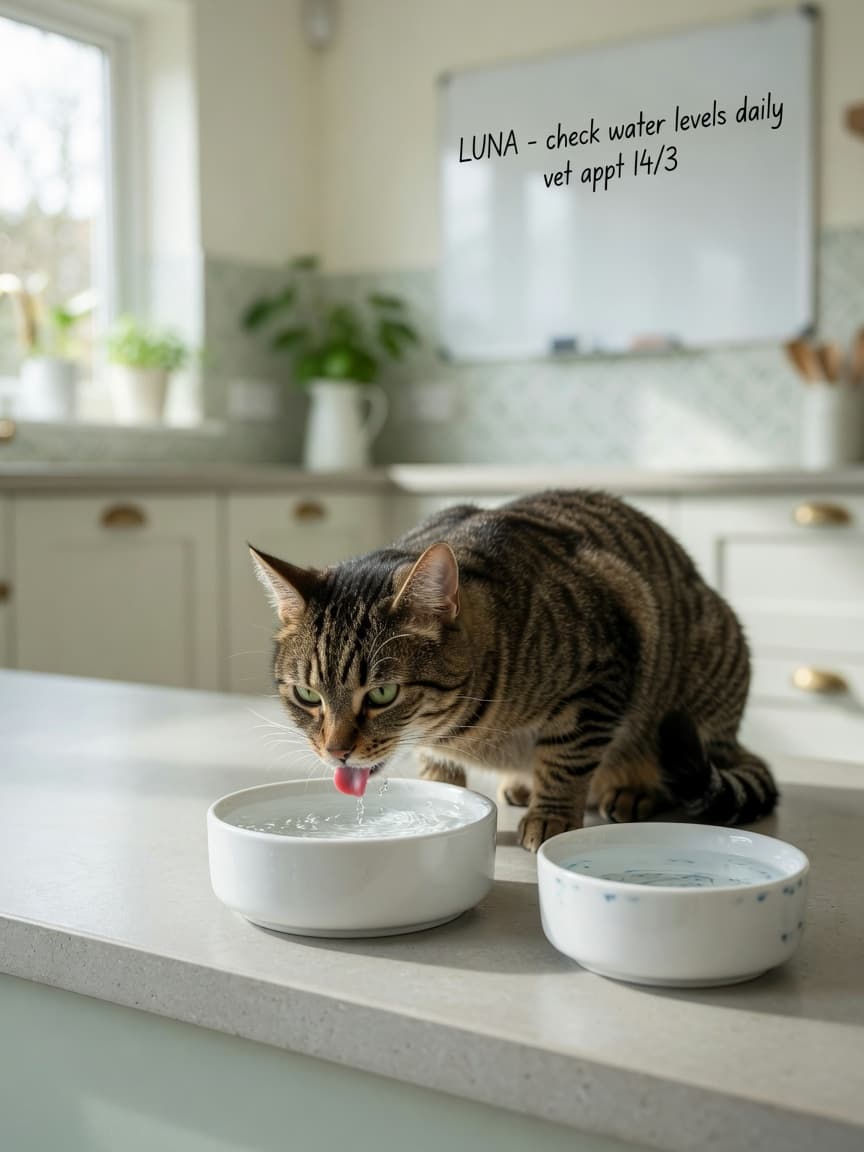
¿Por Qué Mi Gato Bebe Tanta Agua? (Polidipsia)
Actualizado junio 2026
- Aumento dramático en la ingesta de agua combinado con vómitos o letargo
- El gato bebe excesivamente pero no orina, o tiene dificultad para orinar
- Signos de deshidratación: ojos hundidos, encías secas, piel que no recupera su forma al pellizcarla suavemente
- Inicio repentino de sed excesiva en un gato mayor — requiere análisis de sangre la misma semana
Los gatos evolucionaron como depredadores del desierto e históricamente obtuvieron la mayor parte de su hidratación de las presas. Un gato que de repente corre hacia el cuenco de agua varias veces al día — o bebe de grifos abiertos, inodoros o fuentes inusuales — está mostrando polidipsia, el término médico para la sed excesiva. Aunque la dieta puede influir en la cantidad de agua que bebe un gato, un aumento genuino en el consumo de agua es casi siempre una señal digna de investigación. Aquí te mostramos qué podría estar causándolo.
¿Cuánta Agua Es Normal para un Gato?
Los gatos sanos que comen una dieta húmeda consumen aproximadamente 200-250 ml de agua diaria (gran parte de ella proviene del alimento). Los gatos que comen pienso seco beben significativamente más — alrededor de 150-200 ml de agua adicional por día. Una regla útil: si tu gato bebe más de 45 ml por kilogramo de peso corporal al día, eso constituye polidipsia y justifica una evaluación veterinaria. Medir la ingesta durante 24 horas llenando un cuenco con una cantidad conocida y calculando la diferencia te proporciona una línea base confiable.
1. Enfermedad Renal Crónica (La Más Común en Gatos Mayores)
La ERC daña la capacidad del riñón para concentrar la orina, causando la producción de grandes volúmenes de orina diluida. El cuerpo responde con una sed intensa para compensar la pérdida de líquido. Este patrón — beber y orinar más simultáneamente — se llama PU/PD (poliuria/polidipsia) y es la presentación característica de la ERC. La ERC afecta a un estimado 30-40% de gatos mayores de 10 años. La detección temprana mediante un análisis de sangre anual (creatinina, SDMA) permite un manejo dietético y médico que puede extender significativamente una vida cómoda.
2. Diabetes Mellitus
Cuando la glucosa en sangre supera el umbral renal en gatos diabéticos, la glucosa se vierte en la orina y arrastra agua con ella a través de la ósmosis — produciendo grandes cantidades de orina cargada de glucosa y una sed compensatoria intensa. Los gatos diabéticos a menudo beben y orinan dramáticamente más que lo normal, pierden peso a pesar de comer bien, y pueden desarrollar una debilidad característica en las patas traseras (neuropatía diabética). Una prueba de glucosa en sangre y un análisis de orina confirman el diagnóstico rápidamente.
3. Hipertiroidismo
El exceso de hormona tiroidea aumenta la tasa metabólica, la presión arterial y el flujo sanguíneo renal — todo lo cual contribuye al aumento de la producción de orina y la sed secundaria. La polidipsia está presente en aproximadamente 30-35% de los gatos hipertiroideos. La pérdida de peso característica a pesar de un apetito voraz generalmente proporciona la pista diagnóstica, pero un nivel de T4 en sangre lo confirma. El hipertiroidismo también puede enmascarar la ERC subyacente; tratar la afección tiroidea puede revelar insuficiencia renal, razón por la cual el monitoreo posterior al tratamiento es importante.
4. Causas Dietéticas
Un cambio de pienso húmedo a seco aumenta dramáticamente los requisitos de agua. Si tu gato cambió recientemente de dieta y está bebiendo más, esto puede ser simplemente una compensación fisiológica. Los gatos que comen dietas altas en sodio (algunos tratados comerciales o alimentos humanos) también beben más. Asegurar una cantidad adecuada de pienso húmedo en la dieta — o añadir una fuente de agua para alentar la hidratación — beneficia la salud del tracto urinario en todos los gatos independientemente de la causa subyacente.
5. Piometra (Hembras No Esterilizadas)
La piometra — una infección uterina grave — causa toxemia sistémica que afecta la función renal e impulsa la polidipsia. Típicamente ocurre en gatos hembras de mediana edad a mayores no esterilizadas dentro de 2 meses después de un ciclo estral. La piometra abierta puede causar flujo vaginal; la piometra cerrada es más peligrosa porque no hay flujo visible. Esta es una emergencia veterinaria que requiere intervención quirúrgica inmediata. La esterilización elimina este riesgo por completo.
6. Enfermedad Hepática
La disfunción hepática — por lipidosis hepática, colangitis o tumores hepáticos — altera el equilibrio de líquidos y puede causar polidipsia. Los gatos afectados a menudo muestran signos concurrentes: ictericia (amarillamiento de los ojos o la piel), vómitos, pérdida de peso y apetito reducido. La enfermedad hepática se diagnostica mediante análisis de sangre, análisis de orina y ecografía abdominal. El pronóstico varía según la causa, pero muchas formas de enfermedad hepática felina responden bien al tratamiento apropiado.
7. Polidipsia Psicógena
Ocasionalmente, los gatos beben excesivamente sin ninguna enfermedad subyacente — un patrón de comportamiento a veces impulsado por aburrimiento, estrés o una asociación aprendida con agua corriente. Este es un diagnóstico de exclusión, alcanzado solo después de que las causas médicas han sido descartadas mediante un estudio diagnóstico completo. El enriquecimiento ambiental, comederos interactivos y la reducción del estrés generalmente resuelven la polidipsia conductual.
Fomenta una hidratación saludable en todos los gatos ofreciendo una fuente de agua para mascotas — el movimiento del agua imita arroyos naturales y atrae los instintos naturales de los gatos. Coloca cuencos de agua lejos de cuencos de comida (los gatos prefieren no beber cerca de su fuente de alimento en la naturaleza). Mezclar un poco de agua tibia en el pienso o cambiar parcialmente a pienso húmedo son también formas efectivas de aumentar la ingesta diaria de líquidos y apoyar la salud renal a largo plazo.
¿Qué Pruebas Realizará Tu Veterinario?
Para un gato con polidipsia, un estudio diagnóstico estándar incluye un recuento completo de células, panel de bioquímica (valores renales y hepáticos, glucosa), tiroxina total (T4) y análisis de orina con gravedad específica. Estas pruebas juntas pueden identificar o sugerir fuertemente las causas más comunes en una sola visita. La ecografía abdominal puede seguir si el análisis de sangre genera