
Los mejores suplementos para perros mayores: guía basada en la evidencia
Por Julia Wrenfield, investigadora en bienestar animal — 25 de junio de 2026
- Por lo general, se considera que un perro es «sénior» a partir de los 7–8 años (razas grandes) o de los 9–10 años (razas pequeñas).
- La degeneración articular, el deterioro cognitivo y el estrés oxidativo son los tres principales retos asociados a la edad que los suplementos pueden abordar.
- No todos los suplementos son iguales: la calidad, la dosis y la formulación determinan si un producto aporta un beneficio real.
- Consulta siempre con tu veterinario antes de empezar cualquier suplemento, especialmente si tu perro toma medicación con receta.
Ver cómo un perro querido va perdiendo ritmo es una de las realidades agridulces de tener un animal de compañía. Los perros mayores suelen moverse con más rigidez por las mañanas, se cansan antes en los paseos y pueden empezar a mostrar signos sutiles de cambios cognitivos. La buena noticia es que un cuerpo creciente de investigación veterinaria respalda el uso de suplementos nutricionales específicos para apoyar las articulaciones, el cerebro, el hígado y el intestino de los perros que envejecen, y para prolongar sus años de comodidad y actividad. Esta guía repasa las opciones con mayor respaldo científico para que puedas tomar decisiones informadas junto con tu veterinario.
Tabla resumen de la evidencia
| Suplemento | Beneficio principal | Nivel de evidencia |
|---|---|---|
| Glucosamina y condroitina | Apoyo al cartílago articular, reducción del dolor por artrosis | Moderado (ensayos dispares, uso clínico positivo) |
| Aceite de pescado omega-3 (EPA/DHA) | Antiinflamatorio, cardíaco, cognitivo, pelaje | Bueno (varios ensayos clínicos aleatorizados en perros) |
| Vitamina E | Antioxidante, apoyo inmunitario | Moderado (evidencia favorable) |
| Vitamina C | Antioxidante, síntesis de colágeno | Bajo-moderado (los perros la sintetizan; el beneficio del suplemento depende de la situación) |
| CoQ10 | Energía mitocondrial, función cardíaca | Bajo-moderado (prometedor; pocos ensayos específicos en perros) |
| Probióticos | Equilibrio de la microbiota intestinal, modulación inmunitaria | Moderado (las cepas específicas de especie importan) |
| SAMe (S-adenosilmetionina) | Protección hepática, apoyo cognitivo (SDC) | Bueno para el hígado; moderado para el SDC |
| Aceite de CBD (sin THC) | Modulación del dolor/ansiedad, antiinflamatorio | Emergente (primeros ensayos positivos; consulta antes con tu veterinario) |
Glucosamina y condroitina
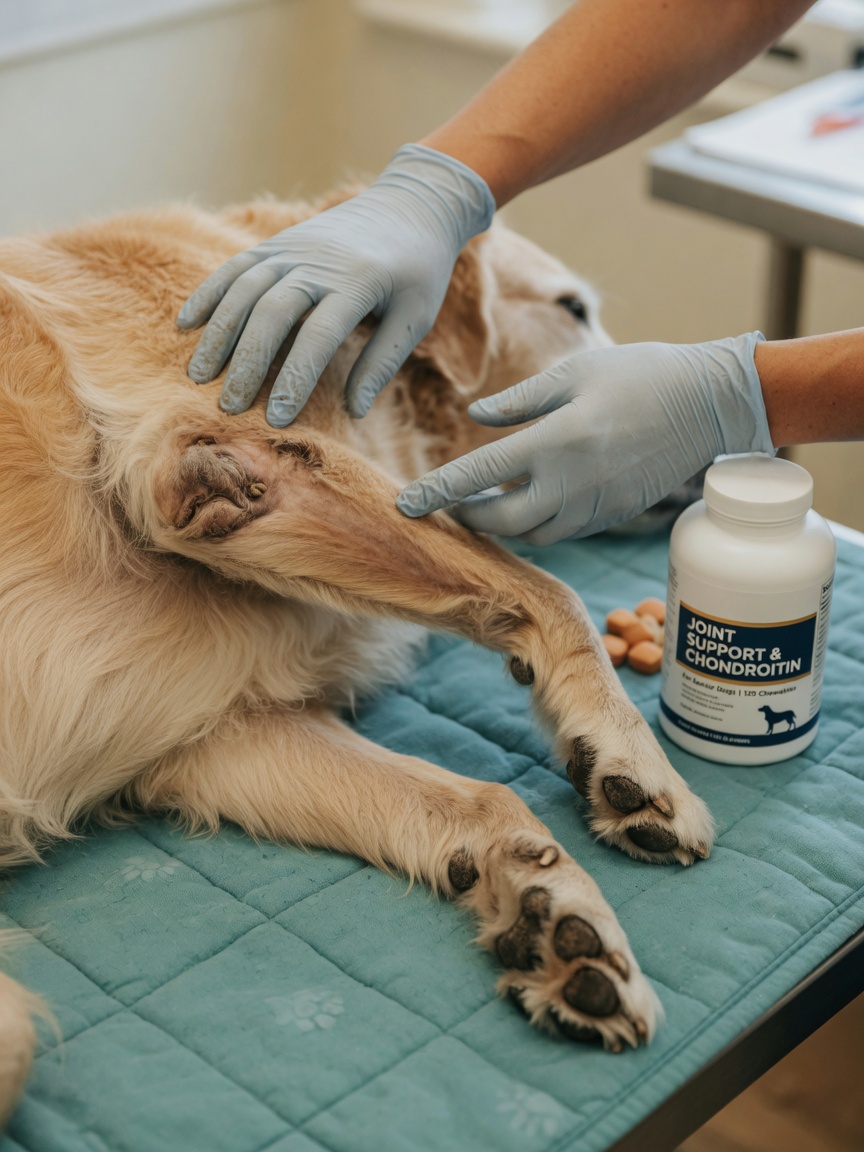
La glucosamina y el sulfato de condroitina son los suplementos articulares que más se recomiendan para perros, y con razón. La glucosamina es un aminoazúcar que sirve como componente básico del cartílago, mientras que la condroitina ayuda a inhibir las enzimas que degradan el cartílago y contribuye a las propiedades de retención de agua que mantienen resistente el tejido articular. Juntas actúan de forma sinérgica para frenar la degradación del cartílago en la artrosis y pueden reducir el dolor articular y mejorar la movilidad.
En perros, la evidencia es más consistente a partir de la experiencia clínica que de grandes ensayos controlados aleatorizados, en parte porque los estudios veterinarios requieren más recursos para financiarse. Dicho esto, un estudio de 2007 publicado en el Journal of the American Animal Hospital Association mostró que los perros con artrosis a los que se administró un producto combinado presentaron una mejora en el apoyo del peso frente al placebo. La mayoría de los especialistas veterinarios en traumatología siguen recomendando estos suplementos como parte de un enfoque multimodal del cuidado articular.
Dosis diarias recomendadas: glucosamina 20 mg/kg de peso corporal; condroitina 15 mg/kg de peso corporal. Los productos de Zooplus ofrecen una amplia gama de suplementos articulares de formulación veterinaria a precios competitivos, incluidos productos combinados de glucosamina y condroitina diseñados para razas grandes y pequeñas.
Ácidos grasos omega-3 (EPA y DHA)
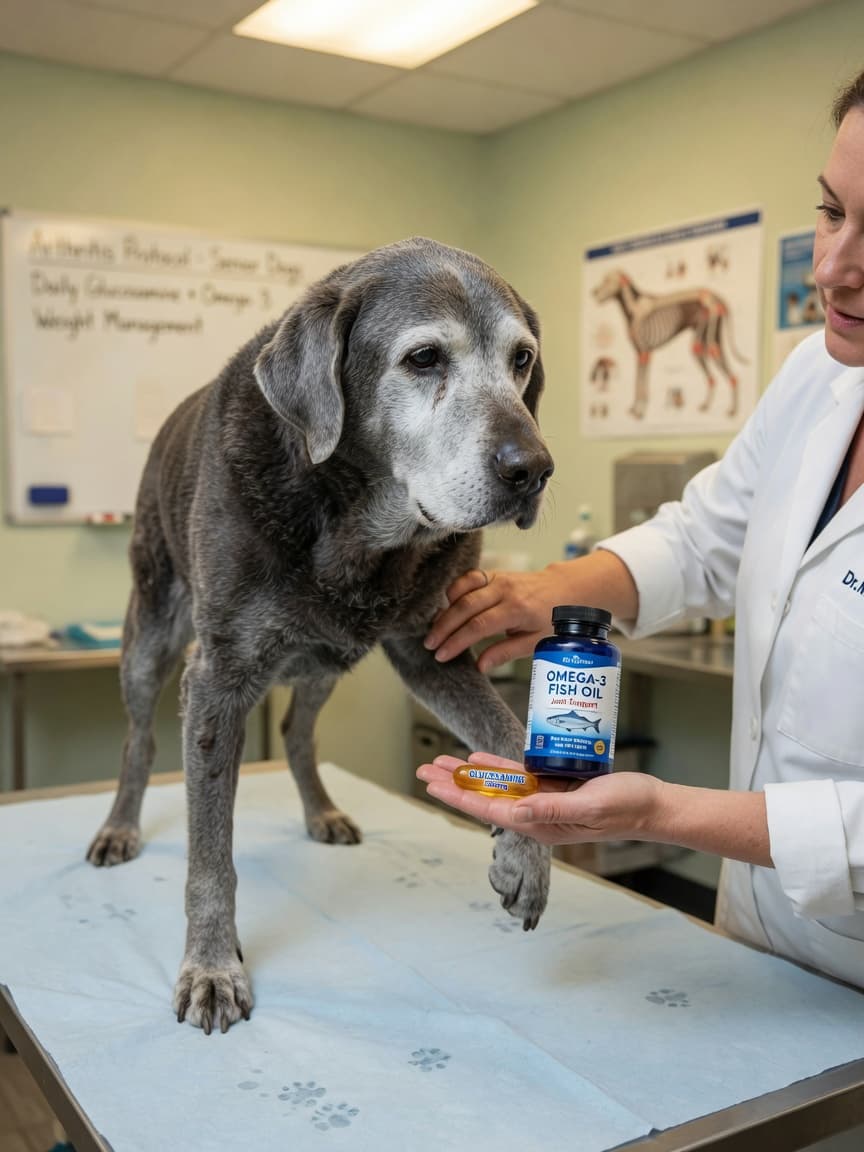
De todos los suplementos para perros mayores, los ácidos grasos omega-3 de origen marino —en concreto el ácido eicosapentaenoico (EPA) y el ácido docosahexaenoico (DHA)— son los que cuentan con la base de evidencia global más sólida. Los estudios han demostrado beneficios significativos para:
- Inflamación articular: el EPA compite con el ácido araquidónico en la cascada inflamatoria, reduciendo la producción de prostaglandinas proinflamatorias. Los perros con artrosis que reciben dosis terapéuticas de aceite de pescado muestran mejoras medibles en el análisis de la marcha con plataforma de fuerza.
- Salud cardíaca: el American College of Veterinary Internal Medicine recomienda los omega-3 para perros con cardiomiopatía dilatada (CMD), en los que reducen la caquexia cardíaca y mejoran los indicadores de supervivencia.
- Función cognitiva: el DHA es un componente estructural de las membranas neuronales. La suplementación se ha asociado con una reducción de las puntuaciones del síndrome de disfunción cognitiva (SDC) en perros que envejecen.
- Calidad del pelo y la piel: los omega-3 reducen la pérdida de agua transepidérmica y mejoran el brillo y el estado del pelaje en perros mayores, cuya piel tiende a volverse más seca.
Las fuentes vegetales como el aceite de lino aportan ALA (ácido alfa-linolénico), que los perros convierten en EPA y DHA con una eficiencia muy baja (<5 %). Para lograr un efecto terapéutico, elige siempre aceite de pescado de origen marino o aceite de algas, que aportan EPA y DHA directamente. La calidad importa: busca productos destilados molecularmente para eliminar metales pesados y PCB, y que cuenten con una certificación de pureza de un tercero independiente.
Antioxidantes: vitaminas E, C y CoQ10
El envejecimiento acelera el estrés oxidativo, es decir, la acumulación de radicales libres que dañan las membranas celulares, las mitocondrias y el ADN. La suplementación con antioxidantes busca neutralizar ese daño y frenar el proceso de envejecimiento a nivel celular.
La vitamina E es el antioxidante liposoluble más importante del organismo. Los perros mayores pueden beneficiarse de su suplementación, sobre todo en combinación con aceite de pescado omega-3 (ya que los omega-3 pueden aumentar la demanda oxidativa si no se acompañan de antioxidantes suficientes). Utiliza vitamina E natural (d-alfa-tocoferol) en lugar de dl-alfa-tocoferol sintético, por su mejor biodisponibilidad. Las dosis suplementarias habituales oscilan entre 100 y 400 UI al día según el tamaño corporal; evita dosis excesivas, ya que cantidades muy altas de vitamina E pueden interferir en la coagulación dependiente de la vitamina K.
Vitamina C: a diferencia de las personas, los perros sintetizan su propia vitamina C en el hígado. Sin embargo, durante una enfermedad, situaciones de estrés o en edades avanzadas, la producción endógena puede resultar insuficiente. Dosis suplementarias pequeñas (10–30 mg/kg) pueden favorecer la función inmunitaria y la síntesis de colágeno sin riesgo de toxicidad, ya que el exceso se elimina por la orina. La evidencia es favorable, pero no concluyente.
La coenzima Q10 (CoQ10) se produce de forma natural en las mitocondrias y desempeña un papel central en la producción de energía celular (síntesis de ATP). Sus niveles descienden con la edad. Aunque faltan ensayos a gran escala en perros, la CoQ10 se usa ampliamente en medicina veterinaria integrativa para apoyar a perros con cardiopatías, a los que reciben medicamentos similares a las estatinas y a perros mayores con fatiga general. Se citan habitualmente dosis iniciales de 1–3 mg/kg/día. Utiliza una forma oleosa o de ubiquinol para una mejor absorción.
Probióticos
La microbiota intestinal cambia con la edad y suele volverse menos diversa y menos resistente. Como consecuencia, los perros mayores pueden sufrir alteraciones digestivas más frecuentes, heces más blandas o una menor competencia inmunitaria. La suplementación con probióticos con cepas adecuadas para la especie —en particular Lactobacillus acidophilus, Bifidobacterium animalis y Enterococcus faecium (cepa SF68)— puede ayudar a restablecer el equilibrio de la microbiota, reducir la inflamación intestinal y reforzar la inmunidad de la mucosa.
Elige productos probióticos específicos para perros con recuentos de UFC (unidades formadoras de colonias) garantizados en la fecha de caducidad, no en la de fabricación. El rango terapéutico para perros suele ser de 1.000 a 10.000 millones de UFC al día. En Zooplus encontrarás alimentos sénior enriquecidos con probióticos y suplementos específicos.
SAMe (S-adenosilmetionina)
La SAMe es un compuesto natural producido en el hígado que participa en más de 40 reacciones bioquímicas, entre ellas reacciones de metilación fundamentales para la síntesis de neurotransmisores, la reparación del ADN y la detoxificación hepática. Tiene dos aplicaciones principales en perros mayores:
Protección hepática: la SAMe es uno de los suplementos hepatoprotectores con más respaldo científico disponibles para perros. Favorece la producción de glutatión (la principal defensa antioxidante del hígado), reduce la inflamación hepática y muchos internistas veterinarios la recomiendan para perros con enzimas hepáticas elevadas, riesgo de lipidosis hepática o que reciben medicación a largo plazo metabolizada por el hígado.
Síndrome de disfunción cognitiva (SDC): la SAMe parece modular las vías de la dopamina y la serotonina. Diversos estudios veterinarios y el producto Novifit (una formulación veterinaria de SAMe) han mostrado mejoras estadísticamente significativas en las puntuaciones de SDC —incluida la reducción de la desorientación, la alteración de los ciclos de sueño-vigilia y el aislamiento social— en comparación con el placebo.
La SAMe debe administrarse con el estómago vacío y en comprimidos con recubrimiento entérico para evitar su degradación por el ácido gástrico. Las dosis habituales van desde 18 mg/kg en perros pequeños hasta dosis por peso más bajas en razas grandes, siempre según las indicaciones veterinarias.
Aceite de CBD para perros mayores
El CBD (cannabidiol) es una opción de la que se habla cada vez más para perros mayores con dolor crónico, ansiedad o inflamación asociados a la edad. Las primeras investigaciones son alentadoras: un estudio de 2018 de la Universidad de Cornell halló que los perros con artrosis a los que se administró 2 mg/kg de aceite de CBD dos veces al día mostraron mejoras significativas en las puntuaciones de dolor y en la movilidad frente al placebo, sin efectos adversos destacables. Investigaciones posteriores han explorado el papel del CBD en la reducción de la ansiedad y el apoyo a la función neurológica.
El CBD actúa a través del sistema endocannabinoide (SEC), que los perros comparten con las personas. El SEC regula la percepción del dolor, la inflamación, el estado de ánimo, la función inmunitaria y el sueño, todos ellos sistemas especialmente relevantes en perros mayores. La expresión clave al elegir cualquier producto de CBD es sin THC: el THC (tetrahidrocannabinol) es tóxico para los perros incluso en dosis bajas y debe estar ausente de cualquier producto que utilices. Elige siempre productos de CBD de amplio espectro o aislado que aporten un certificado de análisis (COA) de un laboratorio independiente que confirme la ausencia total de THC.
Consulta primero con tu veterinario antes de empezar con el CBD, especialmente si tu perro toma AINE, anticonvulsivos u otros medicamentos, ya que el CBD se metaboliza por la misma vía enzimática hepática (CYP450) que muchos fármacos. HolistaPet ofrece una gama de productos de CBD sin THC formulados específicamente para perros, incluidos snacks blandos y tinturas pensados para perros mayores y de razas grandes, con COA completos disponibles para cada lote.
- El aceite de pescado omega-3 tiene la base de evidencia global más sólida para perros mayores, con beneficios para las articulaciones, el corazón, la cognición y la piel.
- La glucosamina y la condroitina cuentan con una evidencia moderada y un amplio respaldo clínico para el manejo de la artrosis.
- La SAMe es una de las opciones con más respaldo científico para la salud hepática y el síndrome de disfunción cognitiva.
- El aceite de CBD (sin THC) muestra resultados prometedores iniciales para el dolor y la ansiedad; consulta siempre antes con tu veterinario y elige productos con COA verificados. HolistaPet es una opción sin THC de confianza.
- Los probióticos favorecen la diversidad de la microbiota intestinal y la función inmunitaria en perros que envejecen.
- Nunca inicies una pauta de suplementos sin supervisión veterinaria, especialmente en perros que toman medicación con receta.
- Descubre suplementos articulares y para perros sénior de formulación veterinaria en Zooplus, con productos de calidad a precios accesibles.
Referencias
- Moreau M, Troncy E, Del Castillo JR, Bichot S, Lussier B, Beauchamp G. Effects of feeding a high omega-3 fatty acids diet in dogs with naturally occurring osteoarthritis. J Anim Physiol Anim Nutr (Berl). 2013;97(5):830-837. PMID: 22812540
- Gamble LJ, Boesch JM, Frye CW, et al. Pharmacokinetics, safety, and clinical efficacy of cannabidiol treatment in osteoarthritic dogs. Front Vet Sci. 2018;5:165. PMID: 30083539
- Rème CA, Dramard V, Kern L, Hofmans J, Halsberghe C, Mombiela DV. Effect of S-adenosylmethionine tablets on the reduction of age-related mental decline in dogs: a double-blinded, placebo-controlled trial. Vet Ther. 2008;9(2):69-82. PMID: 18781481