

Embarazo psicológico en perras: signos, duración y cuándo preocuparse
- Afecta a: hasta el 50 % de las perras enteras (sin esterilizar)
- Causa: hormonal — el descenso de progesterona desencadena un aumento de prolactina
- Duración: normalmente se resuelve en 2–3 semanas sin tratamiento
- Riesgo: mastitis si la producción de leche se prolonga
- Prevención: la esterilización elimina las recidivas
Has visto que tu perra lleva un peluche de un lado a otro, que prepara un nido en su cama y que parece tener la barriga llena de cachorros… pero sabes con certeza que nunca la han montado. ¿Qué está pasando? La respuesta es el embarazo psicológico, también conocido como pseudogestación o falsa gestación. Es un cuadro sumamente frecuente en perras enteras y, aunque suele ser inofensivo, puede resultar angustioso tanto para la perra como para su dueño. Comprender el mecanismo hormonal que hay detrás, reconocer los signos y saber cuándo buscar apoyo veterinario hace que sobrellevar esta experiencia sea mucho más sencillo.
¿Qué es el embarazo psicológico? La historia hormonal
Para entender el embarazo psicológico hay que comprender en qué se diferencia el ciclo reproductivo canino del de la mayoría de las demás especies. En las perras, después de cada celo —haya habido monta o no— el organismo entra en una fase llamada diestro, durante la cual los niveles de progesterona se mantienen elevados durante aproximadamente 60–90 días. Esto reproduce el perfil hormonal de una gestación real.
Cuando termina el diestro, la progesterona cae de forma brusca. En una perra que realmente ha parido, este descenso hace que la hipófisis libere prolactina, la hormona responsable de la producción de leche y del comportamiento maternal. En las perras que nunca han estado gestantes se produce exactamente la misma cascada hormonal. El organismo no puede distinguir entre el final de una gestación real y el final de la fase de diestro que sigue a una gestación fantasma. El resultado es que el cerebro y el cuerpo actúan como si hubiera habido un parto, lo que desencadena todos los comportamientos y cambios físicos asociados.
Se cree que este fenómeno tiene raíces evolutivas: en las manadas de cánidos salvajes, las hembras que no se reproducían experimentaban con frecuencia embarazos psicológicos, lo que les permitía producir leche y ayudar a amamantar a los cachorros de la pareja dominante. Desde el punto de vista evolutivo, es una ventaja, no un defecto. Para el dueño moderno de una mascota, sin embargo, puede resultar bastante alarmante.
¿Con qué frecuencia ocurre?
Se estima que el embarazo psicológico afecta al 40–50 % de las perras enteras en algún momento de su vida, lo que lo convierte en uno de los trastornos reproductivos más frecuentes de la especie. Algunas razas parecen estar más predispuestas que otras, entre ellas el Teckel, el Basset Hound y algunos spaniels. Algunas perras concretas presentan un embarazo psicológico leve después de cada celo; otras solo una o dos veces en toda su vida. No existe un marcador genético claro que permita predecir quién se verá afectada.
Signos y síntomas
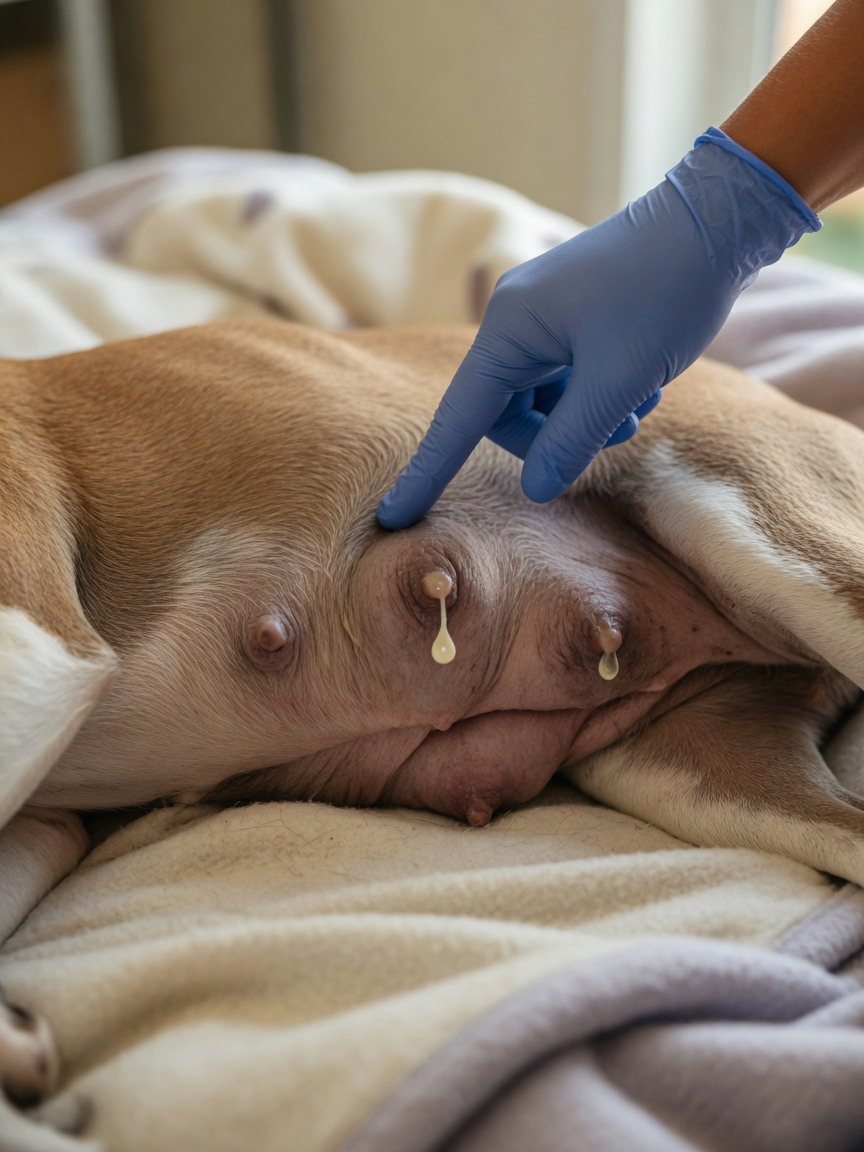
El embarazo psicológico suele comenzar entre 6 y 12 semanas después del final del celo (estro), durante la parte final de la fase de diestro. Los signos varían en gravedad, desde apenas perceptibles hasta muy marcados, y pueden incluir cambios tanto físicos como de comportamiento:
Signos físicos:
- Agrandamiento de las glándulas mamarias: las mamas y el tejido mamario aumentan de tamaño y pueden notarse firmes y calientes.
- Producción de leche: el signo físico más llamativo; se puede extraer leche de verdad (o un líquido acuoso parecido a la leche) de los pezones, a veces en abundancia. Esto se denomina galactorrea.
- Distensión abdominal: el abdomen puede parecer ligeramente redondeado, imitando una gestación.
- Secreción vaginal: puede aparecer de forma ocasional una secreción leve.
- Apatía y disminución del apetito: algunas perras parecen estar «raras» o ligeramente indispuestas durante el pico hormonal.
- Vómitos: pueden acompañar a los cambios hormonales signos gastrointestinales leves.
Signos de comportamiento:
- Comportamiento de nidificación: recoger mantas, toallas u objetos blandos para construir un nido. Puede ser muy intenso.
- Adopción de un juguete: probablemente el signo conductual más llamativo; la perra elige un peluche concreto (a veces un calcetín o una zapatilla) y lo trata como si fuera un cachorro. Lo protege, lo transporta con cuidado y se angustia si se lo quitan.
- Inquietud y ansiedad: deambular, incapacidad para tranquilizarse, búsqueda constante de contacto.
- Agresividad: algunas perras se vuelven protectoras de su «nido» y de sus «cachorros» y pueden gruñir o intentar morder si alguien se acerca.
- Comportamiento maternal hacia otros animales o juguetes: intentar amamantar o acicalar a otras mascotas de la casa.
Duración: ¿cuánto dura?
En la mayoría de los casos, el embarazo psicológico se resuelve por sí solo en 2 o 3 semanas, a medida que los niveles de prolactina descienden de forma natural. En los casos leves a moderados no se requiere tratamiento. Sin embargo, la fase conductual puede persistir más que la fase física si la perra sigue «amamantando» a sus juguetes: esta estimulación provoca una mayor liberación de prolactina y perpetúa la producción de leche. Retirar los juguetes (o pedir a un familiar que lo haga mientras tú no estás, para que la perra no asocie su desaparición contigo) puede ayudar a acortar el episodio.
Cuándo preocuparse: complicaciones
Aunque la mayoría de los embarazos psicológicos se resuelven solos, hay dos complicaciones que requieren atención veterinaria:
Mastitis: si la leche se acumula en las glándulas mamarias sin reabsorberse, puede desarrollarse una infección bacteriana. Los signos de mastitis incluyen glándulas mamarias firmes, calientes y dolorosas; enrojecimiento o cambio de color de la piel sobre la glándula; signos sistémicos de infección (fiebre, apatía, pérdida de apetito); y que la perra intente activamente mamar de sí misma. La mastitis requiere tratamiento antibiótico y, posiblemente, drenaje. No intentes «ordeñar» las glándulas ingurgitadas: esto prolonga la liberación de prolactina y el propio embarazo psicológico.
Síntomas prolongados: si los signos físicos o conductuales persisten más de 3–4 semanas, o reaparecen de forma grave con cada celo, está indicado el tratamiento médico. La cabergolina —un agonista dopaminérgico que inhibe la liberación de prolactina— es actualmente el tratamiento farmacológico de elección en Europa y cuenta con un excelente historial de seguridad y eficacia. Normalmente resuelve los síntomas en 5–7 días.
Opciones de tratamiento
En los casos leves, el manejo se centra en el apoyo conductual: retirar los juguetes utilizados como «cachorros», desalentar con suavidad la nidificación y aumentar el ejercicio y las distracciones. Las compresas frías sobre las glándulas mamarias pueden ayudar a reducir la ingurgitación sin estimular una mayor producción de leche.
En los casos moderados a graves, la cabergolina prescrita por tu veterinario es muy eficaz. Los tratamientos más antiguos, como los progestágenos y los andrógenos, se evitan hoy en día de forma generalizada por su perfil de efectos secundarios más importante.
La única solución permanente es la esterilización (ovariohisterectomía). Al extirpar los ovarios se eliminan por completo las fluctuaciones hormonales cíclicas que causan el embarazo psicológico. Esterilizar durante un embarazo psicológico activo puede, en ocasiones, prolongar temporalmente los síntomas (porque la prolactina ya está elevada), por lo que los veterinarios suelen recomendar esperar a que el episodio se resuelva antes de proceder con la cirugía.
Ayuda a tu perra a mantenerse tranquila durante la fase conductual del embarazo psicológico. Descubre los suplementos calmantes de HolistaPet →
Puntos clave
- El embarazo psicológico afecta hasta al 50 % de las perras enteras y se debe al descenso normal de progesterona tras el celo, que desencadena la liberación de prolactina.
- Entre los signos figuran el agrandamiento mamario, la producción de leche, la nidificación y la adopción de juguetes como «cachorros».
- La mayoría de los casos se resuelven en 2–3 semanas; retirar los juguetes reduce la estimulación de la prolactina y acelera la resolución.
- La mastitis —glándulas mamarias calientes, dolorosas e infectadas— requiere tratamiento veterinario inmediato.
- La esterilización es la única prevención permanente. La cabergolina es el tratamiento médico de elección en los casos graves.
Referencias
- Gobello C, Castex G, Klima L, Rodriguez R, Corrada Y. (2001). A study of two protocols combining cabergoline and cloprostenol to treat pseudopregnancy in dogs. Theriogenology. PMID: 11311660
- Feldman EC, Nelson RW. (2004). Ovarian cycle and vaginal cytology. En: Canine and Feline Endocrinology and Reproduction, 3.ª ed. Saunders. PMID: 15078207