
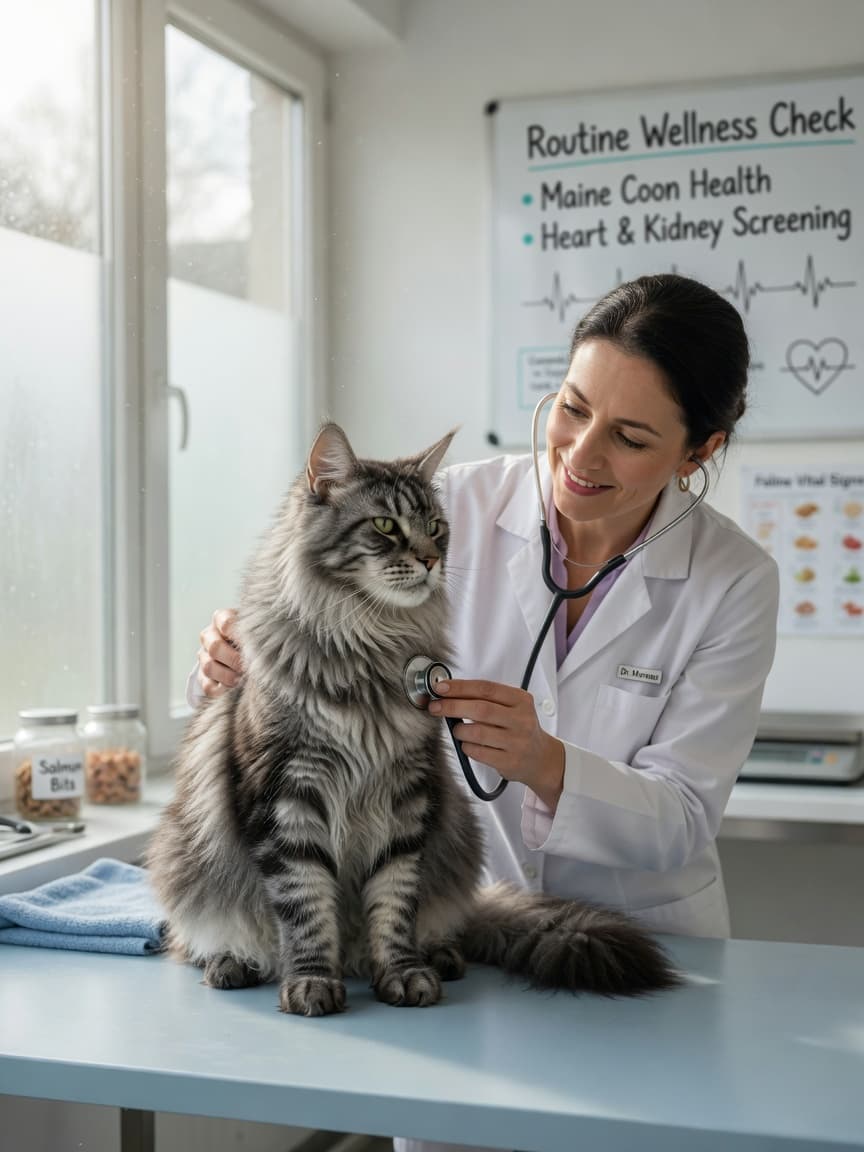
Los gatos Maine Coon tienen predisposición genética a la cardiomiopatía hipertrófica (HCM), la enfermedad cardíaca más común en gatos, con una mutación genética específica identificada en la raza que está vinculada al engrosamiento del músculo cardíaco. Lo más importante que debes entender es que la HCM puede desarrollarse silenciosamente durante años, por lo que el cribado cardíaco regular por parte de tu veterinario —en lugar de esperar a síntomas obvios— es la única forma fiable de detectarla temprano y proteger la calidad de vida de tu gato.
Por Qué los Maine Coon son Propensos a la HCM
La cardiomiopatía hipertrófica causa que las paredes del ventrículo izquierdo del corazón se engrosen de manera anormal. A medida que el músculo crece más grueso, la cavidad se vuelve más rígida y menos capaz de relajarse y llenarse adecuadamente de sangre entre latidos. Con el tiempo, esto puede llevar a una eficiencia cardíaca reducida, coágulos de sangre, acumulación de líquido en o alrededor de los pulmones, y en algunos casos colapso repentino.
En los gatos Maine Coon específicamente, los investigadores identificaron una mutación en un gen responsable de producir una proteína en las células del músculo cardíaco llamada proteína C de unión a miosina cardíaca. Se cree que esta mutación interfiere con la estructura normal y la contracción de las fibras del músculo cardíaco, fomentando el engrosamiento que se ve en la HCM. Las pruebas genéticas para esta mutación específica están disponibles, y muchos criadores reputables ahora seleccionan sus gatos para tratar de reducir su prevalencia en los gatitos.
Vale la pena señalar que no todos los gatos Maine Coon con la mutación desarrollan enfermedad cardíaca clínicamente significativa, y no todos los Maine Coon con HCM dan positivo para esta variante génica particular —otros factores genéticos y ambientales probablemente también estén involucrados. Por eso las pruebas genéticas son una herramienta útil pero nunca un sustituto del cribado físico y por ultrasonidos regular. Si estás considerando un Maine Coon o ya compartes tu hogar con uno, vale la pena leer la guía de razas Maine Coon para obtener una imagen más completa del perfil de salud de la raza junto con su temperamento famosamente dócil y tamaño impresionante.
Signos Tempranos y Síntomas a Vigilar
Uno de los aspectos más desafiantes de la HCM es que las primeras etapas a menudo son completamente silenciosas. Muchos gatos afectados no muestran síntomas externos en absoluto hasta que la enfermedad está bastante avanzada, por lo que el cribado rutinario es tan importante para esta raza. Cuando aparecen signos, pueden incluir:
- Cansancio inusual o renuencia a jugar, correr o saltar como antes
- Respiración rápida o dificultosa, incluso en reposo
- Respiración con la boca abierta (muy inusual en gatos y siempre merece atención urgente)
- Pérdida de apetito reducida o quietud general
- Episodios de desmayo o colapso breve
- Un soplo cardíaco, ritmo de galope o latido irregular notado por tu veterinario durante un chequeo rutinario
Debido a que los gatos son instintivamente buenos enmascarando la enfermedad, cambios sutiles en los niveles de energía o el patrón respiratorio a veces son la única pista que los propietarios notan antes de que ocurra un evento más grave.
Cuando la HCM se Convierte en una Emergencia
Algunos gatos con HCM se presentan repentina y dramáticamente, sin ningún signo de advertencia previo en casa. Busca atención veterinaria de emergencia inmediatamente si tu Maine Coon muestra alguno de los siguientes:
- Dificultad repentina para respirar, jadeo o respiración con la boca abierta
- Encías azuladas o pálidas
- Debilidad repentina, arrastre de las patas traseras o dolor aparente en las extremidades traseras (esto puede indicar un coágulo de sangre, conocido como tromboembolismo aórtico felino, una complicación bien reconocida y grave de la HCM)
- Colapso o pérdida de conciencia
- Gritos de angustia junto con respiración dificultosa
Estas situaciones son potencialmente mortales y requieren atención veterinaria inmediata. El tromboembolismo aórtico en particular es una emergencia que causa dolor repentino y parálisis, usualmente en las patas traseras, y necesita tratamiento urgente.
Cómo se Diagnostica la HCM
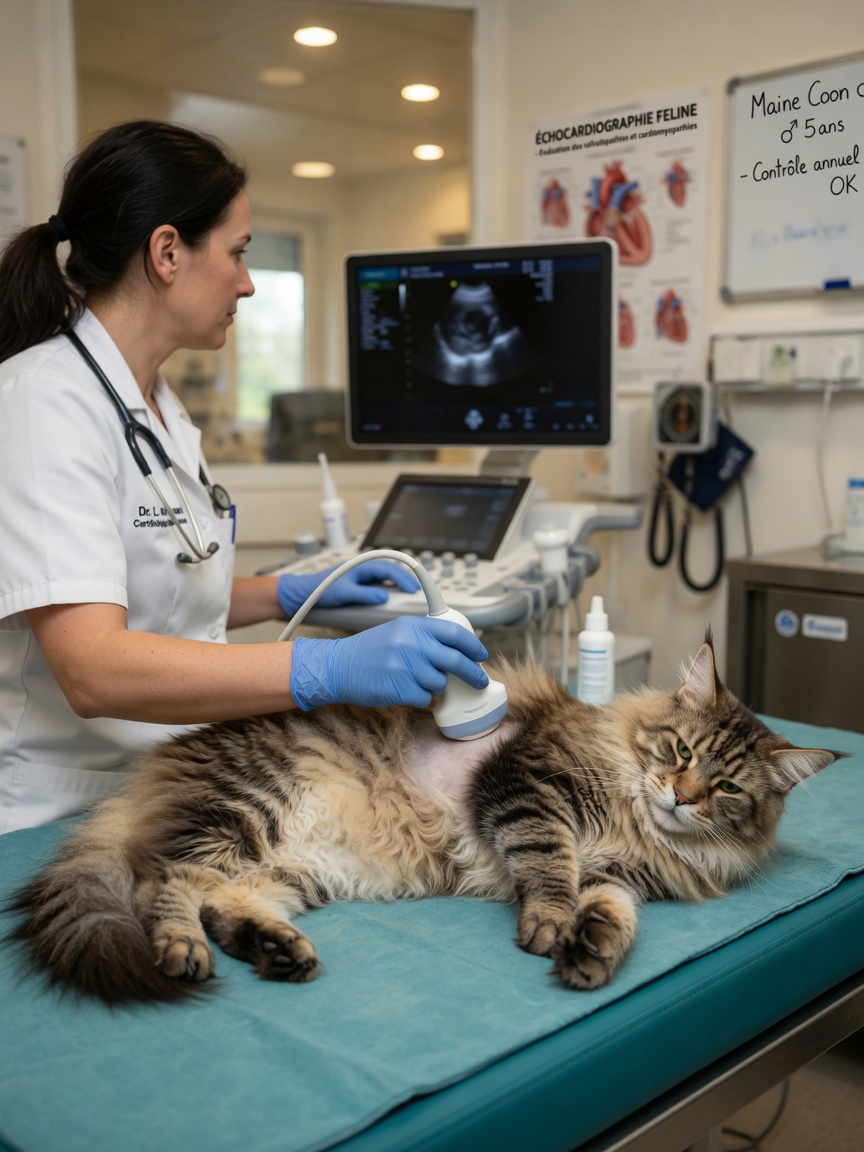
El diagnóstico se basa en una combinación de examen clínico e imágenes en lugar de una única prueba. Tu veterinario puede utilizar:
- Auscultación: Escuchar soplos cardíacos, sonidos de galope o arritmias, aunque muchos gatos afectados tienen sonidos cardíacos completamente normales, especialmente al principio
- Ecocardiografía (ultrasonido cardíaco): La prueba de referencia, permitiendo la medición directa del espesor de la pared cardíaca y la evaluación de qué tan bien funciona el corazón
- Análisis de sangre: Biomarcadores como NT-proBNP pueden ayudar a indicar esfuerzo cardíaco y apoyar una decisión sobre si se justifica el ultrasonido
- Radiografías de tórax: Útiles si se sospecha líquido en o alrededor de los pulmones
- Pruebas genéticas: Pueden identificar la mutación conocida asociada con Maine Coon, que es útil para decisiones de reproducción y evaluación de riesgo, aunque no puede reemplazar la ecocardiografía para diagnosticar enfermedad activa
Dada la naturaleza silenciosa de la HCM temprana, muchos cardiólogos recomiendan que los gatos Maine Coon tengan un ecocardiograma de referencia realizado por un veterinario suficientemente experimentado, con exploraciones repetidas a intervalos a lo largo de la vida, particularmente ya que la raza puede verse afectada desde una edad joven hasta la vejez.
Opciones de Manejo y Tratamiento
Actualmente no hay cura para la HCM, pero una variedad de tratamientos pueden ayudar a controlar los síntomas, ralentizar la progresión en algunos casos y mejorar la calidad de vida:
- Medicamentos: Dependiendo del gato individual, tu veterinario puede prescribir medicamentos para ayudar al corazón a relajarse y llenarse más efectivamente, controlar la frecuencia y el ritmo cardíaco, o reducir el riesgo de formación de coágulos
- Diuréticos: Se usan si se ha acumulado líquido en o alrededor de los pulmones, para ayudar a eliminarlo y facilitar la respiración
- Terapia anticoagulante: Dado el riesgo de tromboembolismo, algunos gatos reciben medicación de forma continuada para reducir el riesgo de coagulación
- Ajustes dietéticos y de estilo de vida: Mantener un peso corporal saludable reduce la tensión general en el corazón
- Monitoreo regular: Los ecocardiogramas repetidos ayudan a controlar si la enfermedad es estable o progresiva, guiando ajustes a