
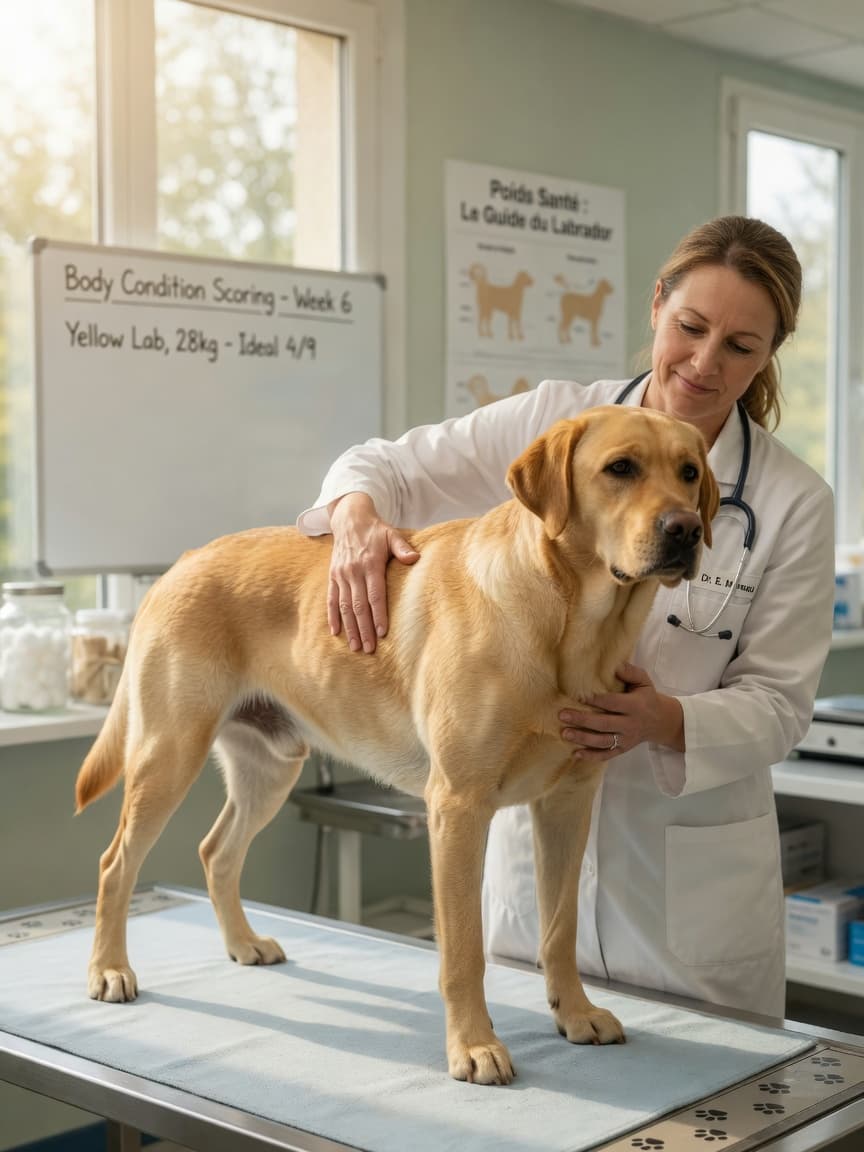
Los Labradores Retriever son una de las razas más propensas a ganar peso, gracias a una combinación de un apetito voraz, una particularidad genética que afecta la regulación del apetito, y su naturaleza motivada por la comida y fácil de llevar. Lo más importante que debe saber un propietario es que mantener a su Labrador delgado a lo largo de su vida es una de las cosas más poderosas que puede hacer por su salud y longevidad — mucho más importante que cualquier golosina, suplemento o dieta de moda. La gestión del peso debe tratarse como un compromiso diario de por vida, no como una dieta ocasional.
Por Qué los Labradores Retriever Son Propensos a Ganar Peso

Los Labradores fueron criados como perros cobradores de trabajo, desarrollados para trabajar duro durante largas horas y para comer oportunistamente cuando había comida disponible — características que tenían sentido en un perro de trabajo pero se convierten en un inconveniente en una mascota doméstica moderna y menos activa. Varios factores genuinos y bien documentados contribuyen a su tendencia a ganar peso:
- Mutación genética que afecta el control del apetito: Una proporción de Labradores Retriever portan una variación en el gen POMC, que juega un papel en la señalización de saciedad (sensación de plenitud) al cerebro. Los perros que portan esta variación tienden a estar más motivados por la comida y es posible que no sientan plenitud de la misma manera que los perros sin ella, lo que los hace más propensos a mendigar, hurgar y comer en exceso si se les permite.
- Temperamento motivado por la comida: Los Labradores son famosos por su entusiasmo alrededor de la comida y su disposición a comer casi cualquier cosa que se les ofrezca, lo que hace que el sobrealimentación por parte de propietarios bien intencionados sea muy común.
- Tipo de cuerpo: Su estructura ancha, sólida y musculosa puede hacer que el aumento de peso temprano sea más difícil de detectar visualmente en comparación con razas más delgadas.
- Falta de coincidencia de actividad: Muchos Labradores se mantienen como mascotas familiares con menos ejercicio del que habrían tenido sus antepasados de línea de trabajo, mientras que la ingesta calórica a menudo permanece sin cambios o aumenta.
- Esterilización: Como muchas razas, los Labradores generalmente requieren menos calorías después de la esterilización debido a una caída en la tasa metabólica, pero los montos de alimentación a menudo no se ajustan en consecuencia.
Estos factores se combinan para hacer de la obesidad una preocupación genuina y común de bienestar en la raza, estrechamente vinculada a enfermedades articulares, esperanza de vida reducida, y calidad de vida más pobre.
Signos y Síntomas Tempranos para Observar
Debido a que los Labradores tienen una construcción naturalmente robusta, el aumento de peso temprano puede ser fácil de pasar por alto. Los signos a tener en cuenta incluyen:
- Dificultad para sentir las costillas sin presionar firmemente, o ninguna cintura visible cuando se ve desde arriba
- Un abdomen caído o redondeado cuando se ve desde el lado
- Renuencia a saltar al coche, subir escaleras, o completar un paseo que completaban fácilmente anteriormente
- Jadeo aumentado o recuperación más lenta después del ejercicio
- Rigidez después del descanso, particularmente en las caderas o codos
- Entusiasmo reducido por el juego o movimiento notablemente más lento
Verificar regularmente la condición corporal al tacto — no solo visualmente — es una de las formas más confiables de detectar el aumento de peso temprano, antes de que se establezca.
Cuando los Problemas de Peso se Vuelven una Emergencia
La obesidad en sí rara vez es una emergencia, pero aumenta significativamente el riesgo de condiciones que pueden volverse urgentes. Busque atención veterinaria inmediata si su Labrador muestra:
- Colapso repentino, letargo extremo, o renuencia a moverse en absoluto
- Respiración dificultosa o rápida, especialmente en reposo
- Abdomen distendido, duro o doloroso, o arcadas improductivas (que pueden sugerir hinchazón, un riesgo serio en razas de pecho profundo)
- Cojera repentina o incapacidad para soportar peso en una extremidad
- Signos de dolor articular que aparecen repentinamente en lugar de gradualmente
Estos signos pueden indicar complicaciones secundarias del exceso de peso, como lesión articular, tensión respiratoria, o emergencias gastrointestinales, y no deben tratarse como rutina.
Cómo los Veterinarios Diagnostican Problemas de Peso
El diagnóstico es generalmente sencillo y se basa en una combinación de métodos:
- Puntuación de Condición Corporal (BCS): Una evaluación práctica de la cobertura de costillas, definición de cintura, y repliegue abdominal, generalmente calificado en una escala de 9.
- Pesaje: Pesajes regulares para rastrear tendencias a lo largo del tiempo en lugar de confiar en una sola lectura.
- Evaluación de la condición muscular: Para distinguir grasa de pérdida muscular, particularmente en perros más antiguos.
- Análisis de sangre: Para descartar causas médicas subyacentes como hipotiroidismo, que puede contribuir al aumento de peso y vale la pena investigar si la pérdida de peso resulta ser inesperadamente difícil.
- Evaluación de articulaciones y movilidad: Dado que los Labradores también están predispuestos a displasia de cadera y codo, los veterinarios a menudo verificarán la comodidad articular y la marcha, ya que el exceso de peso puede empeorar estas condiciones.
Opciones de Gestión y Tratamiento
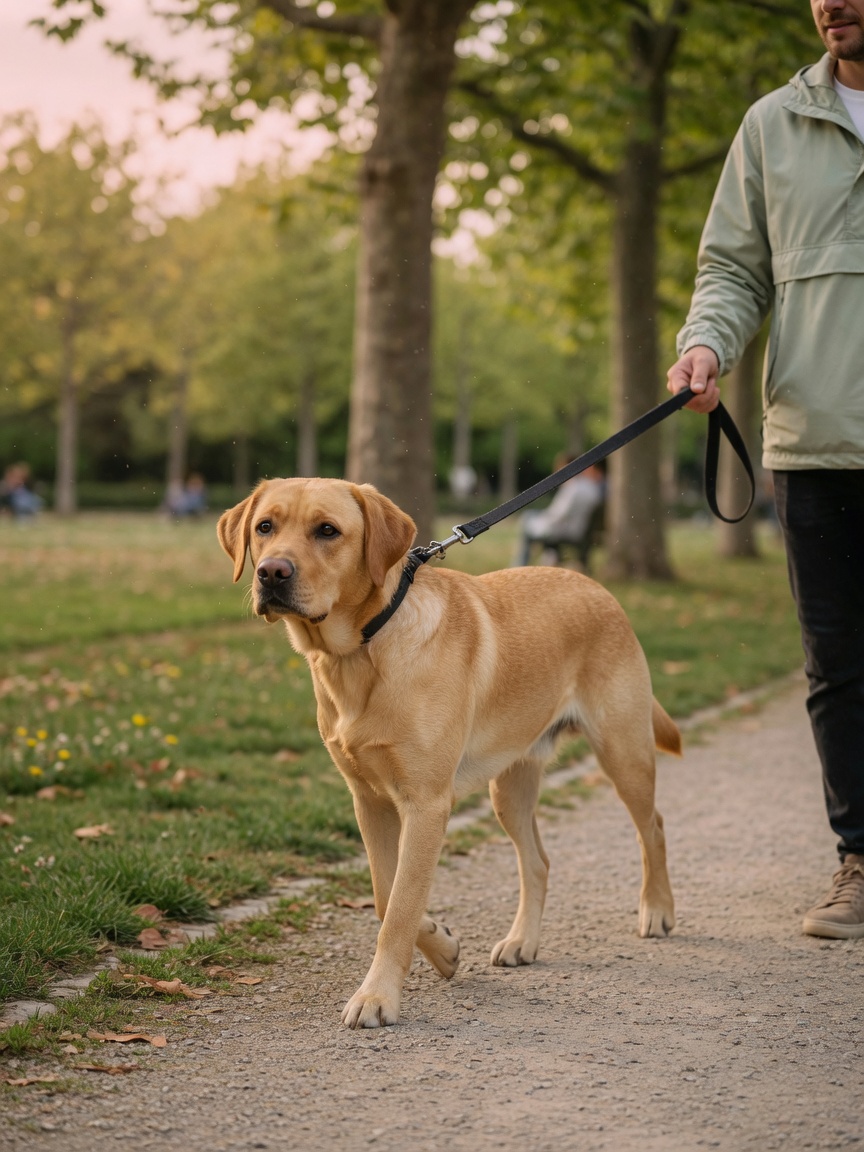
La gestión del peso exitosa es alcanzable pero requiere consistencia y expectativas realistas. Las opciones típicamente incluyen:
- Alimentación controlada en calorías: Alimentar una cantidad medida y pesada de pienso basada en peso objetivo (no actual), en lugar de estimar a ojo.
- Piensos veterinarios para gestión de peso: Alimentos especialmente formulados que son más bajos en calorías pero más altos en fibra y proteína para apoyar la saciedad y preservar la masa muscular durante la pérdida de peso.
- Aumentos de ejercicio estructurado: Aumentos graduales y consistentes en actividad de bajo impacto como paseos con correa o natación, adaptados a la salud articular.
- Gestión de golosinas: Reemplazar golosinas altas en calorías con pequeñas porciones de verduras, o usar parte de la asignación diaria de alimentos como recompensas de entrenamiento.
- Monitoreo regular: Pesajes mensuales y controles de condición corporal para ajustar el plan según sea necesario, ya que el metabolismo puede cambiar con el tiempo.
- Abordaje del dolor articular: Si la artritis o el malestar articular están limitando el ejercicio, la gestión del dolor o