
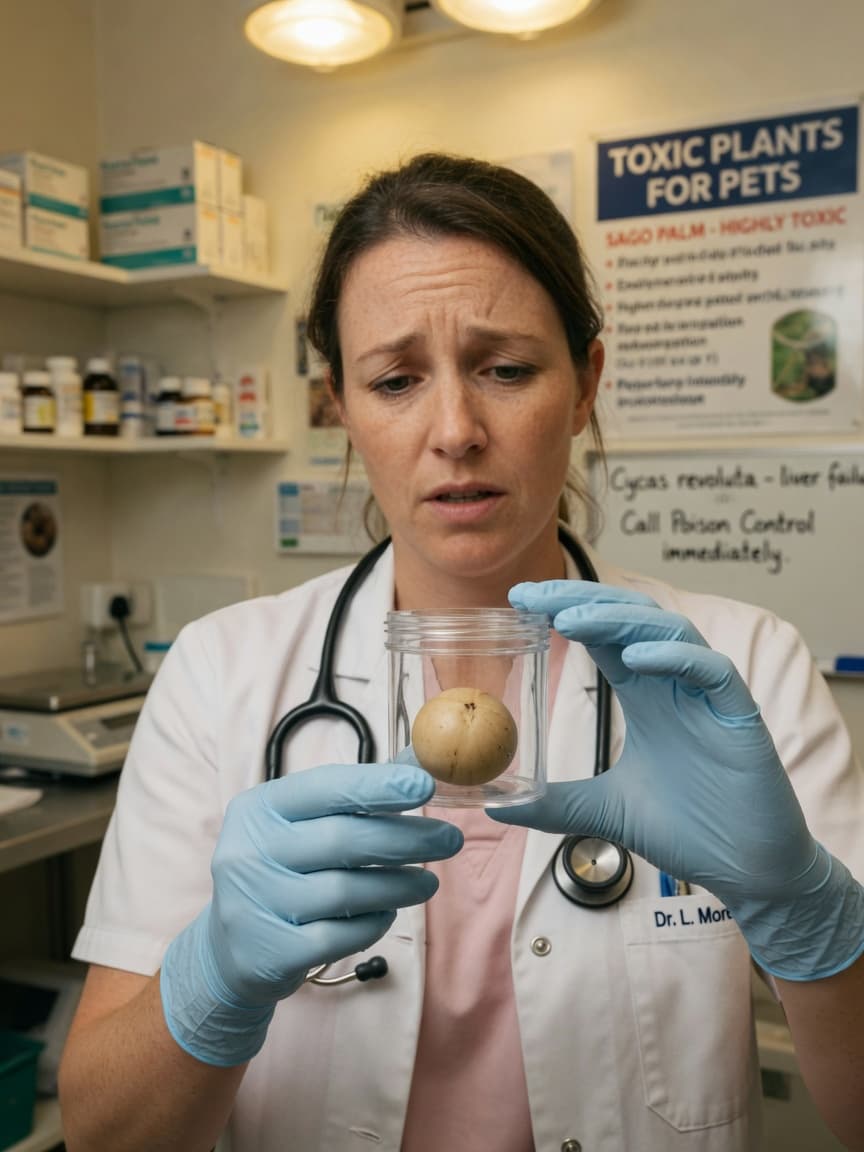
¿Es la cica (sago palm) tóxica para los perros?
Actualizado: junio de 2026
La planta más peligrosa de su barrio
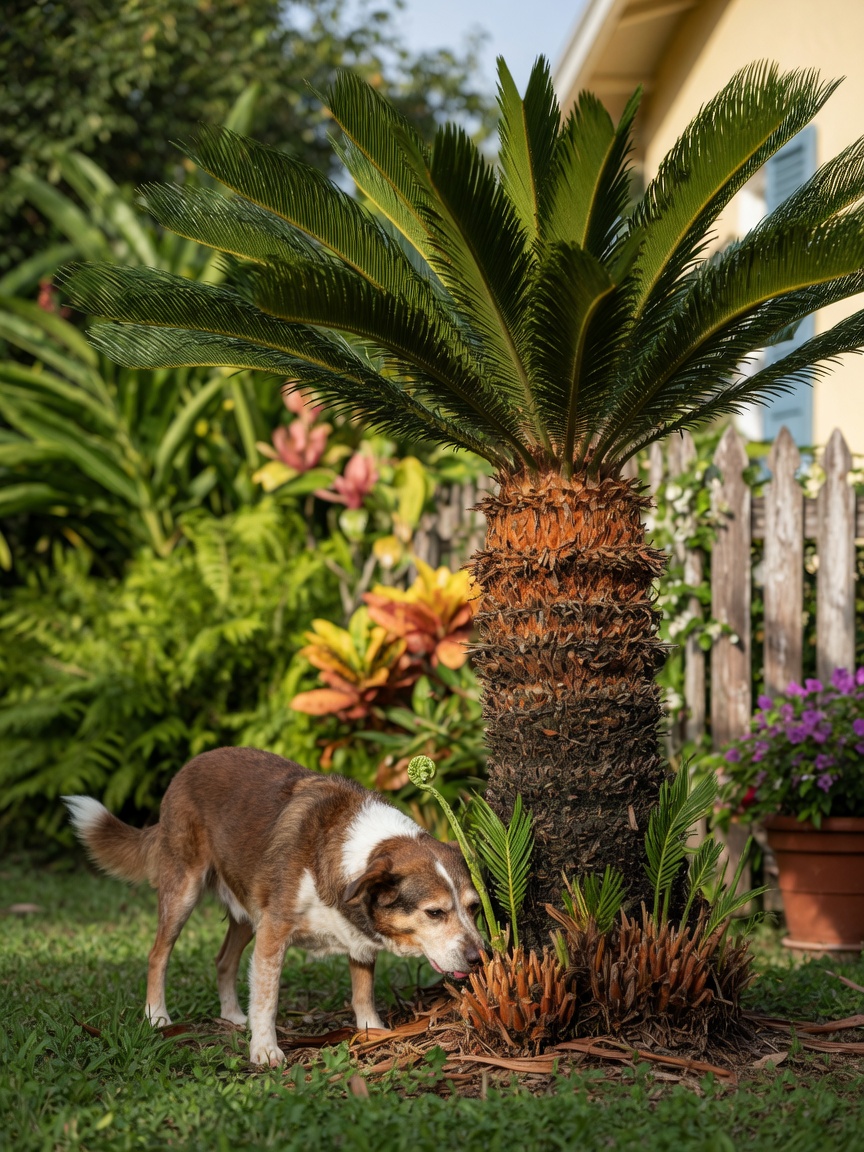
Si vive en un clima cálido —especialmente en el sur de Estados Unidos, el suroeste, Hawái o cualquier región tropical o subtropical—, es posible que la cica (Cycas revoluta y especies relacionadas) esté creciendo ahora mismo en su jardín, en el del vecino o en el parque de su barrio. Es una planta ornamental muy popular, apreciada por su aspecto prehistórico y su resistencia. También es una planta que mata perros con una frecuencia alarmante.
La cica no es en realidad una auténtica palmera. Es una cicadácea —un grupo de plantas que existe desde la era de los dinosaurios— y produce algunas de las hepatotoxinas (venenos hepáticos) más potentes que se conocen en el reino vegetal. El principal agente tóxico es la cicasina, un glucósido que se metaboliza en el organismo y se convierte en metilazoximetanol (MAM), un compuesto que destruye directamente las células hepáticas. Otras toxinas, como la beta-metilamino-L-alanina (BMAA), contribuyen al daño neurológico.
El resultado de la ingestión de cica es una necrosis hepática grave, rápida y con frecuencia mortal: la muerte masiva del tejido hepático. Sin un hígado funcional, el organismo no puede desintoxicar la sangre, producir factores de coagulación ni llevar a cabo cientos de otras funciones metabólicas esenciales. Los perros que sobreviven al tratamiento inicial suelen enfrentarse a una recuperación prolongada e incierta.
Por qué las semillas son especialmente mortales
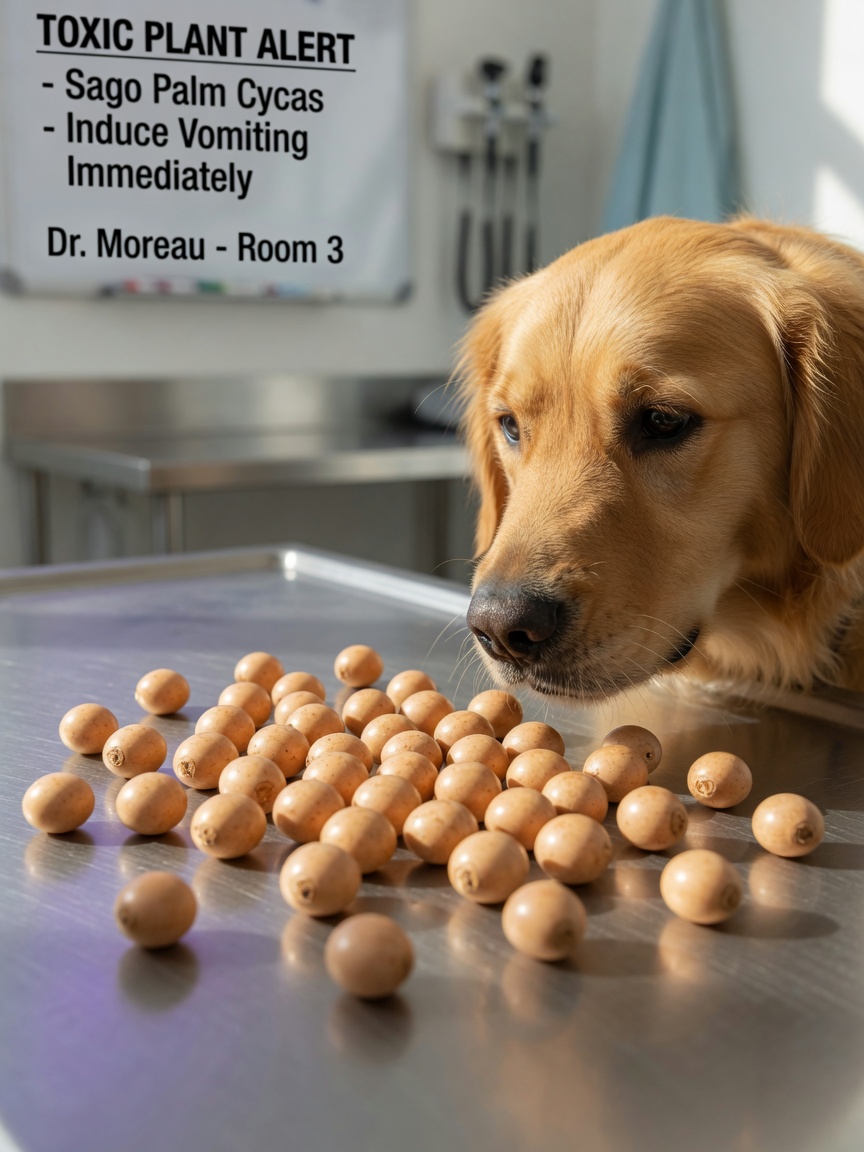
Aunque todas las partes de la cica son tóxicas —las frondes (hojas), el tronco, las raíces y los conos—, las semillas (también llamadas nueces) contienen la mayor concentración de cicasina con una diferencia notable. Una sola semilla puede matar a un perro de tamaño mediano. No es una exageración con fines dramáticos; es una realidad clínica documentada que los toxicólogos veterinarios han comunicado de forma constante.
Las semillas son especialmente peligrosas porque a los perros les resultan atractivas. Son redondas, lisas y tienen una textura y un aspecto que invitan a masticarlas. Se ha observado que los perros buscan y consumen deliberadamente semillas de cica, a veces varias de una vez. En una cica adulta que está produciendo conos, pueden haber docenas de semillas presentes al mismo tiempo.
Los padres y los dueños de mascotas que vivan en zonas donde crecen cicas deben ser plenamente conscientes de este peligro. Un perro que se cuela en el jardín de un vecino que tiene una cica, o que se encuentra una cica en un parque, puede consumir semillas antes de que el dueño se dé cuenta de lo que ha ocurrido.
Síntomas del envenenamiento por cica en perros
La cronología de la toxicidad por cica sigue una progresión predecible y aterradora:
Entre 15 minutos y 3 horas después de la ingestión:
- Vómitos intensos (a menudo el primer signo)
- Diarrea, posiblemente con sangre
- Letargo extremo
- Salivación excesiva
- Dolor abdominal
24-48 horas después de la ingestión (fase de fallo hepático):
- Ictericia (coloración amarillenta de la piel, el blanco de los ojos y las mucosas)
- Hemorragias anómalas: en las encías, en las heces, en heridas menores que no coagulan
- Heces negras y alquitranadas (indicativas de hemorragia gastrointestinal)
- Ascitis (acumulación de líquido en el abdomen)
- Signos neurológicos graves: temblores, convulsiones, desorientación, coma
- Colapso y muerte
Los signos neurológicos aparecen porque un hígado que falla no puede procesar el amoniaco procedente del metabolismo normal de las proteínas, lo que provoca una encefalopatía hepática: un estado tóxico del cerebro. Los perros que llegan a esta fase están en estado crítico y a menudo no pueden salvarse ni con cuidados intensivos.
Tratamiento y pronóstico: una realidad que hace reflexionar
El tratamiento debe comenzar durante la primera hora o las dos primeras horas tras la ingestión para tener alguna posibilidad real de éxito. La descontaminación inmediata (inducir el vómito, administrar carbón activado para evitar que se absorba más toxina) es la primera prioridad. Esto debe hacerlo un veterinario: no intente provocar el vómito en casa.
Incluso con un tratamiento ideal y agresivo —fluidoterapia intravenosa, hepatoprotectores como la N-acetilcisteína y la silimarina (cardo mariano), vitamina K para favorecer la coagulación, plasma fresco congelado para aportar factores de coagulación y monitorización intensiva—, la tasa de mortalidad publicada del envenenamiento por cica oscila entre el 50 y el 75 por ciento. Algunos estudios han comunicado una mortalidad incluso mayor cuando el tratamiento se retrasa o es incompleto.
Los perros que sobreviven suelen necesitar semanas de cuidados de soporte y pueden sufrir daño hepático permanente. La conclusión es cruda: el mejor tratamiento para el envenenamiento por cica es la prevención, porque la curación no se consigue de forma fiable.
Eliminar el riesgo: lo que deben hacer los dueños de mascotas
Si tiene una cica en su jardín y un perro, la única actuación responsable es eliminar la planta por completo —raíces incluidas— y deshacerse de ella de forma que no queden semillas accesibles. No basta con vallar la planta; los perros decididos y los que cavan pueden seguir accediendo a las semillas y frondes caídos.
Recorra su barrio y anote dónde crecen cicas. Evite pasear a su perro cerca de esas propiedades. Si vive en una región donde las cicas son habituales en espacios públicos, mantenga a su perro con correa y bajo estrecha supervisión en todo momento cuando esté al aire libre.
Tenga en cuenta que la planta se conoce por varios nombres: Cycas revoluta, palma coontie, palma de cartón (Zamia furfuracea) y cicadácea son todas plantas relacionadas e igualmente tóxicas. La «sago palm» ornamental que se vende en los centros de jardinería es casi siempre Cycas revoluta.
Puntos clave
- La cica es una de las plantas más letales para los perros: todas sus partes son tóxicas, especialmente las semillas.
- La toxina cicasina provoca un fallo hepático catastrófico, con una tasa de mortalidad del 50-75 % incluso con tratamiento.
- Una sola semilla puede matar a un perro de tamaño mediano; varias semillas son casi con total seguridad mortales.
- Los síntomas progresan desde los vómitos hasta la ictericia, los trastornos de la coagulación, las convulsiones y la muerte en un plazo de 24-72 horas.
- Se trata de una auténtica emergencia: llame de inmediato a su veterinario o al centro de toxicología de la ASPCA al (888) 426-4435.
- La opción más segura: eliminar las cicas de cualquier propiedad donde vivan o entren perros.
Referencias
- Albretsen JC, Khan SA, Richardson JA. «Cycad palm toxicosis in dogs: 60 cases (1987–1997)». Journal of the American Veterinary Medical Association. 1998 Aug 1;213(1):99-101. PMID: 9676488
- Gwaltney-Brant SM. «Cycads». Veterinary Clinics of North America: Small Animal Practice. 2002 Mar;32(2):505-14. PMID: 11947531