
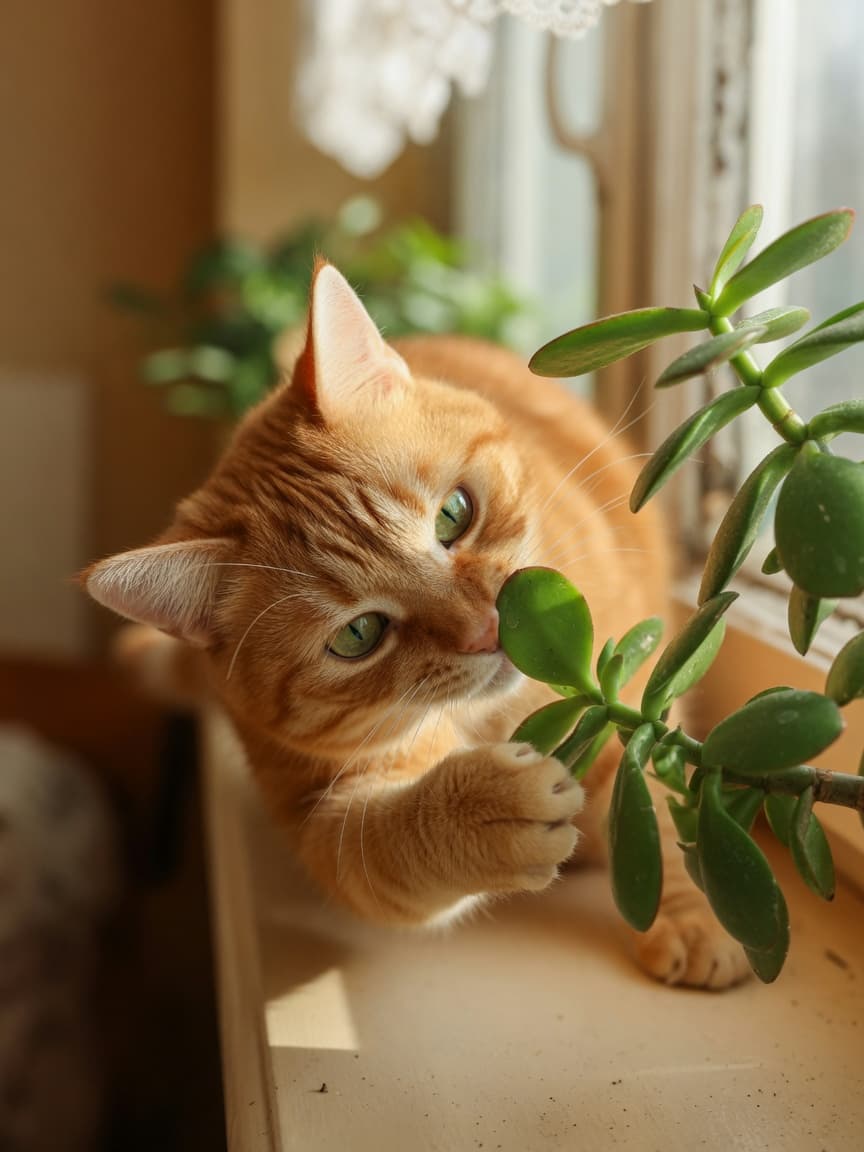
¿Es tóxico el árbol de jade para los gatos?
Actualizado: junio de 2026
¿Qué es el árbol de jade?
El árbol de jade (Crassula ovata) es una de las plantas de interior más populares del mundo. Conocida con diversos nombres comunes, como planta del dinero, árbol del dinero, planta de la suerte y árbol de la amistad, se valora por sus escasas necesidades de mantenimiento, su larga vida y su asociación con la prosperidad en distintas culturas. Con sus hojas gruesas, brillantes y ovaladas y sus tallos leñosos, es un elemento habitual en casas, oficinas y colecciones de plantas de todo el mundo.
Por desgracia para los dueños de gatos, esta apreciada y omnipresente planta de interior supone un riesgo real para la salud de los felinos. Tanto la Sociedad Estadounidense para la Prevención de la Crueldad contra los Animales (ASPCA) como las bases de datos de toxicología veterinaria clasifican el árbol de jade como tóxico para gatos y perros. Y, dado que es tan común como planta de interior y que los gatos son famosos por mordisquear las plantas, la intoxicación por árbol de jade es una de las toxicosis vegetales que se observan con más frecuencia en gatos domésticos.
¿Qué hace que los árboles de jade sean tóxicos?
Aquí es donde las cosas se vuelven algo inusuales en el mundo de la toxicología vegetal: a pesar de estar bien documentado como tóxico, los investigadores aún no han identificado de forma definitiva el compuesto o los compuestos responsables de la toxicidad del árbol de jade. A diferencia de las azaleas (grayanotoxinas) o los lirios (compuestos nefrotóxicos desconocidos), la toxicidad del árbol de jade sigue estando caracterizada de forma incompleta.
Lo que sí sabemos con seguridad —a partir de casos clínicos documentados y de la experiencia colectiva de los profesionales veterinarios— es que la ingestión de árbol de jade produce de manera fiable un síndrome característico en los gatos. La toxina, sea cual sea, afecta principalmente al sistema nervioso y provoca un conjunto de síntomas neurológicos y gastrointestinales que resultan angustiosos para el gato y alarmantes para los dueños.
Cabe señalar que el árbol de jade NO es el auténtico «árbol del dinero» (Pachira aquatica), que es una especie diferente. El árbol de jade se confunde a veces con otras plantas suculentas, pero sus características hojas carnosas y brillantes y sus tallos gruesos lo hacen identificable una vez que se sabe en qué fijarse.
Síntomas de la intoxicación por árbol de jade en gatos
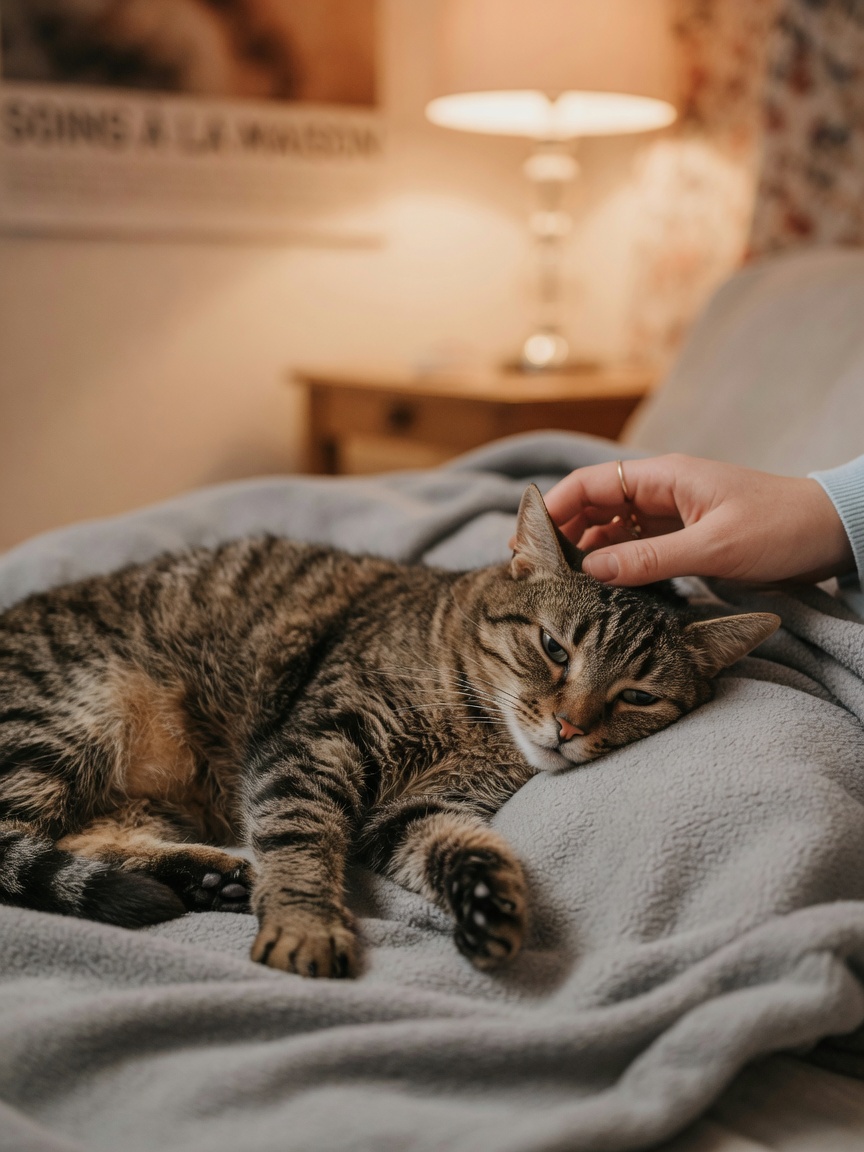
Si tu gato ha ingerido material de árbol de jade —ya sea una hoja, un tallo mordisqueado o la savia de la planta—, vigila atentamente los siguientes signos. Los síntomas suelen aparecer en unas pocas horas tras la ingestión:
- Vómitos: a menudo el primer signo, y pueden repetirse. El gato puede parecer con náuseas antes de vomitar.
- Letargo y debilidad: tu gato puede parecer inusualmente cansado, reticente a moverse o no responder a estímulos que normalmente le interesarían.
- Falta de coordinación (ataxia): el gato puede parecer inestable al andar, tropezar, caerse o tener dificultades para mantener el equilibrio. Es un signo de afectación neurológica y debe tomarse en serio.
- Depresión: un cambio marcado del estado mental; el gato puede parecer «ausente», desinteresado por su entorno o tener la mirada vidriosa.
- Pérdida de apetito: la negativa a comer es frecuente tras la ingestión de árbol de jade.
- Bradicardia: en algunos casos se ha descrito una disminución de la frecuencia cardiaca, lo que sugiere posibles efectos cardiovasculares.
Los signos neurológicos —en particular la falta de coordinación y la depresión— son los que distinguen la intoxicación por árbol de jade de una simple indiscreción alimentaria y deberían motivar una llamada inmediata a tu veterinario. Aunque la intoxicación por árbol de jade no se considera, en general, tan mortal de forma aguda como la toxicidad por lirio u oleandro, no es un problema menor que se pueda pasar por alto, especialmente en gatos pequeños o de edad avanzada.
También tóxico para los perros
Es importante que los hogares con varias mascotas sepan que la toxicidad del árbol de jade no es exclusiva de los gatos. Los perros también son sensibles, y los síntomas son similares: vómitos, ataxia, depresión y letargo. Si tienes gatos y perros, un árbol de jade en cualquier parte de la casa supone un riesgo para ambas especies. Las hojas gruesas y carnosas de la planta resultan atractivas para los animales curiosos, y los perros en particular pueden mordisquear las plantas decorativas que se dejan a nivel del suelo.
Qué hacer si tu gato come árbol de jade
No adoptes una actitud de esperar y ver. Llama a tu veterinario de inmediato. Aunque tu gato parezca estar bien justo después de que descubras que ha estado mordisqueando el árbol de jade, los síntomas pueden retrasarse, y la intervención temprana siempre es más eficaz que tratar un toxidrome ya plenamente desarrollado.
- Llama a tu veterinario inmediatamente o contacta con el Centro de Control de Intoxicaciones Animales de la ASPCA en el (888) 426-4435.
- Anota cuánta planta se ha comido y qué partes (hojas, tallos, raíces) si lo sabes.
- Anota la hora de la ingestión si es posible.
- Lleva una foto o una muestra de la planta para ayudar a confirmar su identificación.
- Vigila de cerca a tu gato por si aparece cualquiera de los síntomas enumerados arriba e informa al veterinario de cualquier cambio.
En la clínica veterinaria, el tratamiento dependerá del momento y la gravedad de la ingestión. Tu veterinario puede inducir el vómito si la ingestión es reciente y el gato todavía no presenta síntomas. Puede administrarse carbón activado para evitar una mayor absorción de la toxina. La fluidoterapia intravenosa y la monitorización de los signos cardiacos y neurológicos constituirán la base del tratamiento de soporte. La mayoría de los gatos con intoxicación por árbol de jade se recuperan con el tratamiento adecuado.
Mantener a los gatos a salvo: pasos prácticos
Lo más seguro para los dueños de gatos es, simplemente, no tener árboles de jade en una casa con gatos. Dado que la planta es tóxica y que los gatos son famosos por mordisquear las plantas de interior —sobre todo las frondosas y de hojas carnosas, que invitan a ser mordidas—, la convivencia de gatos y árboles de jade es un riesgo evitable.
Si adoras tu árbol de jade y no estás dispuesto a deshacerte de él, aquí tienes algunas estrategias para reducir el riesgo (aunque ninguna es infalible):
- Coloca el árbol de jade en una habitación a la que tu gato no tenga acceso, con la puerta bien cerrada.
- Usa maceteros colgantes a alturas completamente inaccesibles incluso para el más atlético de tus gatos (recuerda que los gatos pueden saltar entre 5 y 6 veces su propia altura).
- Aplica sprays repelentes comerciales para gatos en la superficie de la planta y en la zona circundante.
- Ofrece a tu gato hierba gatera de cultivo (hierba de trigo o de avena), que le proporciona una planta adecuada para mordisquear y puede reducir su interés por las plantas de interior.
En última instancia, ninguna estrategia de colocación elimina el riesgo por completo. Si tu gato es decidido e ingenioso —y la mayoría lo son—, la única garantía es sacar la planta de casa.
Otros nombres comunes a los que estar atento
El árbol de jade se conoce con muchos nombres, y los dueños pueden no reconocerlo de inmediato como un riesgo. Si ves alguno de los siguientes en la etiqueta de una planta o en una aplicación de identificación de plantas, trátalo como árbol de jade: planta del dinero, planta de la suerte, árbol de la amistad, jade plateado (Crassula arborescens) o árbol del caucho enano. El género Crassula contiene varias especies estrechamente relacionadas, algunas de las cuales pueden compartir propiedades tóxicas.
Puntos clave
- Los árboles de jade (Crassula ovata) son tóxicos para gatos y perros. La toxina específica no se ha identificado, pero los efectos tóxicos están bien documentados.
- Los síntomas incluyen vómitos, letargo, falta de coordinación (ataxia) y depresión: signos de afectación neurológica.
- La planta también se conoce como planta del dinero, planta de la suerte y árbol de la amistad: conoce todos sus nombres.
- Si tu gato come árbol de jade, llama a tu veterinario de inmediato o al Control de Intoxicaciones de la ASPCA en el (888) 426-4435. No esperes a que aparezcan los síntomas.
- Lo más seguro es retirar los árboles de jade de los hogares con gatos o perros.
Referencias
- Milewski LM, Khan SA. «An overview of potentially life-threatening poisonous plants in dogs and cats». Journal of Veterinary Emergency and Critical Care. 2006;16(1):25-33. PMID: 17187614
- Cope RB. «Toxicoses associated with plants and plant products». Veterinary Clinics of North America: Small Animal Practice. 2007;37(2):419-442. PMID: 17310241