
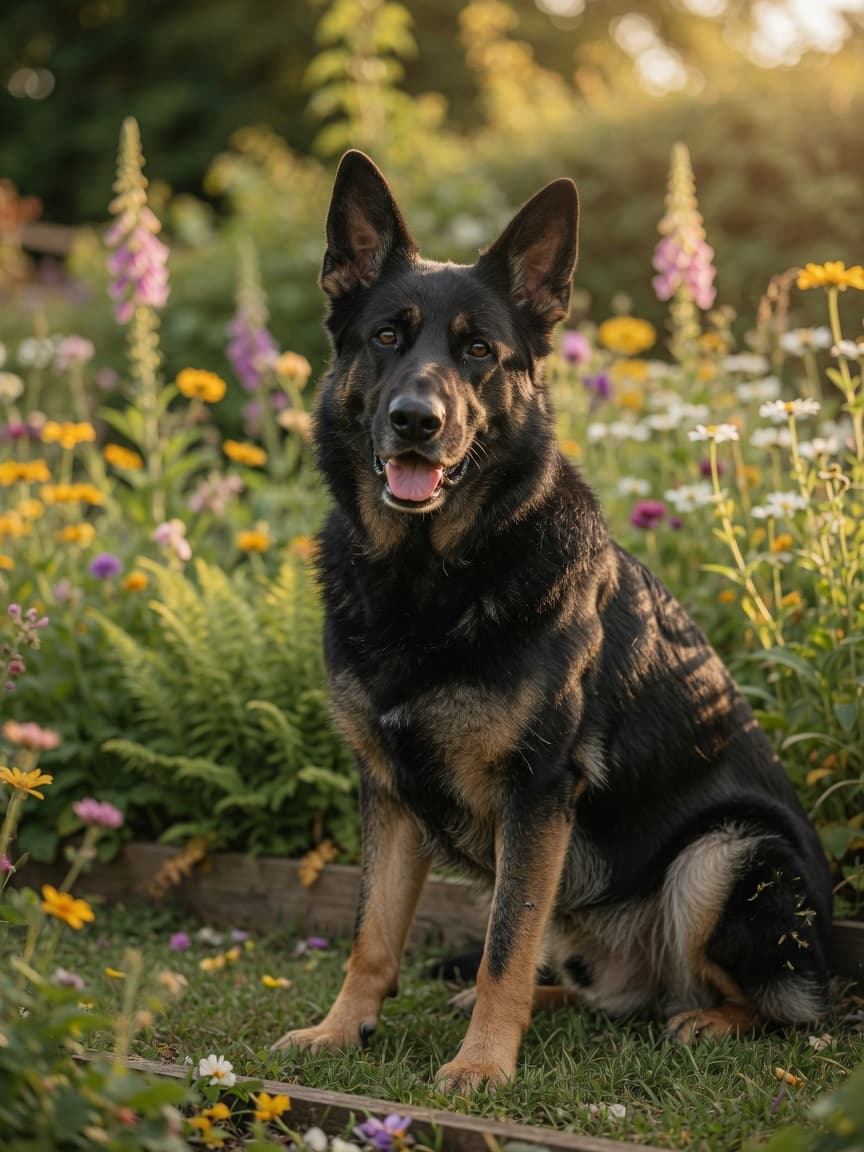
Problemas de Salud del Pastor Alemán: Guía Completa para Propietarios
Actualizado junio 2026
- Esperanza de vida: 9–13 años
- Principales Riesgos de Salud: Displasia de cadera, mielopatía degenerativa, dilatación-vólvulo gástrico (DVG), insuficiencia pancreática exocrina
- Pruebas Genéticas Recomendadas: Evaluación OFA de cadera y codo, prueba del gen DM (SOD1), cribado de portadores de IPE
El Pastor Alemán es una de las razas de trabajo más versátiles y queridas del mundo, destacando como perro policía, animal de servicio y compañero familiar. Sin embargo, su popularidad viene acompañada de un legado genético que los predispone a varias condiciones de salud graves. Comprender estos riesgos temprano permite a los propietarios tomar medidas preventivas, elegir criadores responsables y proporcionar el mejor cuidado posible en cada etapa de la vida.
Problemas de Salud Más Comunes en Pastores Alemanes
Los Pastores Alemanes son propensos a un conjunto de condiciones que reflejan tanto su tamaño como décadas de cría selectiva. La displasia de cadera y codo encabeza la lista, seguida por la mielopatía degenerativa —una enfermedad progresiva de la médula espinal—, la dilatación-vólvulo gástrico (DVG), la insuficiencia pancreática exocrina (IPE) y las alergias en la piel. Como muchas de estas condiciones son hereditarias, el cribado genético del ganado de cría y la elección de un criador reputado que realice pruebas a los progenitores es la medida preventiva más poderosa que un propietario puede tomar antes de llevar un cachorro a casa.
Displasia de Cadera y Codo
La displasia de cadera es probablemente el desafío ortopédico definidor de la raza. La condición resulta del desarrollo anormal de la articulación de la cadera de bola y encaje, causando erosión del cartílago, dolor y finalmente artritis debilitante. Los estudios estiman que hasta el 20% de los Pastores Alemanes se ven afectados en algún grado. La displasia de codo —un grupo de anomalías del desarrollo en la articulación del codo— es igualmente común y a menudo ocurre junto con la displasia de cadera. Ambas condiciones tienen un fuerte componente genético poligénico, lo que significa que múltiples genes interactúan con factores ambientales como la velocidad de crecimiento, la dieta y el ejercicio durante la cachorrería. Los propietarios deben insistir en las certificaciones OFA (Orthopedic Foundation for Animals) de cadera y codo de ambos progenitores. Los primeros signos incluyen reticencia a subir escaleras, una marcha de "conejo saltador" al correr y rigidez después del reposo. El manejo veterinario va desde el control del peso y la fisioterapia hasta la intervención quirúrgica como la osteotomía pélvica triple en perros jóvenes o el reemplazo total de cadera en casos graves.
Mielopatía Degenerativa (MD)
La mielopatía degenerativa es una enfermedad neurológica progresiva e indolora que se asemeja a la ELA en humanos. Generalmente aparece en perros mayores de siete años, comenzando con debilidad y ataxia en las extremidades traseras y avanzando durante meses hacia una parálisis completa. Los Pastores Alemanes tienen una alta frecuencia de la mutación SOD1 asociada con la MD —la investigación sugiere que los portadores homocigotos (genotipo AT/AT) enfrentan un riesgo significativamente elevado. Una prueba de ADN con hisopo de mejilla está disponible y se recomienda encarecidamente para perros de cría. Aunque actualmente no hay cura, la rehabilitación física, la hidroterapia y el cuidado de apoyo pueden mantener la calidad de vida durante meses después del diagnóstico. Los perros con MD permanecen mentalmente alertas y libres de dolor hasta las fases avanzadas, lo que hace que la planificación temprana de dispositivos de movilidad y adaptaciones del hogar sea especialmente importante.
Dilatación-Vólvulo Gástrico (DVG)
El DVG es una emergencia que amenaza la vida en la que el estómago se llena de gas y puede retorcerse sobre sí mismo, cortando el suministro de sangre. Los Pastores Alemanes, como otras razas grandes de pecho profundo, tienen un riesgo elevado. La condición puede ser fatal en pocas horas. Los signos de alerta incluyen un abdomen distendido, arcadas improductivas, salivación excesiva e inquietud. La gastropexia profiláctica —un procedimiento quirúrgico que fija el estómago a la pared abdominal— se puede realizar al momento de la esterilización y reduce significativamente el riesgo de vólvulo. Los propietarios también deben alimentar con dos o tres comidas más pequeñas al día en lugar de una comida grande, usar comederos lentos, y evitar el ejercicio vigoroso durante una hora antes y después de comer.
Insuficiencia Pancreática Exocrina (IPE)
La IPE ocurre cuando el páncreas no produce suficientes enzimas digestivas, causando malabsorción crónica, pérdida de peso, heces grasas voluminosas y apetito voraz a pesar de comer normalmente. Los Pastores Alemanes son la raza más comúnmente diagnosticada con IPE. La buena noticia es que la condición es muy manejable: los suplementos de enzimas pancreáticas en polvo añadidos a cada comida permiten que la mayoría de los perros logren una digestión normal y recuperen peso. Los perros con IPE típicamente requieren suplementación de enzimas de por vida, y algunos también se benefician de inyecciones de cobalamina (vitamina B12) porque la deficiencia es común. El diagnóstico temprano mediante una prueba de sangre TLI (inmunorreactividad similar a tripsina) es crítico para prevenir daño nutricional irreversible.
Prevención y Cuidado Proactivo
Más allá del cribado genético, varias estrategias de estilo de vida ayudan a reducir la carga de enfermedad en los Pastores Alemanes. Mantener a su perro en una puntuación de condición corporal ideal (lo suficientemente delgado para sentir pero no ver las costillas) reduce dramáticamente la carga en las articulaciones y reduce el riesgo de artritis. Los cachorros no deben participar en ejercicio repetitivo de alto impacto en superficies duras hasta que sus placas de crecimiento se cierren alrededor de los 18 meses. Los chequeos veterinarios anuales deben incluir evaluación ortopédica y, a partir de los siete años en adelante, cribado neurológico. La salud dental, a menudo pasada por alto, afecta la inflamación sistémica y debe mantenerse con cepillado regular y limpiezas profesionales anuales.
Suplementos Recomendados para Pastores Alemanes
Los ácidos grasos omega-3 (EPA y DHA), típicamente derivados del aceite de pescado, tienen pruebas sólidas que respaldan su papel en la reducción de la inflamación articular. Una dosis diaria de 20–55 mg/kg EPA+DHA se recomienda comúnmente para perros con osteoartritis. "/en/articles/horse-joint-supplements" title="Best "/en/articles/best-joint-supplements-dogs" title="Best
```
Lecturas relacionadas