
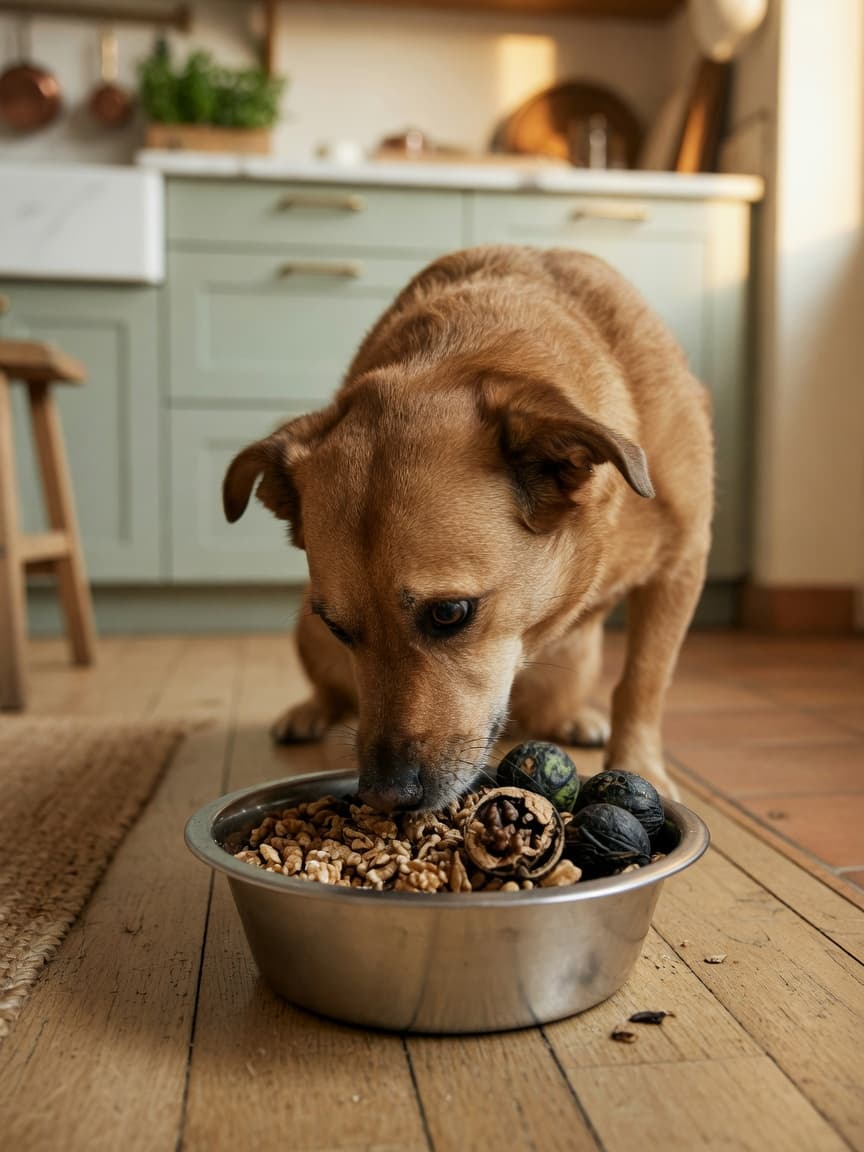
Can Dogs Eat Walnuts? Black Walnuts Are Toxic
Walnuts may be one of the most misunderstood nuts when it comes to dog safety. Many pet owners assume all walnuts carry the same level of risk, but the reality is more nuanced — and in the case of black walnuts, far more alarming. Understanding the difference between walnut varieties could genuinely save your dog's life.
Black Walnuts: A Genuine Toxicity Risk
Black walnuts (Juglans nigra) are native to North America and are commonly found in backyards, parks, and woodland areas across the eastern United States. Unlike English walnuts, black walnuts contain a compound called juglone, which is toxic to many animals including horses and dogs. More critically, black walnuts are highly susceptible to a mold called Penicillium crustosum, which produces tremorgenic mycotoxins — substances that directly affect the nervous system.
When a dog ingests a black walnut contaminated with these mycotoxins, the results can be rapid and severe. Clinical signs typically appear within 30 minutes to a few hours of ingestion and may include muscle tremors, uncontrolled shaking, seizures, vomiting, and hyperthermia (elevated body temperature). In severe cases, neurological symptoms can persist for hours or even days without treatment.
This is not a "wait and see" situation. If you suspect your dog has eaten black walnuts — especially ones found on the ground that may have been sitting for days or weeks — treat it as a veterinary emergency.
The Mycotoxin Problem
Mycotoxins are toxic compounds produced by certain molds that grow on nuts, grains, and other organic matter. The specific molds that colonize black walnuts thrive in humid conditions, and walnuts that have fallen from trees and been lying on the ground are particularly likely to harbor them.
The danger of mycotoxins is that there is no reliable way for a pet owner to detect them visually or by smell. A walnut may look perfectly normal on the outside while carrying a dangerous mold load on the inside. This makes any black walnut found outdoors effectively a high-risk object that should be kept away from dogs entirely.
English Walnuts: Lower Risk, Still Not Recommended
English walnuts (Juglans regia) — the type most commonly sold in grocery stores — do not contain juglone in significant quantities and are less prone to the specific molds that affect black walnuts. However, they are still not a safe snack for dogs for several important reasons.
First, English walnuts are extremely high in fat — around 65% fat by weight. A dog that eats a meaningful quantity of walnuts in one sitting is at real risk of developing pancreatitis, the same fat-triggered inflammation of the pancreas that can occur with almonds. Symptoms include vomiting, diarrhea, abdominal pain, and lethargy.
Second, the size and density of walnuts makes them a choking hazard and a potential cause of intestinal obstruction, particularly in smaller breeds. Dogs tend to swallow chunks of food without adequate chewing, and a walnut piece can lodge in the digestive tract and require surgical intervention.
Third, English walnuts purchased as human food are frequently salted, roasted with oil, or seasoned with spices — all of which add sodium and potentially toxic flavoring agents to an already problematic food.
Walnut Shells: An Additional Hazard
The shells of both black and English walnuts are rough, sharp, and difficult to digest. Dogs that chew on walnut shells can lacerate their gums and mouth tissue, and any fragments swallowed can cause internal irritation or obstruction. Never allow dogs to chew on walnut shells as a "toy" or distraction — this is a separate risk from the nut itself.
What to Do If Your Dog Eats Walnuts
Your response should depend on which type of walnut was consumed:
- Black walnuts: Call your vet or the ASPCA Animal Poison Control Center (888-426-4435) immediately. Do not wait for symptoms to appear.
- English walnuts (grocery store type), plain, just one or two: Monitor your dog closely for vomiting, diarrhea, or signs of distress. Contact your vet if any symptoms develop or if your dog is small or has pre-existing health conditions.
- Salted, flavored, or old/moldy English walnuts: Contact your vet regardless of quantity.
Safe Snack Alternatives for Dogs
Your dog does not need walnuts or any other nuts in their diet. Dogs thrive on nutritionally complete commercial food, and any treats should supplement rather than disrupt that balance. For dogs that enjoy crunchy snacks, consider raw carrot sticks, apple slices (without seeds), or purpose-made dog biscuits.
Explore healthy dog snacks on Zooplus — formulated to be safe, nutritious, and genuinely enjoyable for dogs without the risks that come with human nuts.A Note on Walnut Trees in Your Yard
If you have a black walnut tree on your property, consider this a management issue as well as a feeding issue. Fallen walnuts should be cleared regularly, especially in wet weather when mold develops faster. Dogs that roam the yard unsupervised can easily consume fallen walnuts before you notice. Fencing off the area beneath the tree during walnut season is a sensible precaution for dog owners.
Key Takeaways
- Black walnuts are toxic to dogs due to juglone and tremorgenic mycotoxins — treat ingestion as an emergency.
- English walnuts are not classified as toxic but carry high fat content and pancreatitis risk.
- Mold on fallen walnuts can produce mycotoxins that cause tremors and seizures — never assume a walnut is safe.
- Walnut shells are sharp and can cause mouth lacerations and intestinal obstruction.
- If black walnut ingestion is suspected, call a vet or poison control immediately — do not wait for symptoms.
References
- Bischoff K, Mukai M, Ramaiah SK. "Black walnut." In: Gupta RC, ed. Veterinary Toxicology. Academic Press; 2012. Referenced via: Gwaltney-Brant S. "Veterinary information: toxic plants." PMID: 22426000
- Young KL, Villar D, Carson TL, et al. "Tremorgenic mycotoxin intoxication with penitrem A and roquefortine in two dogs." Journal of the American Veterinary Medical Association. 2003;222(1):52-53. PMID: 12523481
Written by Julia Wrenfield, Pet Wellness Researcher