
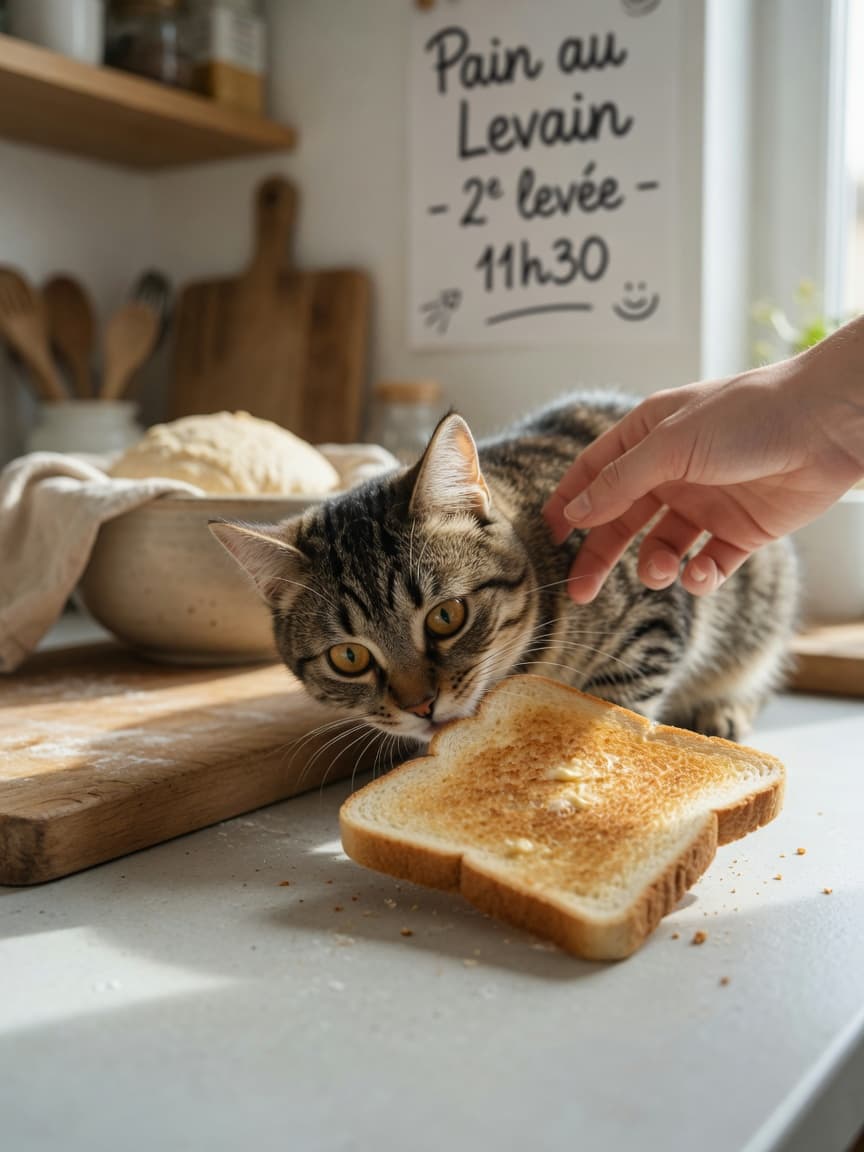
¿Pueden comer pan los gatos? La única regla que podría salvar la vida de tu gato
El pan blanco o integral simple completamente horneado no es tóxico para los gatos en pequeñas cantidades. Un pequeño trozo ocasional es poco probable que cause daño. Sin embargo, el pan no tiene valor nutritivo para los gatos como carnívoros obligados y no contribuye nada más que calorías de hidratos de carbono vacías. Lo más importante: la masa de pan cruda es genuinamente peligrosa y nunca debe llegar a tu gato. La masa que contiene levadura activa puede fermentar dentro del cálido estómago del gato, produciendo etanol y dióxido de carbono — causando envenenamiento por alcohol e hinchazón potencialmente mortal. Cualquier pan que contenga pasas, ajo, cebolla o xilitol también es tóxico. El titular no trata sobre pan simple — se trata sobre masa cruda e ingredientes peligrosos.
El peligro real: masa de pan cruda
Antes de discutir si el pan horneado simple es aceptable para los gatos, es esencial entender el peligro muy real que plantea la masa sin hornear. Esta es la parte de la conversación sobre pan que los dueños de mascotas más necesitan tomar en serio.
La masa de pan cruda contiene levadura activa — organismos vivos que consumen azúcar y producen dióxido de carbono y etanol como subproductos. Este proceso (fermentación) ocurre lentamente a temperatura ambiente, por eso el pan sube. Pero dentro del estómago de un gato, las condiciones son dramáticamente diferentes: cálidas, húmedas y ricas en exactamente el tipo de ambiente en el que la levadura prospera. La fermentación se acelera.
El resultado es una emergencia de dos aspectos. Primero, el gas en expansión causa que el estómago se hinche y se estire, lo cual es intensamente doloroso y puede comprometer el flujo sanguíneo a los órganos abdominales — una condición que puede escalar en dilatación gástrica, una emergencia veterinaria. Segundo, el etanol producido por la levadura fermentada se absorbe en el torrente sanguíneo. Los gatos son extremadamente sensibles al alcohol. Incluso pequeñas cantidades pueden causar toxicidad por etanol de inicio rápido: desorientación, pérdida de coordinación, vómitos, bajo nivel de azúcar en sangre, depresión respiratoria, convulsiones, y potencialmente muerte sin intervención.
Si horneas pan en casa, mantén toda la masa cruda completamente fuera del alcance de tu gato. Si sospechas que tu gato ha comido masa cruda, contacta a tu veterinario o a un hospital de emergencia para animales inmediatamente. No esperes a que aparezcan síntomas.
¿Qué hay sobre el pan horneado simple?
Una vez que el pan está completamente horneado, la levadura está muerta y el proceso de fermentación ha terminado. El pan blanco o integral simple horneado — sin ingredientes añadidos — no es tóxico para los gatos. Si tu gato logra robar una pequeña esquina de tu tostada, no hay razón para entrar en pánico.
Dicho esto, "seguro" no es lo mismo que "beneficioso". El pan simple no ofrece a los gatos esencialmente nada de valor. Los gatos son carnívoros obligados cuya maquinaria metabólica está diseñada para funcionar con proteína animal y grasa. Tienen capacidad limitada para obtener energía de los hidratos de carbono, no requieren ningún hidrato de carbono dietético en absoluto, y carecen de los receptores del sabor dulce que hacen que los alimentos con almidón sean atractivos para los humanos y los perros. La mayoría de los gatos muestran poco interés en el pan simple por esta razón.
El pan que un gato come añade calorías con almidón sin aminoácidos, ácidos grasos esenciales, vitaminas o minerales de consecuencia para su dieta. Con el tiempo, si el pan se convierte en un regalo habitual, contribuye al aumento de peso y puede desplazar los alimentos ricos en proteína que los gatos realmente necesitan para prosperar.
Variedades de pan que son tóxicas para los gatos
Muchos panes comunes contienen ingredientes que van más allá de una base de almidón neutra. Varios de estos ingredientes son genuinamente peligrosos para los gatos:
Pasas y frutas secas: Las pasas — y todas las formas de uvas — son tóxicas para gatos y perros. El mecanismo exacto no se comprende completamente, pero incluso pequeñas cantidades pueden causar insuficiencia renal aguda. Cualquier pan que contenga pasas, sultanas, grosellas u otra fruta seca debe mantenerse completamente alejado de los gatos. Esto incluye panes de frutas, hot cross buns y productos horneados similares.
Ajo y cebolla: El pan de ajo es un transgresor obvio, pero el polvo de cebolla también se usa en algunos panes salados y galletas. Los compuestos de alium (encontrados en ajo, cebolla, puerros y cebollas chinas) causan daño oxidativo a los glóbulos rojos en gatos, llevando a anemia hemolítica. El ajo es aproximadamente cinco veces más tóxico que la cebolla por peso. Incluso las pequeñas exposiciones repetidas se acumulan. Nunca des a un gato pan de ajo o ningún pan salado condimentado con aliums.
Xilitol: Algunos panes especiales, particularmente variedades bajas en azúcar o "saludables", pueden contener xilitol como edulcorante. El xilitol es altamente tóxico para las mascotas y ha sido vinculado a hipoglucemia severa e insuficiencia hepática incluso en dosis pequeñas. Siempre lee las etiquetas de ingredientes antes de compartir cualquier alimento humano con tu gato.
Semillas y frutos secos: Las nueces de macadamia son tóxicas para las mascotas. Algunos frutos secos pueden causar malestar gastrointestinal. El pan que contiene estos no debe darse a los gatos.
Panes infusionados con alcohol o endulzados: Ciertos panes especiales usan cerveza o bebidas espirituosas en la receta, y los bollos dulces pueden contener altas cantidades de azúcar. Ninguno es apropiado para los gatos.
¿Tiene el pan algún uso en la dieta de un gato?
No hay una razón basada en evidencia para incluir pan simple en la dieta de un gato, ni siquiera ocasionalmente. A diferencia de la calabaza (que ofrece beneficios de fibra) o pollo cocido simple (que proporciona proteína), el pan simple es genuinamente nutricionalmente inerte para un gato.
Algunos dueños de gatos usan un pequeño trozo de pan simple suave para esconder una píldora para un gato que resiste la medicación. Este es un enfoque pragmático que funciona para uso a corto plazo. Envolver una pequeña píldora en una pizca del tamaño de un guisante de pan simple o metérsela dentro es generalmente inofensivo si se hace con poca frecuencia. Muchos veterinarios, sin embargo, prefieren bolsas de píldoras o portadores de píldoras a base de golosinas blandas específicamente formuladas para gatos, ya que estos son más sabrosos y no contribuyen hidratos de carbono innecesarios.
Ver alimentos para gatos en Zooplus →