ForPetsHealthcare
Dogs

Why Is My Dog Dragging Its Bottom?

By Julia WrenfieldUpdated September 11, 20264 min read
Evidence-based · Sources checked
{"en": "Dog scooting on carpet with rear end dragging on floor due to anal gland discomfort", "es": "Perro arrastrando la parte trasera sobre la alfombra por molestia en gl\u00e1ndulas anales", "fr": "Chien tra\u00eenant son arri\u00e8re-train sur le tapis en raison d'un inconfort des glandes anales", "de": "Hund rutscht mit Hinterteil \u00fcber Teppich wegen Beschwerden an Analdr\u00fcsen", "nl": "Hond schuifelt met achterwerk over tapijt vanwege ongemak in anale klieren", "pt": "Cachorro arrastando a parte traseira no tapete devido a desconforto nas gl\u00e2ndulas anais", "it": "Cane che striscia il posteriore sul tappeto a causa di disagio delle ghiandole anali"}

If you've noticed your dog scooting across the carpet or dragging their bottom along the ground, you're not alone. This behaviour, whilst sometimes amusing, can indicate an underlying health issue that deserves your attention. Understanding the causes behind this common canine behaviour will help you determine whether a simple home remedy or a veterinary visit is needed.

Anal Gland Issues: The Most Common Culprit

The most frequent reason dogs drag their bottoms is problems with their anal glands. These small pouches, located on either side of your dog's anus, produce a distinctive scent marking fluid. When they become irritated, infected, or impacted, your dog experiences discomfort and will drag their bottom to relieve the pressure.

Signs that anal gland problems may be present include:

  • Excessive licking or biting at the rear end
  • A fishy odour coming from your dog
  • Visible swelling around the anus
  • Difficulty defecating or straining
  • Repeated scooting behaviour

Many dogs, particularly smaller breeds, require regular anal gland expression. Your veterinarian can demonstrate how to do this at home, or you can bring your dog in for professional expression every 4-8 weeks.

Intestinal Parasites and Worm Infestations
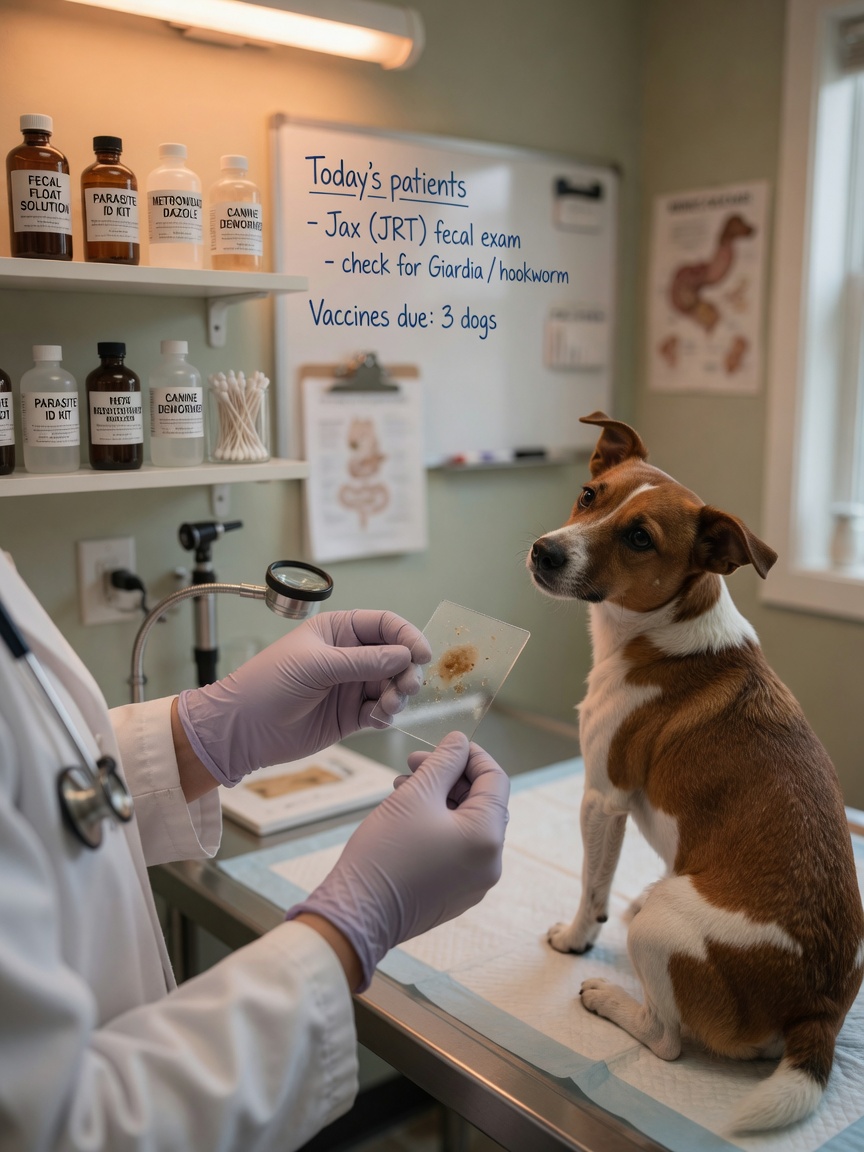
Veterinarian examining a parasite sample under microscope with a Jack Russell Terrier sitting on examination table

Worms and other parasites cause irritation in your dog's digestive tract, leading to itching around the anus. Tapeworms, in particular, often result in the classic bottom-dragging behaviour. You may even notice rice-like segments in your dog's faeces or around their rear end.

Protect your dog with regular worming treatments, typically administered every 3 months for adult dogs. Puppies require more frequent treatments. Ask your vet about the most appropriate worming schedule for your pet's age and lifestyle.

Skin Infections and Allergies

Fungal or bacterial infections around the anal area, or allergies affecting the skin, can cause significant itching. Dogs with food allergies or environmental allergies may develop secondary skin infections that manifest as scooting behaviour.

If your dog also exhibits symptoms such as frequent scratching elsewhere, red or inflamed skin, or ear infections, allergies or dermatitis may be the underlying cause. Your vet can perform skin tests or allergy investigations to identify the specific trigger.

When to Contact Your Vet

Whilst occasional scooting might resolve itself, persistent or worsening behaviour warrants professional attention. Schedule a veterinary appointment if:

  1. The behaviour continues for more than a few days
  2. Your dog shows signs of pain or distress
  3. You notice discharge, bleeding, or swelling
  4. Your dog has difficulty defecating
  5. The scooting is accompanied by other symptoms like vomiting or diarrhoea

Home Care and Prevention

Maintaining your dog's digestive health is essential for preventing many scooting-related issues. Ensure your dog eats a high-fibre diet, as adequate fibre helps express anal glands naturally during normal bowel movements. Encourage regular exercise and provide plenty of fresh water.

Keep your dog's bottom clean and dry, especially if they have long hair around the rear end. Regular bathing and grooming can prevent matting and skin irritation.

Key Takeaways

Dog scooting is rarely a cause for panic, but it should never be ignored. Anal gland problems, parasites, and skin conditions are the most common causes, and all are easily addressed with appropriate veterinary care. By maintaining a good preventative healthcare routine—including regular worming, fibre-rich nutrition, and grooming—you can significantly reduce the likelihood of this uncomfortable behaviour. If you're concerned, your vet is your best resource for diagnosis and treatment.

#why is my dog dragging its bottom#dog health#dog nutrition#forpetshealthcare

Sources & further reading

This article is based on peer-reviewed veterinary research and reputable animal-health sources. Explore the underlying science in our Research Library.

Related articles

The 19 Best Animal Shelters in the Netherlands (2026)

the Netherlands's animal shelters, rescue associations and refuges save thousands of dogs, cats and other animals every year, almost always on tiny budgets and volunteer power. To build the most objective ranking possible, we analysed public Google reviews across more than 56 registered animal-prote…

Read more →

The 48 Best Animal Shelters in Germany (2026)

Germany's animal shelters, rescue associations and refuges save thousands of dogs, cats and other animals every year, almost always on tiny budgets and volunteer power. To build the most objective ranking possible, we analysed public Google reviews across more than 152 registered animal-protection o…

Read more →

The 25 Best Animal Shelters in Italy (2026)

Italy's animal shelters, rescue associations and refuges save thousands of dogs, cats and other animals every year, almost always on tiny budgets and volunteer power. To build the most objective ranking possible, we analysed public Google reviews across more than 121 registered animal-protection org…

Read more →

The 32 Best Animal Shelters in France (2026)

France's animal shelters, rescue associations and refuges save thousands of dogs, cats and other animals every year, almost always on tiny budgets and volunteer power. To build the most objective ranking possible, we analysed public Google reviews across more than 89 registered animal-protection org…

Read more →

The 8 Best Animal Shelters in Portugal (2026)

Portugal's animal shelters, rescue associations and municipal centros de recolha save thousands of dogs, cats and other animals every year, almost always on tiny budgets and volunteer power. To build the most objective ranking possible, we analysed public Google reviews across more than 86 registere…

Read more →

Yorkshire Terrier Collapsing trachea: Causes, Signs & Care

Yorkshire Terriers are one of the breeds most commonly affected by collapsing trachea, largely because their windpipe cartilage is naturally softer and more prone to weakening than in larger dogs. This means the rings of cartilage that hold the airway open can flatten during breathing, causing a cha…

Read more →
Disclaimer:This article is for informational purposes only and does not constitute veterinary advice. Always consult a qualified veterinarian for your pet's health concerns.

Free newsletter

Pet health tips, straight to your inbox

Weekly science-backed advice for dog & cat owners. No spam, unsubscribe anytime.