

Why Does My Dog Roll in Disgusting Things?
It is one of the great frustrations of dog ownership. Your dog is clean, the car is clean, and then without warning they locate something deeply offensive and roll in it with the enthusiasm of someone discovering a luxury spa. Understanding the reasons behind this behaviour does not make it smell any better, but it does help you manage it more effectively.
The Evolutionary Theories
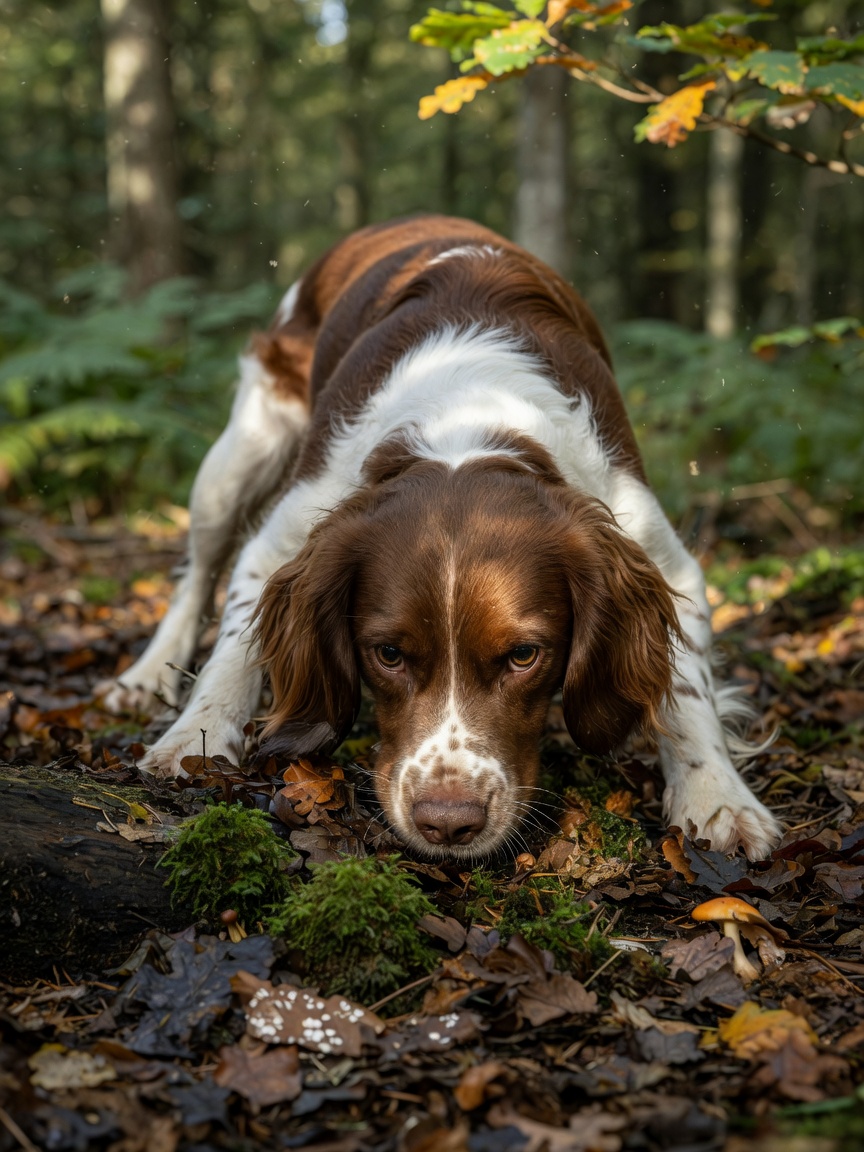
Scientists and animal behaviourists have proposed several theories about why dogs roll in foul-smelling substances, and it is likely that more than one of them is true depending on the individual dog and the situation.
Scent Camouflage
The most widely cited theory is scent camouflage. Dogs are descended from predators that needed to mask their own scent when hunting prey. By covering themselves in the smell of another animal — particularly a dead one — a wild canid could potentially get closer to prey without being detected. Domestic dogs retain many behaviours that no longer serve a practical purpose, and this may well be one of them. The behaviour is so ingrained that even well-fed dogs with no need to hunt will engage in it enthusiastically.
Communication With the Pack
A second theory suggests that rolling in interesting smells is a form of communication. By carrying a novel scent back to other members of the social group, a dog may be advertising a discovery — essentially sharing information about what they found and where. Other dogs sniffing the returning individual would pick up that scent and could investigate the location themselves. In a domestic context this may explain why your dog makes a beeline for other dogs after a particularly successful roll.
Scent Preference and Pleasure
A third and perhaps underappreciated explanation is simply that dogs find these smells genuinely appealing. Human preferences for fragrance are not universal across species. What we find repellent — rotting organic matter, fox scent marks, badger latrines — dogs may experience as rich, complex, and interesting. From your dog's perspective, rolling in fox poo is not a hygiene issue. It is more akin to discovering an extraordinary perfume.
What Dogs Are Most Drawn To
Not all unpleasant substances hold equal appeal. The most common targets in the UK include:
- Fox scent marks and fox faeces — fox secretions contain particularly pungent sulphur compounds that seem irresistible to many dogs
- Decomposing animal matter — the older and more rotten, the better as far as most dogs are concerned
- Badger latrines — badger dung is strongly scented and frequently found along woodland paths
- Dead fish or seaweed along riverbanks and coastal paths
- Bird droppings, particularly those of larger birds such as geese or gulls
Managing the Behaviour
Prevention is far more effective than cure when it comes to rolling. Once a dog is in the process of rolling, most owners are too far away to intervene. The following strategies can significantly reduce the frequency of incidents.
Solid Recall Training
A reliable recall — one that works even when your dog is highly motivated by something else — is your most important tool. A recall trained only in the garden will not hold when your dog has spotted a dead rabbit from thirty metres. Recall should be trained regularly under increasingly distracting conditions, always rewarded generously, and never punished even when the dog has taken a long time to respond.
The Leave It Cue
Training a solid "leave it" cue before walks gives you a way to interrupt your dog's approach to a target before they commit to rolling. This cue must be trained when the dog is calm and then gradually generalised to real-world distractions. It should never be used as a punishment — it should predict something good happening instead.
Long Lead Management
In known hotspots — areas where fox activity is high, near badger setts, or along routes where decomposing matter is frequently found — using a long lead of five to ten metres allows your dog freedom of movement while keeping them within interruption range. This is particularly useful while recall training is still being developed.
The Best Methods for Washing It Out
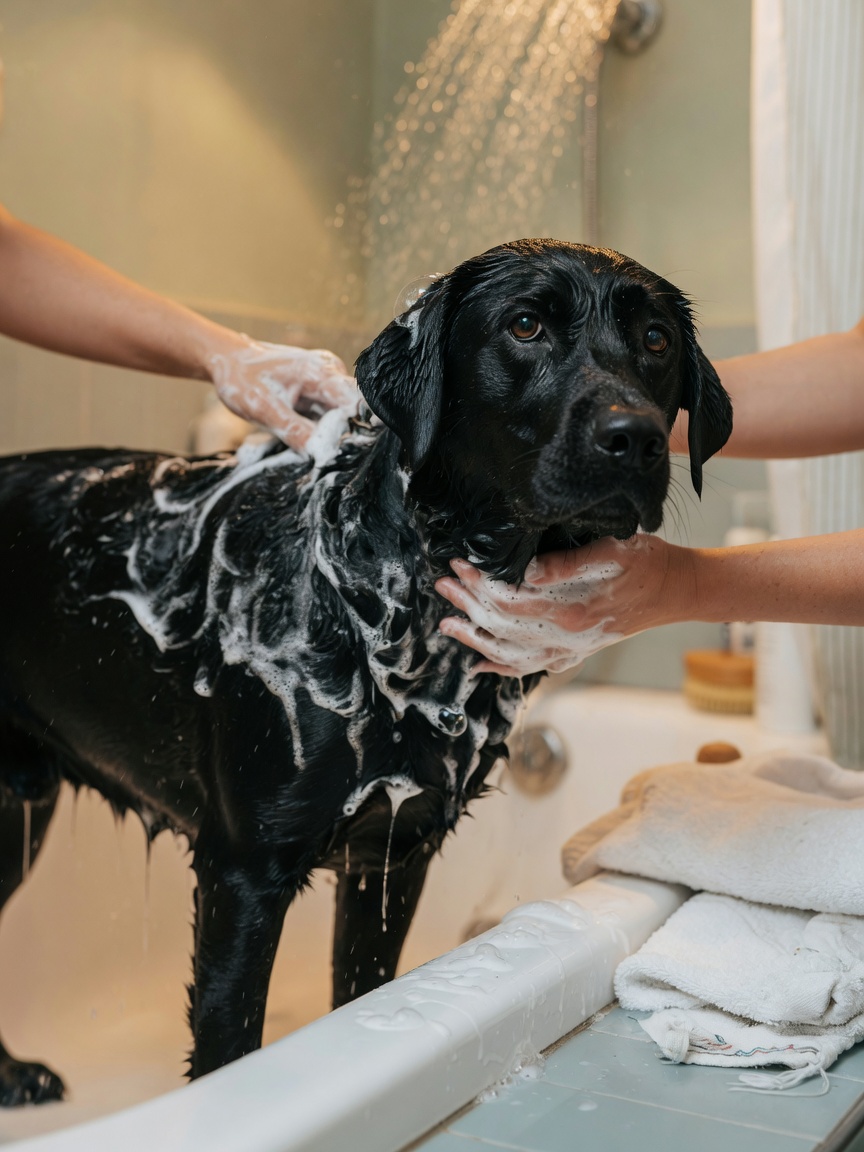
When prevention fails, you need an effective solution. Standard dog shampoo alone rarely cuts through the oily compounds in fox poo. The following approaches are most effective:
- Fairy washing-up liquid — the original formula works exceptionally well because it is designed to cut through grease and oil, which is what fox secretions are primarily composed of. Apply directly to the affected area before wetting the coat, work into a lather, and rinse thoroughly
- Tomato juice — an old remedy that has genuine scientific basis. The enzymes and acids in tomato juice help break down the sulphur compounds responsible for the smell. Apply liberally, leave for a few minutes, then shampoo out
- Specialised odour-eliminating shampoos — products such as Simple Solution and Skunk-Off are formulated specifically to neutralise biological odour compounds rather than simply masking them, and are worth keeping in the car if your dog is a habitual roller
Why Your Dog Looks So Pleased With Themselves
After a successful roll, most dogs display obvious signs of satisfaction — a relaxed body, a self-congratulatory trot, sometimes a distinctly smug expression. This is not your imagination. Your dog genuinely is pleased with themselves. From their perspective, they have done something highly rewarding: located an exceptional scent, engaged in a deeply pleasurable physical and olfactory experience, and potentially communicated something interesting to their social group. The fact that you are now wrestling them into the bath is, frankly, your problem rather than theirs.
Understanding this gap between canine and human priorities is key to approaching the behaviour without frustration. Your dog is not being naughty. They are being a dog. Management through training and environmental awareness is the most practical route to fewer incidents — but it is worth accepting that for many dogs, the occasional successful roll is simply one of life's greatest pleasures.
--- Author: Julia Wrenfield