
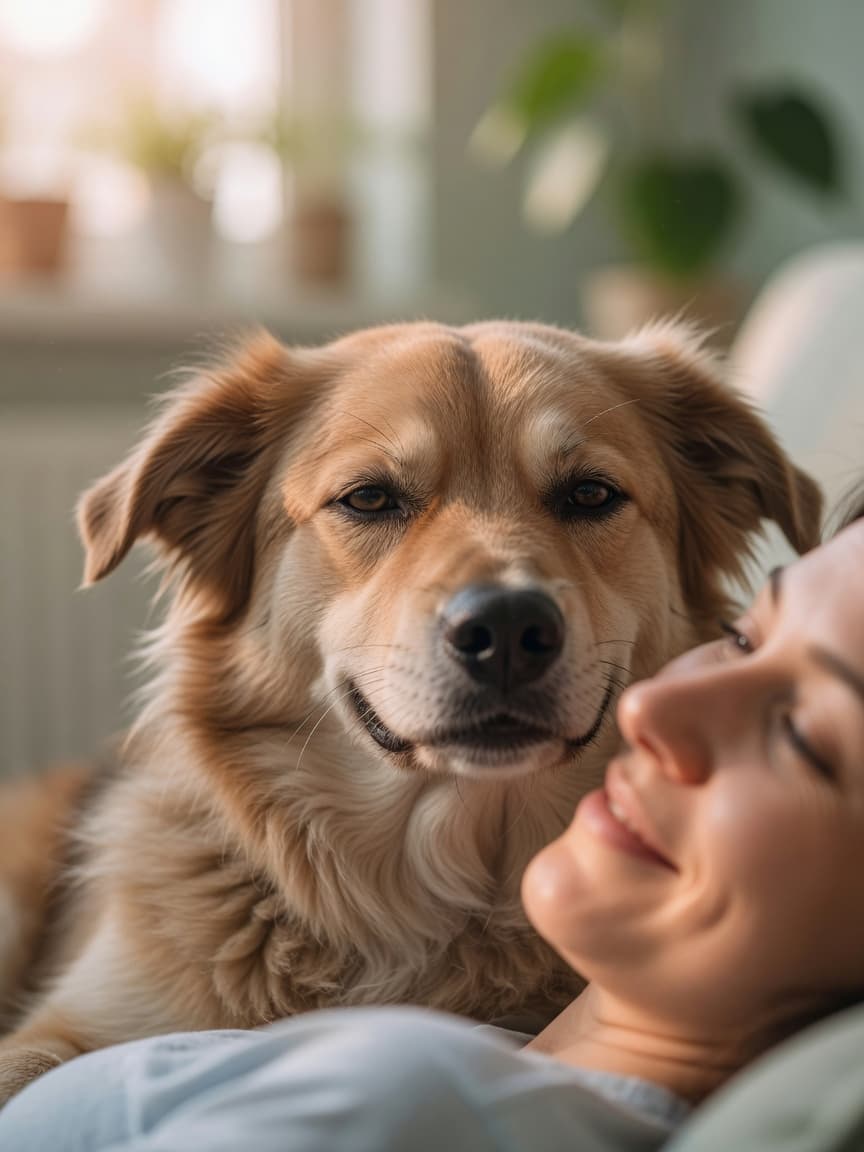
Why Does My Dog Stare at Me? The Science Behind the Gaze
You're eating breakfast and your dog is staring at you. You're watching television and your dog is staring at you. You're on a work call, in the bathroom, lying in bed — and your dog is staring at you. Dogs are intensely visual creatures who communicate a great deal through their eyes, and learning to read that gaze is one of the most rewarding things a dog owner can do. Not all stares mean the same thing.
Staring Because They Want Something
Let's start with the most pragmatic explanation: your dog is staring at you because they want something and they've learned that staring is an effective strategy for getting it. Dogs are extraordinarily good at reading human attention and behavior, and most dogs figure out quickly that sustained eye contact from them tends to produce a response from us — we get up, get food, open the door, or engage in play.
A "wants something" stare is usually accompanied by context clues: it happens near the food bowl at dinnertime, near the door around walk time, or when the dog has a toy at their feet and wants to play. The body language is typically alert but relaxed — weight forward, ears up, tail at a neutral or slightly elevated position.
The Bonding Stare: Oxytocin and Mutual Gaze
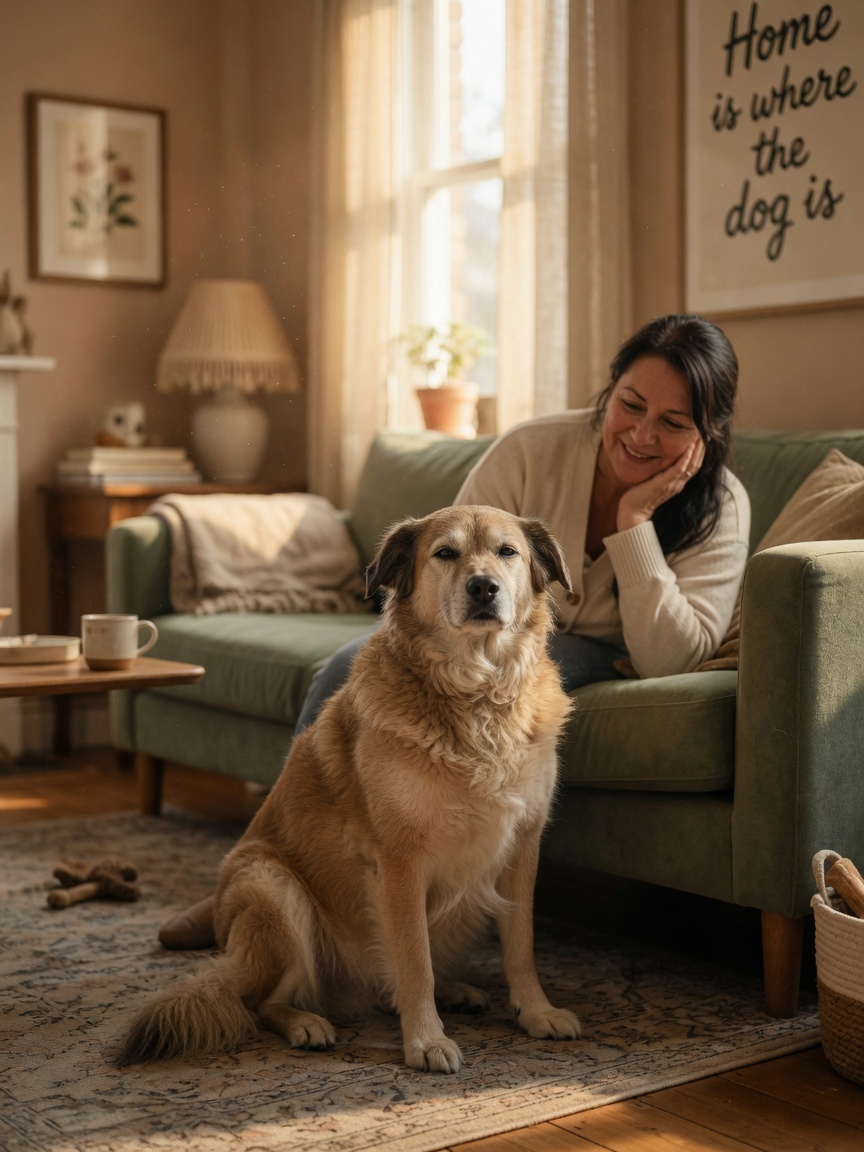
This is where it gets genuinely remarkable. In 2015, a research team led by Takefumi Nagasawa at Azabu University published a study in Science demonstrating that when dogs and their owners engage in mutual gaze, both experience a significant increase in urinary oxytocin — in the dogs by 57.2% and in the owners by 300%. This is the same neurochemical loop that bonds human mothers to infants through eye contact.
What makes this finding extraordinary is its evolutionary implication: dogs appear to have co-opted the human infant-caregiver bonding system through domestication. No other non-human species has been shown to trigger oxytocin release in humans through gaze in this way. Wolves raised by humans do not show this effect. It appears to be specific to the dog-human relationship and its roughly 15,000-year history of co-evolution.
So when your dog gazes softly at you from across the room with relaxed eyes and a loose body, they may genuinely be expressing attachment and affection — not just calculating their next treat.
Staring to Communicate
Dogs use gaze as a referential communication tool — they look at things they want, then look back at the person they want to help them get it. This behavior, called "referential looking" or "gaze alternation," has been extensively studied and is remarkably similar to the pointing behavior in human infants.
In studies, dogs will look at a desired object (a toy out of reach, a treat behind a barrier), then look back at a human, then back at the object — clearly communicating "I need help with that." This is an impressive form of social cognition that reflects the depth of dogs' attunement to human behavior. Your dog isn't just staring at you randomly when the ball rolls under the sofa — they're asking you for help.
Reading the Room: Curiosity, Confusion, and Learning
Dogs also stare when they're paying close attention during training, when they're uncertain about what's expected, or when they're trying to read your emotional state. A dog who stares intently during a training session with a slightly tilted head is engaged, curious, and processing information. This kind of attentive staring is a sign of a dog who is genuinely trying to understand you — and it's one of the most valuable states for learning.
Dogs are also remarkably good at reading human facial expressions. Research has shown that dogs can distinguish between happy and angry human faces, and that they preferentially look at the left side of a human face (where emotional expressions are typically more pronounced). Your dog staring at your face may be actively reading your emotional cues.
The Warning Stare: When Staring Means Something Different
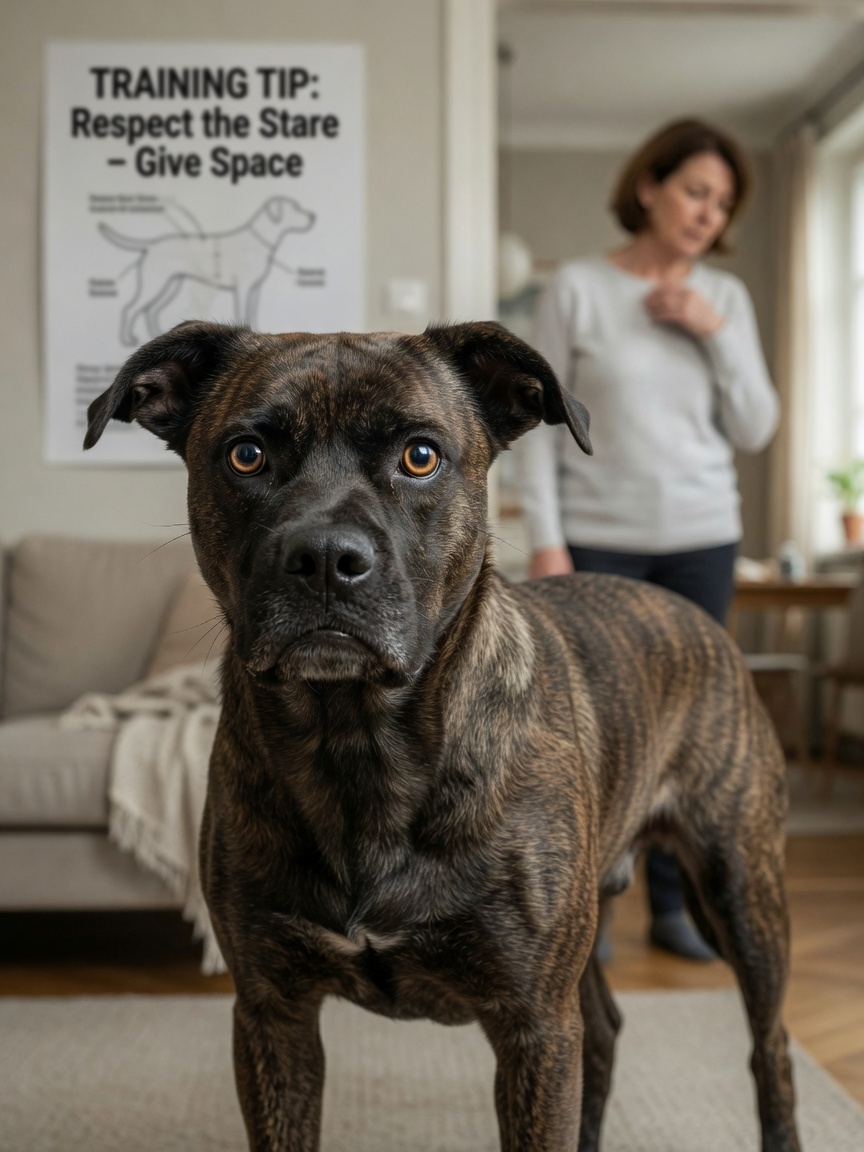
Not all staring is warm and communicative. A hard, unblinking, fixed stare accompanied by a stiff body, closed mouth, forward weight distribution, and absence of the usual soft facial expression is a warning sign. This is a threat signal — the dog is communicating discomfort, resource guarding, or potential aggression.
The key differentiators between a soft gaze and a hard stare are:
- Soft gaze: Relaxed facial muscles, slightly squinted eyes, loose body posture, possible slow blinking — this is connection and trust
- Hard stare: Dilated pupils, wide-open unblinking eyes, tense facial muscles, forward rigid body, closed or tight mouth — this is a warning
Never stare back at a dog displaying a hard stare. Look away slowly and remove yourself from the situation calmly. If you observe hard staring directed at people regularly, consult a behaviorist.
Staring During Sleep or Waking
Some dogs stare at their owners while they sleep, or stare in a confused, glassy way upon waking. This can be entirely normal — some dogs simply enjoy monitoring their people. However, in senior dogs, glassy or vacant staring, particularly if accompanied by disorientation or other behavioral changes, may indicate cognitive dysfunction syndrome or a focal seizure activity and warrants a veterinary check.
Key Takeaways
- Dog staring has multiple meanings: wanting something, bonding and affection, referential communication, learning attention, or a warning.
- The 2015 Nagasawa study confirmed that mutual dog-owner gazing triggers oxytocin release in both parties — a neurochemical bonding response.
- A soft, relaxed gaze indicates connection; a hard, fixed, unblinking stare with tense body language is a warning signal.
- Dogs use gaze alternation to communicate specific needs — they look between the desired object and you to ask for help.
- Glassy or confused staring in senior dogs should be evaluated by a veterinarian.
References
Nagasawa M, et al. (2015). Oxytocin-gaze positive loop and the coevolution of human-dog bonds. Science. PubMed
Müller CA, et al. (2015). Dogs can discriminate emotional expressions of human faces. Current Biology. PubMed