
Why Do Cats Show Their Belly? (And Why You Shouldn't Touch It)
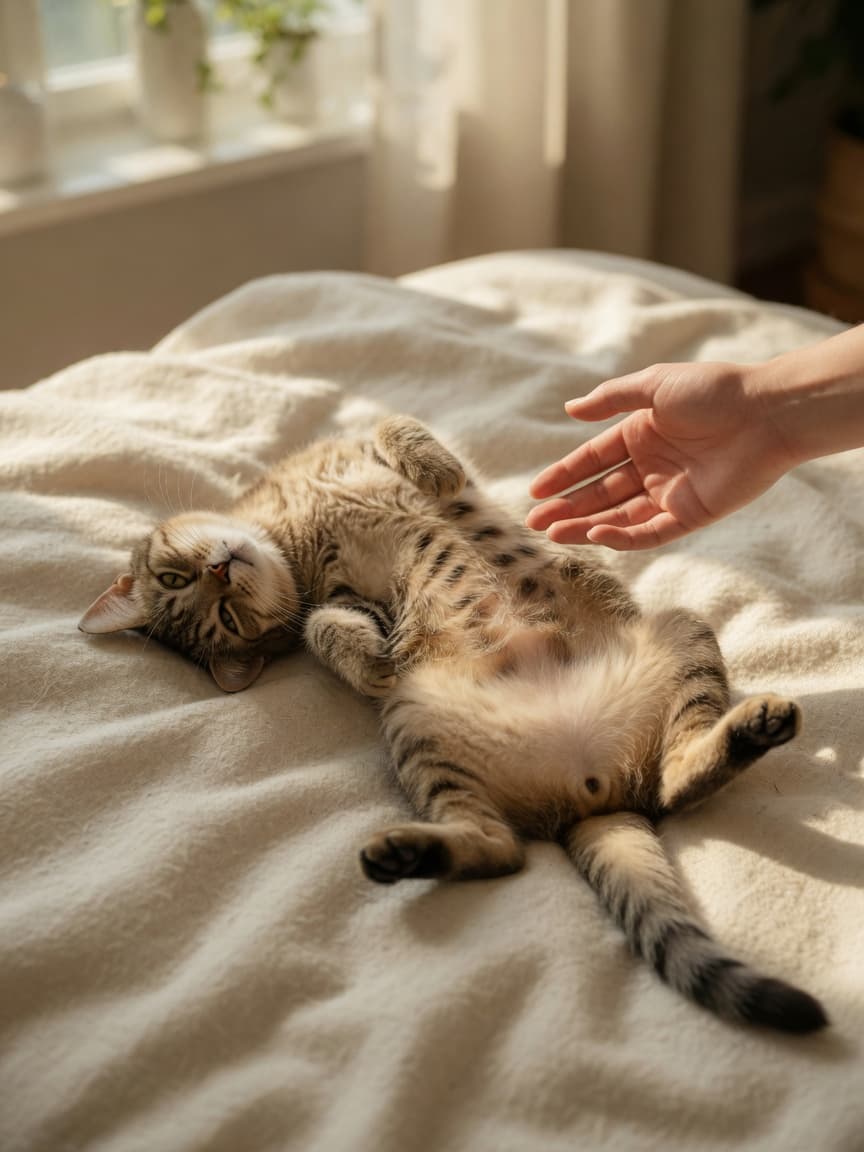
The scene is familiar: your cat rolls onto their back, stretches luxuriously, and gazes up at you with half-lidded eyes — fluffy tummy on full display. Your instinct fires instantly. You want to touch it. You reach out your hand. And then — chomp. Or scratch. Or both.
What just happened? Did your cat trick you? Are they manipulative little con artists? Well... sort of. But it's not as sinister as it sounds. Understanding why cats show their belly — and why they then react when you touch it — requires a look at feline body language, evolutionary survival instincts, and the fundamentally different way cats and humans express trust.
What the Belly Reveal Actually Means
When a cat rolls onto their back and exposes their stomach, they are doing something that is, by feline standards, extraordinarily vulnerable. The belly is home to vital organs — the stomach, intestines, liver, and reproductive organs are all concentrated in this soft, unprotected region. In the wild, exposing your belly means you're completely dropping your guard.
So when your cat rolls over in front of you, they are communicating a high level of trust and comfort. They feel so safe in your presence that they're willing to be physically vulnerable. This is a compliment. It's just not an invitation.
The ASPCA's feline behavior resource describes the belly roll as a "trust display" — a form of communication that signals relaxed, non-threatening intent and social comfort, particularly between bonded individuals.
The Belly Trap: Why Cats React When You Touch It
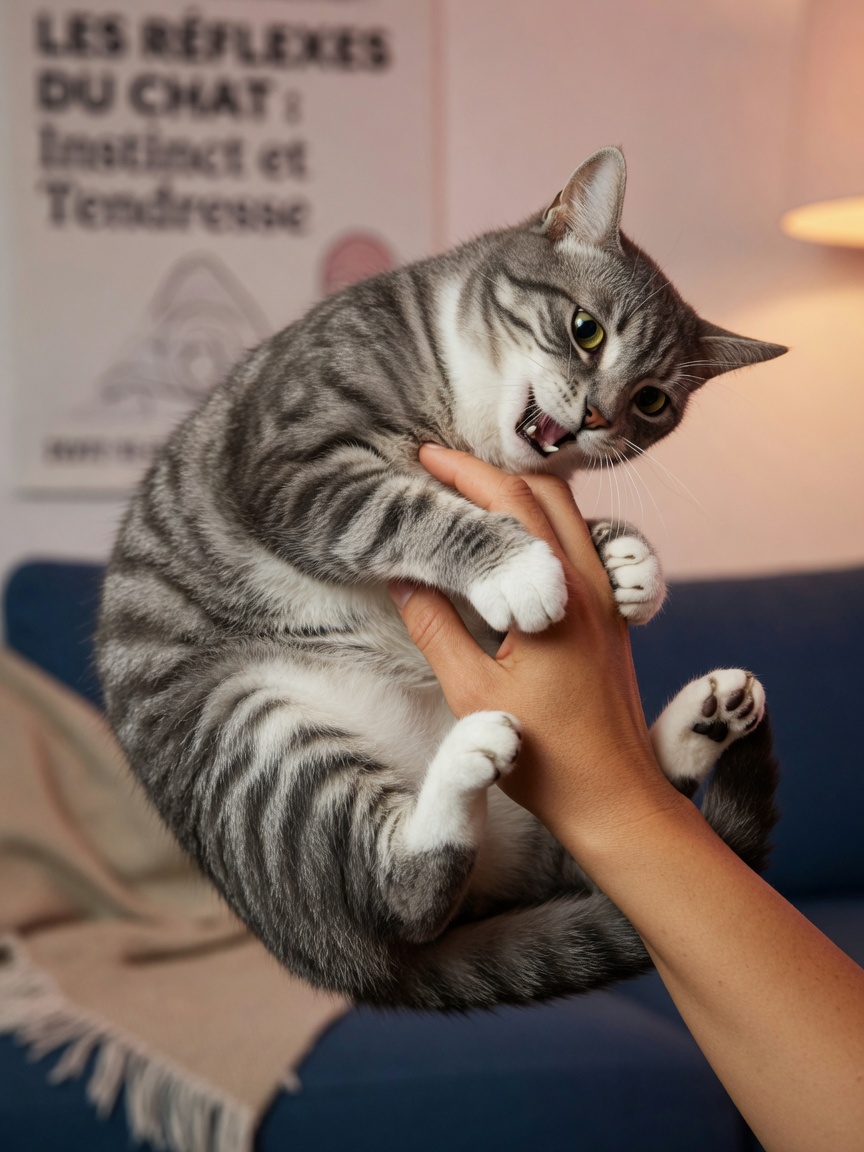
Here's the evolutionary reason cats react when you reach for their belly: even a completely relaxed, trusting cat has deeply wired reflexes that protect the abdomen. The moment something (a hand, a paw, anything) makes contact with the belly, the cat's nervous system can trigger what's called a "defensive wrap" — where the cat uses all four limbs and their mouth to grab and hold whatever touched them.
This reflex exists because in nature, anything grabbing a cat's belly is almost certainly a predator trying to eviscerate them. The fact that your hand is not a predator does not override millions of years of instinctive wiring. Some cats have a much stronger belly-touch reflex than others; some cats genuinely enjoy belly rubs and will solicit them. But the default feline response to unexpected belly contact is defensive, not aggressive in the classic sense.
Individual Variation Is Real
Not all cats are belly-touch-averse. Some cats — especially those who were heavily socialized from kittenhood, those with particularly relaxed temperaments, and those who have specifically learned that belly rubs feel pleasant — will actively seek out tummy scratches. If you have one of these cats, consider yourself lucky.
The key is that the cat should initiate and control the interaction. A cat that rolls over, makes eye contact, and reaches a paw toward you when you approach their belly is signaling a different message than one that rolls over mid-play or in a moment of relaxation where they weren't expecting to be touched.
Reading the Full Picture: Context Clues
Before you decide whether to attempt a belly pet, read the full body language context:
- Relaxed belly roll: Slow movements, relaxed whiskers, half-closed eyes, loose tail — this is a trust display, and the cat is comfortable. Approach with extreme caution and let them sniff your hand first.
- Play-mode belly roll: Dilated pupils, twitching tail, slightly tense posture, maybe a bit of the "crazy eyes" — this is not a trust display. This is a cat who is inviting you to play-wrestle, and the belly is bait. Your hand is the prey. Good luck.
- Submissive belly roll: Sometimes cats roll onto their back when they feel slightly threatened and want to signal non-aggression to a larger animal. In this case, the exposed belly is meant to de-escalate, not to invite touch.
Cornell's Feline Health Center provides detailed guides to feline body language, emphasizing that single cues like a belly roll should always be interpreted in context with the rest of the cat's posture, facial expression, and tail position.
Where Cats Do Like to Be Touched
If you want to pet your cat in a way that's consistently well-received, focus on the areas where scent glands are located — these are the places cats most enjoy being touched, because it feels socially meaningful to them:
- The base of the ears and forehead
- The cheeks and just below the eye line
- Under the chin
- The base of the tail (though some cats dislike this)
The belly and lower abdomen are high-risk zones for most cats. The inner thighs and the paws are also typically off-limits for casual petting. Respect these preferences and your cat will trust you more — which, ironically, makes it more likely they'll eventually let you try the belly.
What to Do When Your Cat Shows Their Belly
The respectful response to a belly roll is acknowledgment without assumption. You can:
- Offer a slow blink back to signal you received the trust communication
- Gently scratch the cheeks or behind the ears — areas you know they enjoy
- Talk to them softly — cats are sensitive to tone of voice
- If you want to test belly access, offer the back of your hand first and watch closely for any stiffening, tail twitching, or ear flattening
The Myth That Cats Are "Manipulative"
The belly-trap is often described as cats being manipulative or deceptive. This framing isn't quite accurate — the cat isn't thinking "I'll lure them in and then attack." The belly roll is a genuine signal of comfort and trust. The defensive reaction that sometimes follows touch is a separate, reflexive response. The cat isn't lying to you; they're just a complex animal with instincts that don't always align with human social expectations.
Understanding this distinction matters because it changes how you interpret and respond to your cat. They're not manipulative — they're multi-layered. And honestly, that's a lot of what makes them so interesting to share a home with.
Key Takeaways
- A belly roll is a trust display — the cat is signaling comfort and safety, not inviting touch.
- The defensive reaction to belly touching is a deep-wired survival reflex, not aggression or manipulation.
- Context matters: a relaxed belly roll and a play-mode belly roll require different responses.
- Some cats do enjoy belly rubs — but they should always initiate and control that contact.
- For consistently positive petting, focus on the cheeks, forehead, and under the chin.
- Acknowledge a belly roll with slow blinks and gentle, non-belly petting to honor the trust it represents.
References
- Reisner IR, Houpt KA, Erb HN, Quimby FW. "Friendliness to humans and defensive aggression in cats: the influence of handling and paternity." Physiology & Behavior. 1994;55(6):1119-1124. PMID: 8047571
- Shreve KRV, Udell MAR. "What's inside your cat's head? A review of cat (Felis silvestris catus) cognition research past, present and future." Animal Cognition. 2015;18(6):1195-1206. PMID: 26154077