
What Does "Obligate Carnivore" Actually Mean?
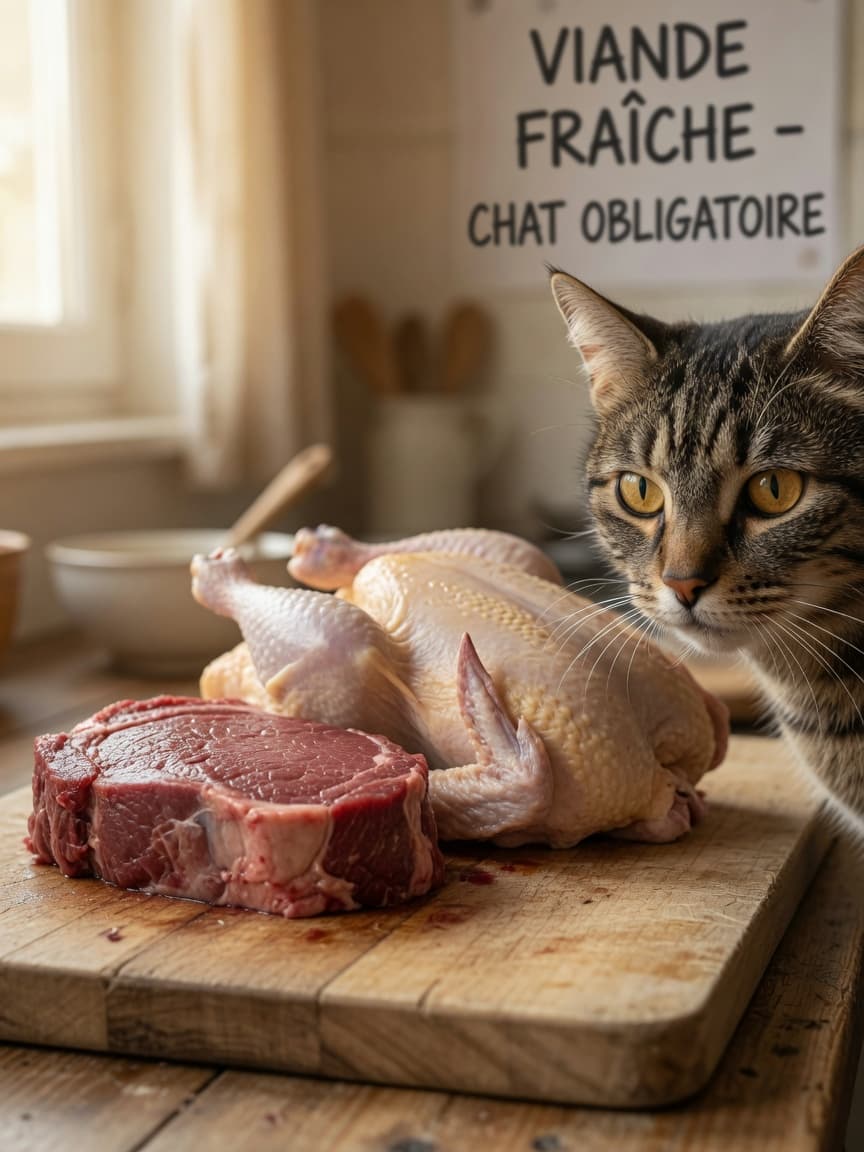
The term obligate carnivore gets thrown around a lot in pet nutrition circles, but it carries more weight than most people realise. Unlike dogs, who are classified as opportunistic omnivores and can derive nutrition from a wide range of food sources, cats are biologically hardwired to obtain virtually all of their essential nutrients from animal tissue. This is not a preference or a habit — it is an evolutionary reality baked into their physiology over millions of years.
Understanding why cats need animal protein in such high quantities, and what happens when they do not get enough, is fundamental to making good decisions about what you feed your cat every day.
The Evolutionary Backstory
Domestic cats descend from Felis silvestris lybica, the African wildcat, a solitary hunter that preyed almost exclusively on small mammals, birds, and reptiles. Their ancestral diet was extraordinarily high in protein, moderate in fat, and extremely low in carbohydrates. Over thousands of generations, cats evolved metabolic pathways that assumed a constant, reliable supply of animal-derived nutrients — because in their natural environment, that is precisely what they had.
The consequence of this evolutionary history is a physiology that is fundamentally different from omnivores. Cats did not develop the enzymatic flexibility to compensate when animal protein is scarce. Instead, they doubled down on metabolic systems that work beautifully when meat is plentiful, and break down when it is not.
The Protein Metabolism That Sets Cats Apart
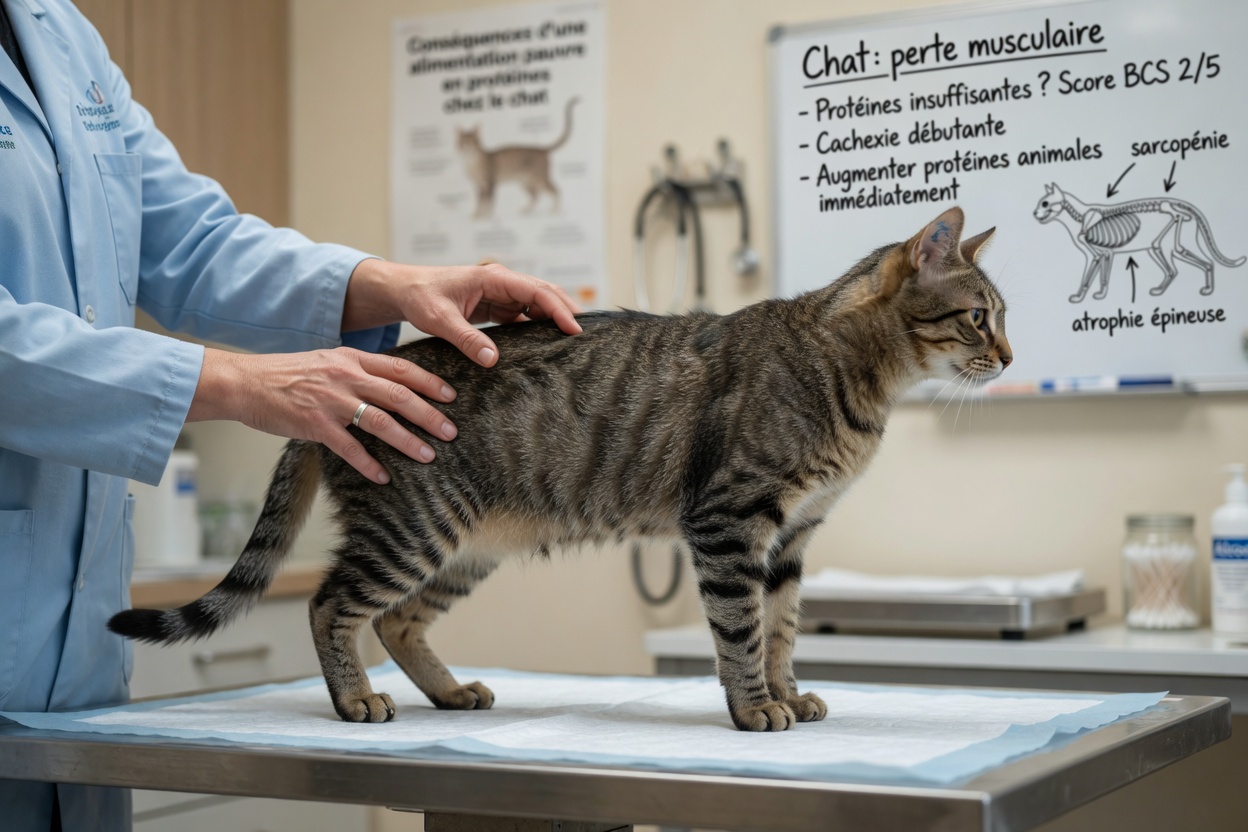
Most mammals, including humans and dogs, can down-regulate their protein catabolism when dietary protein intake drops. In plain terms, when you eat less protein, your body slows down the rate at which it breaks down and excretes the nitrogen from amino acids, conserving what is available. Cats cannot do this. Their livers contain permanently elevated levels of enzymes responsible for breaking down amino acids, and these enzymes remain active regardless of how much protein the cat is actually eating.
This means that even when a cat is consuming a low-protein diet, their body continues to break down protein at a high rate. To compensate, it begins drawing on lean muscle mass. Over time, this leads to muscle wasting, immune dysfunction, poor coat quality, and a general deterioration of health. A cat on a chronically low-protein diet is quite literally consuming itself.
The minimum protein requirement for cats is substantially higher than for dogs or humans. Adult cats need at least 26% of their caloric intake from protein, and many researchers argue that optimal health is supported by figures closer to 40% or above on a dry matter basis.
Taurine: The Amino Acid Dogs Can Make, Cats Cannot
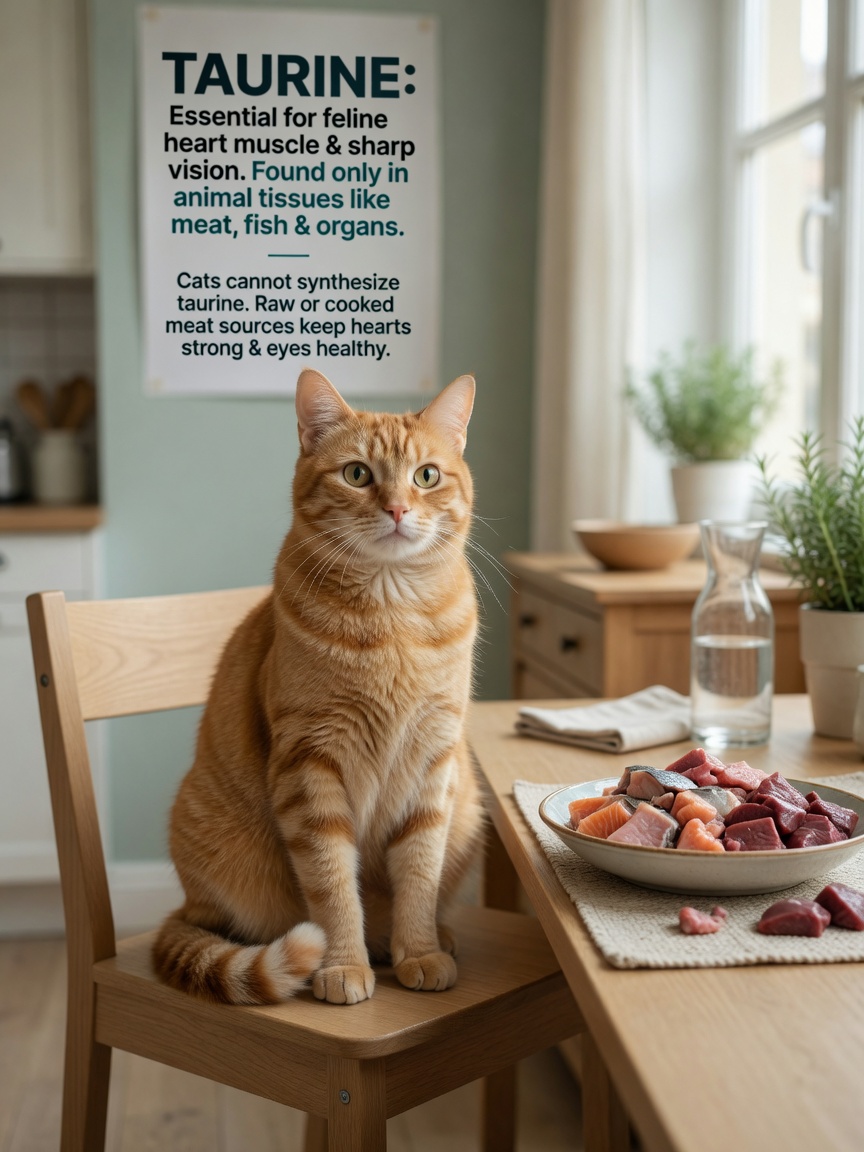
One of the most well-documented consequences of feline obligate carnivory is the absolute dietary requirement for taurine. Taurine is a sulphur-containing amino acid found almost exclusively in animal tissue. Dogs and humans can synthesise taurine from other amino acids, specifically methionine and cysteine. Cats possess the relevant enzymes but at such low activity levels that endogenous synthesis is entirely insufficient to meet their needs.
Taurine deficiency in cats causes dilated cardiomyopathy, a serious and often fatal heart condition in which the heart muscle weakens and the chambers enlarge. It also causes central retinal degeneration, leading to irreversible blindness, and reproductive failure in breeding cats. These are not theoretical risks — they were documented in large numbers of cats in the 1980s before taurine became a mandated addition to commercial cat foods.
Plant-based protein sources contain little to no taurine. Any diet that relies heavily on plant proteins puts a cat at significant risk of deficiency, even if the crude protein percentage looks adequate on the label.
Arachidonic Acid: Another Fat Cats Cannot Synthesise
Cats also lack sufficient delta-6-desaturase activity to convert linoleic acid, an omega-6 fatty acid found in plant oils, into arachidonic acid at meaningful levels. Arachidonic acid is an essential component of cell membranes, plays a critical role in inflammation and immune response, and is necessary for reproductive function. Dogs can perform this conversion reasonably well. Cats essentially cannot.
Arachidonic acid is found in animal fats, particularly in organ meats and poultry fat. A diet devoid of animal fat sources will leave a cat deficient in this critical fatty acid regardless of how well-intentioned the formulation is.
Niacin and Vitamin A: More Nutrients Cats Must Get From Meat
The list of nutrients that cats must obtain preformed from animal tissue is longer than most owners appreciate. Niacin, also known as vitamin B3, can be synthesised by most mammals from tryptophan. Cats have such high activity of the enzyme that diverts tryptophan away from niacin production that they require preformed dietary niacin — available in meat, fish, and organ tissue.
Vitamin A is similarly problematic. Most mammals convert beta-carotene from plant sources into active vitamin A. Cats lack the intestinal enzymes to do this conversion at all. They require preformed vitamin A, found in liver and other animal tissues. This is why feeding a purely plant-based diet to a cat will result in vitamin A deficiency regardless of how many carrots or sweet potatoes are included.
What This Means for Choosing Cat Food
The practical implications of feline obligate carnivory are significant. When evaluating cat food, the ingredient list and nutritional profile should reflect what a cat is designed to eat. Named animal proteins — chicken, turkey, salmon, beef — should appear at the top of the ingredient list. Foods that lead with corn, wheat, soy, or potato are not well matched to feline biology.
High carbohydrate content in cat diets is increasingly linked to obesity, type 2 diabetes, and urinary tract problems. Cats have minimal salivary amylase and low intestinal amylase activity, reflecting their evolutionary irrelevance of carbohydrates. Their bodies are not designed to process large quantities of starch efficiently.
This does not mean every cat food must be raw or minimally processed, but it does mean that protein source, protein quantity, and the presence of essential animal-derived nutrients — taurine, arachidonic acid, preformed vitamin A — should be non-negotiable criteria when selecting what goes in your cat's bowl.