
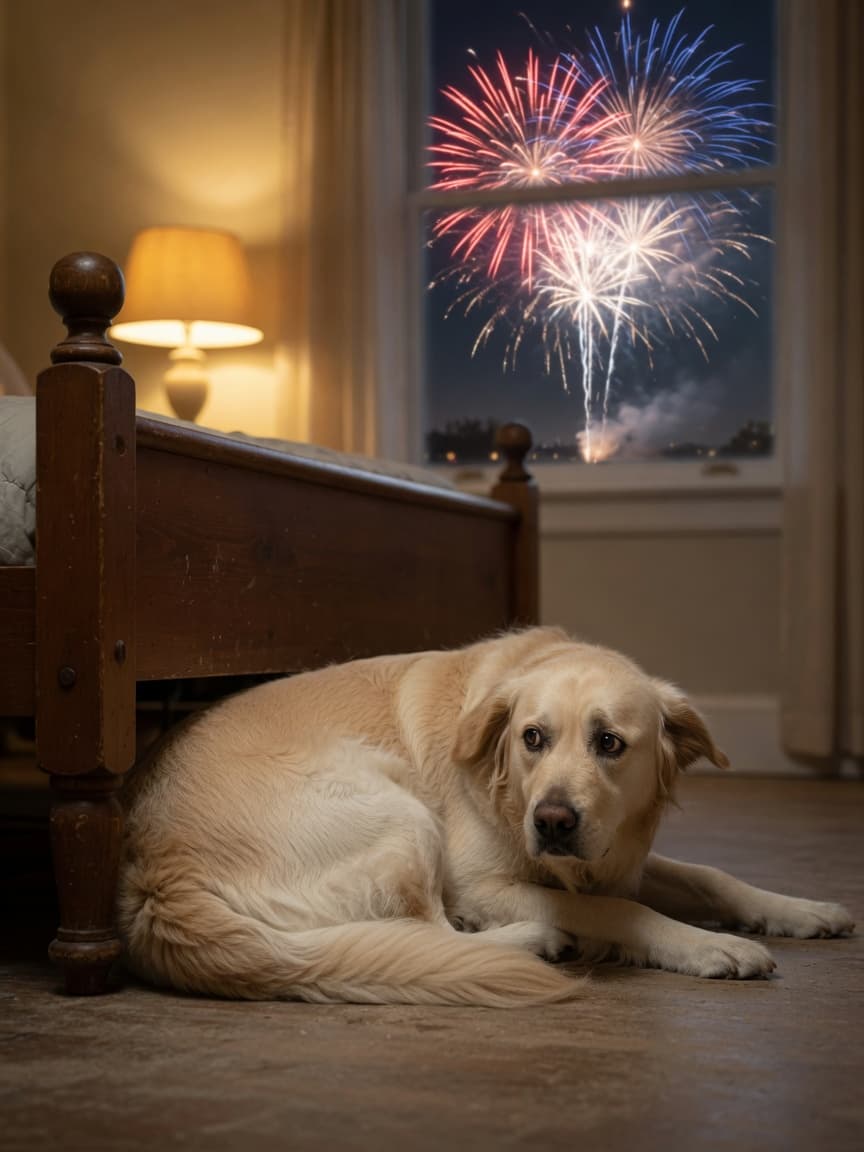
Fireworks season can be a challenging time for dog owners across Europe. Whilst humans gather to celebrate with colourful displays and loud bangs, many dogs experience genuine fear and anxiety. Understanding why your furry companion reacts so strongly to fireworks is the first step towards helping them feel safer during these stressful periods. This fear isn't simply a personality quirk—it's rooted in canine biology and sensory perception.
The Science Behind Canine Hearing
Dogs possess hearing capabilities far superior to humans. Whilst we can hear frequencies up to 20,000 hertz, dogs can hear frequencies ranging from 40 to 60,000 hertz. This means fireworks produce sounds that are significantly more intense and alarming to your dog than they are to you.
Additionally, the unpredictable nature of fireworks—sudden loud bangs followed by periods of silence—creates a startle response. Your dog's brain cannot predict when the next explosion will occur, keeping them in a constant state of heightened alertness. This sustained stress response can lead to anxiety that persists even after the fireworks have ended.
The Fear Response: More Than Just Noise
Your dog's reaction to fireworks involves several sensory triggers:
- Sound intensity: The decibel levels of fireworks can be painful or distressing to sensitive canine ears
- Vibrations: Low-frequency vibrations from explosions travel through the ground and air, creating a physical sensation
- Visual stimuli: Bright flashes and sudden movements can be frightening, particularly for older dogs or those with vision concerns
- Atmospheric changes: Fireworks release chemicals that alter air quality and create unusual smells, adding to sensory confusion
This multi-sensory assault triggers the "fight or flight" response in your dog's nervous system. Their body floods with stress hormones like cortisol and adrenaline, preparing them to escape perceived danger.
Individual Variation in Fear Responses
Not all dogs react equally to fireworks. Several factors influence how severely your dog responds:
- Previous exposure and early socialisation experiences
- Breed predisposition—herding and working breeds sometimes show heightened sensitivity
- Age, with senior dogs often becoming more anxious over time
- Underlying anxiety conditions or trauma history
- Overall temperament and personality
Recognising Signs of Firework Anxiety
Your dog may display various physical and behavioural signs when frightened by fireworks:
- Trembling, panting, or excessive drooling
- Pacing or inability to settle
- Attempting to hide in seemingly safe spaces like bathrooms or under beds
- Destructive behaviour or attempting to escape
- Loss of appetite or reluctance to go outside
- Whining, barking, or unusual vocalisation
Practical Strategies to Help Your Dog
Preparation is key to helping your dog cope during fireworks season. Consider these evidence-based approaches:
- Create a safe space: Designate a quiet interior room away from windows where your dog can retreat
- Use white noise: Play calming music or use a white noise machine to mask firework sounds
- Maintain routine: Keep feeding times, walks, and play consistent to provide stability
- Desensitisation: Gradually expose your dog to recorded firework sounds at low volumes during the weeks before fireworks season
- Consult your veterinarian: Discuss anxiety medication or natural supplements if your dog's fear is severe
- Ensure identification: Microchip your dog and ensure collar tags are current, as frightened dogs may escape
Key Takeaways
Firework anxiety in dogs is a genuine physiological and psychological response, not something to dismiss or force your pet to overcome. Your dog's superior hearing, combined with the unpredictable nature of fireworks and their multi-sensory impact, creates a genuinely frightening experience. By understanding the science behind their fear and implementing compassionate, practical strategies, you can significantly reduce your dog's distress during celebratory periods. If anxiety persists or worsens, always consult your veterinary surgeon for personalised guidance.