ForPetsHealthcare
Dogs

What Your Cat's Yawn Is Telling You

By Julia WrenfieldUpdated August 4, 20264 min read
Evidence-based · Sources checked
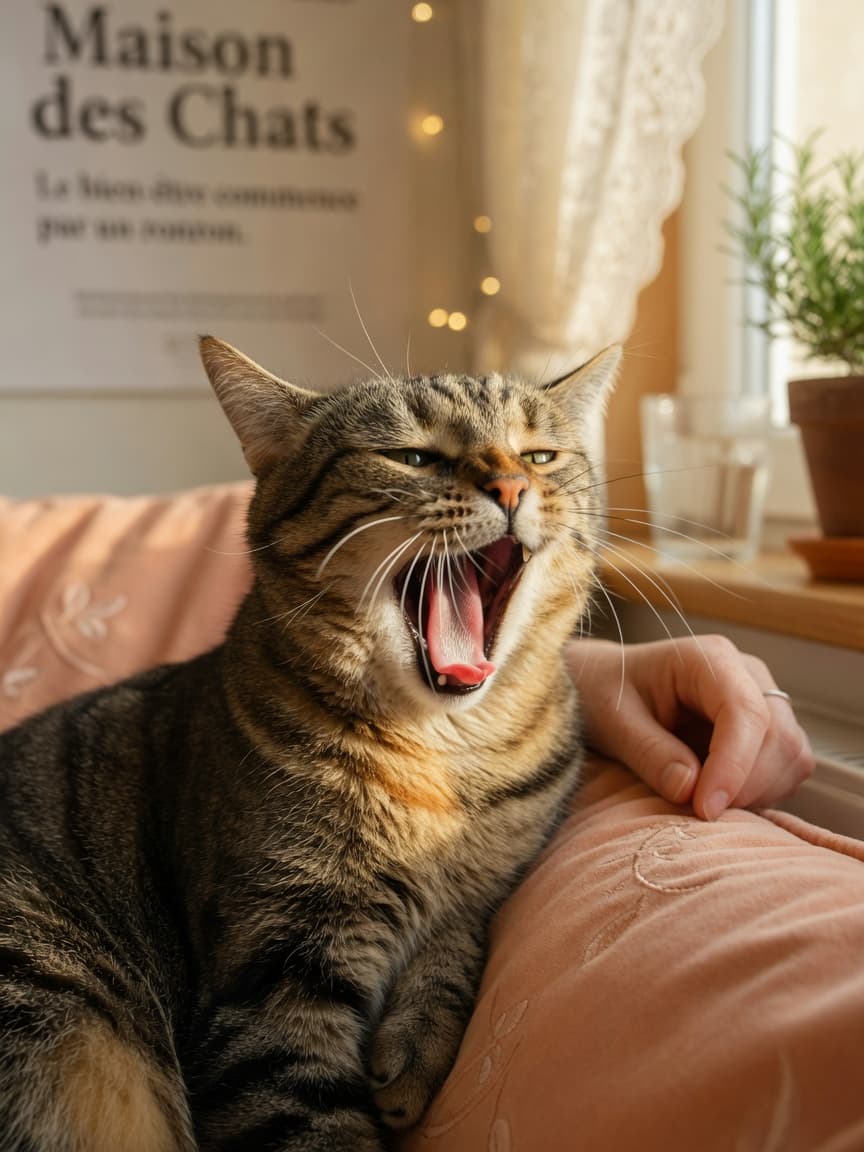
{"en": "Close-up of a cat yawning with mouth wide open, showing teeth and tongue", "es": "Primer plano de un gato bostezando con la boca completamente abierta, mostrando dientes y lengua", "fr": "Gros plan d'un chat qui b\u00e2ille la bouche grande ouverte, montrant ses dents et sa langue", "de": "Nahaufnahme einer g\u00e4hnenden Katze mit weit ge\u00f6ffnetem Maul, Z\u00e4hne und Zunge sichtbar", "nl": "Close-up van een geeuwende kat met wijd open bek, tanden en tong zichtbaar", "pt": "Close-up de um gato bocejando com a boca bem aberta, mostrando dentes e l\u00edngua", "it": "Primo piano di un gatto che sbadiglia con la bocca spalancata, mostrando denti e lingua"}

If you've ever watched your cat yawn and wondered whether it means the same thing as when you yawn, you're onto something interesting. Whilst we often assume a yawn simply indicates tiredness, feline yawns are far more complex and communicative than that. As a pet nutritionist, I've observed that understanding your cat's body language—including those seemingly simple yawns—can provide valuable insights into their physical health, emotional state, and even their social intentions towards you.

The Science Behind Feline Yawning

Cats yawn for similar physiological reasons to humans: to increase oxygen intake, regulate brain temperature, and prepare muscles for activity. However, research suggests that feline yawning serves an additional social purpose. When your cat yawns in your presence, they're often communicating trust and contentment. Unlike dogs, who rarely yawn intentionally, cats have developed yawning as a deliberate signalling mechanism within their social repertoire.

A cat's yawn typically lasts between 1-3 seconds and is often accompanied by a full-body stretch. This combination helps awaken their muscles and increase alertness after rest periods.

What Different Yawn Patterns Reveal
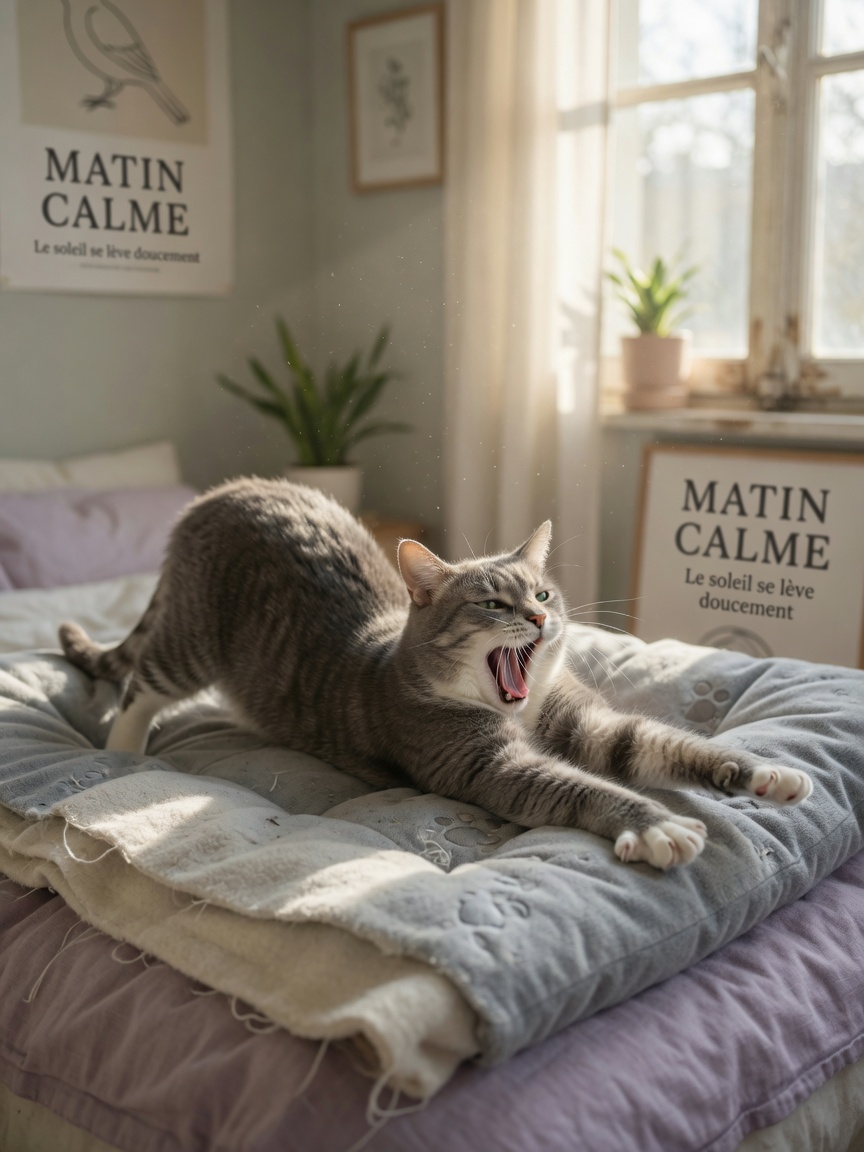
A grey and white cat stretching and yawning on a cozy bed in morning light, demonstrating the natural yawning behavior upon waking.

Not all yawns are created equal. By observing the frequency and context of your cat's yawning, you can glean important information:

  • Frequent yawning upon waking: This is entirely normal and helps your cat transition from sleep to wakefulness.
  • Yawning during social interaction: When your cat yawns whilst sitting near you or during playtime, they're displaying affection and relaxation around your presence.
  • Excessive yawning: If your cat yawns excessively throughout the day without an obvious trigger (such as waking up), this could indicate fatigue, stress, or potentially an underlying health concern.
  • Yawning before play or hunting: This demonstrates your cat's mental and physical preparation for activity.

Health Concerns to Monitor

Whilst occasional yawning is perfectly normal behaviour, certain patterns warrant attention. Persistent excessive yawning, particularly when combined with other symptoms, may indicate:

  1. Dental problems or oral discomfort
  2. Upper respiratory infections
  3. Thyroid imbalances
  4. Sleep disorders
  5. Stress or anxiety

If your cat's yawning frequency has suddenly increased, or if it's accompanied by lethargy, loss of appetite, or changes in behaviour, consult your veterinarian promptly.

The Yawn as a Sign of Trust and Affection
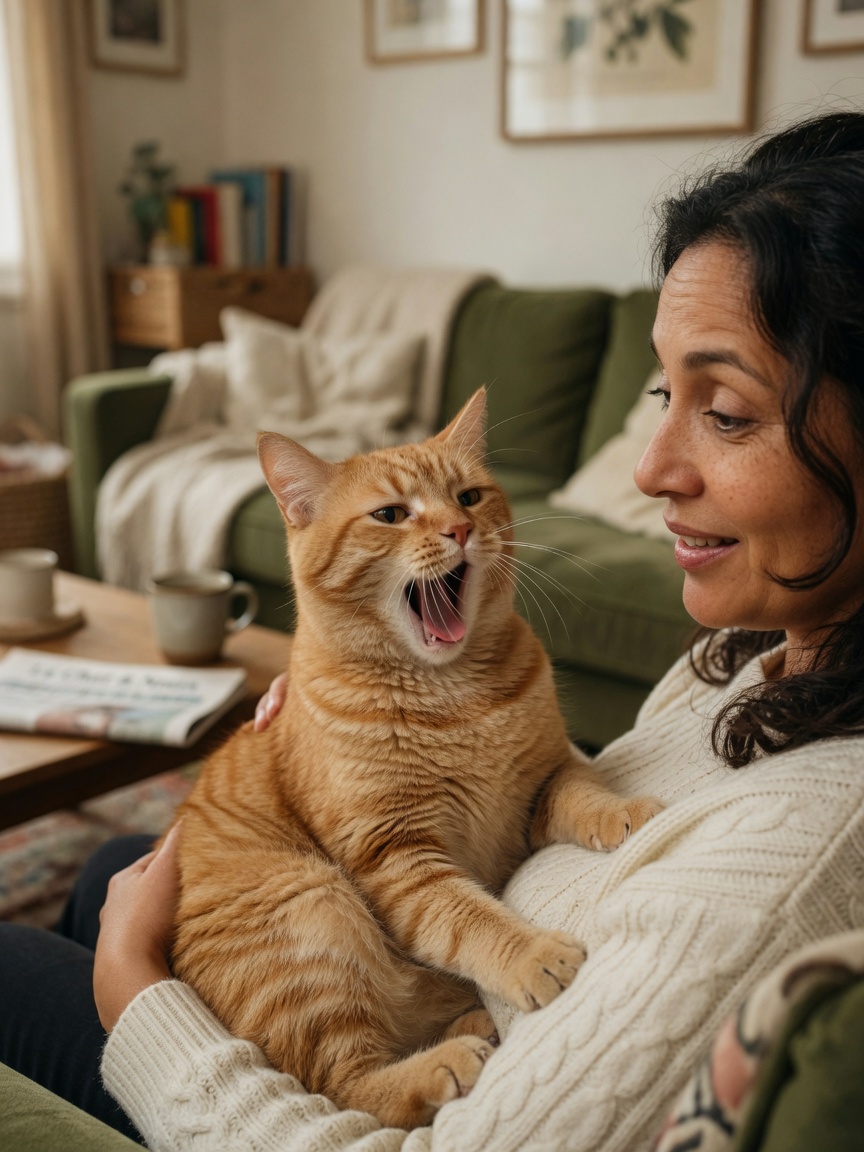
An orange tabby cat yawning while seated on an owner's lap, demonstrating the bond and trust expressed through feline yawning behavior.

Perhaps most delightfully, your cat's yawn can be interpreted as a feline compliment. When your cat yawns in your immediate vicinity—particularly if they're making eye contact or following it with a blink or head rub—they're essentially saying "I feel safe with you." This is a powerful bonding moment. Some feline behaviour experts suggest that yawning near their human is equivalent to cats saying "I trust you" or even mimicking our own yawns as a form of social bonding.

Practical Tips for Cat Owners

  • Keep a yawning log: Note when and how often your cat yawns to establish their normal pattern, making it easier to spot changes.
  • Ensure adequate sleep: Most cats need 12-16 hours of sleep daily; provide comfortable, quiet resting spaces.
  • Maintain good dental hygiene: Regular dental checks can rule out pain as a cause of excessive yawning.
  • Respond positively: When your cat yawns near you, it's an opportunity for interaction—slow blinks in return deepen your bond.

Key Takeaways

Your cat's yawn is rarely just about being tired. It's a multifaceted form of communication that reveals emotional comfort, physical readiness, and social attachment. By understanding what your cat's yawns are communicating, you'll develop a deeper appreciation for their complex emotional life. Monitor for any sudden changes in yawning patterns, ensure your cat has a healthy sleep environment, and cherish those moments when your feline friend yawns in your presence—it's their way of showing they trust and value you.

#what your cats yawn is telling you#cat health#feline nutrition#forpetshealthcare

Sources & further reading

This article is based on peer-reviewed veterinary research and reputable animal-health sources. Explore the underlying science in our Research Library.

Related articles

The 19 Best Animal Shelters in the Netherlands (2026)

the Netherlands's animal shelters, rescue associations and refuges save thousands of dogs, cats and other animals every year, almost always on tiny budgets and volunteer power. To build the most objective ranking possible, we analysed public Google reviews across more than 56 registered animal-prote…

Read more →

The 25 Best Animal Shelters in Italy (2026)

Italy's animal shelters, rescue associations and refuges save thousands of dogs, cats and other animals every year, almost always on tiny budgets and volunteer power. To build the most objective ranking possible, we analysed public Google reviews across more than 121 registered animal-protection org…

Read more →

The 48 Best Animal Shelters in Germany (2026)

Germany's animal shelters, rescue associations and refuges save thousands of dogs, cats and other animals every year, almost always on tiny budgets and volunteer power. To build the most objective ranking possible, we analysed public Google reviews across more than 152 registered animal-protection o…

Read more →

The 32 Best Animal Shelters in France (2026)

France's animal shelters, rescue associations and refuges save thousands of dogs, cats and other animals every year, almost always on tiny budgets and volunteer power. To build the most objective ranking possible, we analysed public Google reviews across more than 89 registered animal-protection org…

Read more →

The 8 Best Animal Shelters in Portugal (2026)

Portugal's animal shelters, rescue associations and municipal centros de recolha save thousands of dogs, cats and other animals every year, almost always on tiny budgets and volunteer power. To build the most objective ranking possible, we analysed public Google reviews across more than 86 registere…

Read more →

Sphynx Cat Skin care and hygiene: Causes, Signs & Care

Sphynx cats have little to no coat, which means the skin itself takes on jobs that fur normally does — insulation, oil dispersal, and barrier protection — leaving it prone to greasiness, blocked pores, fungal infections, and sunburn. The single most important thing to know is that a Sphynx's skin ne…

Read more →
Disclaimer:This article is for informational purposes only and does not constitute veterinary advice. Always consult a qualified veterinarian for your pet's health concerns.

Free newsletter

Pet health tips, straight to your inbox

Weekly science-backed advice for dog & cat owners. No spam, unsubscribe anytime.