
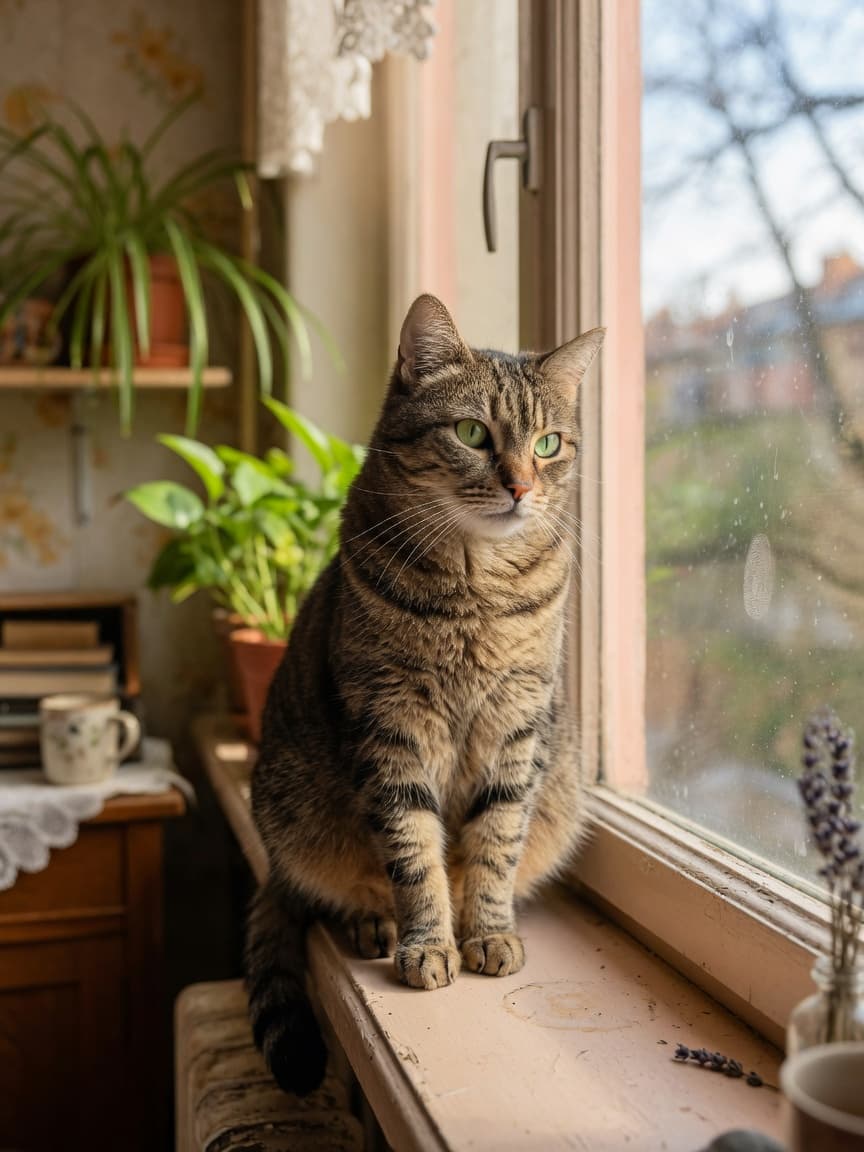
If you've ever caught your cat staring intently at a blank wall, swishing their tail dramatically, or suddenly bolting through your home at 3 AM, you've probably wondered what on earth goes on inside their mysterious little head. Unlike dogs, cats are notoriously difficult to read, which is precisely why understanding feline behaviour fascinates so many pet owners. The truth is, your cat's thoughts are far more complex than most people realise. Modern feline research has revealed that cats experience a rich emotional and cognitive life—they're not the aloof, indifferent creatures popular culture suggests. Learning to decode your cat's thinking patterns will deepen your bond and help you provide better care for their mental and physical wellbeing.
The Feline Brain: Surprisingly Complex
Your cat's brain may be smaller than a human's, but don't let that fool you. Feline brains contain approximately 30,000 neurons—that's roughly twice as many as dogs! This neurological advantage means cats are capable of complex thought, problem-solving, and emotional reasoning.
Research from animal behaviourists shows that cats possess episodic memory, meaning they remember not just events, but contextual details surrounding those events. When your cat remembers where you hide the treats or anticipates your arrival home at a specific time, that's episodic memory at work.
Common Feline Thoughts and Behaviours
Understanding what your cat is thinking requires observing their behaviours and body language. Here are some common scenarios:
- The Slow Blink: When your cat slowly closes and opens their eyes whilst looking at you, they're expressing affection and trust. This is cat language for "I love you." Reciprocate with a slow blink, and watch them relax—they're literally thinking "my human cares for me."
- Tail Twitching: A slowly swishing tail suggests contentment and observation. A rapidly twitching or puffed tail indicates agitation, fear, or hunting focus.
- The Head Bump: When your cat rubs their head against you, they're not just seeking attention—they're marking you with their scent glands and thinking "you belong to me."
- Zoomies: Sudden bursts of running and jumping typically mean your cat is either hunting imaginary prey or burning off pent-up energy. Their mind is fully engaged in play.
- Staring at Walls: This often indicates your cat is tracking movement invisible to human eyes—perhaps insects, sound vibrations, or even imaginary prey from their hunting instincts.
Emotional Lives of Cats
Cats experience genuine emotions, though they express them differently than humans or dogs. Studies have demonstrated that cats feel:
- Joy and contentment when relaxing with their owners
- Frustration when prevented from engaging in natural behaviours
- Affection towards their chosen humans
- Fear and anxiety in stressful situations
- Boredom without sufficient environmental enrichment
Indoor cats, in particular, may experience depression and anxiety if their environment doesn't provide adequate stimulation. This is why environmental enrichment—scratching posts, climbing shelves, interactive toys, and window perches—is crucial for feline mental health.
The Hunting Mindset
Much of what your cat thinks about relates to their predatory nature. Even well-fed indoor cats retain their hunting instincts. When your cat focuses intently on a moving object or pounces on your hand, they're not being aggressive—they're expressing their natural need to hunt. Providing appropriate outlets like feather wands, laser pointers, and puzzle feeders satisfies these mental and physical urges.
Building Stronger Understanding
To better understand your cat's thoughts, observe their consistent patterns and routines. Keep a mental note of what triggers certain behaviours, what your cat's personality quirks are, and how they respond to different situations. Over time, you'll develop an intuitive sense of your cat's unique way of thinking.
Key Takeaways
Your cat's mind is constantly working—thinking about food, hunting, comfort, and surprisingly, their relationship with you. By recognising their body language, respecting their independent nature, and providing mental stimulation, you'll gain valuable insight into their world. Remember, cats think differently than humans, but they're far from indifferent. Your cat likely thinks about you more than you realise, even if they show it in subtle, characteristically feline ways.