
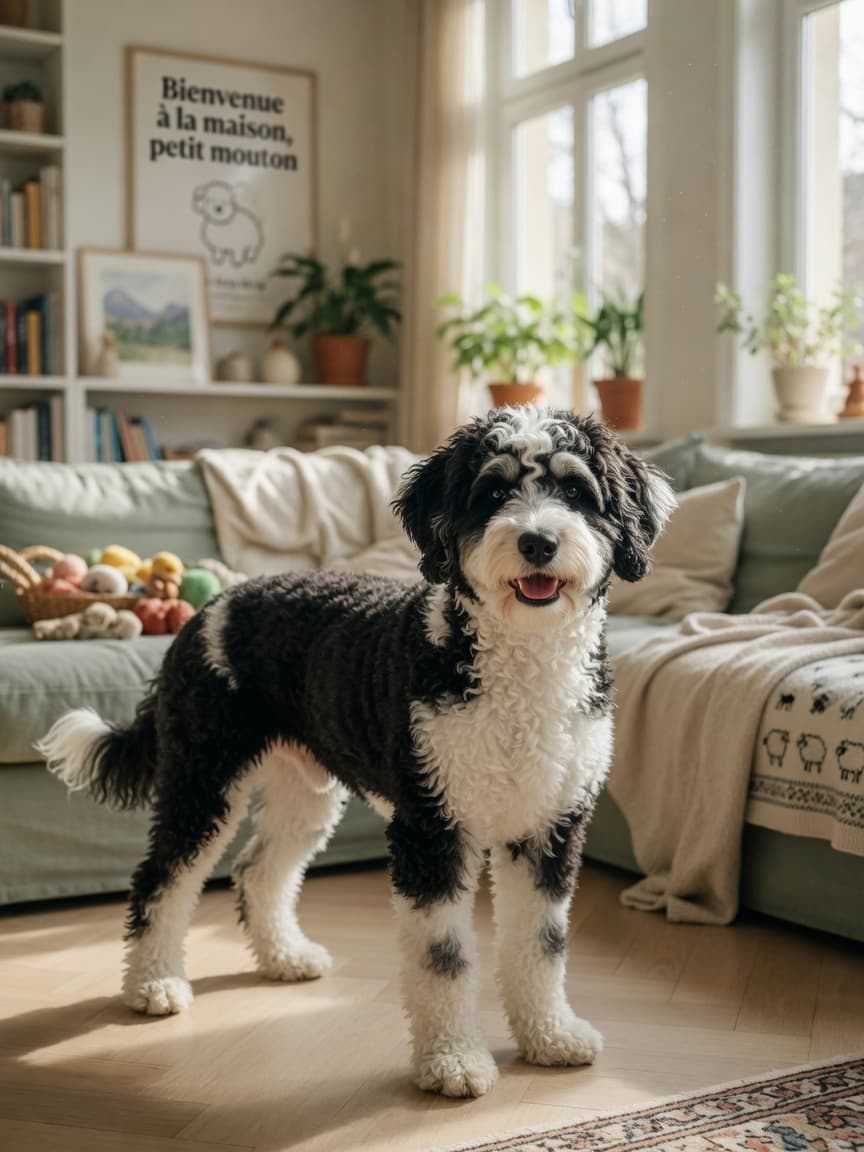
The Mini Sheepadoodle has become increasingly popular among UK pet owners seeking a compact, intelligent, and affectionate family companion. This designer breed combines the charming traits of an Old English Sheepdog with the intelligence and hypoallergenic coat of a Miniature Poodle, resulting in a dog that's smaller than its standard counterpart but equally captivating. Whether you're considering bringing one home or simply curious about this delightful breed, understanding their unique characteristics, care requirements, and potential health considerations is essential for making an informed decision.
Breed Origins and Characteristics
Mini Sheepadoodles are the result of crossing a Miniature or Toy Poodle with an Old English Sheepdog, or occasionally breeding two Mini Sheepadoodles together. This relatively recent designer breed emerged in the 2000s, designed to provide the intelligence and temperament of Sheepdogs in a more manageable size.
These dogs typically weigh between 12 and 25 kilograms and stand 30 to 45 centimetres tall, making them ideal for families with moderate living spaces. Their distinctive appearance includes a fluffy, often black and white coat, though grey and white variations occur. Their expressive faces and medium-sized frames make them instantly recognisable and undeniably charming.
Temperament and Personality
Mini Sheepadoodles are renowned for their friendly, intelligent, and playful nature. They thrive on human interaction and make excellent family pets, though they're best suited to homes with older children who understand how to handle medium-sized dogs respectfully.
Key personality traits include:
- High intelligence and eagerness to please
- Affectionate and loyal bonds with their families
- Natural herding instincts inherited from Sheepdog ancestry
- Sociable nature with other dogs and pets
- Moderate to high energy levels requiring regular activity
Their herding background means they may occasionally attempt to "herd" family members or other pets, though proper training can manage this behaviour effectively.
Exercise and Mental Stimulation Needs
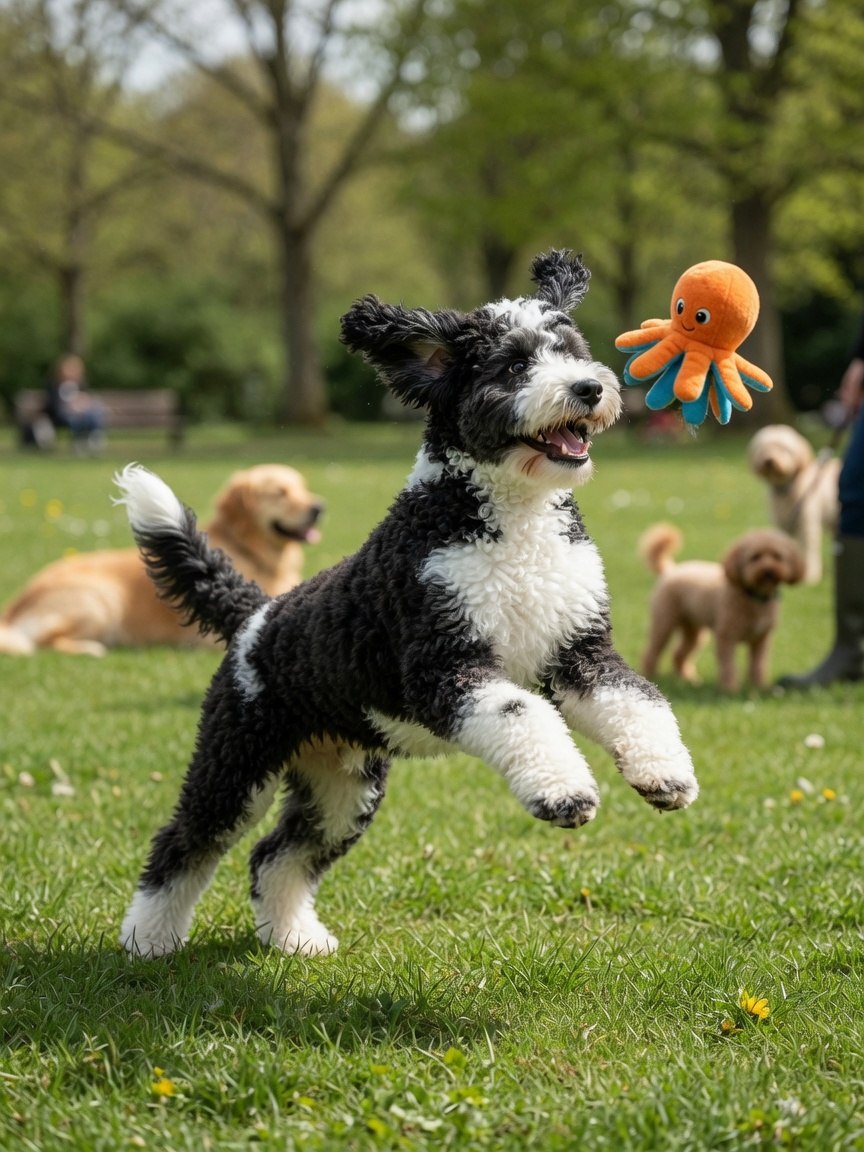
Mini Sheepadoodles require approximately 60 minutes of exercise daily, combining walks, playtime, and interactive activities. Without adequate physical and mental stimulation, they may develop problematic behaviours such as excessive barking or destructiveness.
Effective exercise strategies include:
- Daily walks or runs in local parks
- Interactive games like fetch or agility training
- Puzzle toys and treat-dispensing games
- Swimming, which they often enjoy due to their Poodle heritage
- Socialisation sessions with other dogs
Grooming and Coat Care
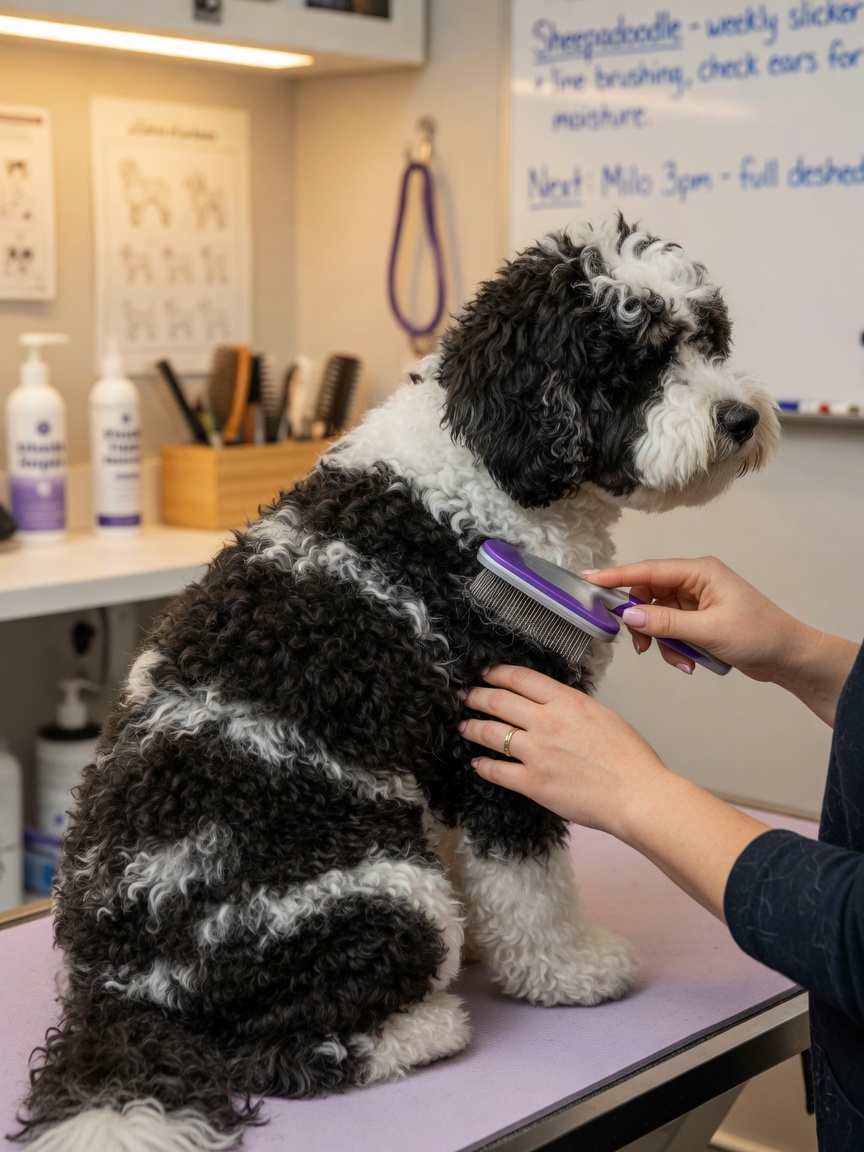
One of the most important considerations for Mini Sheepadoodle ownership is their grooming needs. Their Poodle-influenced coat is curly to wavy and requires regular maintenance to prevent matting and maintain health.
Essential grooming practices include:
- Brushing their coat 3-4 times weekly to prevent tangles
- Professional grooming every 6-8 weeks
- Regular ear cleaning, as floppy ears can trap moisture
- Nail trimming every 4-6 weeks
- Teeth brushing several times weekly
Whilst their coats are often described as hypoallergenic, no dog is truly non-allergenic. Mini Sheepadoodles tend to shed minimally compared to other breeds, making them suitable for people with mild allergies.
Health Considerations
As a designer breed, Mini Sheepadoodles can inherit health conditions from both parent breeds. Responsible breeders conduct health screening to minimise these risks. Common health considerations include hip dysplasia, eye conditions, and patellar luxation.
Maintaining optimal health involves:
- Regular veterinary check-ups, particularly in puppyhood and senior years
- Up-to-date vaccinations and preventative treatments
- A balanced, high-quality diet appropriate for their size and activity level
- Maintaining healthy weight to reduce joint stress
- Regular eye and ear examinations
Training and Socialisation
Mini Sheepadoodles are highly trainable due to their intelligence and desire to please. Early socialisation and puppy training classes are invaluable for developing well-adjusted adults. Positive reinforcement techniques work best with this sensitive, people-pleasing breed.
Key Takeaways
Mini Sheepadoodles are intelligent, affectionate companions that require committed owners willing to provide regular exercise, professional grooming, and ongoing training. Their relatively long lifespan of 12-15 years makes them a long-term family commitment. If you can meet their exercise, grooming, and socialisation needs, a Mini Sheepadoodle can bring years of joy and companionship to your home. Always source from reputable breeders who conduct health screening to ensure you're bringing home a healthy, well-socialised puppy.
```