
The Grey Ghost's Health Profile
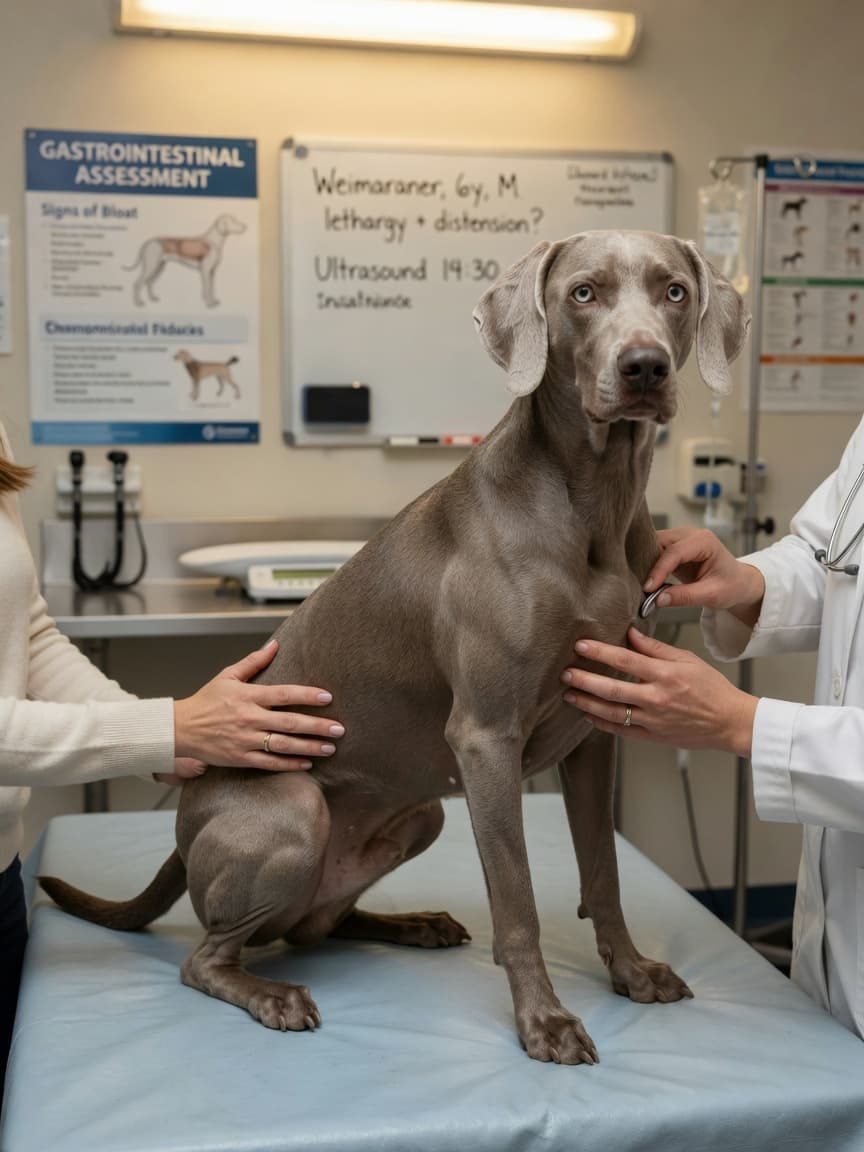
With their silvery coats and pale, penetrating eyes, Weimaraners are among the most distinctive of all gun dog breeds. Athletic, driven, and deeply attached to their owners, they are dogs that thrive on activity and purpose. But several inherited and breed-specific health conditions can cut a Weimaraner's life short or significantly compromise its quality of life. Bloat, immune-mediated disorders, and hip dysplasia are the three conditions that every Weimaraner owner must understand.
Gastric Dilatation-Volvulus: A Life-Threatening Emergency
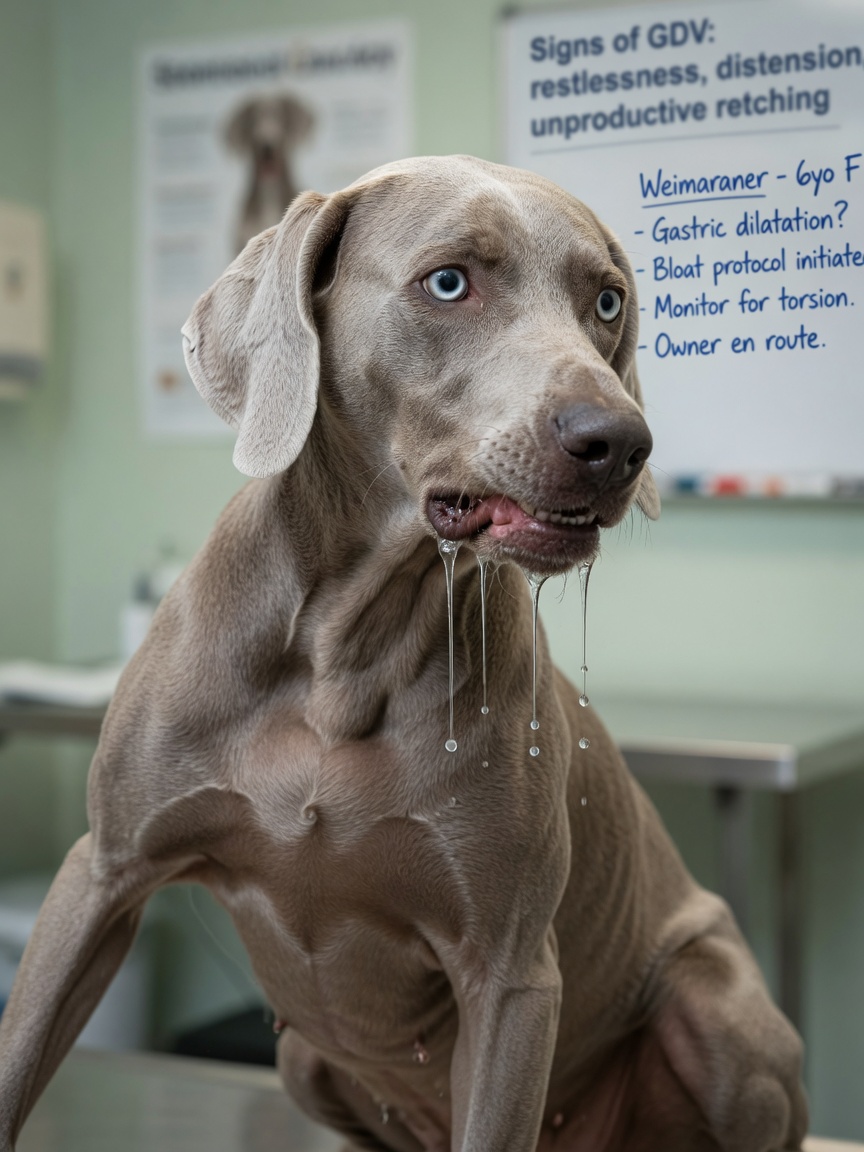
Gastric dilatation-volvulus, more commonly known as bloat or GDV, is one of the most acute emergencies in canine medicine — and large, deep-chested breeds like the Weimaraner face a substantially elevated risk. In GDV, the stomach fills with gas and then rotates on its axis, cutting off blood supply to itself and to the spleen, and triggering a cascade of cardiovascular shock that can kill within hours.
Risk factors
- Deep, narrow chest conformation
- Eating a single large meal daily
- Exercising vigorously immediately before or after eating
- Stress or anxiety
- A family history of GDV
- Increasing age
Recognising GDV
Classic signs include a visibly distended or drum-tight abdomen, unproductive retching or repeated attempts to vomit without producing anything, excessive drooling, restlessness, and rapid deterioration into weakness or collapse. If you observe these signs in your Weimaraner, treat it as an immediate emergency — every minute matters.
Prevention and prophylactic gastropexy
Several preventive strategies can reduce risk: feeding two or three smaller meals rather than one large one, using a slow-feeder bowl, avoiding exercise for at least an hour either side of meals, and minimising anxiety around feeding time. Prophylactic gastropexy — a surgical procedure that permanently attaches the stomach wall to the abdominal wall, preventing rotation — is increasingly recommended for high-risk breeds. It can be performed at the time of neutering with minimal additional surgical risk and has been shown to prevent volvulus, though not all instances of dilation.
Immune-Mediated Disease in Weimaraners
The Weimaraner is well recognised within veterinary circles as a breed with a dysregulated immune system. This manifests in several distinct but related conditions that can affect young puppies through to adult dogs.
Weimaraner immunodeficiency syndrome
Some Weimaraner puppies develop recurrent bacterial infections — particularly of the skin, lymph nodes, and bones — in the first months of life. This appears to reflect an inherited immune deficiency affecting neutrophil function. Affected puppies may respond poorly to vaccines and require intensive veterinary support. The condition often improves as dogs mature, but early recognition is essential.
Hypertrophic osteodystrophy
HOD is a painful inflammatory bone condition that disproportionately affects Weimaraner puppies during rapid growth phases, typically between two and eight months. It causes swelling and pain at the growth plates of long bones, fever, and reluctance to move. The condition appears to have an immune-mediated component, and an association with recent vaccination has been investigated, though causation remains debated. Treatment involves anti-inflammatory medication and supportive care; most puppies recover, though some cases are severe.
Autoimmune conditions in adults
Adult Weimaraners show elevated rates of immune-mediated haemolytic anaemia and immune-mediated thrombocytopenia — conditions in which the immune system destroys the dog's own red blood cells or platelets. These are serious and can be life-threatening without prompt treatment including immunosuppressive therapy.
Hip Dysplasia
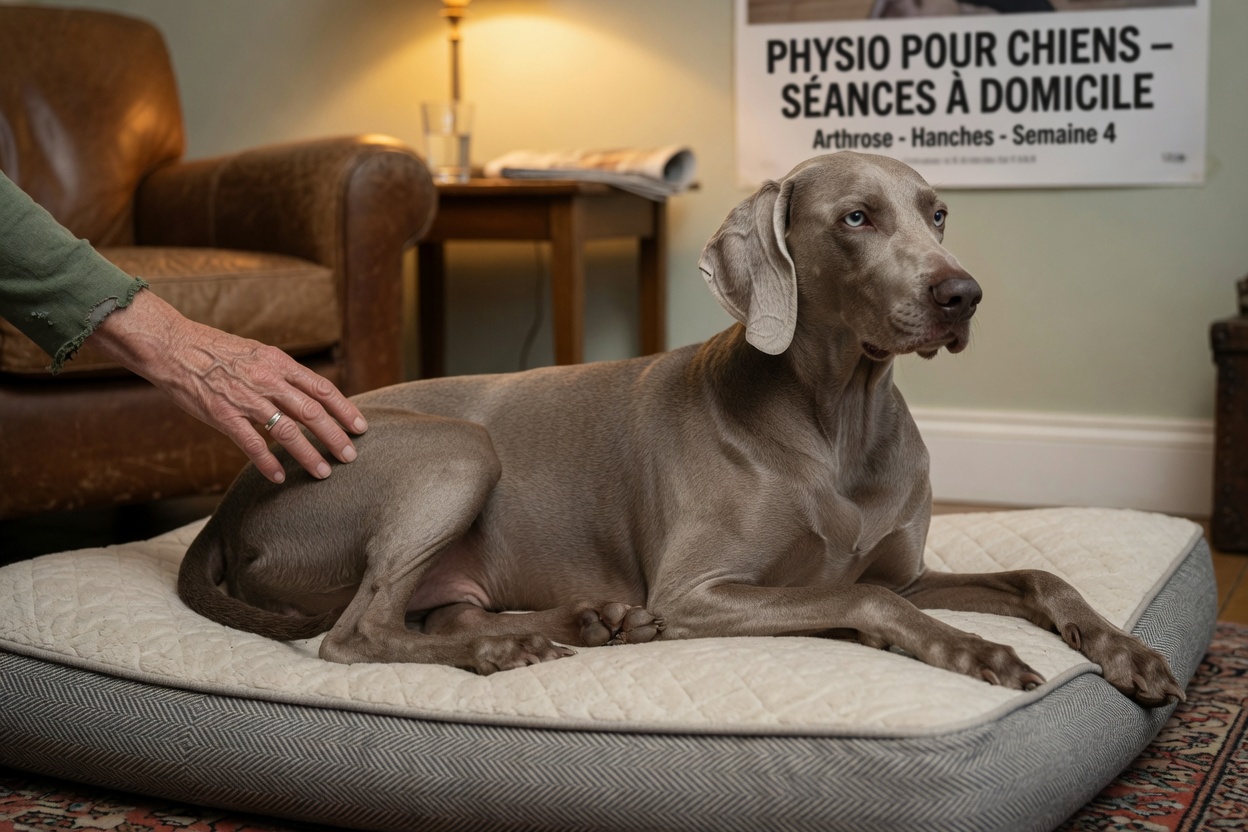
Hip dysplasia is a developmental condition in which the hip joint forms abnormally, leading to joint laxity, erosion of cartilage, and progressive osteoarthritis. Weimaraners show a moderate prevalence of hip dysplasia, and as an active working breed, the functional impact on affected dogs can be significant.
Signs include a bunny-hopping gait when running, stiffness after rest, reluctance to exercise, and progressive difficulty with stairs or rising from lying down. Diagnosis is confirmed by radiography, and management depends on severity — ranging from physiotherapy, weight management, and anti-inflammatory medication in mild cases, to total hip replacement in severely affected individuals.
Responsible breeders should have both parents hip scored through a recognised national scheme before mating. Prospective owners should always request copies of parental health certificates.
Other Health Considerations
Weimaraners are also prone to hypothyroidism, spinal muscular atrophy (a progressive neurological condition specific to the breed), and a range of skin and coat issues. As an energetic breed, they are also at risk of soft tissue injuries — cruciate ligament rupture in particular — especially if kept primarily indoors without adequate daily exercise.
Keeping a Weimaraner Healthy: Practical Priorities
- Feed multiple smaller meals and restrict exercise around mealtimes to reduce GDV risk
- Discuss prophylactic gastropexy with your vet, ideally at the time of neutering
- Monitor puppies carefully during the growth phase and report fever, joint swelling, or movement reluctance promptly
- Keep vaccination records and report any post-vaccination illness to your vet immediately
- Ensure parents are hip scored before purchasing a puppy
- Maintain a lean body weight to protect joints and reduce cardiovascular load
- Schedule regular veterinary check-ups including thyroid assessment from middle age
The Weimaraner is a rewarding breed for active owners prepared to meet its substantial mental and physical needs. Being equally prepared for its health challenges ensures that when problems arise, you can respond quickly and confidently. Always consult your vet before making decisions about surgery, diet changes, or management of any diagnosed condition.