
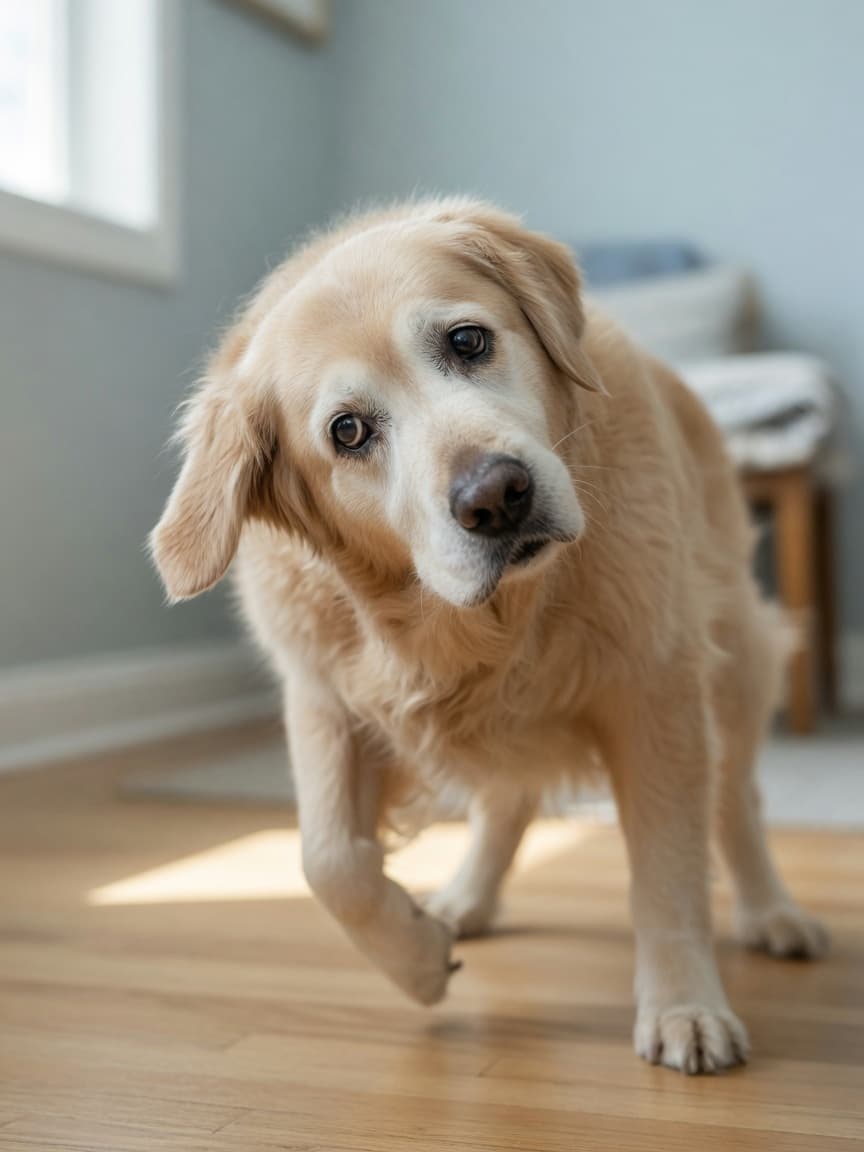
What Is Vestibular Disease in Dogs?
If your dog has suddenly lost the ability to walk in a straight line, is tilting its head to one side, and appears to be spinning or falling, vestibular disease is likely the cause. To an owner witnessing this for the first time, the signs are alarming and often mistaken for a stroke. Whilst vestibular disease is undeniably distressing to observe, the majority of affected dogs make a full or near-full recovery — often within a matter of weeks.
The vestibular system is responsible for maintaining balance and co-ordinating eye movements relative to head position. It comprises the inner ear, the vestibulocochlear nerve, and the brainstem. When any part of this system is disrupted, the dog loses its sense of spatial orientation.
Types of Vestibular Disease
Peripheral Vestibular Disease
This is the most common form and originates in the inner ear or the vestibular nerve itself. It is not caused by a brain lesion. Idiopathic peripheral vestibular disease, sometimes called old dog vestibular syndrome, occurs most frequently in older dogs and has no identifiable cause. It is typically self-limiting and carries an excellent prognosis.
Central Vestibular Disease
Central vestibular disease involves the brainstem or cerebellum and is more serious. It may be caused by a brain tumour, inflammatory disease, infarction, or infection. Dogs with central disease often show additional neurological signs and tend to have a more guarded prognosis.
Recognising the Signs
The onset of vestibular disease is typically sudden and dramatic. Common signs include:
- Head tilt to one side, which may be mild or pronounced
- Loss of balance and an inability to walk in a straight line
- Falling or rolling toward the affected side
- Nystagmus, a rapid and involuntary flickering of the eyes, usually horizontal in peripheral disease
- Nausea and vomiting due to the sensation of motion
- Reluctance to stand or move
In peripheral vestibular disease, dogs remain mentally alert and responsive despite their physical symptoms. A dog that appears confused, mentally dull, or shows weakness in the limbs is more likely to have central involvement, which warrants urgent veterinary assessment.
Common Causes
Peripheral vestibular disease can arise from a number of conditions:
- Otitis interna, an infection of the inner ear, which is one of the most frequently identified causes
- Polyps or masses in the ear canal
- Hypothyroidism, which has been associated with vestibular dysfunction in some cases
- Certain antibiotics, particularly aminoglycosides, which are toxic to the inner ear when used incorrectly
- Trauma to the head
- Idiopathic causes, where no underlying disease is identified
Central vestibular disease, as noted above, is associated with more serious pathology including neoplasia, granulomatous meningoencephalitis, distemper encephalitis, and vascular events.
How Vets Diagnose Vestibular Disease
Your vet will begin with a full neurological and otoscopic examination. The direction of the nystagmus, the position of the head tilt, and any additional neurological deficits help differentiate peripheral from central disease. Blood tests, thyroid function testing, and otoscopy under sedation may follow. If central disease is suspected, referral for MRI and cerebrospinal fluid analysis is strongly recommended.
In idiopathic cases, the diagnosis is reached by excluding other causes rather than identifying a specific trigger.
Treatment and Recovery
Treatment depends entirely on the underlying cause. When otitis interna is identified, a course of appropriate antibiotics is prescribed. Hypothyroidism is managed with daily thyroid hormone supplementation. Idiopathic vestibular disease, by contrast, requires supportive care rather than specific treatment.
Supportive measures during recovery include:
- Anti-nausea medication such as maropitant to manage vomiting and motion sickness
- Sedatives in severely distressed dogs to reduce anxiety and facilitate rest
- Assisted feeding and drinking if the dog cannot reach food and water independently
- Padded bedding and removal of access to stairs to prevent injury from falling
- Short, supervised walks on a harness rather than a neck collar
In idiopathic cases, owners typically see noticeable improvement within 72 hours and significant resolution within two to three weeks. Some dogs retain a mild residual head tilt permanently, but this does not appear to cause any discomfort or functional impairment.
Supporting Your Dog Through Recovery
The acute phase of vestibular disease is distressing for the dog and for the owner. Dogs may panic due to the disorientation they are experiencing, and calm, reassuring handling makes a significant difference. Keeping the environment quiet, limiting movement on slippery floors, and providing a secure, low-level resting space all help.
It is worth noting that some dogs experience recurring episodes, particularly where an underlying cause such as chronic ear disease has not been fully resolved. Addressing the root cause is essential to reducing the likelihood of relapse. If your dog has had one episode of vestibular disease, your vet may recommend regular ear checks and monitoring of thyroid function as preventative measures.
Vestibular disease in dogs, whilst visually alarming, is one of those conditions where the initial presentation rarely reflects the eventual outcome. With appropriate care, most dogs bounce back with remarkable resilience.