
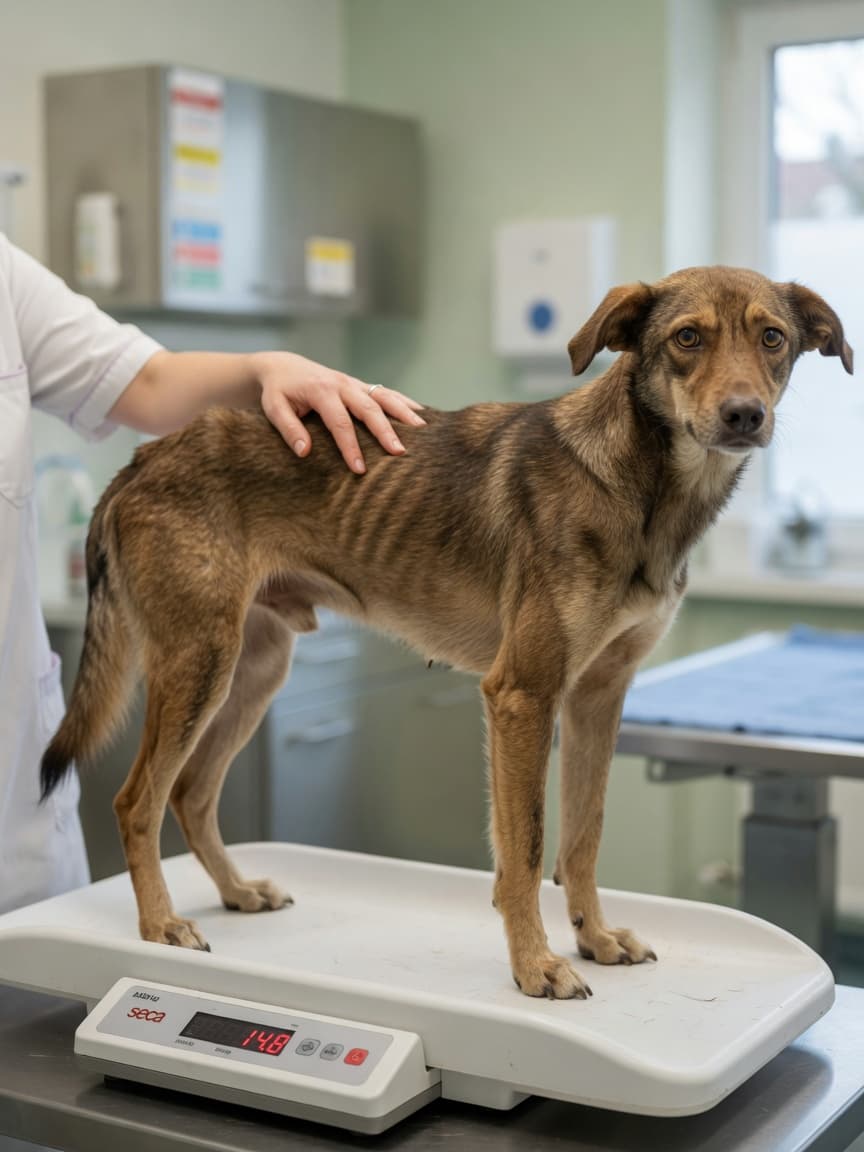
A Thin Dog Is Not Always a Simple Problem
When a dog is visibly underweight — ribs prominent without touching, hip bones sharp, spine visible from a distance — the temptation is to immediately increase food. In some cases, that is exactly the right response. In others, adding more food to an animal whose body cannot absorb or utilise nutrients properly will change very little. Understanding why a dog is thin is as important as knowing how to address it. Skipping the diagnostic step is the most common mistake owners make when managing a genuinely underweight dog.
How to Assess Whether Your Dog Is Underweight
Using the 1 to 9 Body Condition Score scale, a dog scoring 1 to 3 is underweight. At BCS 3, ribs are easily visible with no fat cover, the waist is severely pronounced, and there is little to no muscle mass over the hindquarters. At BCS 1 or 2, the dog is in a medically concerning state and immediate veterinary attention is required. At the borderline — BCS 4 — ribs are visible without touching and the dog would benefit from modest weight gain, but is not in acute danger.
It is worth noting that certain breeds such as Greyhounds, Whippets, Salukis, and Italian Greyhounds naturally sit at BCS 3 to 4 and display visible ribs as a normal feature of their conformation. Assessing these breeds against a standard BCS chart without accounting for breed norms will falsely indicate a problem. When in doubt, check with your vet.
Medical Causes of Underweight That Must Be Ruled Out
Weight loss in a dog that is eating normally, or that has lost appetite without an obvious cause, is a red flag. A veterinary examination should be the first step before any nutritional intervention.
Common Medical Causes
- Intestinal parasites: Roundworms, hookworms, and whipworms compete for nutrients and can cause significant weight loss, particularly in puppies and dogs in multi-dog environments. A faecal examination is a simple and inexpensive starting point.
- Malabsorption conditions: Exocrine pancreatic insufficiency (EPI) and inflammatory bowel disease both impair the dog's ability to absorb nutrients from food. Dogs with EPI in particular can eat enormous quantities yet remain skeletal. Characteristic signs include voluminous pale stools and a ravenous appetite.
- Dental disease: Pain when chewing causes dogs to eat less without owners always recognising it as a dental problem. Check your dog's mouth for visible tartar, redness, or reluctance to chew harder foods.
- Chronic disease: Kidney disease, liver disease, heart disease, and cancer can all cause progressive weight loss. These conditions require diagnosis and management by a vet — nutrition alone will not resolve them.
- Hyperthyroidism: Less common in dogs than cats but documented, particularly in older animals. It causes weight loss despite normal or increased appetite.
Non-Medical Causes of Underweight
When medical causes have been excluded, the reasons for underweight are usually straightforward:
- Insufficient calorie provision: Particularly common with rescue dogs whose history is unknown, or with owners following feeding guidelines designed for less active dogs when their dog has high activity levels.
- Competition from other dogs: In multi-dog households, a more submissive dog may be consistently pushed away from food or eating too quickly under social stress.
- High energy expenditure: Working dogs, highly active dogs, and intact males with large territories can have energy requirements 50 to 100 percent above that of a typical pet.
- Stress and anxiety: Chronic stress suppresses appetite in dogs as it does in humans. A dog that has recently changed home, lost a companion, or is experiencing ongoing anxiety may eat poorly as a result.
How to Help a Dog Gain Weight Safely
Once medical causes are excluded or addressed, a structured approach to weight gain is more effective than simply doubling portions.
Dietary Strategies
- Increase caloric density rather than volume: Switching to a higher-fat, higher-protein formula allows more calories per gram of food, which is useful for dogs with small appetites or digestive sensitivity.
- Feed smaller meals more frequently: Three to four smaller meals per day is better tolerated than one or two large meals for dogs needing to gain weight, particularly those recovering from illness.
- Add calorie-dense toppers: Plain cooked chicken, scrambled egg, or a small amount of tinned fish in spring water can increase palatability and caloric content. Introduce any additions gradually to avoid digestive upset.
- Avoid rapid refeeding: Dogs that have been severely malnourished are at risk of refeeding syndrome — a dangerous metabolic complication — if calories are increased too rapidly. Increase intake by no more than 25 percent every three to four days under veterinary guidance.
Monitoring Progress
Weigh your dog weekly during a weight gain programme. Healthy gain should be gradual — roughly 1 to 2 percent of body weight per week. Muscle takes longer to build than fat deposits, so early gains may reflect fluid and fat accumulation before visible muscle development occurs. If your dog is not gaining weight despite increased calorie provision, return to your vet to reassess for missed underlying conditions.
Key Points
- Always investigate the cause of underweight before increasing food — particularly if the dog is eating normally or has lost appetite.
- Rule out parasites, malabsorption, dental disease, and systemic illness with a vet examination first.
- Increase calories gradually, using calorie-dense foods rather than large increases in volume.
- Feed multiple smaller meals daily for dogs with poor appetite or digestive sensitivity.
- Monitor weight weekly and seek veterinary reassessment if progress stalls.