
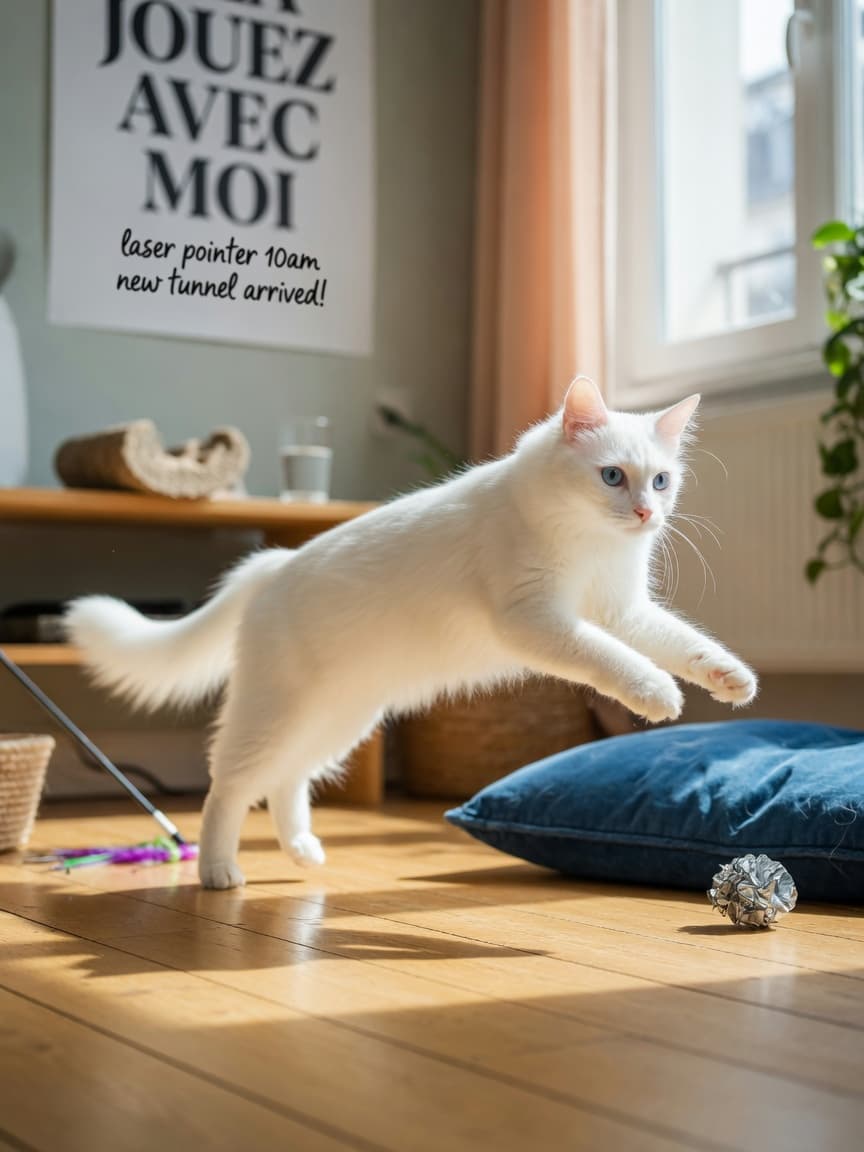
The Turkish Angora is a slender, elegant cat best suited to attentive owners who want an intelligent, people-oriented companion rather than a low-maintenance pet. Its most defining trait is a fine, single-layered silky coat that sheds seasonally but rarely mats, making grooming easier than its fluffy appearance suggests. The headline health concern in the breed is congenital deafness linked to the white coat and blue-eyed gene, alongside a rare but well-documented hereditary neurological condition seen in some bloodlines.
Breed Overview
- Size: Small to medium, typically slim and fine-boned despite a long body
- Lifespan: Commonly reported as 12 to 16 years with good care
- Coat: Single-layered, silky, medium-length; famously white but recognised in many colours and patterns
- Origin: Central Anatolia, Turkey, one of the oldest natural cat breeds, historically associated with the Ankara region
Temperament & Family Fit
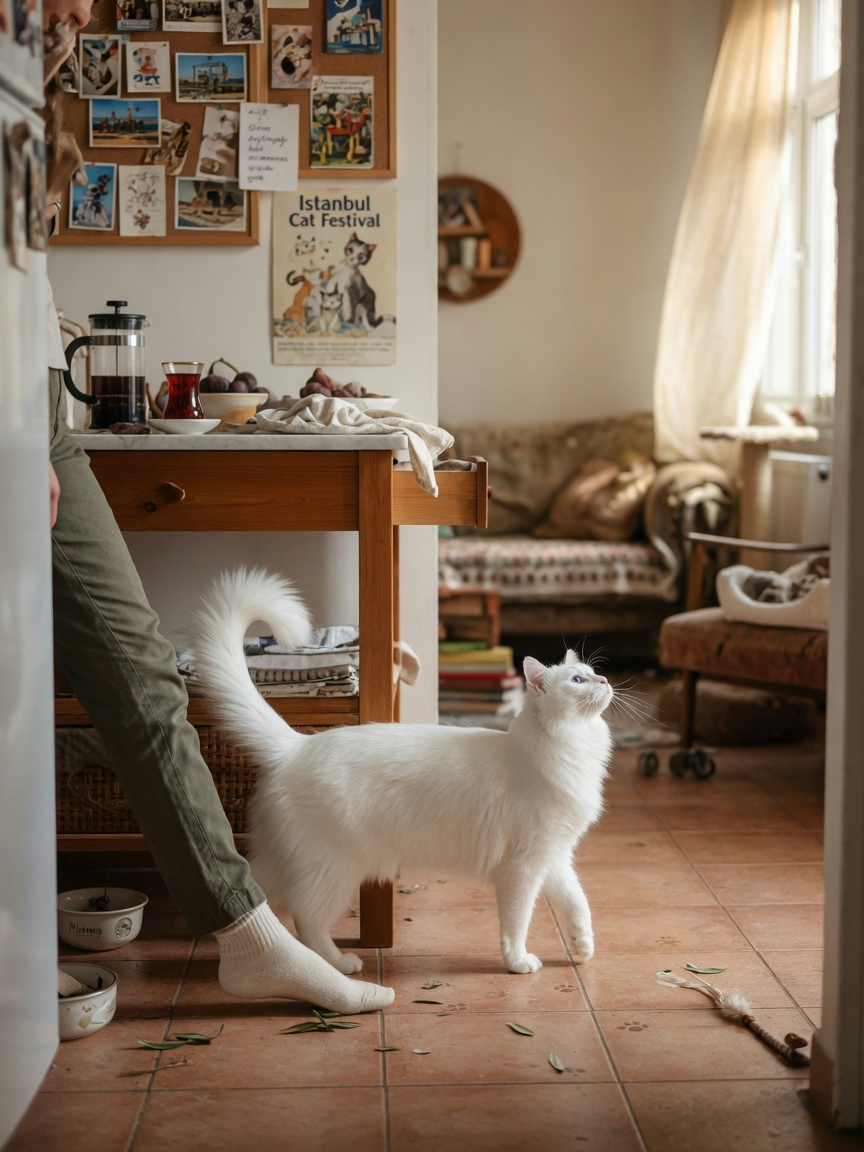
Turkish Angoras are lively, curious and highly social cats that form strong bonds with their households. They tend to follow their owners from room to room, enjoy being involved in daily activities, and are often described as "dog-like" in their loyalty and willingness to learn simple commands or tricks. They are intelligent and can become bored without stimulation, so they generally do best in homes where someone is around for a good portion of the day or where enrichment is provided consistently.
This is not a breed that thrives being left alone for long stretches. They are usually good with children who understand gentle handling and with other pets, particularly if introduced gradually, but their assertive, sometimes vocal personality means they like to be heard and involved rather than ignored. Owners who want an interactive, chatty companion tend to get on very well with this breed; those wanting a purely low-interaction lap cat may find the Turkish Angora's energy and demand for engagement a bit much.
Health Issues in Turkish Angoras
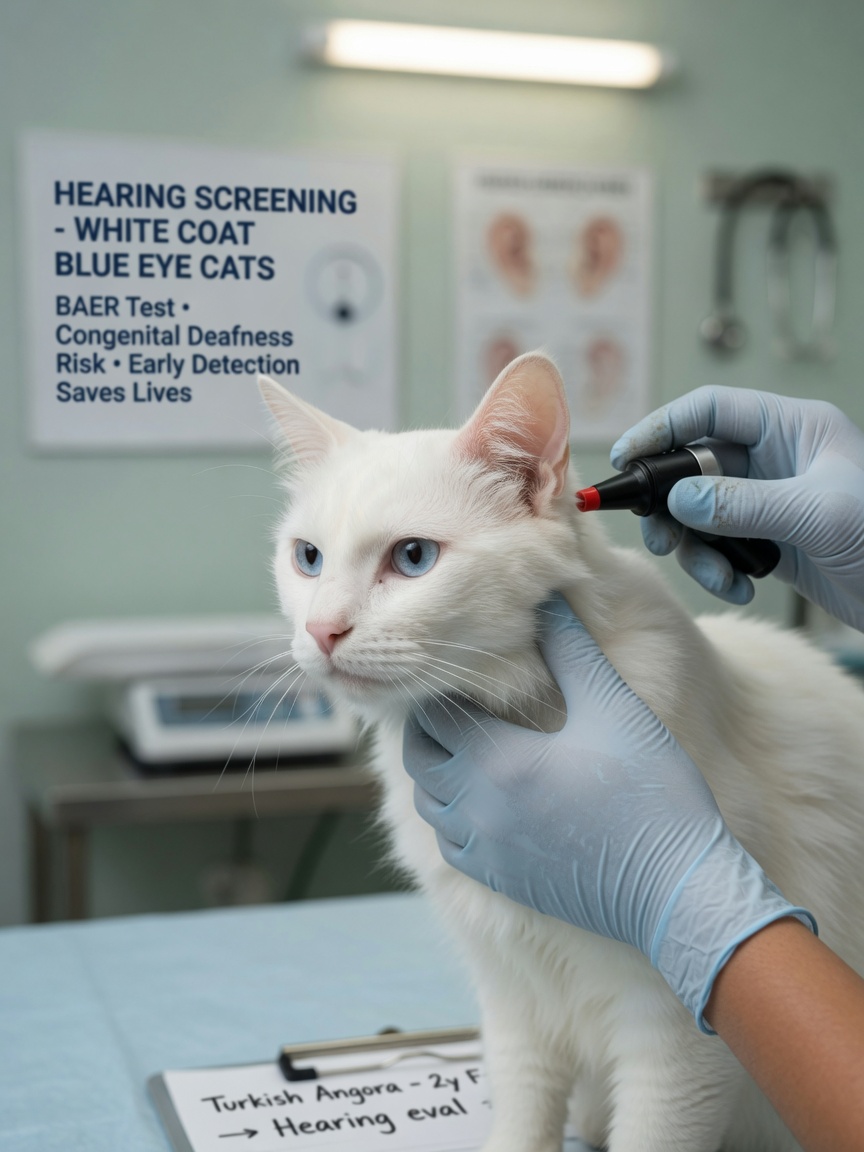
Like all pedigree breeds, Turkish Angoras carry certain inherited predispositions alongside the general health concerns seen in cats more broadly. The following are the conditions most consistently documented or discussed in relation to this breed.
Congenital Deafness
Deafness in cats is strongly associated with the dominant white coat gene, particularly in cats with blue eyes, and Turkish Angoras—being one of the breeds most associated with pure white colouring—are commonly reported to carry a higher risk than average. The deafness is usually present from birth (congenital) rather than developing later in life, and it can affect one or both ears.
Early signs include a kitten failing to respond to sounds, not waking to noise, or being startled easily because they cannot hear someone approach. A simple clap test away from the cat's field of vision can raise suspicion, though formal testing (such as BAER testing) by a vet is the reliable way to confirm hearing status. Deaf cats can live full, happy lives, but owners typically need to adapt by keeping them indoors or in secure outdoor enclosures, using visual cues and vibration (such as stamping on the floor) to get their attention, and being extra vigilant around traffic and other hazards they cannot hear coming.
Hereditary Ataxia
A rare, inherited neurological disorder has been documented specifically in Turkish Angora kittens, generally believed to follow an autosomal recessive inheritance pattern. It affects coordination and balance due to abnormal development or degeneration within the nervous system.
Signs typically appear in early kittenhood and may include tremors, an unsteady or wobbly gait, difficulty judging distances when jumping, and progressive worsening of coordination. Because this condition is neurological rather than orthopaedic, it is not the same as simple clumsiness and tends to be noticeably progressive. There is no cure, so management focuses on supportive care, a safe low-stress environment with minimal climbing hazards, and working closely with a vet to monitor progression. Reputable breeders aim to screen for and avoid propagating the trait, so asking about the health history of a kitten's parents and littermates is a sensible step for prospective owners.
Hypertrophic Cardiomyopathy (HCM)
HCM, a thickening of the heart muscle that can affect how efficiently the heart pumps blood, is the most common heart disease across cats generally and is reported in many pedigree breeds, including the Turkish Angora, though it is less extensively studied in this breed than in some others. It can be inherited in some cases, though it may also occur without a clear hereditary link.
Early signs are often subtle or entirely absent until the disease is advanced, which is why HCM is sometimes described as a silent condition. When signs do appear, they may include lethargy, faster or laboured breathing, reduced appetite, or in severe cases sudden collapse. Regular veterinary check-ups that include listening for heart murmurs or abnormal rhythms are valuable, and cats with any concerning findings may be referred for an echocardiogram (heart ultrasound) for a definitive assessment. There is no way to prevent HCM entirely, but early detection allows for closer monitoring and, where appropriate, medical management to support quality of life.
Dental and Periodontal Disease
As with the wider cat population, Turkish Angoras are commonly reported to develop dental tartar, gingivitis and periodontal disease over their lifetime, particularly as they move into middle age and beyond. This isn't unique to the breed but is worth flagging because dental disease is under-recognised by many owners.
Early signs include bad breath, red or swollen gums, reluctance to eat hard food, or pawing at the mouth. Regular dental checks, tooth brushing where the cat will tolerate it, and dental-support diets or treats can help slow the build-up of plaque and tartar. Left unmanaged, dental disease can contribute to pain and, in some cases, has been linked to broader systemic inflammation, so it is a health area worth taking seriously rather than treating as purely cosmetic.
Joint and Mobility Changes with Age
While not as strongly documented as in some larger or more heavily built breeds, older Turkish Angoras can develop age-related joint stiffness and mild osteoarthritis, particularly given their active, jumping-oriented lifestyle. Early signs include reluctance to jump onto favourite high spots, stiffness after resting, or a change in grooming habits due to difficulty reaching certain areas.
Although the detailed guidance in our arthritis management resource is written with dogs in mind, many of the underlying comfort principles—keeping a healthy body weight, providing soft bedding, and easy access to litter trays and resting spots—apply just as usefully to ageing cats. A vet can advise on cat-specific pain relief options, as many canine arthritis medications are not appropriate for cats.
Nutrition & Feeding
Turkish Angoras are active, agile cats with a lean build, and their feeding plan should reflect this rather than following a one-size-fits-all approach. A complete, life-stage-appropriate diet that supplies adequate high-quality protein, essential fatty acids and balanced minerals is generally recommended, with portion sizes adjusted according to activity level, age, and body condition rather than by breed alone.
Because the breed can be prone to becoming picky or to grazing throughout the day, measured meals or portion-controlled feeding are often more practical than free feeding, which can contribute to unwanted weight gain. Fresh water should always be available, and wet food can help support hydration, particularly important for long-term urinary and kidney health in cats generally. Some owners explore gut-supportive additions such as probiotics; while the clearest evidence base for these currently comes from canine studies, as summarised in our overview of probiotics for dogs, similar principles around supporting digestive balance are of growing interest in feline nutrition, and any supplement should be discussed with a vet first.
Grooming & Care
Despite their luxurious appearance, Turkish Angoras have a single coat layer without a dense undercoat, which means they are generally lower-maintenance to groom than many long-haired breeds. A weekly brush is usually sufficient to remove loose hair and prevent occasional tangles, with more frequent grooming useful during seasonal shedding periods, typically in spring and autumn.
Because the coat is fine, it can still show signs of irritation if a cat is scratching excessively, which may indicate fleas, environmental sensitivities, or other skin issues. While written primarily for dogs, some of the general detective work described in our guide to skin allergies—looking at seasonal patterns, diet, and environmental triggers—can offer a useful starting framework, though a vet should always assess a cat directly given the differences between species. Routine care should also include regular nail trims, ear checks, and dental hygiene as outlined above, along with attention to eye discharge, which can occasionally be more noticeable in white, blue-eyed cats.
Exercise & Training Needs
This is an energetic, athletic breed that enjoys climbing, jumping and exploring, so a stimulating indoor environment is important for both physical and mental wellbeing. Cat trees, shelving, window perches and interactive toys help satisfy their natural desire to be up high and on the move. Turkish Angoras often enjoy puzzle feeders and food-based enrichment, which can also help slow down fast eaters and provide mental stimulation.
Many owners find that Turkish Angoras respond well to gentle training, including leash walking (with a well-fitted harness), fetch, and simple cues, reflecting their intelligence and eagerness to interact. Kittens benefit from early, positive socialisation to handling, other pets, and everyday household sounds and experiences—principles broadly similar to those described in general pet growth-stage guidance, even though that resource is written with puppies in mind, since consistent early exposure supports confident, well-adjusted adult behaviour across species.
FAQs
Are all Turkish Angoras deaf?
No. Deafness is associated with the white coat and blue-eyed gene combination and is more commonly reported in these individuals rather than the breed as a whole. Angoras of other colours are not thought to carry the same elevated risk, and even among white, blue-eyed cats, many have completely normal hearing.
Do Turkish Angoras get along with dogs and other cats?
Generally, yes, particularly with proper introductions and early socialisation. Their confident, social personality often allows them to integrate well into multi-pet households, though as with any cat, individual temperament and a gradual introduction process matter more than breed alone.
How much grooming does a Turkish Angora really need?
Less than their appearance suggests. A weekly brush is usually enough outside of shedding season, when more frequent grooming helps manage loose fur. Their coat lacks a thick undercoat, so matting is less of a concern compared with many other long-haired breeds.
Is the Turkish Angora a good choice for a first-time cat owner?
They can be, provided the owner is prepared for an interactive, people-focused cat that dislikes being left alone for long periods and needs environmental enrichment. Their manageable grooming needs make them practical, but their social and vocal nature means they suit engaged, present owners rather than those wanting a hands-off pet.
This guide is intended for general informational purposes only and does not replace individual veterinary advice. Always consult a qualified vet for guidance specific to your cat's health, history and needs.