

Why Most Pets Are Unrestrained — and Why That Has to Change
A 2023 survey by a major UK motoring organisation found that over 60% of drivers travel with an unrestrained pet in the vehicle. In a collision at just 30 mph, a 10 kg dog becomes a projectile exerting roughly 300 kg of force. That is not a statistic to gloss over. Travelling safely with your pet requires the same planning you would give any other passenger.
Legal Position in the UK
Under the Highway Code Rule 57, drivers are required to suitably restrain animals in vehicles. Failure to do so can result in a charge of driving without due care and attention, carrying fines and penalty points. Your car insurer may also refuse a claim if an unrestrained animal was deemed a contributing factor in an accident. The law is clear; the responsibility rests with the driver.
Choosing the Right Restraint
Harnesses and Seatbelt Clips
A crash-tested harness attached via a seatbelt clip is one of the most practical options for dogs. Look for products that have passed independent crash-testing — not all harnesses on the market have been tested to any meaningful standard. The Centre for Pet Safety in the United States has published independent test results that are widely referenced in the UK pet community. A harness should distribute force across the chest and shoulders, not the neck.
Travel Crates and Carriers
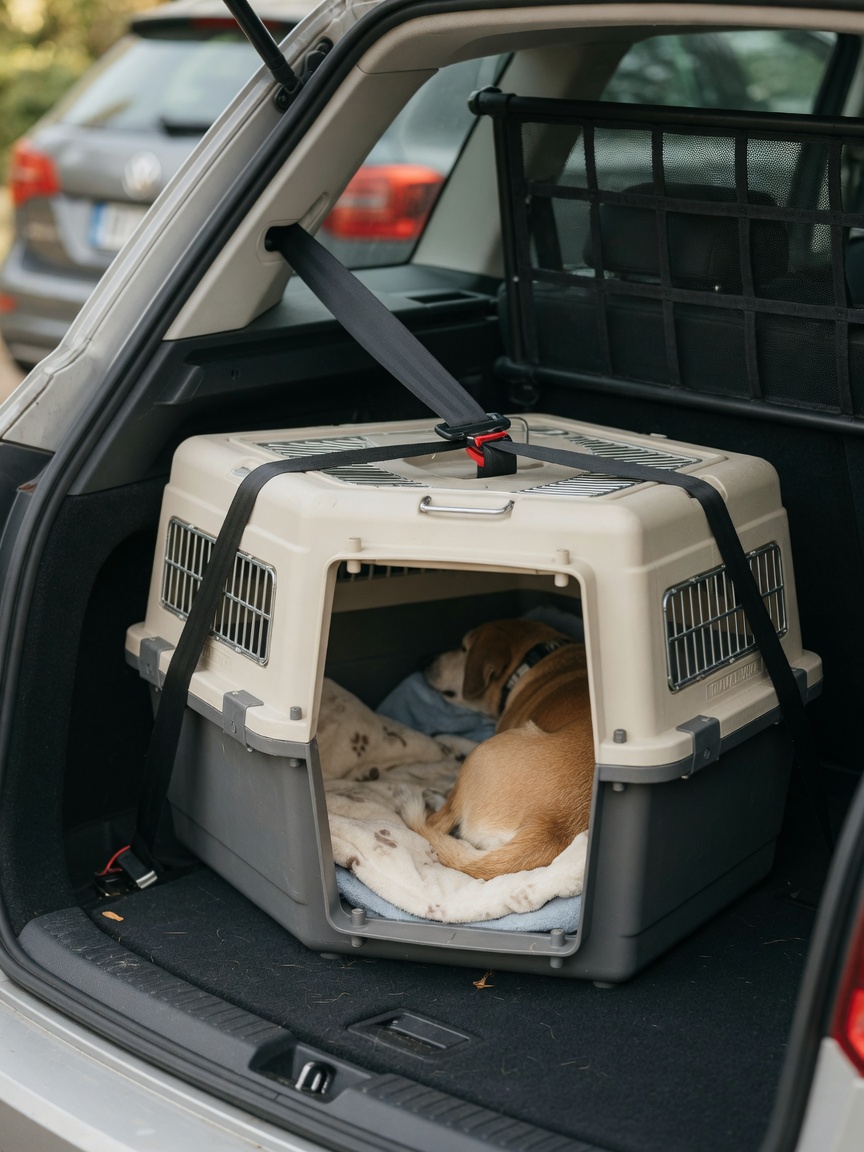
A rigid, well-secured crate is considered the gold standard for both dogs and cats. The crate must be anchored — either by a seatbelt through the handle or secured in the boot with a cargo barrier. An unsecured crate offers little protection in a crash. Soft-sided carriers provide comfort for short journeys but should not be treated as crash protection.
Dog Guards and Cargo Barriers
A dog guard keeps a dog in the boot area but does not prevent injury from forward momentum in a crash. It is best combined with a harness or crate rather than used alone. Guards are most suitable for estate cars and SUVs with sufficient boot space to allow the animal to stand, turn, and lie down comfortably.
Preventing and Managing Motion Sickness
Why It Happens
Motion sickness in pets — particularly in younger dogs and cats — occurs because the inner ear detects movement while the eyes, often fixed on a static interior, send conflicting signals. Anxiety compounds the problem. Puppies frequently grow out of car sickness as the vestibular system matures, but some animals remain susceptible throughout life.
Environmental Steps
- Keep the car well ventilated and cool — heat worsens nausea.
- Avoid feeding your pet a large meal within two to three hours of travel.
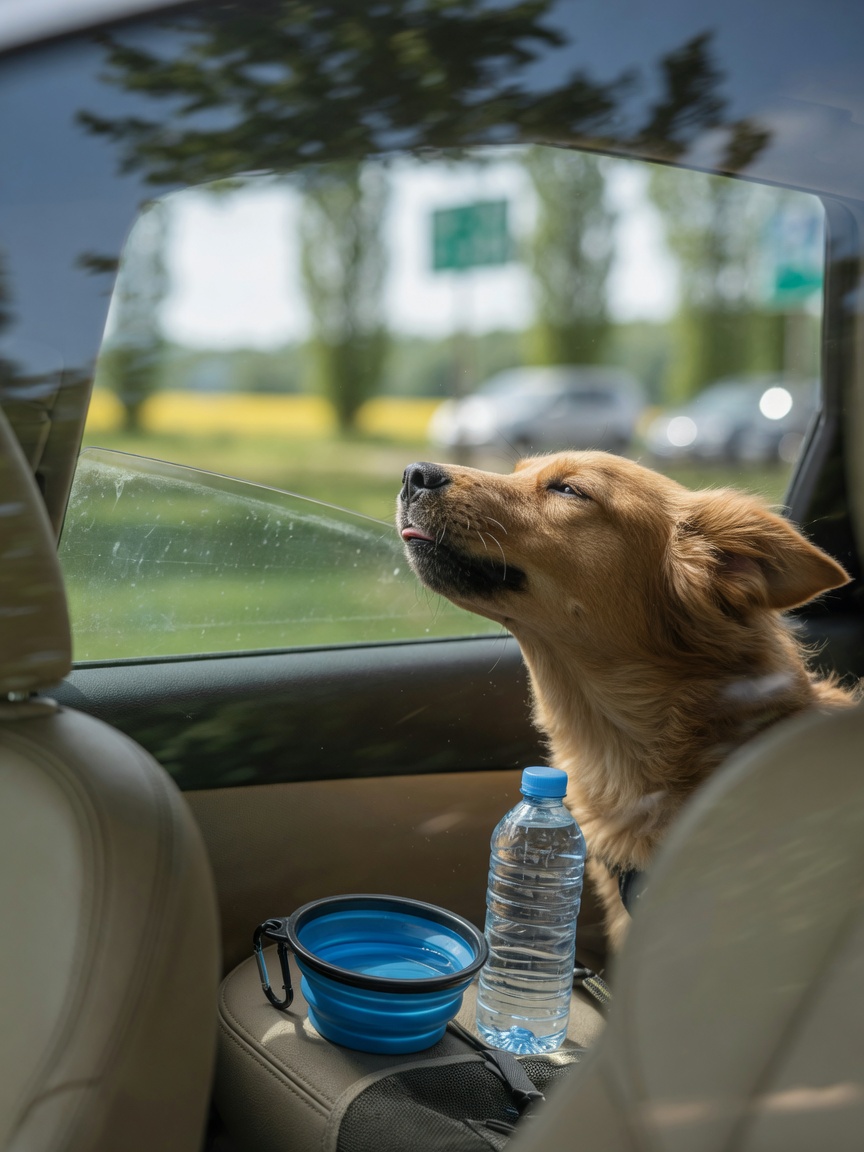
- Allow your pet to look forward or out of a slightly opened window where safe to do so.
- Build positive car associations by beginning with very short, stationary sessions and gradually increasing journey time over several weeks.
- Use calming aids such as pheromone sprays on bedding before the journey.
When to Speak to a Vet
For pets with persistent or severe motion sickness, your vet can prescribe anti-nausea medication or mild sedation. Over-the-counter options exist but vary in safety and suitability depending on your pet's species, age, and health. Always consult a vet before administering any medication — including antihistamines sometimes cited as home remedies.
Planning Stops and Hydration
On journeys of more than two hours, plan rest stops every 90 minutes to two hours. Dogs need to stretch, relieve themselves, and drink fresh water. Keep water and a portable bowl in the vehicle at all times. Never leave a pet unattended in a parked car — even on a mild day, interior temperatures can exceed 40°C within minutes. In the UK this is grounds for an animal cruelty charge under the Animal Welfare Act 2006.
Practical Pre-Journey Checklist
- Confirm your restraint is properly fitted and crash-tested where possible.
- Bring familiar bedding to reduce anxiety.
- Ensure your pet's microchip details are up to date in case of separation.
- Pack a travel kit: water, bowl, waste bags, lead, any medication, and a copy of vaccination records.
- Check the destination for any local rules — some beaches and parks restrict dogs during peak months.
- If travelling abroad, verify pet passport and health certificate requirements well in advance.
Safe car travel with a pet is entirely achievable with a modest investment of preparation. The restraint you choose could be the difference between a minor incident and a tragedy — for your pet, yourself, and other road users.