
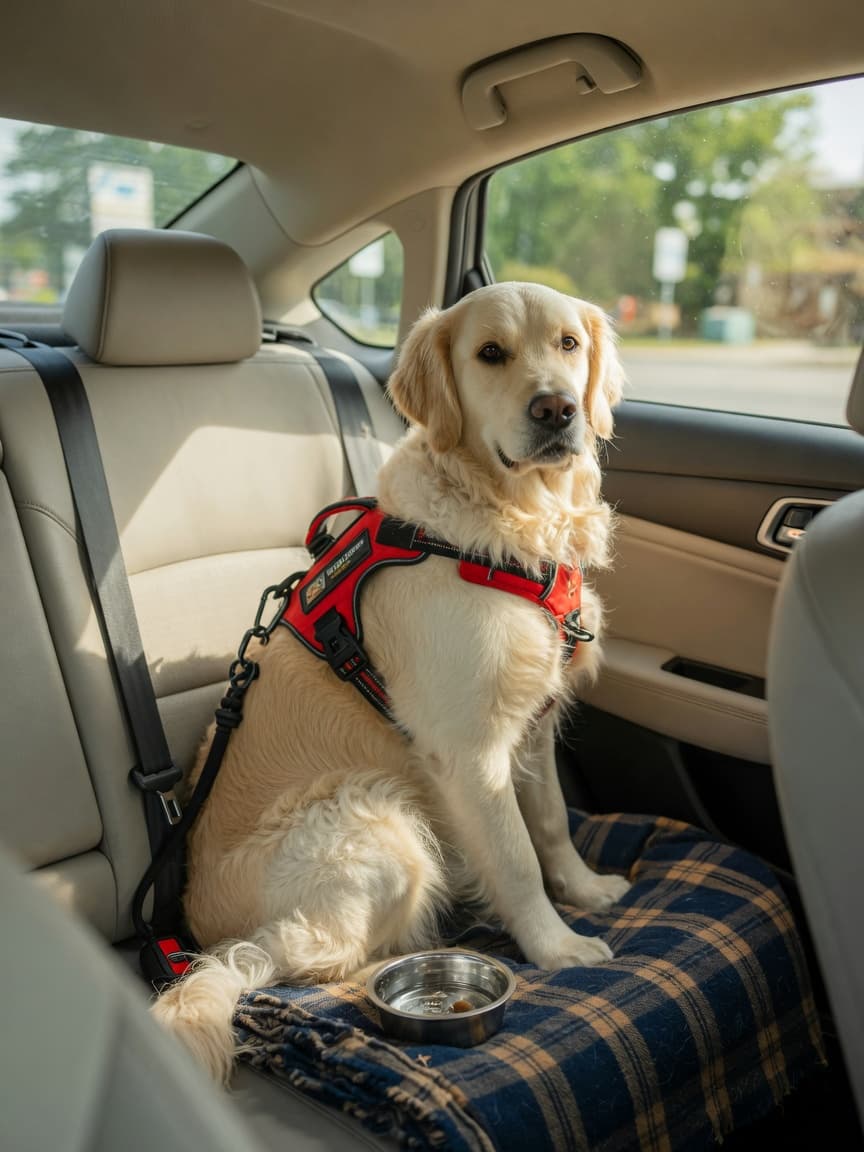
Getting Your Dog Ready for the Road
Most dogs will spend a significant portion of their lives travelling in cars, whether it is a quick trip to the vet or a cross-country holiday. Yet despite how routine it seems, car travel carries genuine risks for dogs that many owners underestimate. From restraint requirements to the very real suffering that motion sickness can cause, there is more to road travel than simply letting your dog hop onto the back seat.
Planning ahead makes an enormous difference to both safety and your dog's comfort, and the good news is that most problems are entirely preventable with the right approach.
Restraint: It Is Not Optional
An unrestrained dog in a moving vehicle is a hazard to everyone on board. In a collision at 30 mph, a 25 kg dog becomes a projectile exerting roughly 500 kg of force. Even at low speeds, an unsecured dog can distract the driver, cause an accident, or be seriously injured by airbag deployment.
The main safe restraint options include:
- A crash-tested harness clipped to the seatbelt anchor
- A rigid, well-ventilated crate secured to the boot floor or back seat
- A boot guard or dog barrier combined with a crate or bed
Not all harnesses are created equal. Look for products that have been independently crash-tested, such as those tested by the Centre for Pet Safety in the United States or similar accredited bodies. Standard walking harnesses offer very little protection in an impact.
Understanding Motion Sickness in Dogs
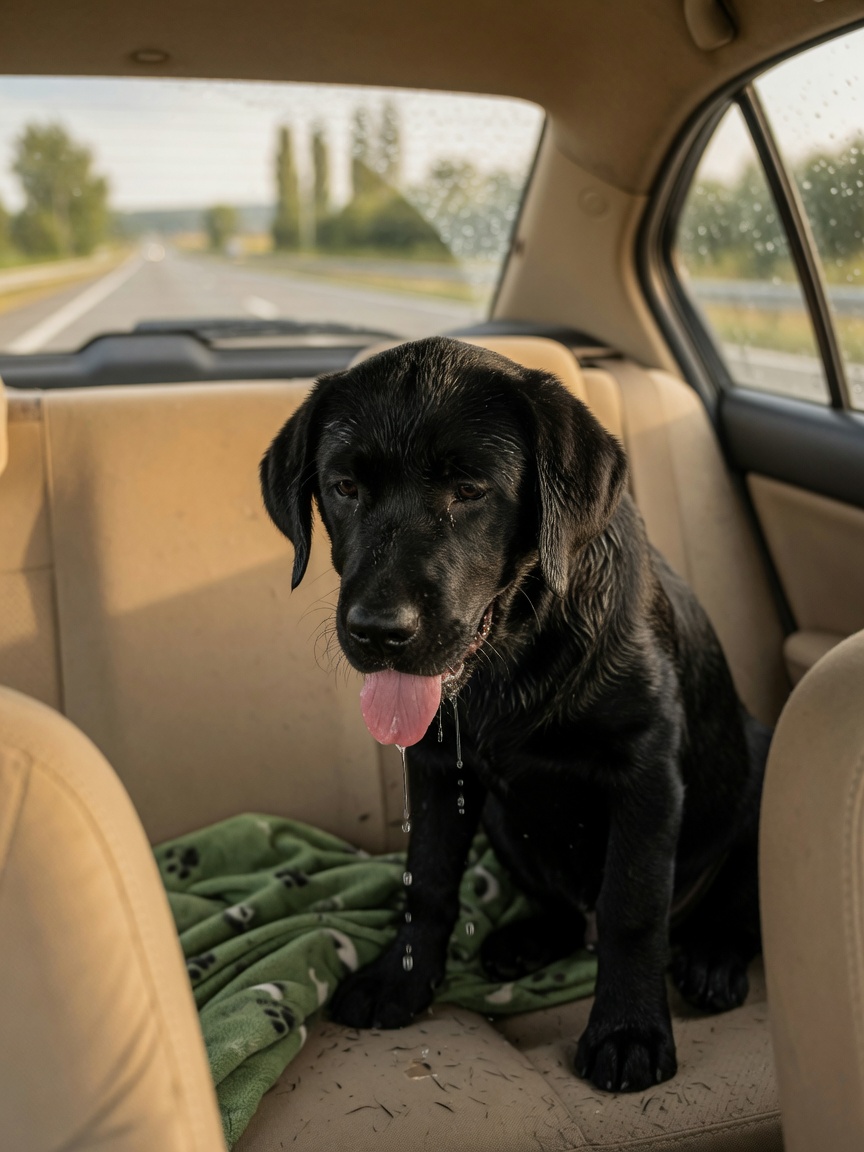
Motion sickness in dogs is more common than most owners realise and is frequently underdiagnosed. It stems from a conflict between what the inner ear senses and what the eyes perceive, a neurological mismatch that triggers nausea. Puppies are particularly prone because the structures of the inner ear are not yet fully developed, and many dogs do grow out of it with age.
Signs of motion sickness include:
- Excessive drooling and lip-licking
- Yawning or appearing lethargic
- Whining or restlessness
- Vomiting, with or without warning
- Refusal to enter the vehicle on future trips
If your dog consistently shows any of these signs, speak to your vet before assuming it is purely behavioural. There are evidence-based pharmaceutical options available, including maropitant (sold under the brand name Cerenia), which targets the vomiting centre in the brain and is highly effective. Your vet may also discuss antihistamines such as diphenhydramine, though these are less reliable in dogs than in humans.
Natural and Behavioural Strategies
For mild cases, or alongside veterinary treatment, several non-pharmaceutical strategies can genuinely help. Restricting food for three to four hours before travel significantly reduces the likelihood of vomiting, though water should always be available. Positioning your dog to face forward rather than sideways can reduce the sensory conflict that drives nausea.
Keeping the car well-ventilated is important. A cooler environment reduces nausea in both humans and dogs. Cracking a window slightly also helps equalise air pressure and provides fresh airflow.
Gradual desensitisation works well for dogs that have developed a fear of car travel following bouts of sickness. Start by simply sitting with your dog in a stationary car, then progress to very short journeys before building up distance over several weeks. Pairing each step with high-value treats creates positive associations that can eventually override the negative ones.
Planning Long Trips
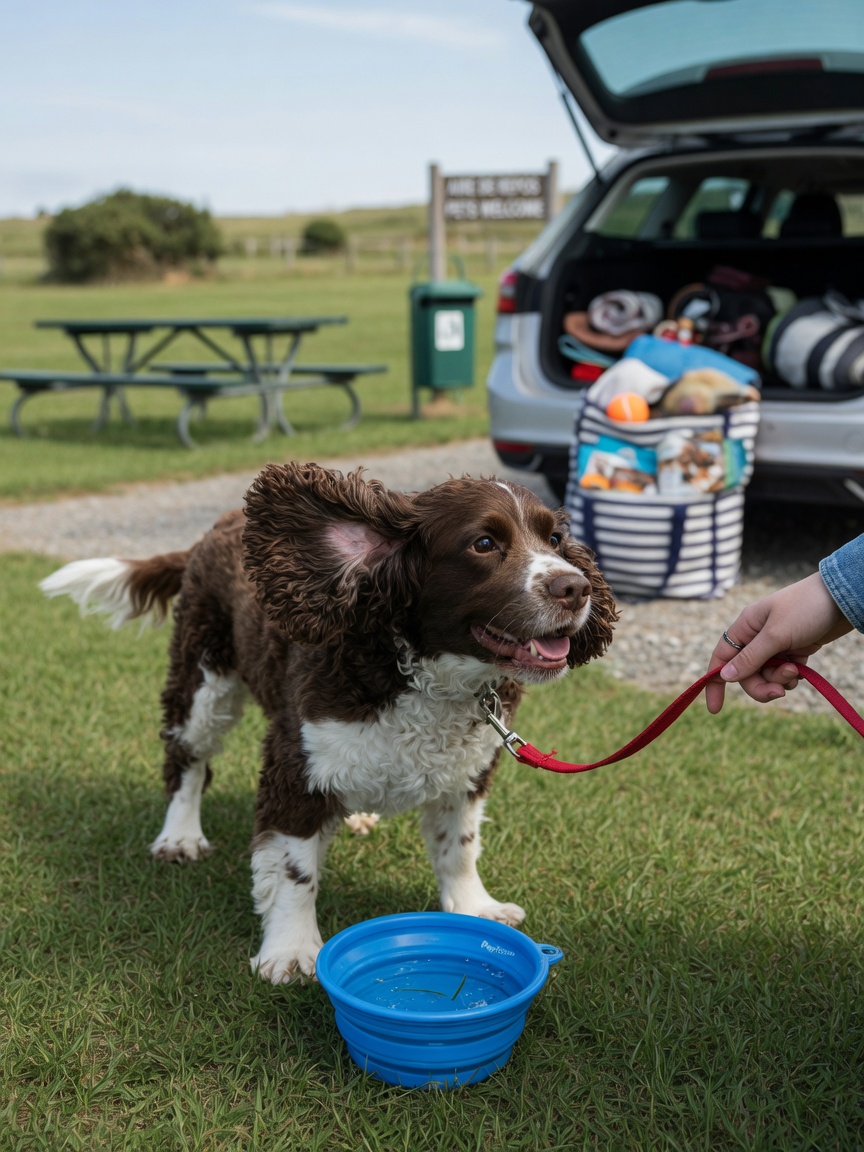
For journeys lasting more than two hours, regular breaks are essential. Aim to stop every two hours to allow your dog to stretch, toilet, and drink water. Dogs should never be left in a parked car unattended, even with windows cracked. The interior temperature of a car can rise to dangerous levels within minutes, even on a mildly warm day in the UK.
Pack a dedicated travel bag for your dog containing:
- Fresh water and a portable bowl
- Their usual food, portioned out to avoid overfeeding
- Waste bags and a small first aid kit
- A familiar blanket or toy to provide comfort and scent continuity
- Any medication your vet has prescribed for the journey
Dogs should be walked on a lead at rest stops, not allowed to roam freely in car parks or unfamiliar areas. A secure, well-fitted collar with current identification tags is essential, and a microchip should always be up to date.
Keeping Things Cool
Heatstroke is one of the most serious risks during car travel and can develop remarkably quickly. Dogs regulate body temperature less efficiently than humans, relying primarily on panting rather than sweating. In warm weather, use sunshades on rear windows, consider a cooling mat in the boot, and never leave the climate control off for extended periods while the dog is in the vehicle.
Flat-faced breeds such as French Bulldogs, Pugs, and Bulldogs are at significantly higher risk of overheating due to their restricted airways. If you own a brachycephalic dog, extra care around temperature management is non-negotiable.
Building Confidence Over Time
Many of the challenges associated with car travel come down to early experience. Dogs that are introduced to vehicles gradually during puppyhood, with plenty of positive reinforcement and short successful trips, are far less likely to develop anxiety or sickness as adults. For dogs that already have a negative association with cars, patience and consistency with a desensitisation programme will produce results, though it does take time.
The goal is a dog that sees the car as a neutral or even exciting environment rather than a source of stress. With the right preparation, the vast majority of dogs can become comfortable, safe travel companions for life.