ForPetsHealthcare
Dogs

How to Stop Cats From Pooping in the Sink or Bathtub

By Julia WrenfieldUpdated August 4, 20264 min read
Evidence-based · Sources checked
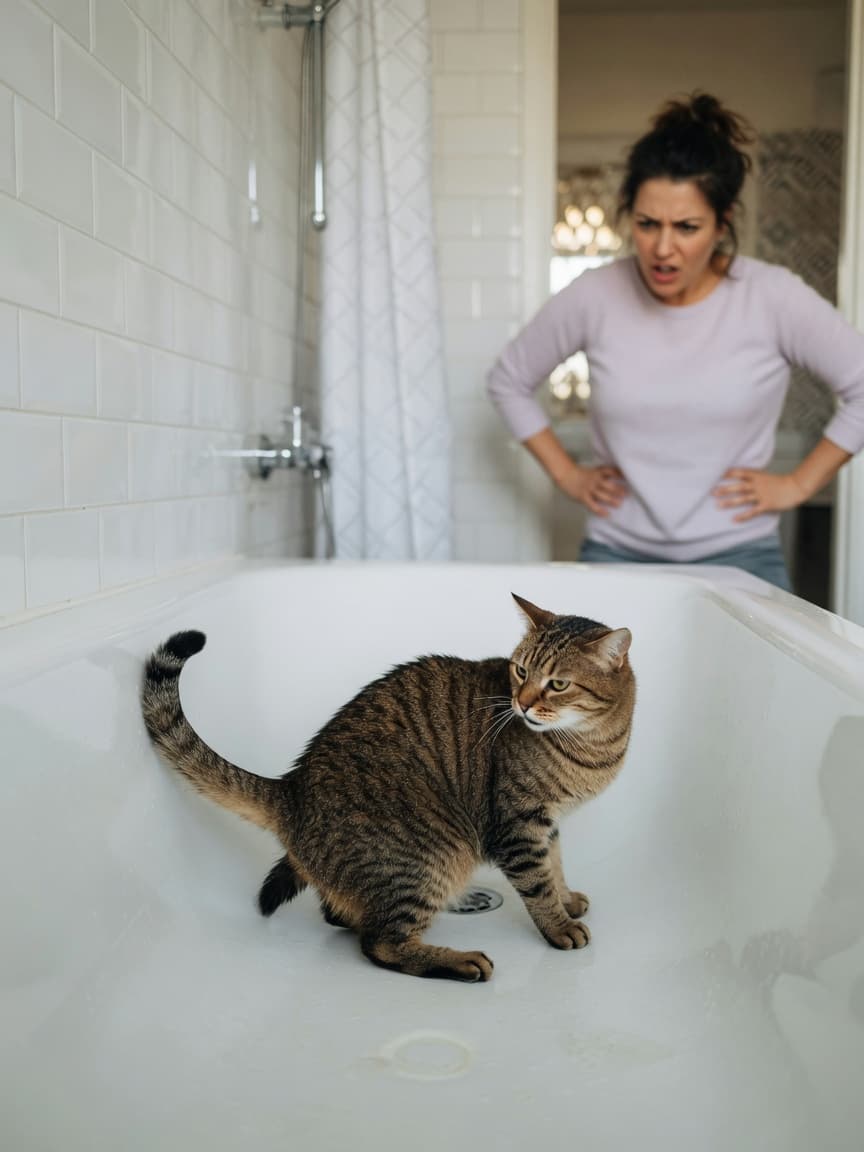
{"en": "Orange cat sitting in empty bathtub, demonstrating inappropriate bathroom behavior in household fixtures", "es": "Gato naranja sentado en ba\u00f1era vac\u00eda, demostrando comportamiento inapropiado en accesorios del hogar", "fr": "Chat roux assis dans une baignoire vide, montrant un comportement inappropri\u00e9 dans les sanitaires", "de": "Orange Katze sitzt in leerer Badewanne und zeigt unangemessenes Verhalten in Haushaltsfixuren", "nl": "Oranje kat zittend in lege badkuip met ongepast toiletgedrag in huishoudelijke voorzieningen", "pt": "Gato laranja sentado em banheira vazia exibindo comportamento inadequado em acess\u00f3rios dom\u00e9sticos", "it": "Gatto arancione seduto in vasca da bagno vuota, che dimostra comportamento inappropriato nei sanitari"}

Discovering that your cat has used your bathroom sink or bathtub as a toilet is frustrating and unhygienic. This unusual behaviour, whilst uncommon, is more prevalent than many cat owners realise. If your feline friend has developed this habit, rest assured that it's usually solvable with patience and understanding. This article explores the underlying causes and provides practical, evidence-based solutions to redirect your cat back to their litter box where it belongs.

Understanding Why Cats Choose Sinks and Bathtubs

Cats don't eliminate in inappropriate places without reason. Understanding the motivation behind this behaviour is the first step towards resolving it. Common causes include:

  • Litter box aversion: Your cat may find their litter box unclean, poorly located, or using an unsuitable litter type
  • Medical issues: Digestive problems, inflammatory bowel disease, or food intolerances can cause urgency and avoidance of the litter box
  • Stress or anxiety: Changes in the household, loud noises, or territorial issues may trigger inappropriate elimination
  • Accessibility: Your cat may find the sink or bathtub easier to access than their litter box, particularly for older or mobility-restricted cats
  • Texture preference: Some cats prefer smooth surfaces over litter for defecation

Rule Out Medical Problems First

Before implementing behavioural solutions, consult your veterinarian to exclude medical causes. Gastrointestinal conditions, parasites, or dietary intolerances can make cats avoid their litter boxes. Your vet can perform a thorough examination and recommend appropriate diagnostic tests if necessary. Once medical issues are ruled out, you can confidently pursue behavioural interventions.

Optimise Your Litter Box Setup
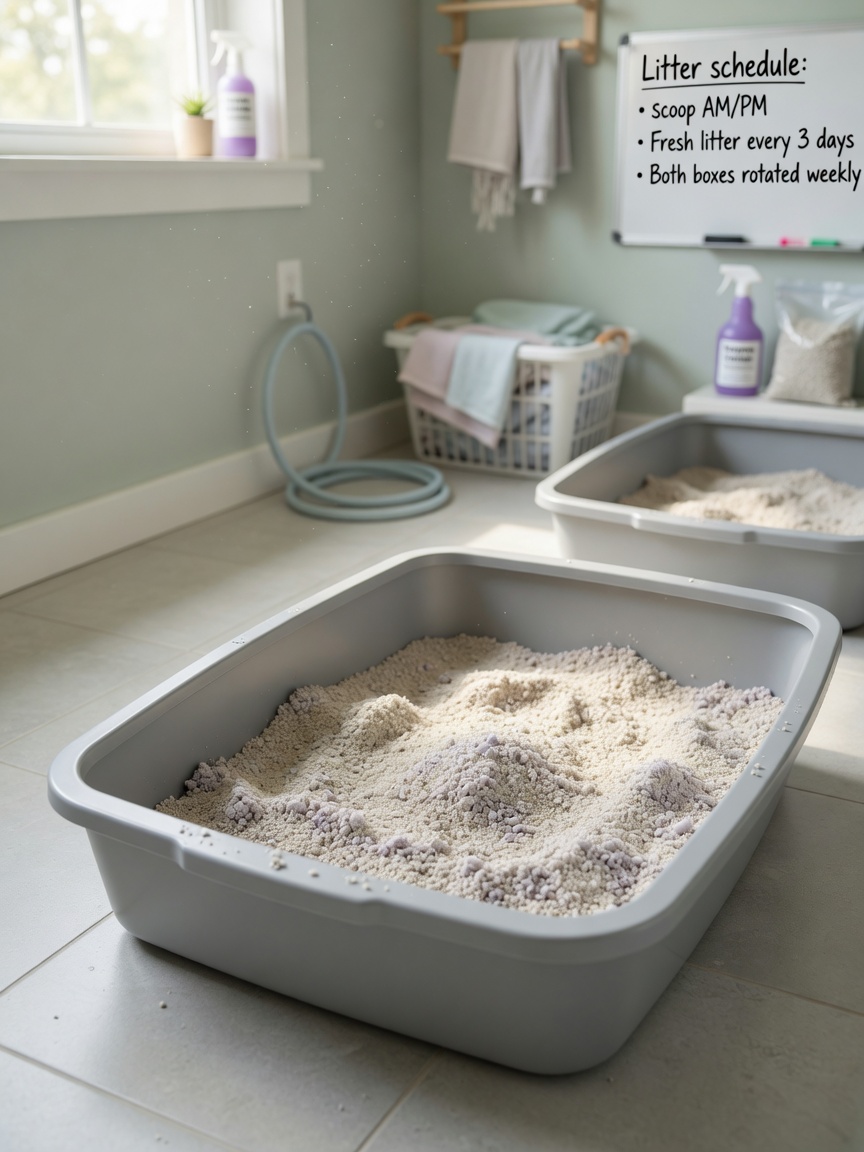
Two large, clean open litter boxes with fresh litter placed in a quiet, accessible laundry room location

The foundation of solving this problem is ensuring your litter box is genuinely appealing to your cat.

  1. Cleanliness: Scoop daily and perform weekly deep cleans. Cats are naturally fastidious and may refuse a soiled box
  2. Number of boxes: Follow the rule of one box per cat, plus one extra. Place boxes in different locations to increase accessibility
  3. Size and style: Use boxes at least 1.5 times the length of your cat's body. Some cats prefer open boxes, whilst others like covered ones
  4. Litter type: Experiment with different textures. Unscented, clumping litter works well for most cats, but some prefer non-clumping varieties
  5. Location: Place boxes away from food, water, and high-traffic areas. Ensure quiet, accessible spots

Making Sinks and Bathtubs Unappealing
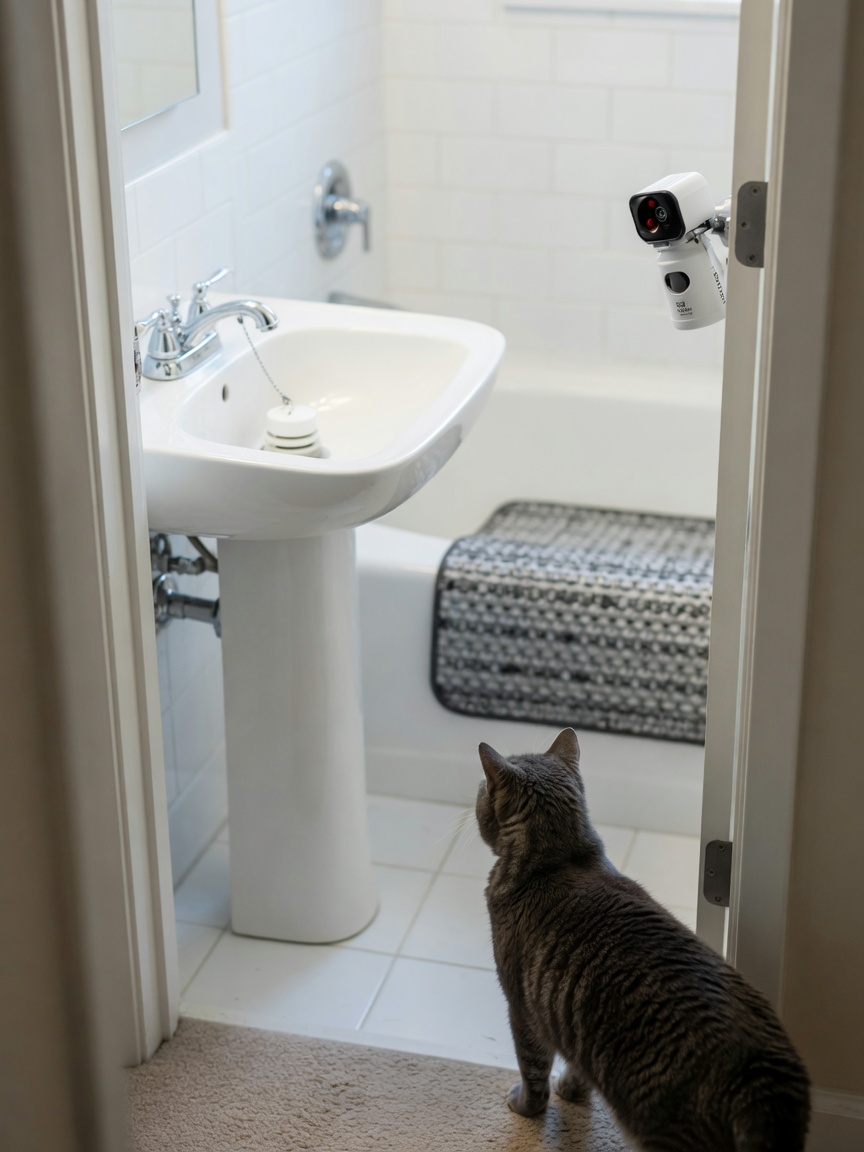
A modern bathroom showing a plugged sink drain, textured shower mat in tub, and motion-activated deterrent spray near the door, with a cat standing outside

Once you've optimised the litter box, make the bathroom fixtures less attractive:

  • Keep sink and bathtub drains plugged when not in use
  • Place a shower mat or textured covering in the tub to change the surface feel
  • Use motion-activated air sprays near bathroom entrances as a gentle deterrent
  • Close bathroom doors when supervising your cat isn't possible
  • Thoroughly clean any affected areas with enzymatic cleaners to remove scent markers

Environmental Modifications and Stress Relief

Consider your cat's broader environment and stress levels. Provide enrichment through vertical spaces, interactive toys, and regular play sessions. Ensure your cat has quiet retreats away from household chaos. Feliway or other feline pheromone diffusers can help reduce anxiety in sensitive cats.

Key Takeaways

Resolving sink and bathtub toileting requires a multi-faceted approach combining medical assessment, litter box optimisation, and environmental management. Be patient—behavioural changes take time. Most cats respond within 2-4 weeks once underlying issues are addressed. If problems persist despite these measures, consult a feline behaviour specialist for personalised guidance. With consistency and understanding, you'll help your cat return to appropriate elimination habits.

#how to stop cats from pooping in the sink or bathtub#cat health#feline nutrition#forpetshealthcare

Sources & further reading

This article is based on peer-reviewed veterinary research and reputable animal-health sources. Explore the underlying science in our Research Library.

Related articles

The 19 Best Animal Shelters in the Netherlands (2026)

the Netherlands's animal shelters, rescue associations and refuges save thousands of dogs, cats and other animals every year, almost always on tiny budgets and volunteer power. To build the most objective ranking possible, we analysed public Google reviews across more than 56 registered animal-prote…

Read more →

The 25 Best Animal Shelters in Italy (2026)

Italy's animal shelters, rescue associations and refuges save thousands of dogs, cats and other animals every year, almost always on tiny budgets and volunteer power. To build the most objective ranking possible, we analysed public Google reviews across more than 121 registered animal-protection org…

Read more →

The 48 Best Animal Shelters in Germany (2026)

Germany's animal shelters, rescue associations and refuges save thousands of dogs, cats and other animals every year, almost always on tiny budgets and volunteer power. To build the most objective ranking possible, we analysed public Google reviews across more than 152 registered animal-protection o…

Read more →

The 32 Best Animal Shelters in France (2026)

France's animal shelters, rescue associations and refuges save thousands of dogs, cats and other animals every year, almost always on tiny budgets and volunteer power. To build the most objective ranking possible, we analysed public Google reviews across more than 89 registered animal-protection org…

Read more →

The 8 Best Animal Shelters in Portugal (2026)

Portugal's animal shelters, rescue associations and municipal centros de recolha save thousands of dogs, cats and other animals every year, almost always on tiny budgets and volunteer power. To build the most objective ranking possible, we analysed public Google reviews across more than 86 registere…

Read more →

Sphynx Cat Skin care and hygiene: Causes, Signs & Care

Sphynx cats have little to no coat, which means the skin itself takes on jobs that fur normally does — insulation, oil dispersal, and barrier protection — leaving it prone to greasiness, blocked pores, fungal infections, and sunburn. The single most important thing to know is that a Sphynx's skin ne…

Read more →
Disclaimer:This article is for informational purposes only and does not constitute veterinary advice. Always consult a qualified veterinarian for your pet's health concerns.

Free newsletter

Pet health tips, straight to your inbox

Weekly science-backed advice for dog & cat owners. No spam, unsubscribe anytime.