
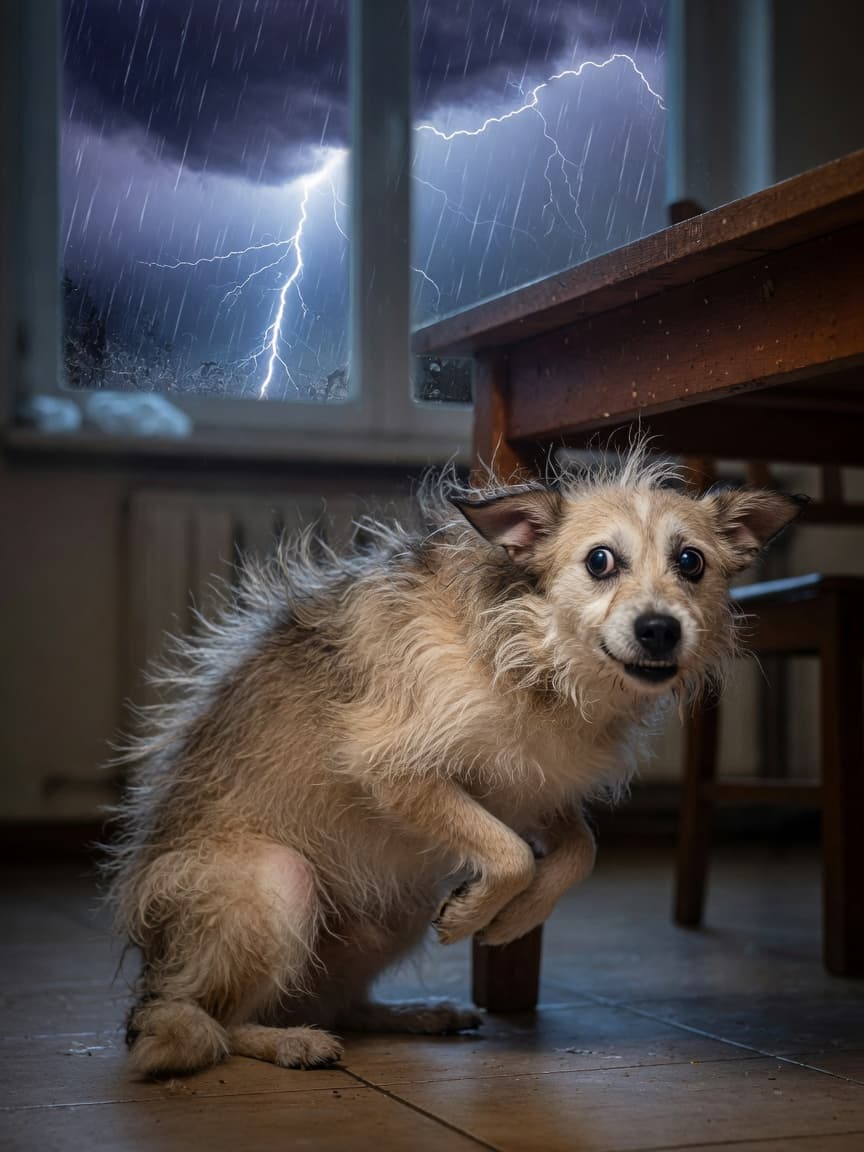
Understanding Why Storms Terrify Some Animals
A dog or cat who panics during thunderstorms is not being dramatic or poorly trained. The physiological response is genuine, the distress is real, and in moderate to severe cases it represents one of the most common welfare problems in companion animals. Studies of noise phobia in dogs indicate prevalence rates between 25 and 49 percent in various populations, and storm-specific phobia — which is often more severe than simple noise reactivity — accounts for a significant portion of those cases.
What makes thunderstorms uniquely challenging compared to other loud noises is that they involve multiple simultaneous sensory inputs. There is the thunder itself, but also lightning flashes, changes in barometric pressure that dogs detect before humans do, the smell of ozone and rain, static electricity buildup in the coat, and often sustained unpredictability — storms can last hours, the intervals between thunderclaps are irregular, and the intensity varies. A dog cannot predict when the next frightening event will occur, and it is that unpredictability, as much as the noise itself, that drives the most extreme anxiety responses.
The Role of Static Electricity
Research by veterinary behaviourist Dr Nicholas Dodman and colleagues at Tufts University identified static electrical buildup in the coat as a likely significant contributor to storm phobia in dogs, particularly in breeds with longer or denser coats. Dogs may experience mild shocks from contact with flooring or furniture during a storm, which explains a behaviour many owners find puzzling: the tendency to seek out bathrooms, showers, or tiled rooms. These grounded surfaces may provide some relief from the static charge.
This observation has practical implications. Anti-static capes designed for dogs — which dissipate electrical charge from the coat — have been reported anecdotally to reduce anxiety in statically sensitive dogs. The evidence base is limited but the mechanism is credible, and for severely affected dogs it may be worth trialling.
What Storm Phobia Looks Like
The range of presentations is wide. Some dogs exhibit subtle early signs that owners may not immediately associate with anxiety: restlessness, yawning, or low-level pacing that begins thirty to sixty minutes before the storm arrives, as the animal responds to falling barometric pressure. Others present acutely with the first thunderclap.
Signs of storm-related anxiety include:
- Panting, trembling, or drooling disproportionate to physical exertion
- Hiding under furniture, in cupboards, or in unusually small or dark spaces
- Seeking constant physical contact with the owner
- Destructive behaviour targeting doors, windows, or exits — which carries a significant injury risk
- Toileting indoors despite reliable house training
- Vocalisation that does not respond to reassurance
- In severe cases, self-injury from escape attempts
Cats tend to hide rather than exhibit destructive behaviour, but their distress is equally real. Prolonged hiding, refusal to eat during storm events, and changes in litter box use are all indicators that a cat's storm anxiety is affecting their quality of life.
Creating a Safe Space
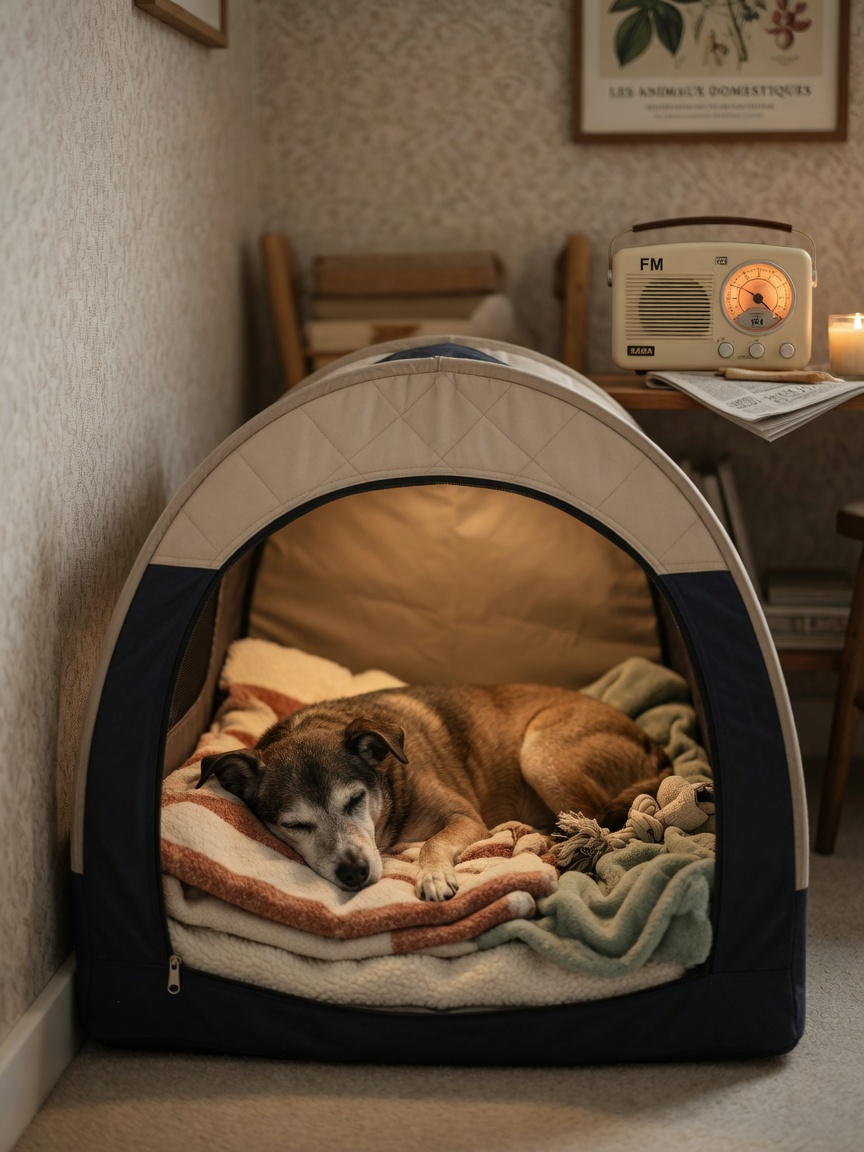
Providing a designated refuge that the pet can access at will — and that they have been conditioned to associate with safety before a storm arrives — is one of the most reliably effective practical interventions. This is not about confining the animal but about giving them a bolt-hole they choose themselves.
Effective safe spaces typically share these characteristics:
- Enclosed on multiple sides, reducing the visual impact of lightning
- Located in the interior of the home, away from windows and exterior walls
- Containing familiar bedding with the owner's scent
- Accessible at all times so the pet learns it is reliably available
- Set up and reinforced with treats and positive associations on calm, storm-free days
Sound masking — using white noise machines, a radio, or television — can reduce the salience of thunder without eliminating it. Classical music has modest supportive evidence in kennelled dogs; for home environments, any consistent ambient sound that is already familiar to the pet is likely beneficial.
Pressure Wraps and Their Evidence Base
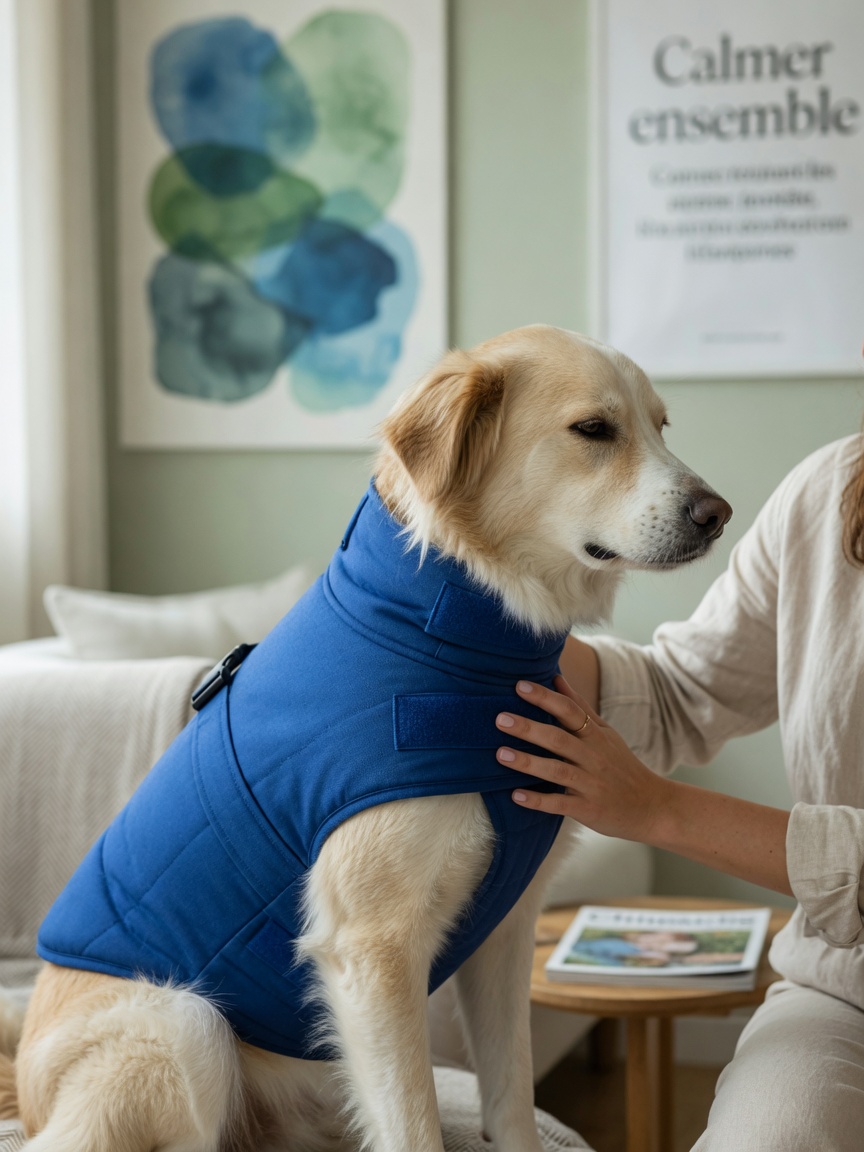
Pressure wraps — commercially available as Thundershirts and similar products — apply gentle constant pressure across the torso. The proposed mechanism draws loosely on the calming effects of deep pressure stimulation observed in human anxiety research. The evidence in dogs is mixed: some studies show meaningful anxiety reduction, others show no significant effect compared to placebo handling. Clinical experience suggests approximately 30 to 60 percent of dogs show some benefit, making them a reasonable first-line trial given their safety profile and low cost relative to pharmaceutical options.
Correct fit is important — the wrap should be snug but not restrictive, and the dog should first be introduced to it during calm periods rather than in the midst of a storm.
When Veterinary Intervention Is Necessary
Moderate to severe storm phobia warrants a conversation with your vet. The welfare implications of repeated acute fear responses are significant — chronic stress in pets has documented negative effects on immune function, cardiovascular health, and lifespan — and the expectation that animals should simply tolerate phobic responses is not ethically defensible when effective interventions exist.
Pharmaceutical options include situational medications such as imepitoin or gabapentin, which can be given in advance of predicted storms. For dogs with severe phobia, trazodone or dexmedetomidine gel (Sileo) offer more targeted anxiolytic effects. None of these are sedatives in the conventional sense — the goal is to reduce the fear response, not to render the animal unresponsive.
Behavioural therapy using systematic desensitisation — gradual exposure to recorded storm sounds at low intensity, paired with positive reinforcement, over weeks or months — reduces reactivity in dogs who receive it, but the recordings do not replicate all the multi-sensory inputs of a real storm. It is most effective as part of a broader management plan rather than as a standalone intervention.
Reassuring your pet during a storm does not reinforce their fear — this is a persistent myth that has caused considerable unnecessary suffering. Fear is not a behaviour that can be reinforced through comfort; it is a physiological state. Staying calm yourself while providing contact and reassurance is appropriate and kind. Your presence genuinely helps.