
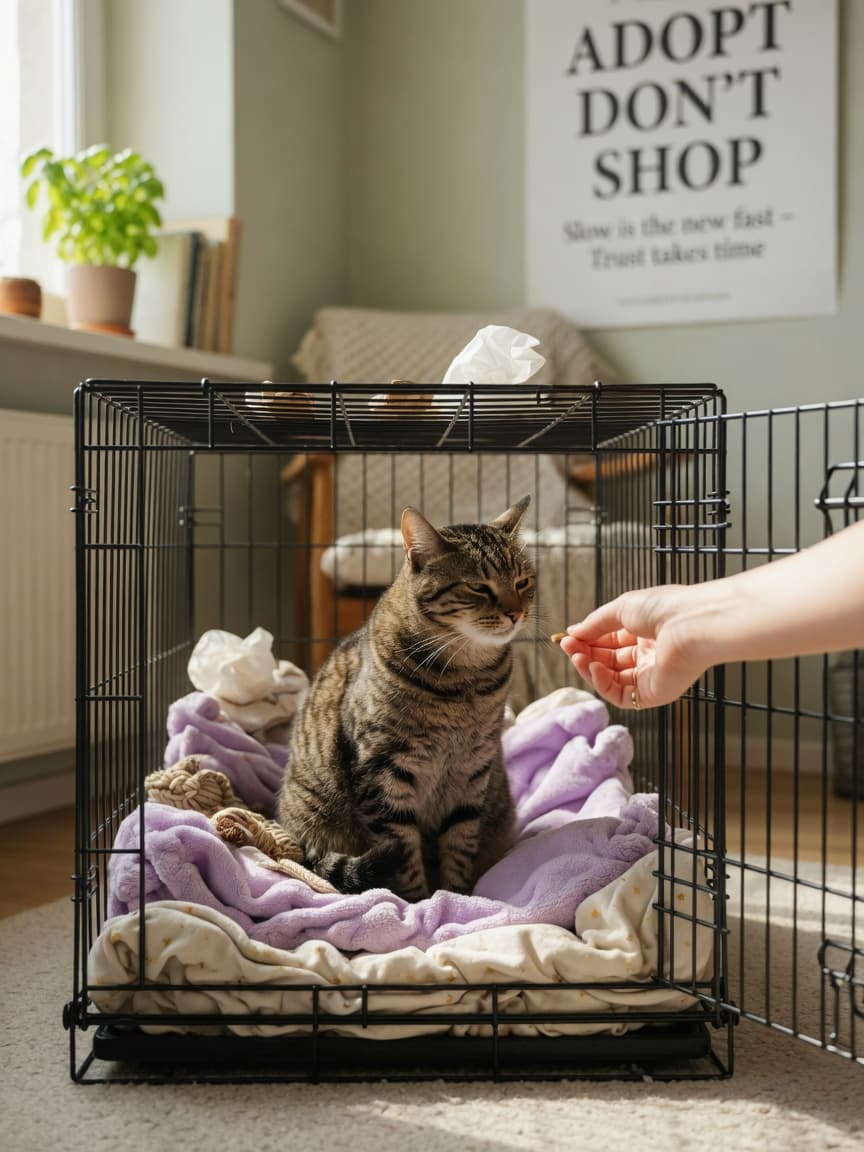
Many cat owners assume their feline companions will never accept a crate, but crate training is one of the most valuable skills you can teach your cat. Whether you need a secure space for vet visits, travel, or creating a safe room during home renovations, a properly trained cat will view their crate as a comfortable den rather than a prison. With patience, positive reinforcement, and the right approach, most cats can learn to tolerate—and even enjoy—their crate within a few weeks.
Why Crate Training Matters for Cats
Unlike dogs, cats aren't naturally pack animals, so their relationship with confined spaces differs significantly. However, a crate provides essential benefits: it protects your cat during car journeys, reduces stress at the veterinary clinic, and offers a safe sanctuary during stressful household situations. For multi-cat households, a crate allows you to separate cats for feeding or medical reasons. Most importantly, a crate-trained cat experiences far less anxiety during necessary confinement, leading to better overall health outcomes.
Choosing the Right Crate
Your first step is selecting an appropriate crate. Follow these guidelines:
- Choose a crate large enough for your cat to stand, turn around, and lie down comfortably
- Select a design with good ventilation and visibility—wire crates or crates with multiple viewing sides work well
- Avoid excessively large crates, as cats feel more secure in snug spaces
- Consider crates that open from the top and sides for easier loading
- Ensure the crate is sturdy and escape-proof
Preparing the Crate Environment
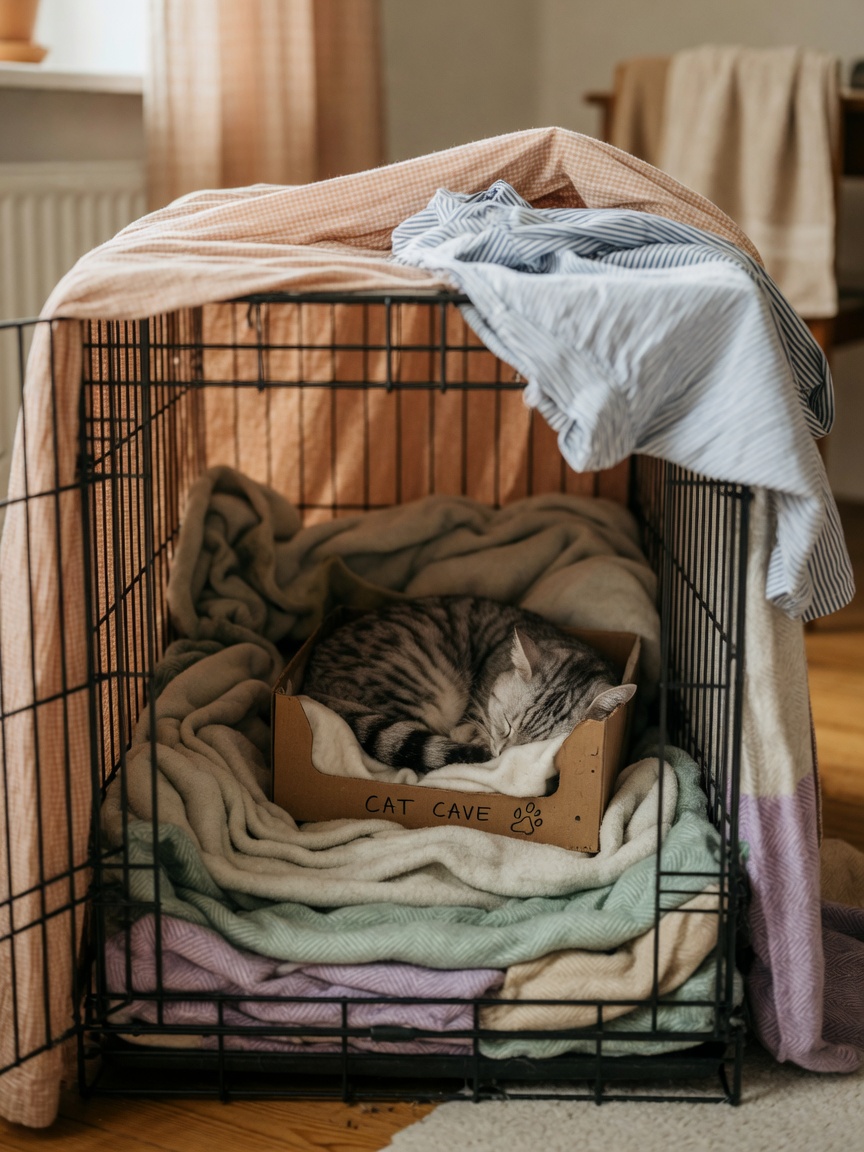
Make your crate inviting by transforming it into a cosy den. Place familiar-smelling bedding inside—perhaps a blanket that smells like your home. Add a small hiding box or cover the crate partially with a cloth to create a cave-like atmosphere that cats naturally prefer. Never force confinement; instead, leave the crate door open and allow your cat to explore at their own pace. Some cats will investigate immediately, whilst others need several days.
Step-by-Step Training Process
Follow this gradual approach to avoid overwhelming your cat:
- Introduction phase: Leave the crate door open and reward your cat with treats whenever they investigate or enter voluntarily. This builds positive associations.
- Door closing practice: Once your cat enters freely, briefly close the door while they're inside, then immediately open it and reward them. Gradually increase the duration.
- Absence training: Close the door and step away for a few seconds. Return before your cat becomes stressed and reward calm behaviour.
- Extended confinement: Slowly increase the time your cat spends in the closed crate, always ensuring positive associations with treats and praise.
- Real-world practice: Take short practice journeys in the car with your crated cat to familiarise them with travel scenarios.
Essential Training Tips
- Train during calm periods, not when your cat is already anxious or agitated
- Use high-value treats—reserved exclusively for crate training
- Keep sessions short (5-10 minutes) to maintain positive associations
- Never use the crate as punishment, or your cat will develop negative associations
- Be patient; some cats progress faster than others
- Consider using calming pheromone sprays like Feliway inside the crate
Key Takeaways
Crate training your cat requires patience and consistency, but the investment pays dividends throughout your pet's life. Start early if possible, maintain positive associations, and progress at your individual cat's pace. Never rush the process or force your cat into the crate. With gentle, reward-based training, your cat can learn that their crate is a safe space they choose to enter—making vet visits, travel, and emergency situations significantly less stressful for everyone involved.