
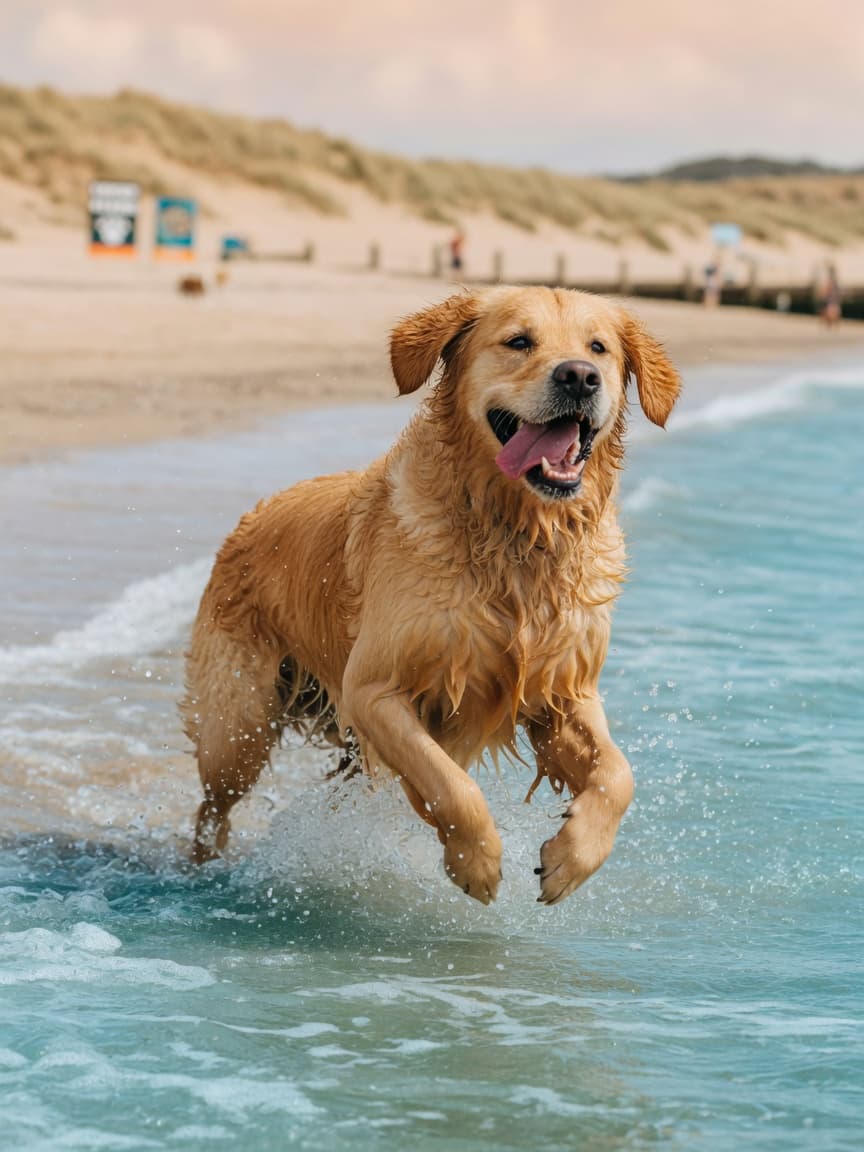
Dog Beach Safety Guide for the UK and EU
A beach day with your dog sounds like the perfect summer outing. And it can be — with the right preparation. But coastal environments come with a surprisingly long list of hazards, and beach access rules for dogs are far more complicated than most owners realise. Get informed before you go.
Beach Bans: Where Dogs Are and Are Not Welcome
Spain
Spain operates some of the strictest dog beach rules in Europe. The majority of main beaches — especially those with Blue Flag status — ban dogs entirely during the summer season, which runs from June through to September. Fines for breaking these rules can range from €100 to over €600 depending on the municipality. However, most coastal towns also designate specific dog-friendly beaches, known as playas para perros, where dogs are welcome year-round. These tend to be smaller, quieter stretches away from the main tourist areas. Always check with the local ayuntamiento (town council) website before you travel, as rules vary significantly between resorts.
France
French beach rules follow a similar pattern. The majority of popular beaches, particularly along the Côte d'Azur and Atlantic coast, ban dogs between June and September. Fines for violations start at around €68 and can be higher on certain communes. A number of French resorts do maintain designated dog-friendly beach sections, and these are usually marked with clear signage. Outside the summer season, restrictions are generally lifted, making spring and autumn the best times to visit French beaches with a dog.
Italy
Italy's coastal rules are similar, with most lido-style beach clubs and organised beach areas banning dogs during peak season. Some regions are more permissive than others — Sardinia and parts of Tuscany have invested in dog-friendly beach infrastructure. As with Spain and France, check local authority rules before your trip.
United Kingdom
UK beach access for dogs is managed at the local authority level. Many popular beaches operate seasonal bans from Easter through to the end of October on the main sand areas. However, most beaches maintain dog-friendly sections alongside the restricted areas, and many are fully open outside the seasonal ban period. National Trust coastal properties often have clearly marked dog-friendly sections. The website of the relevant local council, or a quick search on Doggiely or similar UK pet-friendly directories, will confirm the rules for any specific beach.
Hot Sand: The Paw Burn Risk
Sand absorbs heat aggressively. On a 25°C day, pale sand can reach surface temperatures above 50°C, which is enough to cause paw burns within seconds of contact. The simple test is to press the back of your hand flat on the sand for five seconds. If you cannot hold it there comfortably, it is too hot for your dog's paws. Visit the beach in the early morning or late evening during summer, when the sand has had time to cool. Signs of burned paws include limping, licking, and blisters on the paw pads. If you suspect burns, rinse with cool water and see a vet.
Saltwater Ingestion
Dogs that play in the sea will inevitably swallow some saltwater, but too much causes hypernatraemia — salt poisoning. Signs include vomiting, lethargy, excessive thirst, stumbling, and in severe cases, seizures. Always bring plenty of fresh water and offer it regularly throughout your beach visit to keep your dog hydrated and reduce the temptation to drink from the sea. If you suspect your dog has swallowed a large amount of seawater, contact a vet promptly.
Blue-Green Algae
Blue-green algae (cyanobacteria) poses a serious and often underestimated danger to dogs. It appears as a greenish or blue-green scum on still or slow-moving water and can also occur in coastal and estuarine areas. The toxins it produces can cause liver failure, neurological symptoms, and death, sometimes within hours of exposure. There is no antidote. Keep your dog out of any water showing signs of algae bloom. The UK Environment Agency and local authorities issue alerts when blooms are confirmed — check these before visiting lakes, rivers, or coastal inlets. Do not assume the sea itself is safe near estuaries or enclosed bays.
Jellyfish
Jellyfish washed up on beaches can still sting when dead. Dogs are naturally curious and will sniff or lick them. Do not allow this — the sting causes significant pain, swelling, and can trigger an allergic reaction. Rinse the affected area with seawater (not fresh water, which can worsen the sting) and contact a vet if the reaction seems severe or your dog has ingested any part of the jellyfish.
Currents and Rip Tides
Dogs are generally good swimmers but they are not immune to the sea. Strong rip tides, breaking waves, and cold water can exhaust and disorient even fit, athletic dogs. Do not allow your dog to swim far out or into surf you would not swim in yourself. Keep an eye on your dog at all times in the water — dogs can tire quickly and may struggle to find their way back through surf.
Rinsing After Swimming
Salt, sand, and bacteria from seawater irritate the skin and ears, and can cause infections if left. Rinse your dog thoroughly with fresh water after every sea swim. Pay particular attention to the ears, between the toes, and under the collar. Dry the ears gently — prolonged moisture in the ear canal encourages yeast and bacterial infections.
Life Jackets
If your dog is a brachycephalic breed — Bulldogs, Pugs, French Bulldogs, Boxers — or is elderly, very young, or simply not a confident swimmer, a properly fitted canine life jacket is worth every penny. These breeds are particularly prone to tiring rapidly in water due to their respiratory conformation. Look for a jacket with a handle on the back so you can lift your dog out of the water quickly if needed.
Quick Beach Safety Checklist
- Check local dog access rules before you travel
- Test sand temperature with the back of your hand before letting your dog walk on it
- Bring plenty of fresh water and offer it frequently
- Keep your dog away from jellyfish, algae, and stagnant water
- Rinse your dog thoroughly after every swim
- Consider a life jacket for poor swimmers or brachycephalic breeds
- Keep dogs on a lead near cliffs, rip tides, or strong surf
With a little preparation, the beach is one of the most enjoyable environments you can share with your dog. Go at the right time of day, know the rules, and stay alert to the hazards — and both of you will have a brilliant time.