
Hip Dysplasia in German Shepherds
German Shepherds are among the breeds most commonly affected by hip dysplasia, a developmental condition that affects the hip joint and can lead to significant pain and mobility problems over a dog's lifetime. Despite being one of the most studied orthopaedic conditions in veterinary medicine, hip dysplasia remains poorly understood by many owners — often because the early signs are subtle and easy to attribute to other causes. Understanding how this condition develops, what to look for, and how to manage it effectively can make an enormous difference to a German Shepherd's quality of life.
What Is Hip Dysplasia?
The hip joint is a ball-and-socket joint. In a healthy dog, the head of the femur fits snugly and smoothly into the acetabulum — the cup-shaped socket in the pelvis. Hip dysplasia occurs when this joint develops abnormally, resulting in a loose, poorly fitting joint. This laxity causes abnormal movement and friction, which over time leads to cartilage damage, bone remodelling, and the development of osteoarthritis.
The condition is polygenic, meaning it is influenced by multiple genes, which makes breeding away from it genuinely difficult. Environmental factors, including rapid growth rate, excessive exercise during puppyhood, and inappropriate nutrition, can influence how severely the genetic predisposition manifests.
Why German Shepherds Are at Risk
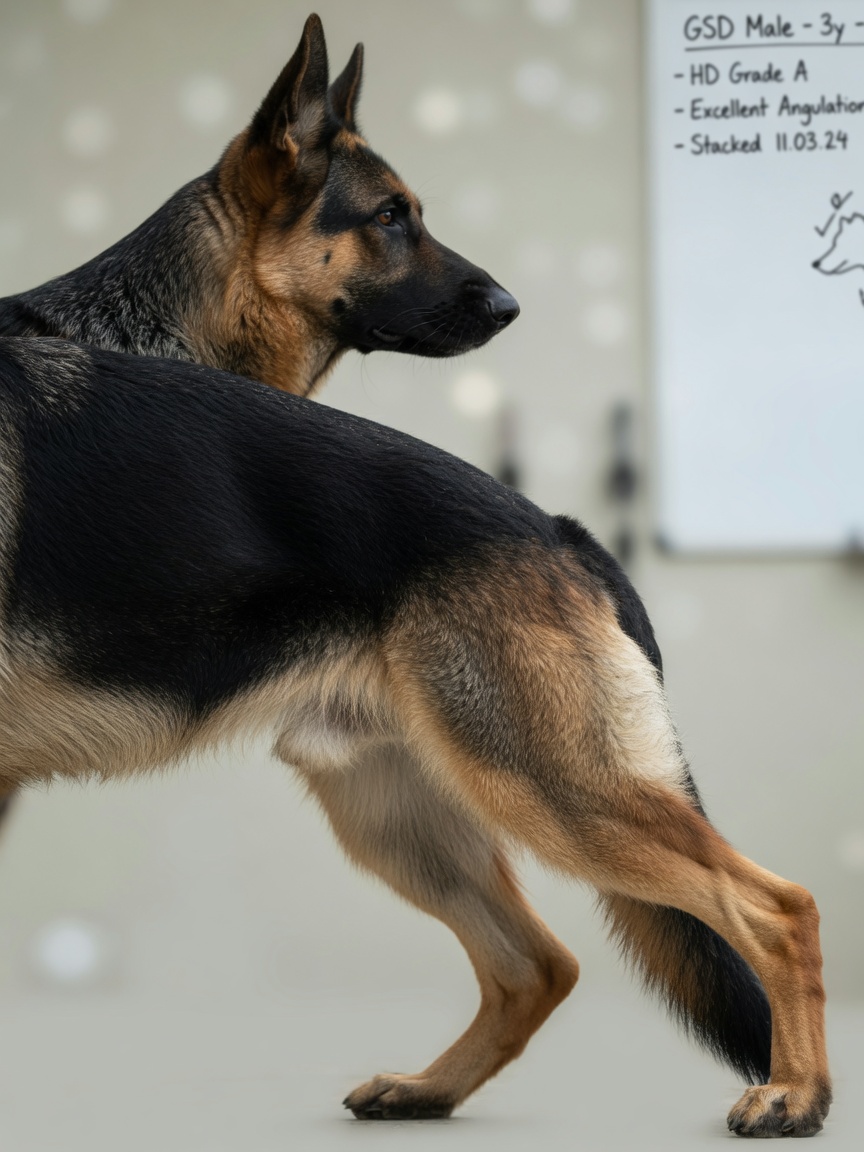
German Shepherds have been selectively bred for decades with an emphasis on a sloping topline and a particular gait. Research has suggested that this exaggerated angulation of the hindquarters may contribute to abnormal loading of the hip joint. Prevalence figures from the British Veterinary Association and the Kennel Club Hip Dysplasia Scheme show that a significant proportion of German Shepherds score above the breed mean, indicating widespread hip problems across the breed population.
Signs and Symptoms
Hip dysplasia can appear as early as five to six months of age in severely affected dogs, or it may not become clinically apparent until middle age, when secondary arthritis has accumulated. Common signs include:
- Reluctance to exercise, climb stairs, or jump into the car
- A bunny-hopping gait, where both hindlimbs move together when running
- Stiffness after rest, particularly in the morning or after lying down for extended periods
- Reduced muscle mass over the hindquarters compared to the front of the body
- Audible clicking from the hip joints during movement
- Behavioural changes such as increased irritability or reluctance to be touched around the back end
It is worth noting that the degree of radiographic change does not always correlate with clinical signs. Some dogs with severely abnormal hip x-rays remain relatively comfortable, while others with moderate changes experience significant pain. This is why clinical assessment rather than imaging alone should guide treatment decisions.
Diagnosis
Definitive diagnosis requires radiography. Your vet will typically take hip x-rays under sedation or anaesthesia to allow proper positioning. In the UK, formal scoring is carried out through the BVA/KC Hip Dysplasia Scheme, which assigns each hip a score from 0 to 53, with lower scores indicating better conformation. The current breed mean score for German Shepherds is published annually and should be used as a benchmark when evaluating dogs for breeding.
For younger dogs, the PennHIP method — which assesses joint laxity directly using a distraction technique — can provide an earlier and arguably more predictive evaluation than the standard BVA scheme.
Prevention in Puppies
Owners of German Shepherd puppies can take meaningful steps to reduce the risk of severe hip dysplasia developing, even in genetically predisposed dogs. Key recommendations include:
- Avoiding high-impact exercise such as jumping, running on hard surfaces, or forced long walks until skeletal maturity at around 18 months
- Keeping puppies lean — excess body weight increases joint loading during the critical growth period
- Feeding a large-breed specific puppy food that avoids excessive calcium and phosphorus, which can contribute to abnormal bone development
- Providing appropriate, low-impact exercise such as swimming or short lead walks on varied terrain
Medical Management
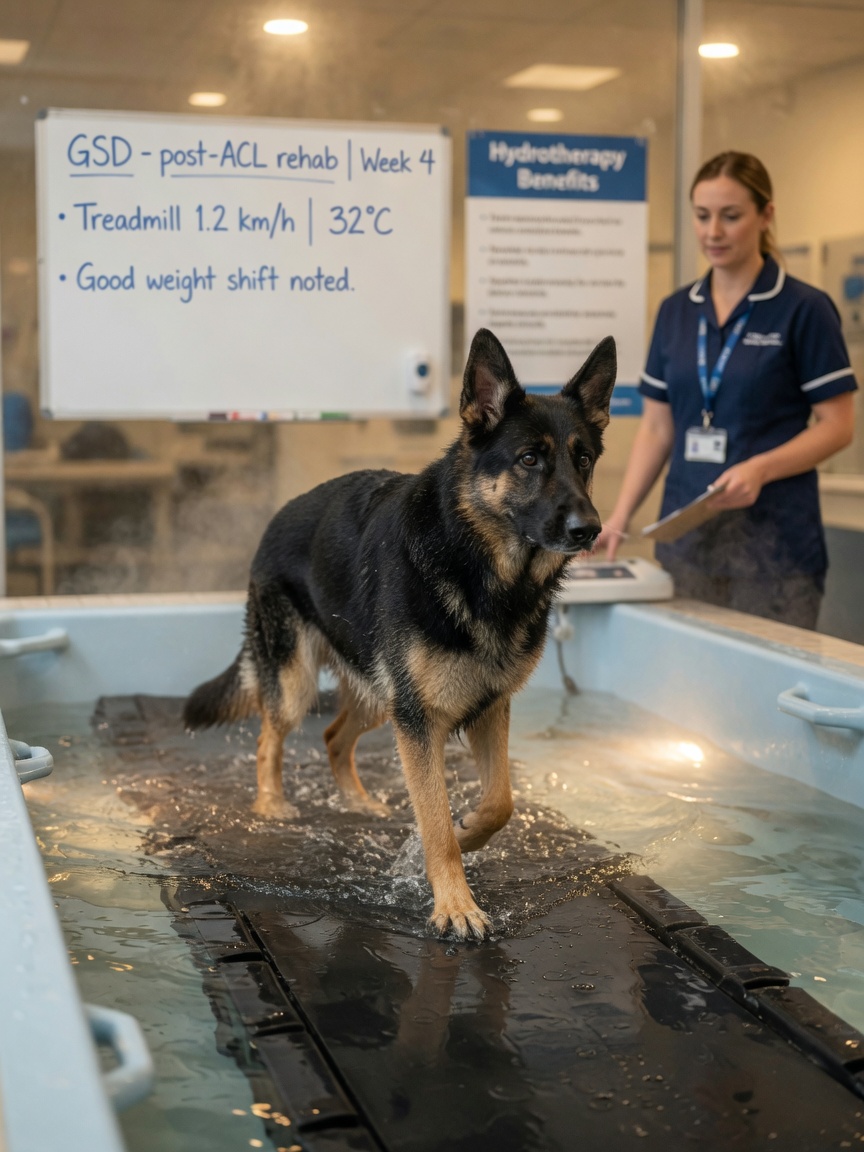
For dogs already showing signs of hip dysplasia or secondary arthritis, a multimodal approach tends to produce the best outcomes. Non-steroidal anti-inflammatory drugs (NSAIDs) prescribed by your vet can significantly improve comfort and mobility. These should be used at the lowest effective dose and with appropriate monitoring for gastrointestinal and renal side effects.
Joint supplements containing omega-3 fatty acids, glucosamine, and chondroitin are widely used, though the evidence base varies. Fish oil supplementation has the most consistent support in veterinary literature for its anti-inflammatory properties. Hydrotherapy — particularly underwater treadmill walking — is highly effective for building hindlimb muscle mass without joint impact and is available through many veterinary physiotherapy practices across the UK.
Surgical Options
Several surgical procedures are available depending on the dog's age and the severity of the condition. In young dogs with severe laxity but before arthritis develops, a triple pelvic osteotomy (TPO) can reposition the acetabulum to improve femoral head coverage. Total hip replacement is considered the most effective long-term solution for dogs with established arthritis and significant pain, with success rates exceeding 90 per cent in most studies. Femoral head and neck excision (FHO) is a salvage procedure used when other options are not viable.
Long-Term Quality of Life
With appropriate management, many German Shepherds with hip dysplasia live full, active lives. Weight control is arguably the single most impactful intervention available, as every kilogram of excess body weight significantly increases the load on already compromised joints. Regular, moderate exercise — particularly swimming and lead walking — maintains muscle support around the joint and slows the progression of secondary arthritis. Work closely with your vet to develop a plan tailored to your dog's individual needs, and do not hesitate to seek a referral to a veterinary orthopaedic specialist if conservative management is not providing adequate relief.