
Why Siamese Cats Behave the Way They Do
Few breeds are as immediately recognisable as the Siamese — not just for those striking blue eyes and colour-pointed coat, but for their extraordinary personality. Siamese cats are among the most people-oriented of all domestic breeds, and their behaviour reflects a deep social intelligence that sets them apart from more independent felines. Understanding what drives their actions is the first step to building a happy, harmonious life with one of these remarkable cats.
The Siamese Cat Club UK, one of the oldest breed clubs in the country, describes the breed as "extrovert, loyal, and demanding in the nicest possible way." That phrase captures the essential paradox of the Siamese: they are high-maintenance, yet utterly rewarding. Their behaviour is not difficult once you understand its roots — it is simply the expression of a cat that is wired for close companionship.
The Highly Vocal Nature of the Siamese
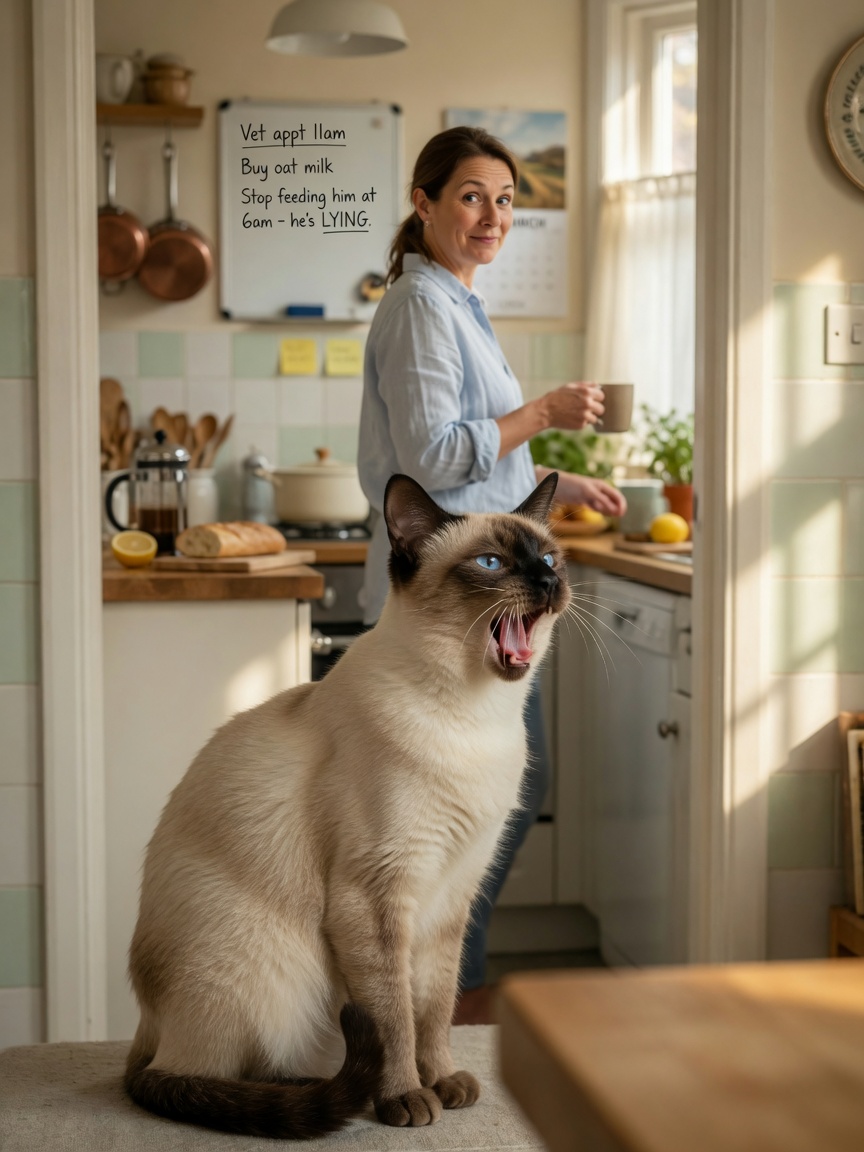
Perhaps the most famous Siamese characteristic is their voice. Siamese cats are extraordinarily vocal, and their calls range from soft, conversational chirps to a loud, insistent yowl that many people describe as resembling a human baby crying. This is not random noise — it is communication, and your Siamese is genuinely trying to tell you something.
Common reasons for vocalisation include hunger, boredom, a desire for attention, discomfort, or simply the wish to update you on what they have been doing. Some Siamese will narrate their entire day, following their owner from room to room and offering a running commentary. Rather than discouraging this behaviour, many owners learn to engage with it, talking back and treating it as the conversation their cat intends it to be.
Excessive or sudden changes in vocalisation can, however, indicate pain or illness, particularly in older cats. If your Siamese becomes unusually loud at night or begins yowling without an obvious trigger, a veterinary check is worthwhile.
Velcro Cats: The Siamese Bond with Their Owner
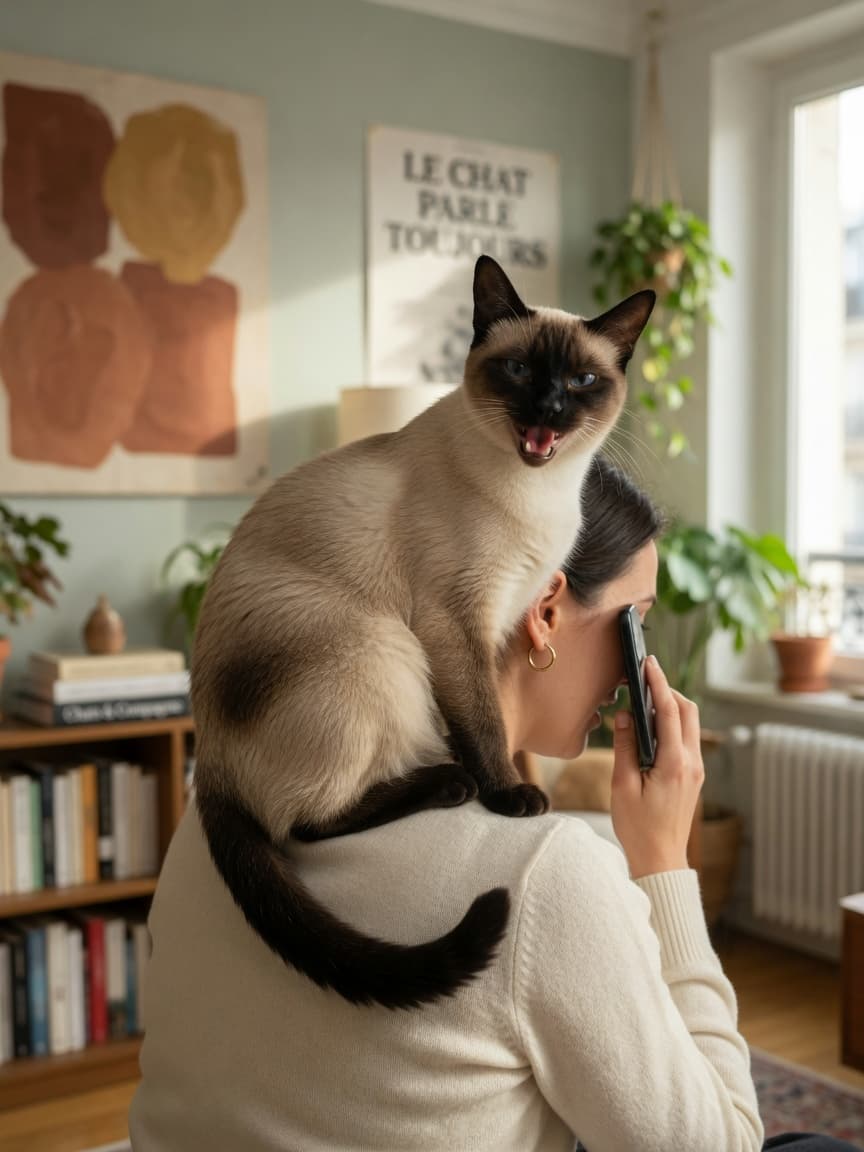
Siamese cats are often called "Velcro cats" because of their tendency to attach themselves to one or two favourite people and follow them everywhere. This is not clinginess in a neurotic sense — it reflects the breed's genuine social need for close human contact. A Siamese left alone for long periods will often become distressed, bored, and potentially destructive.
If your lifestyle involves long working hours away from home, a Siamese may not be the right choice — or you may need to make specific arrangements to address their social needs. Many owners of single Siamese cats choose to adopt a second cat (ideally another Siamese or an equally sociable breed) to provide companionship during the day.
Separation Anxiety: Signs and Management
Separation anxiety is genuinely common in Siamese cats, and it manifests in several ways. Signs to watch for include:
- Excessive vocalisation when left alone (neighbours may alert you to this)
- Destructive behaviour such as scratching furniture or knocking items off surfaces
- Inappropriate toileting outside the litter tray
- Over-grooming or pulling out fur
- Refusing food when left alone, followed by overeating when the owner returns
Management strategies include creating a stimulating environment with puzzle feeders, hiding treats around the house, and leaving worn clothing near the cat's resting area so they can access your scent. Interactive feeders and timed treat dispensers can also help. In severe cases, a behaviourist referral or a discussion about short-term anxiolytic medication with your vet may be appropriate.
Play Needs and Mental Stimulation
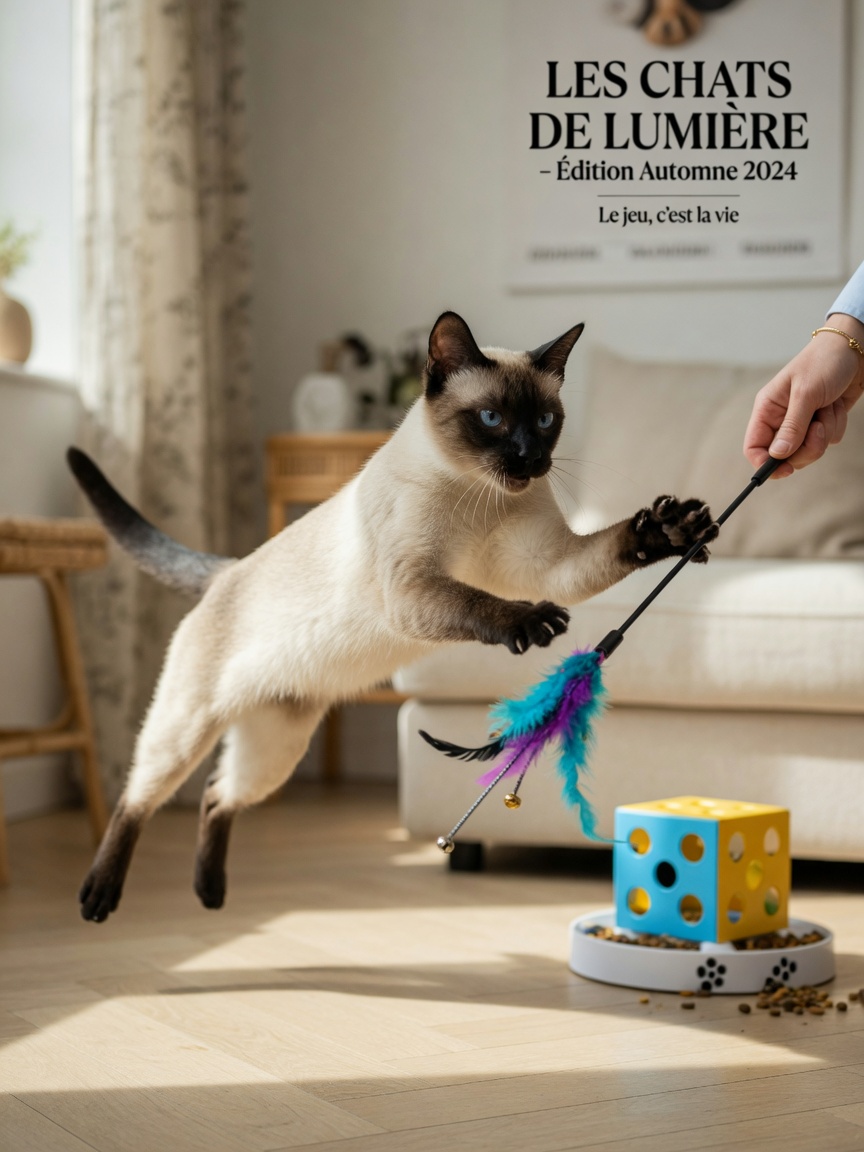
Siamese cats are highly intelligent and require significant mental stimulation to stay content. Without adequate play and enrichment, they will find their own entertainment — and it is unlikely to align with your preferences. Aim for at least two structured play sessions per day of ten to fifteen minutes each, using wand toys, feather teasers, or laser pointers (always end laser sessions with a physical toy the cat can "catch" to avoid frustration).
Puzzle feeders are an excellent investment for Siamese cats. Rather than serving meals in a standard bowl, use a food puzzle or slow feeder that requires the cat to work for their food. This taps into their natural problem-solving instincts and extends feeding time considerably. Zooplus carries a wide range of interactive feeders and puzzle toys suitable for highly active breeds, available for delivery across the EU.
Rotating toys regularly prevents habituation — a toy that was ignored last week may be thrilling again after a fortnight in a drawer. Novel objects, paper bags (with handles removed), and cardboard boxes all provide low-cost enrichment.
Territorial Behaviour and the Multi-Pet Household
Despite their sociability with people, Siamese cats can be surprisingly territorial with other animals, particularly cats they perceive as rivals. They tend to be confident and assertive, and they will not automatically defer to a resident cat simply because that cat was there first.
When introducing a Siamese to other pets, use a slow, structured approach. Begin with scent swapping — exchanging bedding between the animals before any visual contact occurs. Progress to visual contact through a barrier (a baby gate or slightly opened door), then to supervised free interaction over a period of days to weeks depending on how the animals respond. Never force interaction, and ensure each animal has a refuge space the other cannot access.
Siamese generally do well with dogs that respect cats, and many get along well with other Siamese or similarly sociable breeds. The key is patience and a gradual introduction process.
Creating a Stimulating Home Environment
Beyond play sessions, the physical environment matters enormously for a Siamese cat's wellbeing. Vertical space is particularly important — cat trees, wall-mounted shelves, and high perches allow the Siamese to survey their territory from above, which is a natural and calming behaviour. A window perch with a view of the garden provides hours of passive entertainment.
Consider installing a bird feeder within sight of a favourite window. The activity of garden birds provides a form of stimulation that cats find deeply engaging, and it costs very little to set up. Combined with regular interactive play, a companion animal, and plenty of human attention, these measures will go a long way toward keeping your Siamese settled, engaged, and content.
The Siamese is not a breed for the indifferent owner. But for those who embrace their conversational, devoted nature, the bond formed with a Siamese cat is truly unlike any other.