
Acupuncture for Dogs: What the Evidence Actually Shows
Acupuncture has been used in human medicine for thousands of years, and over the past few decades it has found its way into veterinary practice. If your dog is dealing with chronic pain, mobility issues, or a condition that hasn't responded well to conventional treatment, you may have come across it as an option. But what does the science actually say, and is it worth considering for your pet?
How Veterinary Acupuncture Works
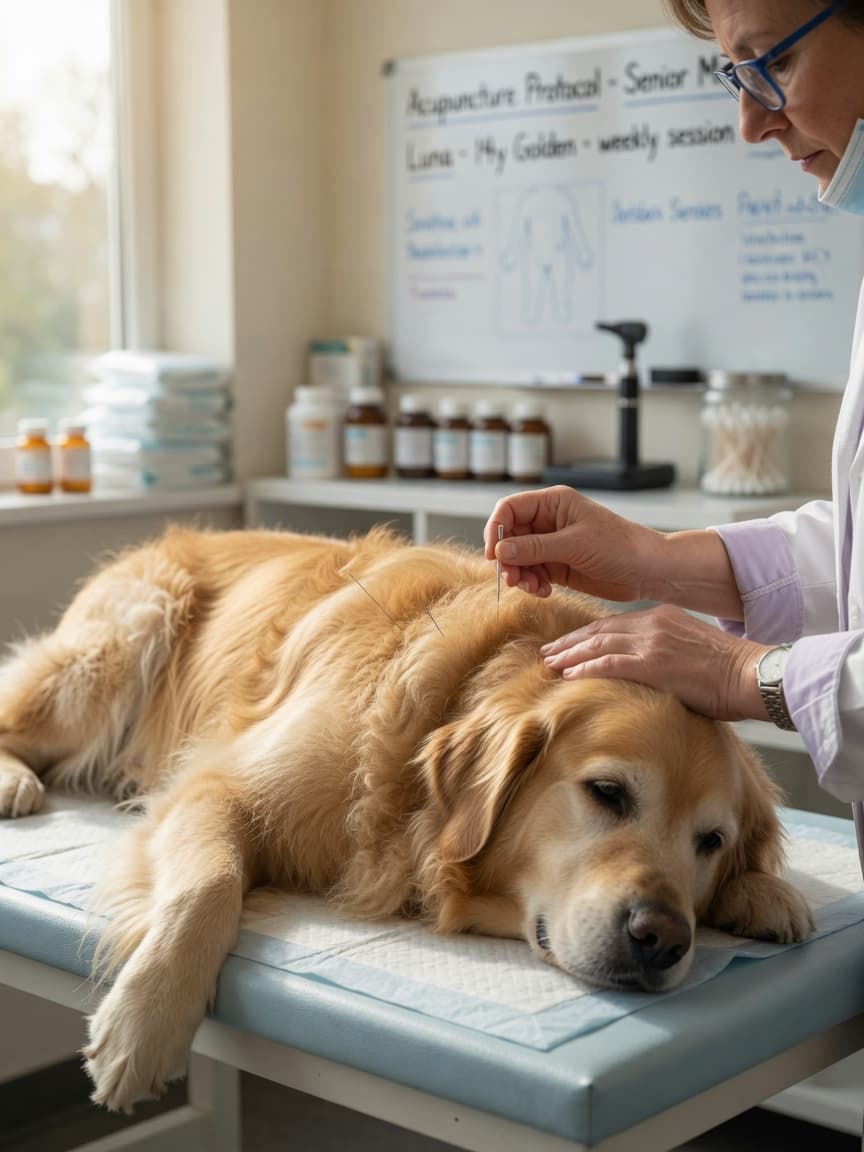
Acupuncture involves inserting fine needles into specific points on the body. In traditional Chinese medicine, these points are thought to lie along pathways called meridians, through which energy flows. While this traditional explanation doesn't map neatly onto modern anatomy, researchers have found that many acupuncture points correspond to areas dense with nerve endings, blood vessels, and connective tissue.
From a Western biomedical perspective, inserting needles into these points appears to trigger the release of endorphins and other neurotransmitters, reduce inflammation, and influence the nervous system's pain signalling pathways. This is why many vets who practise acupuncture frame it in neurological rather than metaphysical terms.
What Conditions Is It Used For?
Veterinary acupuncture is most commonly recommended for:
- Musculoskeletal pain, particularly arthritis and hip dysplasia
- Intervertebral disc disease (IVDD) and spinal conditions
- Neurological dysfunction and muscle weakness
- Post-surgical rehabilitation
- Chronic pain that hasn't responded to medication alone
- Nausea associated with chemotherapy or gastrointestinal issues
It is also sometimes used as part of a broader palliative care plan for older dogs with multiple conditions, where limiting the number of pharmaceutical drugs is a priority.
What Does the Research Actually Show?
This is where things get nuanced. The evidence for acupuncture in dogs is promising in some areas, but far from conclusive. A number of studies have shown improvements in pain scores and mobility in dogs with osteoarthritis and spinal disease following acupuncture treatment. A 2016 systematic review published in Veterinary Journal found positive outcomes in studies examining acupuncture for musculoskeletal pain, though the authors noted that many studies had small sample sizes and methodological limitations.
One of the genuine challenges in acupuncture research — both in humans and animals — is the difficulty of designing a proper placebo control. Dogs cannot report pain subjectively in the way humans can, and it is difficult to create a convincing sham acupuncture condition that doesn't influence outcomes. This makes it hard to fully separate the specific effects of needle placement from the general effects of calm handling and attention from a vet.
That said, multiple clinical reports and some controlled trials do suggest real physiological effects. Electroacupuncture, which involves passing a mild electrical current through the needles, has shown particular promise for nerve regeneration and motor function recovery in dogs with spinal cord injuries.
What to Expect at a Session
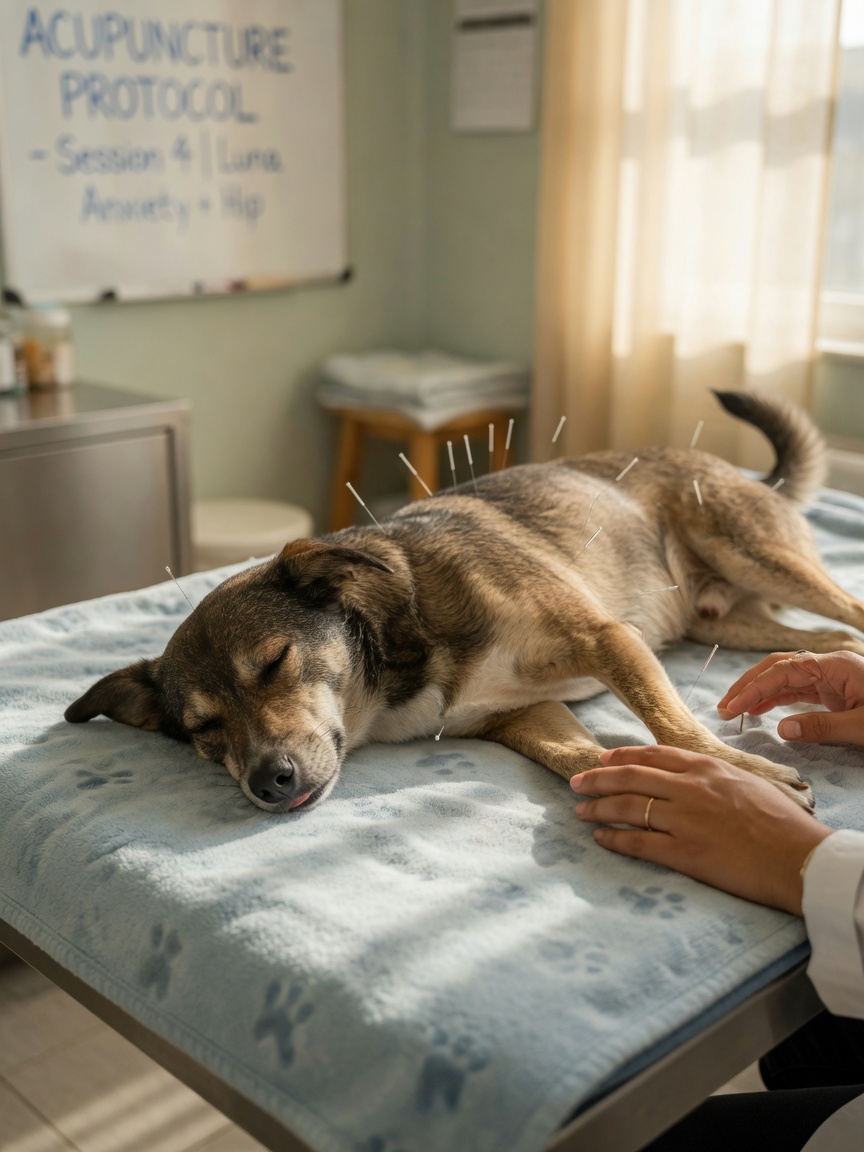
A veterinary acupuncture session typically lasts between 20 and 45 minutes. Most dogs tolerate it well and some become visibly relaxed during treatment. The needles used are very fine — much thinner than those used for injections — and the majority of dogs show little to no reaction to their insertion.
A course of treatment usually involves weekly sessions for four to six weeks, followed by maintenance sessions every few weeks depending on the dog's response. Results are rarely immediate; improvement tends to build gradually over several sessions.
Finding a Qualified Practitioner
In the UK, veterinary acupuncture should only be performed by a qualified veterinary surgeon who has undertaken additional training in acupuncture. The Association of British Veterinary Acupuncturists (ABVA) maintains a register of members who have completed accredited training. Be cautious of practitioners who are not vets, as performing acupuncture on animals without a veterinary qualification is illegal in the UK.
Always ensure your vet is aware that your dog is receiving acupuncture, particularly if they are on medication, as some interactions and contraindications do exist.
Is It Worth Trying?
Acupuncture is unlikely to be a standalone cure for most conditions, but the evidence suggests it can be a useful part of a multimodal approach to pain management — particularly for dogs with arthritis, spinal disease, or chronic conditions where long-term NSAID use carries risks. It is generally low-risk when performed by a qualified vet, and many owners report meaningful improvements in their dog's quality of life and mobility.
If your dog has a condition that hasn't responded fully to conventional treatment, it is worth having an honest conversation with your vet about whether acupuncture might be a reasonable addition to their care plan.