
Seven Is Not Just a Number
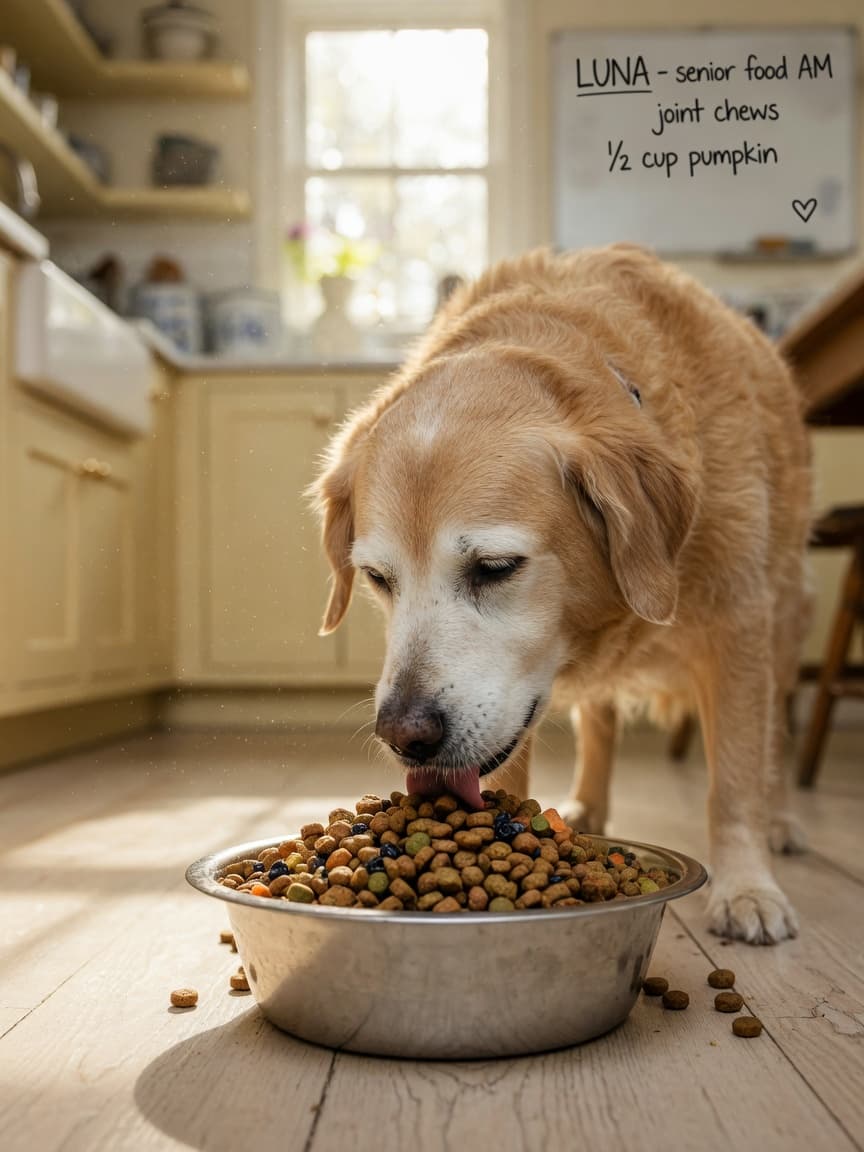
The moment a dog crosses the threshold into their senior years — broadly defined as age seven for most medium breeds, earlier for giant breeds — a cascade of physiological changes begins that has real consequences for how they should be fed. And yet, many dogs spend their final years eating the same food they ate at three, simply labelled "all life stages." That is a missed opportunity for meaningful preventive care.
How the Ageing Body Changes Nutritional Needs
Understanding what happens physiologically in the senior dog is the foundation for making intelligent feeding decisions.
Metabolic Rate and Body Composition
Older dogs tend to experience a decline in lean muscle mass — a process called sarcopaenia — even when body weight stays the same or increases. Fat tissue may accumulate while muscle diminishes, leaving a dog that appears a normal weight but has a compromised body composition. Resting metabolic rate typically falls, meaning fewer calories are needed to maintain weight. However, this is not universal — some senior dogs, particularly those with underlying disease, actually struggle to maintain weight and require more caloric support.
Digestive Efficiency
The digestive tract becomes less efficient with age. Absorption of certain nutrients — including proteins, fats, and some vitamins — can decline, meaning the quality and digestibility of food matters more than it did in younger years. A senior dog may need higher-quality protein sources even if the total protein percentage appears similar on the label.
Organ Function
Kidney function declines progressively in most older dogs, even in the absence of clinical kidney disease. Liver function may also be reduced. These changes affect how nutrients are processed and can influence the appropriate levels of protein, phosphorus, and sodium in the diet.
Protein: The Most Misunderstood Nutrient in Senior Dogs
For years, veterinary guidance recommended reducing protein in older dogs to protect the kidneys. Current evidence has shifted that position considerably. Unless a dog has diagnosed chronic kidney disease, restricting protein in a healthy senior dog may actually be harmful — accelerating muscle loss and weakening immune function.
What matters is protein quality and digestibility, not simply reducing the amount. Senior dogs need highly digestible, complete protein sources to support muscle maintenance. If kidney disease is diagnosed, your vet will guide specific dietary modifications — this is not a decision to make based on general advice alone.
Calories, Weight, and the Body Condition Score
Weight management in senior dogs requires regular reassessment rather than a set-and-forget approach. Obesity in older dogs accelerates joint deterioration, worsens cardiac workload, and is associated with a shorter lifespan. Conversely, unintentional weight loss in a senior dog is a red flag that warrants veterinary investigation — it is never simply "normal ageing."
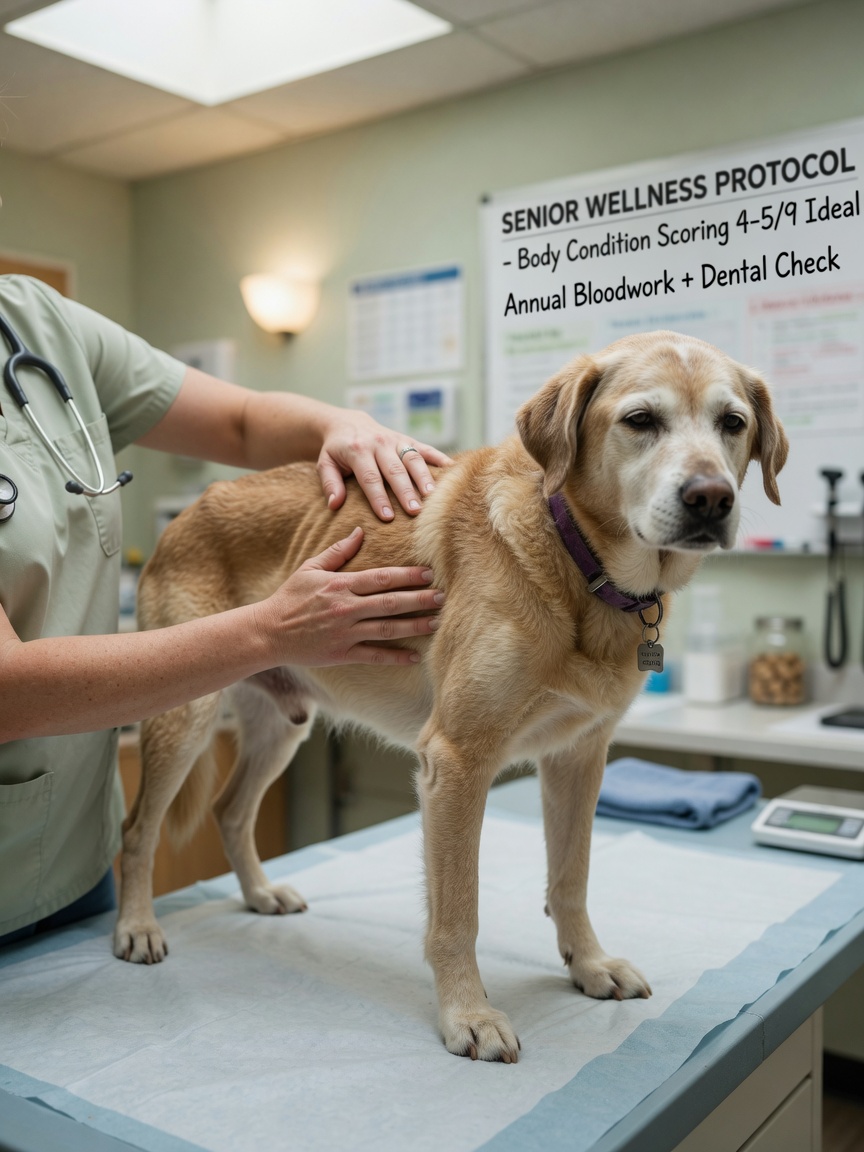
Learn to use the body condition score (BCS) system: you should be able to feel your dog's ribs without pressing hard, and there should be a visible waist when viewed from above. Weigh your senior dog monthly and adjust portions accordingly, rather than following packet feeding guides blindly.
Key Nutrients That Deserve Attention

Omega-3 Fatty Acids
EPA and DHA from marine sources have well-documented benefits for joint health, cognitive function, skin condition, and cardiovascular health in older dogs. Most commercial dog foods contain insufficient levels for therapeutic benefit in senior dogs, making targeted supplementation worthwhile in many cases. Always use a product formulated for dogs, as fish oil quality varies considerably.
Antioxidants
Oxidative stress increases with age and contributes to cellular damage across multiple body systems, including the brain. Vitamins E and C, beta-carotene, and selenium are key antioxidants to look for in senior formulations. Some diets specifically enriched with antioxidants have shown improvements in cognitive function markers in ageing dogs.
Joint-Supporting Nutrients
Glucosamine and chondroitin sulphate are commonly added to senior dog foods, though the concentrations in commercial diets are often too low to provide clinical benefit. If joint support is a priority — and for most dogs over seven, it should be — a quality glucosamine supplement alongside a joint-supportive diet is a reasonable approach.
Phosphorus and Sodium
In dogs with early kidney disease or cardiovascular concerns, moderating phosphorus and sodium intake may be beneficial. Your vet can assess whether this applies to your dog through routine blood and urine testing, which becomes increasingly important as dogs age.
Choosing the Right Food for a Senior Dog
The pet food market is saturated with products labelled "senior," but labelling is not regulated to require specific nutritional differences from adult formulas. Scrutinise the actual nutrient profile and ingredient quality rather than the marketing.
Key things to look for in a genuine senior formula include: a named, high-quality protein as the first ingredient; adequate but not excessive caloric density; added omega-3 fatty acids; antioxidant supplementation; and appropriate phosphorus levels. Wet food can be beneficial for senior dogs with dental difficulties or reduced water intake.
Practical Steps for Senior Dog Feeding
- Schedule a veterinary health check at least annually — ideally every six months — including blood and urine screening to guide dietary decisions.
- Assess your dog's body condition monthly and adjust portions as metabolic needs shift.
- Transition to a high-quality senior or all-life-stages diet with verified senior-appropriate nutrient levels.
- Consider omega-3 supplementation with a marine-source product formulated for dogs.
- Add a quality joint supplement if your dog is not already on one, unless your vet advises otherwise.
- Monitor appetite, water intake, and weight — changes in any of these in a senior dog require veterinary attention.
- Avoid supplementing minerals or vitamins without veterinary guidance, as over-supplementation can cause harm.
Good nutrition in the senior years is not about restriction. It is about precision — giving an ageing body exactly what it needs to stay strong, comfortable, and cognitively sharp for as long as possible.